Skip to content

Posts by Thomas Cox PhD RN

Japan’s tragedy (or is it all of us??)


This just appeared out of nowhere just now and I had totally forgotten writing it – but it would have been so appropriate 2 years ago – not that it will not continue to be appropriate going forward because the earthquake/hurricane/tsunami is still ahead of us.

Peggy L Chinn's avatarPeggy L Chinn

Yesterday Thomas Cox sent around a terrific commentary on what is happening in Japan, and with his permission, I am posting it here.  If you want to see the actual post on the Nurse-Philosophy list, go to this link: http://bit.ly/hUfKBM.

But this is so important, I am posting it here in its entirety:

Risk – The Real Butterfly Effect

by Thomas Cox, PhD, RN, author of  the soon to be available book: Standard Errors: Life, Health & Death When Hospitals, Long Term Care Facilities, Home Health Agencies, Physicians & Nurses Are Insurers.

I have resisted the impulse to comment on Japan. But there are only a few “Teachable moments” as profound as this one.

45+ years ago somebody thought it would be a great idea to build a nuclear reactor along the pacific ocean coastline in a country with high seismic activity and high risks of tsunamis.

That day, a butterfly emerged…

View original post 816 more words
What Would Florence Nightingale Do (WWFND)?: Nightingale and 21st Century Health Care Reform


From the Bates Center Blog:

What Would Florence Nightingale Do (WWFND)?: Nightingale and 21st Century Health Care Reform


New paper in Journal of Healthcare Risk Management


Just had my latest paper published in the Journal of Healthcare Risk Management:

Cox, T. (2011), Exposing the true risks of capitation financed healthcare. Journal of Healthcare Risk Management, 30: 34–41. doi: 10.1002/jhrm.20066

The key points:

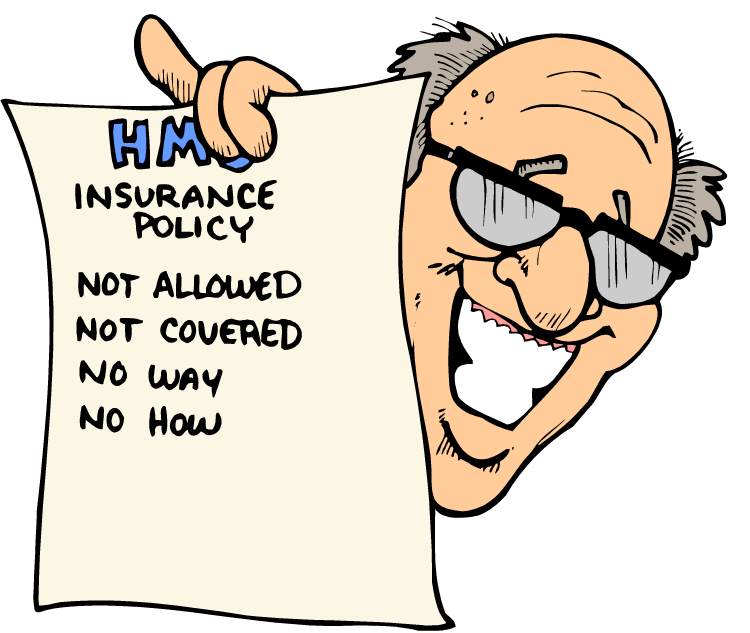
Small insurers are inefficient insurers: They have lower probabilities of achieving modest profit goals, higher probabilities of incurring operating losses, and higher probabilities of Insurance "not allowed"insolvency than larger insurers when both randomly select policyholders from the same populations.

Small insurers also have to cut benefits to match larger insurer’s probabilities of achieving modest profit goals, avoiding operating losses, and avoiding insolvency.

Despite this, and the obvious impact it has on service quality and quantity, almost every proposal for trimming health care costs assumes Read more

Disaster preparedness


The Washington Post had a story yesterday that should raise some concerns, for a day or two:  “US Health Care System Unprepared for Major Nuclear Emergency, Officials Say”Disaster Relief

As I suggested in another post, it is difficult, if not impossible to be prepared for a catastrophe when our health care facilities are barely handling routine loads.

Disaster preparedness requires tremendous redundancies: Extra staff, extra supplies, extra equipment, extra medications, extra food, and alternative energy sources. Read more

Regulating Medical Loss Ratios


I was just thinking about a new paper in the American Journal of Managed Care:

—————————————————————————————————————————————————
Regulating the Medical Loss Ratio: Implications for the Individual Market
Jean M. Abraham, PhD; and Pinar Karaca-Mandic, PhD
(Am J Manag Care. 2011;17(3):211-218)

“Results:In 2009, using a PPACA-adjusted MLR definition, we estimated that 29% of insurer-state observations in the individual market would have MLRs below the 80% minimum, corresponding to 32% of total enrollment. Nine states would have at least one-half of their health insurers below the threshold. If insurers below the MLR threshold exit the market, major coverage disruption could occur for those in poor health; we estimated the range to be between 104,624 and 158,736 member-years.”Conclusion: The introduction of MLR regulation as part of the PPACA has the potential to significantly affect the functioning of the individual market for health insurance.”————————————————————————————————————————

The Robert Wood Johnson Foundation thought enough of it to post it on their website and I did a post over there

http://www.rwjf.org/coverage/product.jsp?id=72089&cid=XEM_910232#disqus_thread

but sometimes they don’t like them, so I’ll edit it and redo it here because I think Read more

Thoughts on: “Bringing Values Back Into Evidence-Based Nursing: The Role of Patients in Resisting Empiricism” by Porter, O’Halloran, and Morrow.


Was just reading: “Bringing Values Back Into Evidence-Based Nursing: The Role of Patients in Resisting Empiricism” by Porter, O’Halloran, and Morrow.

What a great article. Nails a number of things that I have been tangentially interested in. Without in any way suggesting a deficit it was interesting to me that little attention seemed to be given to “how” and “why” we got here: How and why we have slipped up and where we must go to get out of the hole so many of us feel we are in.

So here are some additional thoughts on their article. Read more