Skip to content

Posts by Peggy L Chinn

Theory Development Process of Situation-Specific Theories


The current ANS featured article is titled “Theory Development Process of Situation-Specific Theories” authored by Eun-Ok Im, PhD, MPH, RN, CNS, FAAN. In this article, Dr. Im described the development processes used in fifteen situation-specific theories published in refereed journals. This article is available at no cost whiled it is featured, and we encourage you to take advantage of its availability! Dr. Im shared her reflections about her work in this message:

Since my first article on situation-specific theories was published in Advances in Nursing Science in 1999, my thoughts on situation specific theories have grown. I have started this year with an unusual excitement because of the upcoming first book on situation-specific theories from Springer Nature that I have worked on with Dr. Afaf Meleis. The book is a collection of the works by many theorists who gave their thoughts on and have developed and used their own situation-specific theories. On this blog, I am including a picture of little red fruits on a tree that I found in Atlanta, GA this winter (American Holly tree?) in order to illustrate my feelings about all the theoretical works related to situation specific theories that we have done. A collection of our little pretty fruits that we produced despite all the challenges!!!

While working on the first book on situation specific theories, I became to wonder what theoretical development process had been used in the actual development of situation-specific theories. During the same time period, I was invited to several international conferences/workshops/seminars related to theory development, and many of them asked me to give presentations on theory development process of situation-specific theories. Also, over the past several years, I have been asked by PhD students on how they could develop their own situation specific theories through their PhD dissertation works.  When I published the article on the integrative approach to situation-specific theories in 2005, I thought I gave clear guidance for theory development process of situation specific theories. However, many junior and senior scholars were wondering how situation-specific theories had been actually developed during the past two decades.  Because of these inquiries by many nursing scholars and PhD students, this paper was initiated.

While working on the paper, I was very glad to find that I was right about the theory development process of situation specific theories that I proposed in 2005.  For instance, all the situation-specific theories that were reviewed were developed through various combinations of induction and deduction using unique theory development strategies. The situation-specific theories were developed using multiple sources of theorizing (including multiple theories and multiple research studies) in various, but no homogenous steps.  I thought these findings were reasonable and natural considering the high specificity and diversity that situation-specific theories are supposed to provide and respect. 

I also had an interesting finding that situation-specific theories were developed from all types of theories including grand theories, middle-range theories, and situation-specific theories.  Considering the lowest level of abstraction in situation-specific theories, the derivation of situation-specific theories from grand theories and middle-range theories was recommended by many scholars, but situation-specific theories were actually developed based on all types of theories/theoretical works. Considering the characteristics of situation-specific theories (e.g., respecting diversity and contextuality, direct linkages to research and practice), it would be understandable to see the derivation of situation-specific theories from all types of theories and theoretical works.

Based on the expected and unexpected findings on theory development process of situation-specific theories, I made several suggestions for future theoretical development of situation-specific theories in this paper.  Especially, I thought it would be essential and important for future theorists to be creative and innovative in their theoretical efforts to develop situation-specific theories. All situation-specific theories were developed in their own unique ways that would fit with the specific populations and particular nursing situations that they aimed to describe, explain and predict. Without openness to new and creative methods, it would be difficult for theorists to develop situation-specific theories that could exactly fit with their unique populations and nursing situations.  

Especially when considering all the evolutions and revolutions that nursing discipline might need to go through with new changes in nursing environments (e.g., COVID19 pandemic), the openness would be a key to success in our future theoretical journeys. Indeed, with the start of COVID19, health care systems went through drastic changes including the rapid adoption of telemedicine and telehealth. With the changes, nursing situations became to involve telenursing procedures in many aspects of practice, and nurses have been on the frontline of health systems to take care of COVID19 patients through both in-person and non-in-person encounters. Are we ready to provide theoretical lenses that could support all these changes in nursing practice and care?  What if robots began to replace some components of nursing care? Maybe, these would not be necessary worries and concerns at this moment, but we never expected the COVID19 as well. 

Again, many thanks to Dr. Chinn to provide me with this great opportunity to dialogue with my respected colleagues; I missed our dialogues during this pandemic while staying at my little place. Hope this blog could initiate some fruitful discussion on situation-specific theories.  Also, to conclude this blog, I want to mention that this is the year of Golden Cow, White Ox, or Metal Bull in Asian culture, which will bring good fortune to all of us.  With the new good luck, I hope the COVID19 pandemic would disappear and we could get together soon.  

Best wishes for all of us.

Eun-Ok Im

Discrimination-fueled mistrust of hospice care


The current ANS featured article is titled “Mistrust Reported by US Mexicans With Cancer at End of Life and Hospice Enrollment” authored by Margaret L. Rising, PhD, JD, RN; Dena Hassouneh, PhD, RN, FAAN; Patricia Berry, PhD, CNP, GNP-BC, ACHPN, FPCN, FAAN; and Kristin Lutz, PhD, RN. The article is available to download at no cost while it is featured! Here is the abstract giving a summary of the outcome of the grounded theory approach used in this work:

Margaret L. Rising

Hospice research with Hispanics mostly focuses on cultural barriers. Mindful of social justice
and structural violence, we used critical grounded theory in a postcolonial theory framework
to develop a grounded theory of hospice decision making in US Mexicans with terminal cancer. Findings suggest that hospice avoidance is predicted by mistrust, rather than culture,
whereas hospice enrollers felt a sense of belonging. Cultural accommodation may do little
to mitigate hospice avoidance rooted in discrimination-fueled mistrust. Future research with
nondominant populations should employ research designs mitigating Eurocentric biases. Policy makers should consider concurrent therapy for nondominant populations with low trust
in the health care system (p. E14)

Rising, M. L., Hassouneh, D., Berry, P., & Lutz, K. (2021). Mistrust Reported by US Mexicans With Cancer at End of Life and Hospice Enrollment. ANS. Advances in Nursing Science, 44(1), E14–E31. https://doi.org/10.1097/ANS.0000000000000344

Conceptual Framework of Self-Advocacy


The current ANS featured article is titled “A Conceptual Framework of Self-advocacy in Women With Cancer” authored by Teresa H. Thomas, PhD, RN; Heidi S. Donovan, PhD, RN; Margaret Q. Rosenzweig, PhD, CRNP-C, AOCNP, FAAN; Catherine M. Bender, PhD, RN, FAAN; and Yael Schenker, MD, MAS, FAAHPM. In this article the authors discuss new insights about the process of self-advocacy. Here is a message from Dr. Thomas about this work:

Teresa Thomas

The past two decades have seen increasing attention put on “patient-centered care.” Healthcare systems and providers strive to put the patient at the forefront of their services. But what about the patient? What are we asking patients to do when we attempt to be patient-centered? How are we asking them to do so? And importantly, are all patients equally able to engage in patient-centered care?

Our team’s research in patient self-advocacy strives to answer these questions in the context of women with cancer. What happens when a woman with cancer encounters a challenging situation?  How does she assert her values and priorities to ensure her needs are met? This article presents our conceptual framework of self-advocacy among women with cancer.

Through our work with women with cancer, we know that not all individuals can speak up for themselves. Individuals quickly learn that if they don’t assert themselves, their care will at best not meet with needs and at worst be mismanaged and lead to their own poor health:

    • Individuals get lost in the healthcare system because they don’t know how to question their providers or seek clarification about their health.
    • Individuals hesitate to share the side-effects of treatment with their social circles because they don’t want to be considered a burden.
    • Individuals neglect their needs for the sake of not being perceived as rude or questioning.

Two observations drive this work. First, we noticed that research in patient empowerment and self-management focused on supporting patients in performing the tasks of managing their illness. While critical, we also recognize that individuals need support in doing more than just the “tasks” of being a patient. We want to create a language and framework that recognize the individual holistically and point to ways in which they can use their strengths to address their health concerns.

Second, we noticed a lack of patient-driven solutions to addressing disparities and inequities in outcomes. While equipping patients with self-advocacy skills cannot overcome the intertwined systems that perpetuate health inequities, there are ways in which patients can actively assert themselves to address challenges in their healthcare and social support networks.

We encourage others – by engaging in our article – to explore the concepts of self-advocacy, critique and refine this framework, and ultimately develop evidence-based ways to support individuals in achieving the goals of patient-centered care.

Theory of Suicide


The current featured ANS article is titled “The Three-Step Theory of Suicide: Analysis and Evaluation” authored by Avery M. Anderson, BA, BSN, RN and Mary Beth Happ, PhD, RN, FGSA, FAAN. This article is available for download at not cost while it is featured. Watch this informative 3-minute video of Mr. Anderson discussing this work!

Sexual Assault in the Lives of Ethnic Minority Women


Our current featured article is by the prolific social-justice team from the University of Wisconsin Milwaukee – Ashley Ruiz, BSN, RN; Jeneile Luebke, PhD, RN; Maren Hawkins, BA; Kathryn Klein, BA; Lucy Mkandawire-Valhmu, PhD, RN. This current article is titled “A Historical Analysis of the Impact of Hegemonic Masculinities on Sexual Assault in the Lives of Ethnic Minority Women Informing Nursing Interventions and Health Policy.” The article is available for download at no cost while it is featured. Below is a message from primary author Ashley Ruiz about this work:

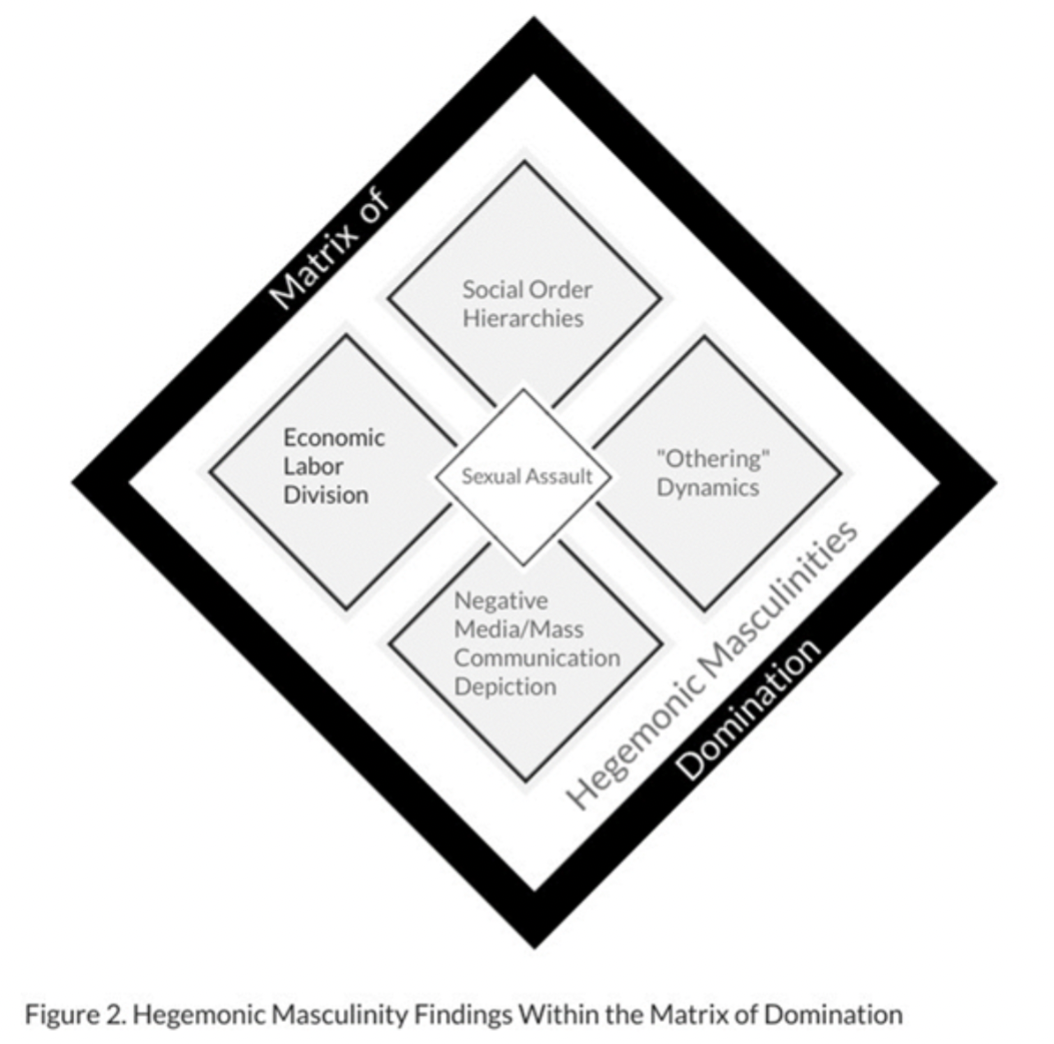
In this article, we urge readers to consider how hegemonic masculinities are created, upheld, and sustained, due to intersecting systems of oppressions (the totality of which are also referred to as the matrix of domination).  A dominant ideology that refers to how masculine traits are constructed and idealized, hegemonic masculinities are learned social practices that ultimately lead to justifying the acceptability of violence, such as sexual assault.  In this article, we identify four ways in which hegemonic masculinities are used to justify sexual assault, specifically in the lives of ethnic minority women (social order hierarchies, “othering” dynamics, negative media/mass communication depiction, and economic labor division).  We draw from the literature to demonstrate specific ways in which sexual assault in the lives of ethnic minority women in the States are historically situated specifically in relation to colonization and slavery.  This history, upheld by hegemonic masculinities, demonstrates the past and present justification of sexual assault in ethnic minority women’s lives.  We call for nurses to recognize and understand this history as a basis for their approach to effectively meeting the healthcare needs of ethnic minority women who have experienced sexual assault. Understanding this history can help contribute to the implementation of effective interventions and health policies that disrupt hegemonic masculine ideologies by calling for a cultural shift in US society that no longer tolerates violence against women while ensuring the provision of opportunities for women’s healing.  

Sexual Disparities for Black Females


The current ANS featured article (available at no cost while features) is entitled “Black Female Sexuality: Intersectional Identities and Historical Contexts” authored by Natasha Crooks, PhD, RN; Randi Singer, PhD, MSN, MEd, CNM, RN, and Audrey Tluczek, PhD, RN, FAAN. Dr. Crooks provided this information about this work:

As a Black female researcher, my passion lies within addressing sexual health disparities and social inequities Black girls and women face throughout the life course. The motivation for my research stems from my clinical experiences in women’s sexual and reproductive health. I began investigating the experiences of Black female sexual development for my dissertation and have built upon this work by including adolescent girls. Many women from the study described how their intersectional identities and historical context influence their sexual development, aligning intersectionality to the findings of my grounded theory study.

Intersectionality is an important framework to use in nursing as it emphasizes the historical context, which is often absent in nursing theory. Intersectionality is a concept many of us may be familiar with; however, there is a lack of understanding particularly in nursing regarding its use. There is a complexity and discomfort in discussions of intersectionality as it describes social hierarchies (i.e., power and privilege) as well as consequences of those concepts (i.e., internalized oppression and historical trauma), especially as nurses and the field of nursing are predominately white. However, nurses are at the forefront of social justice and have a responsibility to provide culturally safe care. We thought it was important to discuss how research on Black female sexuality led to the development of an expanded intersectionality model and how it could inform research, theory, practice, and education.

We believe this work is timely considering the social awakening the Black Lives Matter movement has shed light on and the injustices Black communities face. In this article, we highlight many of the social inequities, which have led to historical trauma among Black women. We wanted to demonstrate the importance of intersectionality in relation to health, as well as the importance of historical context in health care. Historical context is critical in examining social inequities and health disparities among underrepresented populations. This framework may be useful in understanding how systemic issues have impacted health disparities, such as the disproportionate death rate of COVID-19 cases within Black communities.

Satisfaction Outcomes for Women “Choosing to Go Flat” after Mastectomy


The current ANS featured article, available at no cost while it is featured, is titled “Satisfaction Outcomes in Women Who “Choose to Go Flat” After Mastectomy: An Integrative Review,” authored by Tracy E. Tyner, MSN, APRN, ACNP-BC; Mikyoung A. Lee, PhD, RN. We invite you to download the article while it is featured, and share your comments related to their integrative review. Here is a message provided by lead author Tracy Tyner about this work.

Tracy Tyner

Tracy Tyner

Imagine, if you can, being diagnosed with breast cancer or you are at high-risk based on genetic or familial factors. After thoughtful and careful consideration and conversations with your healthcare team, you have decided to undergo a mastectomy and forego breast reconstruction, an option recently defined by the National Cancer Institute (2020) as Aesthetic Flat Closure, or in lay terms, “going flat.” Aesthetic flat closure is defined as a surgical procedure to remove excess fat and skin, followed by tightening of the skin to create a smooth, flat, nicely contoured chest wall, and can occur at the time of mastectomy or after reconstructive breast implant or autologous breast flap removal. After the mastectomy, you awaken to discover that you did not receive a flat closure but instead found excess amounts of skin along your chest wall with unexpected tissue deformities. Imagine looking at your chest wall with these deformities every day for the rest of your life. The potential short and long-term physical and psychological sequela these women experience is infinite.

Mikyoung Lee

Healthcare journalists are reporting similar events from women all across the country. In speaking with women who have undergone aesthetic flat closure, I have heard both amazing and disturbing stories surrounding their flat closure experiences. As a nurse practitioner with a family history of breast cancer, I felt a duty to answer the call from these women by enrolling in a Doctoral Nursing Program with a research focus on patient-reported outcomes in women choosing mastectomy with aesthetic flat closure.

To better understand this population, the authors, Tracy E. Tyner and Dr. Mikyoung A. Lee, set out to identify satisfaction outcomes in women choosing to go flat after mastectomy through an integrative review. Satisfaction outcomes addressed in this literature review included: chest wall appearance/aesthetic satisfaction, decision satisfaction, healthcare clinician interaction/care satisfaction, and factors affecting satisfaction. Most studies compared outcomes among different surgical options: breast-conserving surgery, mastectomy without reconstruction, and mastectomy with implant or autologous flap reconstruction. Only two qualitative studies specifically addressed women who “chose” to go flat. Overall, decision satisfaction was good, but there were mixed results on aesthetic satisfaction. Studies looking at satisfaction with healthcare clinician interactions were quite illuminating, revealing issues of paternalism, implicit and explicit biases regarding societal femininity and breasts, and a lack of educational resources available for these women. The strongest factors impacting satisfaction were body image, body mass index, radiation therapy, and access to information and resources.

This literature review found a significant paucity in the literature on satisfaction outcomes in women choosing mastectomy with aesthetic flat closure. We have only scratched the surface on understanding patient-reported satisfaction outcomes in this population. Future research needs are limitless. As nurses, we can play a pivotal role in improving patient satisfaction and health outcomes for women “choosing to go flat.”

National Cancer Institute (2020). Aesthetic flat closure. https://www.cancer.gov/publications/dictionaries/cancer-terms/def/aesthetic-flat-closure


Guidance on Concept Analysis


Beth Rodgers

For the current issue of ANS, I invited Beth Rodgers, PhD, RN, FAAN, to share her thoughts and guidance for nurse scholars embarking on this important work! Dr Rodgers is Professor Emeritus, University of Wisconsin Milwaukee, Nursing Alumni Endowed Professor, Department of Adult Health and Nursing Systems. Her work defining quality in concept analysis work as enabling conceptually sound research to improve clinical care was recently explicated in the Journal of Nursing Scholarship.1 In this Guest Editorial, Dr Rodgers further explains the importance of this necessary intellectual challenge for the discipline. Access her Guest Editorial “Confronting Conceptual Challenges in Nursing Scholarship” and share your comments and responses here!

  1. Rodgers BL, Jacelon CS, Knafl KA. Concept analysis and the advance of nursing knowledge: state of the science. J Nurs Scholarsh. 2018;50(4):451–459. doi:10.1111/jnu.12386.

Information Security in Nursing


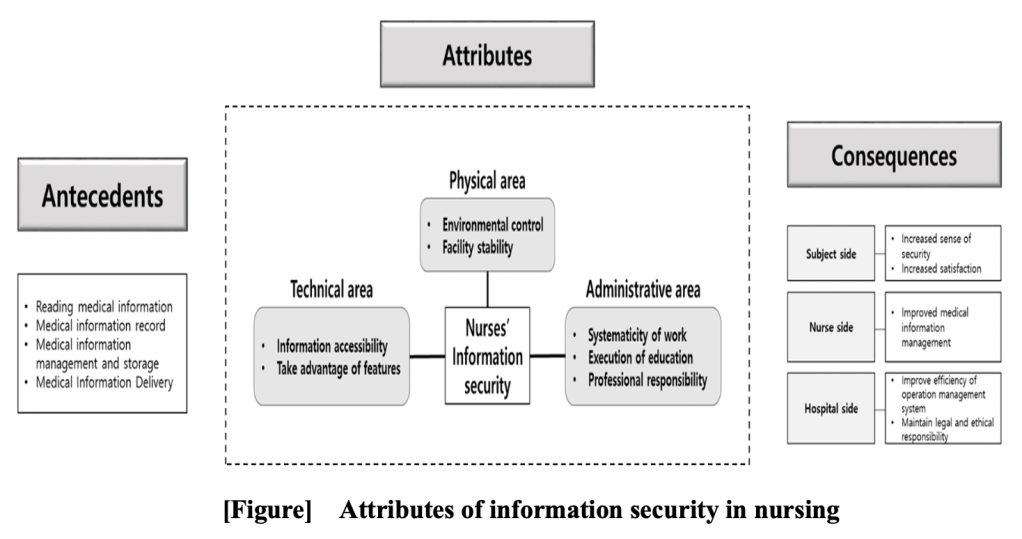
The current featured ANS article is titled “Information Security in Nursing: A Concept Analysis” authored by Jiwon Kang, PhD, RN and GyeongAe Seomun, PhD, RN — free to download while it is featured. This work resulted in a model that the authors project can guide the identification of physical, technical, and administrative attributes and definitions of information security in nursing. Dr. Seomun provided this description of their work:

Information security in nursing requires technical, physical, and administrative security, which comprise an essential information security aspect. Physical security includes disaster prevention measures to protect information processing facilities, where information systems are located, from natural disasters and insider threats, as well as methods for protecting information systems from invasion and destruction. Technical security includes information data protection. The most basic countermeasures are to control access to the information system or to use software with enhanced security is a macro-based security measure that establishes the law, the safety and reliability of information systems.

We performed the task of compiling and analyzing the essential attributes of the information security in nursing derived from the review of the literature in the theoretical phase and the attributes of the concepts identified in the fieldwork phase. In the theoretical phase, 7 attributes (facility stability, external access and intrusion control, technical access control, use of functions, establishing a system, management of human resources, and responsibility for information security) were derived. Seven attributes (facility stability, environmental control, access to information, practical use of security systems, stability, persistence, and professional responsibility) were analyzed in the fieldwork phase. In summary, the attributes of information security in nursing were derived from 7 attributes (facility stability, environmental control, information accessibility, take advantage of features, systematicity of of education, and professional responsibility) in 3 domains [See Figure].

Nurses can review the environmental controls of the workplace and the stability of the facility. They can understand and use the accessibility of health information and the functions of the security program. They can follow the system of the work, recognize the patient information security-related matters through education, and evaluate and maintain medical information security with professional responsibility.

The security of patient information in the nursing field is a sensitive situation, and understanding the information security of the nurse is necessary. Nurses’ information security is an important concept, it is necessary to develop scale suitable for the current situation. Nurses’ Information Security Scale assesses aspects of physical, technical, and administrative security based on conceptual analysis. Nurses can develop a systematic method of performance to enhance the security of medical information with this scale. This study is useful for educators interested in strengthening nurses’ information security

Updated ANS Author’s Guide: Anti-racist Guidelines


The recent spotlight on police brutality and killing of Black Americans prompted widespread reflection and change toward social justice and racial inequities in almost all sectors of society – including the realm of scholarly publishing. The “Scholarly Kitchen,” blog of the Society for Scholarly Publishing, posted a notice of an “Antiracist Framework for Scholarly Publishing” on August 6, 2020 that serves as a guide to re-shape policies and practices in the production of scholarly literature.

I am delighted to share the outcome our initiative to examine and revise guidelines and practices for Advances in Nursing Science. As Editor, I established a workgroup of scholars of color who serve on the ANS Panel of Reviewers to take a deep dive into the journal’s “Information for Authors”. Together we created major anti-racist changes that have now gone into effect.

The changes that we made begin with a fundamental acknowledgement of the power of the published word to shape thought and power structures, and the responsibility of authors in situating their work within existing power structures:

Published scholarly works play a major role in shaping thought and power structures. We encourage authors to include a standpoint statement that describes your position relative to power relations of race, gender, and class. This is particularly important if your work involves disadvantaged populations or issues of social determinants of health and health equity. Examples include: 

  • “The authors Identify as white middle-class nurses. We have drawn on literature authored by scholars of color to inform the design, interpretations and conclusions reported in this article.”
  • “Our work arises from our experiences as able-bodied nurses, as well as our identities as mixed-race descendants of immigrants from Central and South American countries.”

The following is a new section that specifically addresses guidelines related to racism:

The ANS leadership – Editor, advisory board members, peer reviewers and Publisher recognize that published scholarly works are vehicles that can challenge systemic racism and intersecting forms of power inequities.  ANS expects an explicit antiracist stance as a means to provide scholarly resources to support antiracism in research, practice, education, administration, and policymaking. To this end, we offer the following guidelines:

  • Remain mindful of the many ways in which white privilege is embedded in scholarly writing, and engage in careful rereading of your work to shift away from these explicit and implied messages.  As an example, general “norms” are typically taken to reflect white experience only; this is revealed when the experience of people of color are taken to be “other” or “unusual” or worse yet “unhealthy” 
  • When race is included as a research variable or a theoretical concept, racism  must be named and integrated with other intersecting forms of oppression such as gender, sexuality, income, and religion.
  • If your work does include race,
    • Provide a rationale that clearly supports an antiracist stance.
    • Be careful not to explicitly or implicitly suggest a genetic interpretation.
    • Explicitly state the benefit that your work contributes on behalf of people of color.
  • Refrain from any content that explicitly or implicitly blames the victim or that stereotypes groups of people; situate health inequities clearly in the context of systemic processes that disadvantage people of color. 
  • Focus on unveiling dynamics that sustain harmful and discriminatory systems and beliefs, and on actions that can interrupt these structural dynamics.

Please visit the complete ANS Information for Authors to review these changes. We welcome your feedback, comments and questions! Please respond below!

Deep appreciation to the following team of ANS peer reviewers who developed these guidelines:

Helene Berman, RN, Ph.D, University of Western Ontario

Mary K. Canales, Ph.D., RN, University of Wisconsin, Eau Claire

Lucy Mkandawire-Valhmu, PhD, RN (also member of Nursology.net management team)

Margaret Dexheimer Pharris, RN, PhD, FAAN, St. Catherine University (Emerita)

Bukola Oladunni Salami, RN, MN, PhD, University of Alberta

Holly Wei, PhD, RN, CPN, NEA-BC, East Caroline University

Jennifer Woo, Ph.D., CNM, WHNP, FACNM, Texas Woman’s University (also member of Nursology.net management team)