A Middle-Range Theory of Teaching and Learning
Our current featured article is titled “Guided Participation for Clinical Practice: A Middle-Range Theory of Teaching and Learning” authored by Karen Pridham, PhD, RN, FAAN and Rana Limbo, PhD, RN, CPLC, FAAN. While it is featured you can download the article at no cost! We welcome your comments and discussion of this article in the comments below. Dr. Pridhame shared this background about their work for ANS readers –

The article, “Guided Participation for Clinical Practice,” written with Rana Limbo, is the culmination to date of years of experiences working with families. These experiences include observing, reflecting, and wondering with parents of children and with our research team about how parents and later, the nurses we were working with, were thinking through and coming up with new solutions to the health-related issues they were dealing with. Our observations led us to reflect and wonder how my students, and later my colleagues, made their own assessments about parents and their children working on health-related tasks and responsibilities. In the process, were parents themselves learning to more confidently and competently manage these issues–specifically problems or goals–and achieve the outcomes they wanted to accomplish?
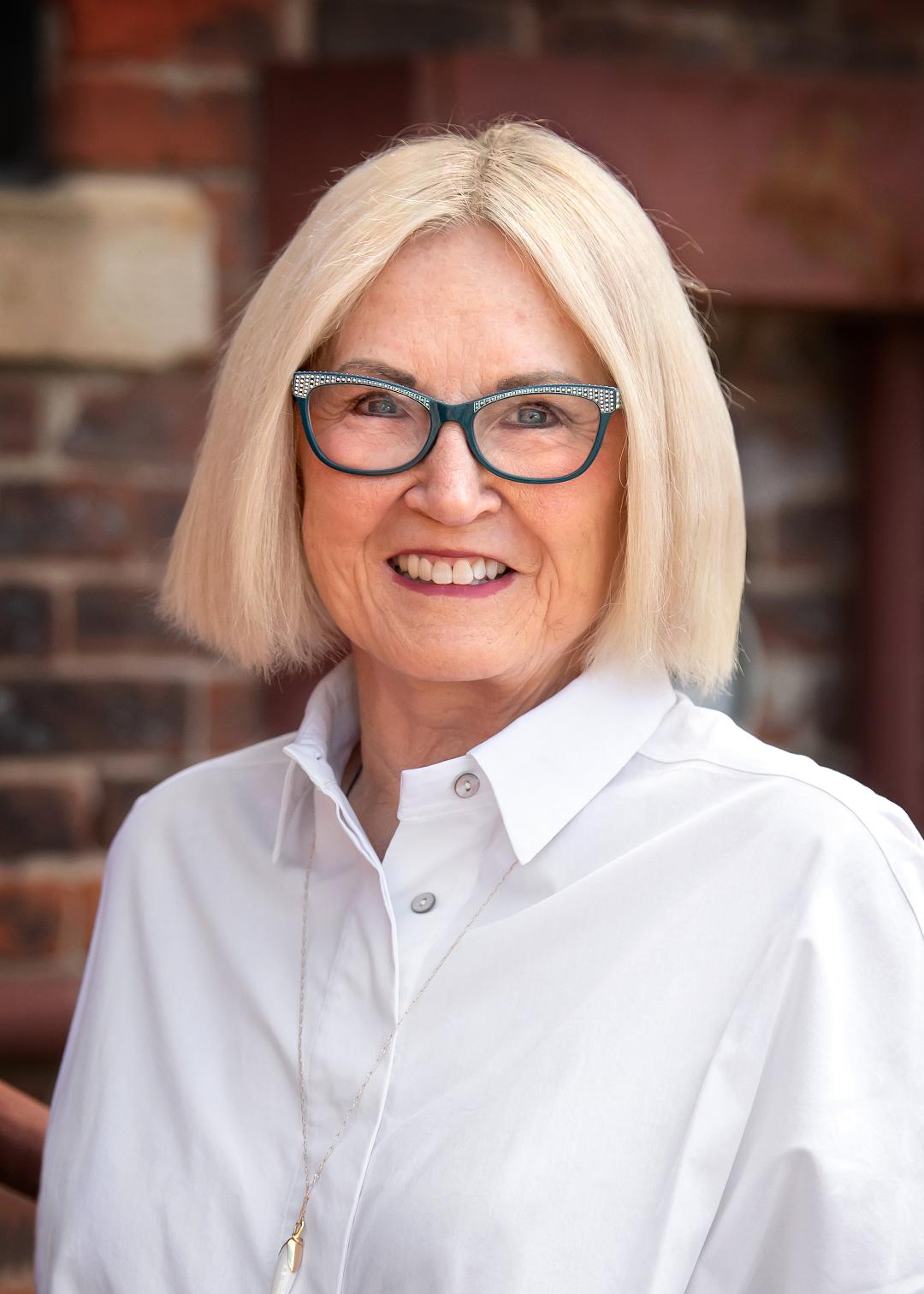
Together, research assistants, graduate students, colleagues (e.g., co-investigators and research teams), and I, kept on thinking, learning about, and developing Guided Participation over the decades, a process that remains ongoing due to the assumption that Guided Participation is dynamic. Our many miles of automobile travel together, most often in pairs, to observe and discuss feedings with many families and the in-depth reflection and analysis that followed on the ride home were invigorating and productive of new insights and concepts for describing parents’ goals and competencies and Guided Participation processes. These concepts had origins in Rogoff’s work, were studied together in seminar courses, and in our own meaning making and concept naming from discussion of research experiences. Ours was a process of theory development through deep and challenging experiences with families—parents and their infants—in need of description and explanation–cast against study of the literature. The rich description in the literature included Dewey’s Education as Experience; Vygotsky’s concepts of socially-based learning, among them the zone of proximal development; and Rogoff’s ideas of learning as a collaborative process, contextually and culturally attuned to the other.
We went beyond noticing that something was missing or incomplete in traditional teaching/learning patterns based in information sharing, important in its own right but not sufficient for theory development of participatory learning in clinical practice. We had experienced, over decades of our lives and in many settings, learning within a relationship, another Guided Participation assumption, when we were engaged in activity vital to projects that mattered deeply to us. Among the guides who shaped my orientation towards learning through experience was my mother. When I was 12 years old and teaching summer Vacation Bible School in the small community in which my family lived, I was challenged by the behavior of an 8-year-old boy who disengaged from participation with the group, seemingly self-absorbed and fidgety—clearly not having a good time, consequently making a nuisance of himself. When I asked my mother, who was an experienced Sunday School teacher, how to handle the situation that was joyless for both the child and me, she suggested I find out from him what he wanted to work on at Vacation Bible School. He surprised me with a clear and doable activity, and with my asking the question (later to be learned as joining attention), we formed a relationship, and had a time that I remember as good for the rest of the week. It was a pivotal, amazing teaching/learning experience for me. Later, as a graduate student in nursing, I had the good fortune to be one of the four students in the first class the renowned scholar and practitioner of pediatric nursing, Florence Blake, had at the University of Wisconsin-Madison. She taught me the meaning of “being with” when she and I were with a toddler having a tantrum, so angry that it was enough to drive anyone in the vicinity away. But Florence Blake stayed put, sitting close to the child and telling him that she knew he was angry and upset. She would not leave him, she assured him, talking gently through his shrieks and thrashing about, a powerful lesson to me regarding how trust with a young child was maintained and strengthened—and what it took to be with someone and why.
With students and research assistants, we did not dwell on what was lacking in traditional teaching in clinical practice. Our new, evolving frames of mind oriented us to finding a language for recording our work with families and communicating what we were observing in learning through participation. We were also creating a “dictionary” of sorts of issues families were working on or needed to work on, the processes we were using to work on the issues with them, and the competencies they were developing in Guided Participation sessions, often focused on the infant’s feeding, sleeping, growth, and development.
Dr. Rana Limbo, co-author of this article and first author of a companion article¸ collaborated with me in many home visits, reflected with me in depth about what we had experienced with a family, and co-taught classes of public health and neonatal intensive care nurses and led many reflective practice sessions with these nurses and nurses providing Guided Participation to parents of fragile infants. These experiences with Dr. Limbo greatly enlarged my thinking about Guided Participation concepts, including joining attention, sharing understanding, making connections, and transferring responsibilities, as well Guided Participation as a clinical practice. The collaboration with Dr. Limbo in many contexts and venues, including automobile trips generally 90 minutes one way, has kept Guided Participation a dynamic and developing—exciting and intriguing–practice.




 ANS: Advances in Nursing Science Blog
Hi Peggy, Just wanted to let you know once again that the featured article is available only for purchase. This is a recurring issue, seems like a disconnect between publisher and the blog.
I appreciate the blogs, including today’s post. Thanks for continuing this.
Warm regards, Jo Anne
Jo Anne Bennett, PhD, RN
*Consultante / Conseillère technique *
*Recherche en politique de la santé *
Renforcement des systèmes de santé
Institut National de Santé Publique Ministère de la santé – République de Guinée +224 626 95 17 28 <+224%20626%2095%2017%2028>