Skip to content

Posts from the ‘Featured Articles’ Category

Decision Making at the End of Life


Our latest featured article is “Decision Making Among Older Adults at the End of Life: A Theoretical Perspective” by Rafael D. Romo, PhD, RN, PHN; Carol S. Dawson-Rose, PhD, RN, FAAN; Ann M. Mayo, DNSc, RN, FAAN; and Margaret I. Wallhagen, PhD, GNP-BC, FGSA, AGSF, FAAN. The article is available for no-cost download while it is featured, so I encourage you to visit the website, read the article, and return here to add your comments about this work!  Dr. Romo shared this background information about his work for ANS readers:

We are honored to have our manuscript has been selected as an Editor’s Pick. This work has special meaning for me (the first author) as it is the culmination of a long journey, one that began with my mother’s death in 2000, led to my career as a nurse, and on to a PhD. Through her death (and my father’s death that occurred while I was working on my
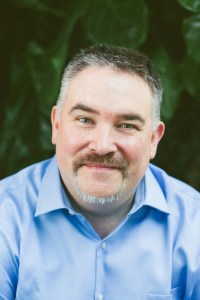
Rafael Romo

Rafael Romo

dissertation), I saw first-hand how the process in which decisions are made is at least, if not more, important as the choices themselves. As clinicians, however, we often find ourselves perplexed by patients’ decision making.

Anticipating and predicting patient decision making would help clinicians who are responsible for supporting and guiding patients through the process, which at times may feel like gazing into a proverbial crystal ball. In my PhD program I began to look at different frameworks that exist to explain, if not predict, decision outcomes among older adults, particularly at the end of life. Prospect theory1 is one important theory that attempts to explain decision making, though in the area of economics. Not only is the original paper one of the most frequently cited papers ever published,2 but the theory has been rigorously tested through numerous studies in a wide variety of fields.

I became interested in prospect theory because it has emerged as a potential framework in healthcare decisions and shows great promise. However, I was struck by one aspect to the existing healthcare research: how the commodity is determined. This commodity is a continuum on which a choice can be measured as a gain or a loss. In economics, the commodity has generally been a purely monetary measure. This is easily measured and constructed as everyone has a sense of what $100 is, even if it is more or less important based on one’s financial situation. In healthcare, the commodity has been measured not so much from patients’ perspectives but from an objective clinical criterion of health. In this study we found that participants’ subjective perceptions of health were markedly different than those determine by traditional clinical measures. While clinicians may use disability or comorbidity as a commodity on which to value choices that is indeed objective, participants were determining their health differently. Not only that, they were trying to value choices on two competing criteria: their desire to live as long as possible and their hope to maintain a high quality of life.

By using prospect theory as an a priori framework in this analysis, we bring important innovations to our understanding of the theory as it is used in healthcare. First, we chose to look at commodities of health status and prognosis as the participants defined them. Thus, rather than using their clinical status and prognosis – which was poor for all the participants – we relied on their personal perceptions as this is the point of reference from which they make decisions. Second, we examined how these two commodities were being utilized together, as it became apparent our participants were valuing choices on both. Even those who felt they were in the best of health didn’t make choices solely on that criterion; rather, they still considered how long they felt they had to live. Likewise, those who felt they had a very short prognosis still “wanted a chance,” as one participant put it. What we discovered is that participants were trying to achieve a delicate balance between the two and that using multiple criteria appears to become more and more important as ones health declined. As they approach the end of life, they are not willing to sacrifice quality of life completely to live as long as possible. Instead, they want a happy medium. This desire to use two commodities seems unique to end-of-life decisions and was not fully addressed by prospect theory.

Is theory needed to understand decision making at this specific time of life? We argue yes. Theory is important both to clinical practice and research. Because clinicians are called upon to resolve the discordant views patients may have of both their health and prognosis, they greatly benefit from understanding this important balancing act. Clinics need to help patients navigate through the complex choices around end-of-life care. While “correcting” patients’ subjective self-assessments may seem like taking away hope, patients cannot make the value-based decisions they say are important without fully understanding the true nature of their situations. Our participants understood this and looked to providers to guide them – and in many cases, to simply make decisions for them.

Besides its value for clinicians and patients, theory plays an important role from the research perspective, as it helps us identify what needs to be studied, and by extension, what interventions may be helpful. Theory also helps us determine where interventions can be applied. Despite all the research that has been done in end-of-life decision making, older adults frequently continue to receive care that is \inconsistent with long-held views, so we continue to have a weak understanding of how older adults are making these choices. In this paper we propose an extended view of prospect theory that can be used to better frame decision making at this unique and challenging time of life. We do not propose this extension as the definitive statement on theory related to end-of-life decision making. We cannot yet offer ways to test and validate our perspective. Rather, we seek to start a dialog that will lead to new and innovative thinking in end-of-life decision making, particularly when the decisions transition from choices about what one would want in an abstract future to what one does want in a concrete reality of today. There are, and will be, detractors of our perspective of prospect theory. We welcome this and hope our manuscript initiates a long, vibrant conversation that will indeed push the envelope and prompt further research that enables us to ensure older adults at the end of life receive high-quality care that is consistent with their own values and goals at the end of life.

  1. Kahneman D, Tversky A. Prospect theory: an analysis of decision under risk. 1979;47(2):263-292.
  2. Wu G, Zhang J, Gonzalez R. Decision under risk. In: Koehler DJ, Harvey N, eds. Blackwell Handbook of Judgment and Decision Making. Malden, MA: Blackwell Publishing; 2004: 399-423.
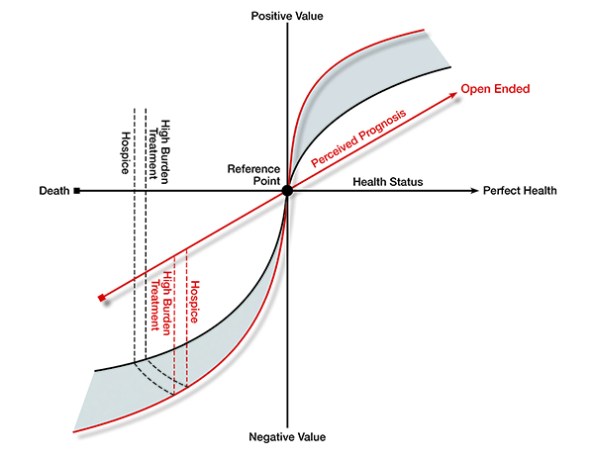
figure-2


Death Is a Social Justice Issue


Our first featured article from the latest ANS issue is titled “Death Is a Social Justice Issue: Perspectives on Equity-Informed Palliative Care” by Sheryl Reimer-Kirkham, PhD, RN; Kelli Stajduhar, PhD, RN; Bernie Pauly, PhD, RN; Melissa Giesbrecht, PhD; Ashley Mollison, MA; Ryan McNeil, PhD; and Bruce Wallace, PhD.  While this article is featured it is available for download at no cost! Please read it, then return here to join a discussion around these important ideas!  Here is a message from Dr. Reimer-Kirham about their work:

In this paper, we lay the theoretical groundwork and make the case for equity-informed palliative care.  We draw on the Equitable Access to Care (EAC) study to explore the end-of-life experiences of people who are ‘doubly

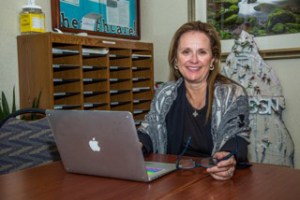
Sheryl Reimer-Kirkham

vulnerable’ – those who are dying and experiencing hardships due to social determinants of health such as poverty, homelessness, racialization and criminalization. Our research emerged out of the distress of health and social service workers who witnessed their clients dying prematurely because they were diagnosed with life-limiting conditions too late, when treatment options were either not available or less effective.

The EAC study seeks to understand barriers to quality end-of-life care and to create recommendations for policies and practices to improve equitable access and enhanced quality of care.  To conduct our research, we observe and interview people experiencing structural vulnerability at the end-of-life, their ‘chosen’ family and service providers, and key decision makers from various service backgrounds. Our study also looks at promising models and practices of end-of-life (EOL) care for homeless people that can be applied in the local context.

Our team is a community-academic partnership which includes the University of Victoria (Institute on Aging &

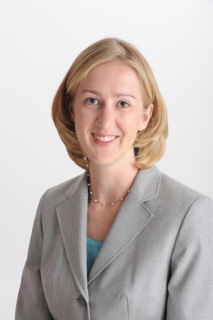
Kelli Stajduhar
Kelli Stajduhar

Lifelong Health, School of Nursing, and Centre for Addictions Research of BC), Trinity Western University (School of Nursing), BC Centre for Excellence in HIV/AIDS, Palliative Education and Care for the Homeless (PEACH), and the Palliative Outreach Resource Team (PORT). PEACH is a palliative consult/support service for homeless people in Toronto, ON. PORT is a group of service providers who work to improve quality and access to palliative and bereavement services for dying homeless people in Victoria, BC. Our study began in 2014 and we plan to release results by fall 2017.

As a community-academic partnership, it is important to us that we collaborate with our networks to foster

Bernie Pauly
Bernie Pauly

dialogue, raise awareness, and create practical recommendations to bring about social change.  Highlighted in this paper, last year we brought together specialized palliative care services with community health and social service workers to host A PORT in the Storm: A day of education and discussion about equitable access in palliative care. Outcomes from this event included networking, awareness, and greater understanding of services available, and the organizational barriers to providing quality care at EOL.

In this paper, we explore how a social justice lens in palliative care can illuminate how social and structural inequities profoundly shape health, illness, and dying experiences for people who are made particularly vulnerable by a constellation of socio-political, economic, cultural and historical forces.  By offering three exemplars – Leslie, George, and Cliff – we illustrate why an equity-informed approach to palliative care is desperately needed for a nuanced understanding regarding who current palliative care programs are failing.

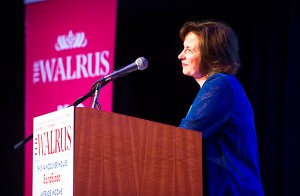
Recently, our study team wrote an op-ed called Homeless Deserve End-of-Life Care but aren’t getting it to direct attention to the story of a homeless, Indigenous man in our community who was discharged from hospital after surgery with no place to go. Our study and the experience of homeless people at EOL garnered international attention when the Canadian Broadcasting Corporation (CBC)  picked up this story. Dr. Kelli Stajduhar recently spoke to The Walrus Talks Quality of Life audience about the value of palliative care and its lack of availability in Canada.  (see also Acknowledgements noted on manuscript).

Our hope is that our article and this blog increases awareness about the need for equity-informed approaches to palliative care, including prompting discussion around the following questions: What are the experiences of health and social service workers in providing EOL care (both ‘informal’ and specialized) to people experiencing structural vulnerability? What policies and practices have supported quality end-of-life care for this population?


Nursing Influence


The latest featured article in the current issue of ANS is titled “Understanding Influence within the Context of Nursing: Development of the Adams Influence Model Using Practice, Research, and Theory” authored by Jeffrey M. Adams, PhD, RN, NEA-BC, FAAN and Sudha Natarajan, PhD, MSN, RN.  While it is featured it is available for download at no cost, so I invite you to read the article and return here to share in discussion of these important ideas!  Here is a message from Dr. Adams about this work:

The Adams Influence Model (AIM) can be used as a framework for anyone seeking to understand more about the factors, attributes, and process of influence.  However, the concept of influence is an especially important one for

Jeffrey Adams

Jeffrey Adams

nurses.  The basis of exploration of influence highlighted in this article started well over ten years ago and drew from years of experiences as a consultant working in the clinical information systems (CIS) space.  At that time, I found that CISs were largely selected by CFOs, CIOs, CMOs and I felt that while nurses were “involved” in the selection process, often times product chosen did not benefit nursing care or capture nursing data.  This was despite nurses overwhelmingly being the largest users of the CIS.  I wanted to simply understand why or how this happened?

Around that same time RWJF and Gallup released a report identifying that respondents did not perceive nursing as influential in reshaping health policy (what is now the ACA) when compared to nearly every other group.  And several other smaller studies also identified that executive nurses self reported as having less influence than their non-nurse executive counterparts on a host of issues.  So we thought, how could this be?  At 1% of the entire US population nurses are by far the largest percentage of the healthcare workforce, nurses are overwhelmingly the most trusted profession, and nurses are well documented addressing each component of the quadruple aim.  Of course nurses SHOULD be influential… and because we aren’t, how do we get there?  We decided to start at the beginning and asked the question “what does influence look like?” The AIM, as represented in this article, is the result of our efforts to answer that question.

While the origins and development of the AIM are chronicled in this manuscript, the AIM has been widely used since 2009 to frame health policy and strategy, to describe leadership practices, and serve as a guiding framework for research and instrument development.

Current projects using the AIM include development of:

  • understanding nursing leadership’s influence over professional practice environments and the relationship to workforce and patient outcomes (with Maja Djukic, Ashley-Kay Basile and Matt Gregas)
  • a guiding framework for baccalaureate health policy curriculum (with Ashley Waddell and Jaqueline Fawcett).
  • the influence of nurse leaders on the professional practice environment and nurse engagement (with Maria Ducharme, Jeannie Bernstein, and Cynthia Padula)
  • Leadership Influence Self Assessment (LISA©) instrument (with RWJF Executive Nurse Fellows colleagues Debbie Chatman Bryant, Joy Deupree, Suzanne Miyamoto, Casey Shillam and Matt Gregas).

It would be wonderful to see everyone take inventory and articulate how we anticipate each of our projects, papers, presentations, courses and other efforts will INFLUENCE practice, research, education, theory and/or policy.  This “influence” framing provides us opportunity to be purposeful and forward thinking toward an end that doesn’t leave assimilation of our contributions and value to chance.


Learner-Centered Clinical Growth


In the current ANS featured article, author Jessica Barkimer, MSN, RN, CNE illustrates the value of evolutionary concept analysis to understand a dynamic, changing phenomena – clinical growth.  The article, titled “Clinical Growth: An Evolutionary Concept Analysis” is available at no charge while it is featured on the ANS website!  Here is Ms. Barkimer’s description of her work that led to this article:

As an educator who teaches nursing students in various clinical learning environments, I embrace the student-centered approach.  Each student brings forth unique previous experiences that contribute to his or her own construction of knowledge.  Years ago, while working on my degree, Masters of Science in Nursing Education, I encountered students who were functioning at various levels in the same cohort of students.  Learning objectives

Jessica Barkimer

Jessica Barkimer

often guide educators, however, in an attempt to facilitate the learning of each student, I often wondered, “how can an educator determine if a student demonstrates an appropriate amount of growth to progress to the next level?”  This multifaceted topic requires examination to benefit nurse educators, students, and patients.  Currently, I am working towards my PhD in nursing and have had the opportunity to work with faculty at Marquette University who have helped guide me in this process of knowledge discovery.

This article presents the findings of the conceptual analysis of clinical growth, using Rodger’s evolutionary method.  These findings represent a holistic approach, focusing on cognitive, affective, and psychomotor domains of each learner, requiring growth in all three areas.  This concept analysis and model lay the foundational groundwork for examining relationships among the antecedents, attributes, and consequences, which are essential for a nurse educator to understand and implement in practice, moving nursing education forward.  This examination of the literature also allowed me to consider various instruments designed to capture the aspects of clinical growth.  I look forward to continuing my research in this area.

Internet Recruitment of Racial/Ethnic Minority Research Participants


The currently featured article in ANS presents an examination of six practical issues the authors encountered in recruiting Asian-American breast cancer survivors as participants in an intervention study conducted on the internet.  The article is titled “Internet Recruitment of Asian American Breast Cancer Survivors,” authored by Eun-Ok Im, PhD, MPH, RN, CNS, FAAN; Yaelim Lee, PhD, RN; Xiaopeng Ji, MSN, RN; Jingwen Zhang, PhD; Sangmi Kim, MSN, RN; Eunice Chee, BSE; Wonshik Chee, PhD; Hsiu-Min Tsai, PhD, FAAN; Masakazu Nishigaki, PhD, RN, PHN, CGC; Seon Ae Yeo, PhD, FAAN; Marilyn M. Shapira, MD, MPH; Jun James Mao, MD, MSCE.  This informative article is availabe at no charge while it is featured; we invite you to read the article and contribute your responses to the article here!

Nurse Fatigue in the Hospital


The latest featured article from the current issue of ANS  is titled “Interpretation of Hospital Nurse Fatigue Using Latent Profile Analysis” by Diane Ash Drake, PhD, RN and Linsey M. Barker Steege, PhD. You can access this article here at no charge now while it is featured. Dr. Drake and Dr. Steege have each provided a message about their background and the work that has led to this article!  Leave your comments here to join a conversation about their work.

From Diane Drake –

diane-drake

Diane Ash Drake

I have had the privilege to consult as the Nurse Research Scientist at Mission Hospital, Mission Viejo, CA since 2003. Nurse fatigue quickly became a focused research interest supported by a small team of hospital nurse leaders who understood the potential adverse effects of long work shifts, and wanted to better understand hospital nurse fatigue and investigate fatigue risk management strategies. During the initial literature search we reviewed several nurse fatigue dissertations and contacted one investigator, a human factors engineer, who fortunately joined our study team. I want to thank Dr. Linsey Steege who shares the authorship of this paper with me for her perseverant collaboration and brilliant research intellect. Ultimately, my investigation of hospital nurse fatigue is about supporting the important work of hospital nurses with the purpose of making fatigue risk management a reality.

From Linsey Steege –

barker_linsey

Linsey M. Barker Steege

As an industrial and systems engineer, my overall research goal is to design work systems to improve health, safety and performance of health professionals, and by doing so, to benefit society by improving healthcare quality and patient outcomes. Human factors engineering is a focus area within industrial and systems engineering, which examines the interactions between humans, tools and technologies, the physical environment, and the organization of work in an effort to optimize human performance and well-being. In recent years, multiple agencies including the Institute of Medicine, the President’s Council of Advisors on Science and Technology, the National Academy of Engineering, and the Agency for Healthcare Research and Quality have pointed to the importance of partnership and collaboration between systems engineering, including human factors engineering, and healthcare. I feel privileged to be able to collaborate with Dr. Drake and the Mission Hospital nurse fatigue study team to better understand nurse fatigue in the context of the hospital nurse work system and work toward improved fatigue monitoring and risk management systems.  The findings from this paper offer a new approach for measuring nurse fatigue and may be useful in developing more efficient fatigue monitoring systems and for evaluating the effect of fatigue risk management strategies.


Trauma Informed Nursing Practice with Teen Mothers


The current ANS featured article is authored by Sarah Bekaert, MSc and Lee SmithBattle, PhD, and is titled “Teen Mothers’ Experience of Intimate Partner Violence: A Metasynthesis.”  We invite you to download this article from the ANS website and return here to add you comments to a discussion of this very important issue.  Sarah Bekaert shared this background about this article:

This paper arose from the two authors’ mutual interest in the lived experience of teen mothers.  Sarah Bekaert is currently lecturing at City University, London, UK, and practicing clinically in Sexual Health and Contraception with Oxford University Hospitals Trust.  A Children’s nurse by background, she has a special interest in teen health,

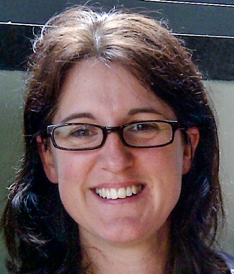
Sarah Bekaert

Sarah Bekaert

pregnancy and parenthood.  Her current PhD study explores the tension between public expectations for avoiding teen mothering and the private desire of some teens who have had a previous abortion to become a mother whilst still a teen.

Professor Lee SmithBattle of St Louis University, U.S., is a nurse who is currently on the seventh round of interviews with former teen mothers and their families.  Spanning 30 years, this qualitative longitudinal study challenges the pejorative assumptions of teen mothers by contextualizing their experiences and long-term outcomes.

With the explosion of qualitative research on teen mothering, Professor SmithBattle drew together a team to organize, summarize and review this research.  This first metasynthesis project focuses on intimate partner violence (IPV) in teen mother’s relationships.

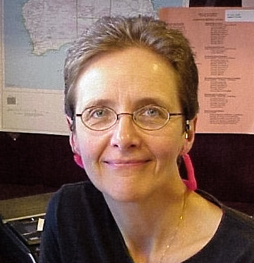
Lee SmithBattle

Lee SmithBattle

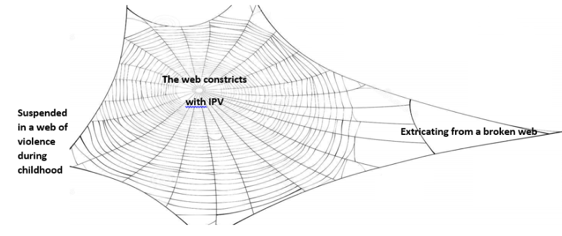
We have organized our findings by the metaphor of a spider’s web to illustrate the trajectory of IPV in the young mother’s lives and attempts to extricate themselves from violent relationships.  The metaphor was inspired by a verse from the poem ‘Integrity’ by Adrienne Rich1, American poet, essayist and radical feminist of the 20th and early 21st century.*

Bekaert Fig1

Findings highlight pervasive violence in teen mothers’ childhoods and impoverished circumstances that make it difficult to leave an abusive relationship. We observe a constriction of the web as domestic violence emerges or worsens with pregnancy. As a consequence, young mothers become isolated, and live with the physical and psychological consequences of IPV. Research suggests that trauma informed nursing practice is needed to support teen mothers in violent intimate relationships to spin a new web.a

  • Rich, A. A Wild Patience Has Taken Me This Far, poems 1978-1981. WW. Norton and Company; 1981.


Transgender Patient Care


Our current featured article is by Rebecca M. Carabez, PhD, RN ;Michele J. Eliason, PhD and Marty Martinson, DrPH title “Nurses’ Knowledge About Transgender Patient Care: A Qualitative Study.” This article is available for download at no cost while it is featured on the ANS website!  Dr. Eliason sent this message about her personal experiences embarking on a career focused on LGBTQ health:

In 1988, I started my first study of LGBTQ issues in nursing, and I was NERVOUS! I had escaped a homophobic healthcare clinic setting for the supposedly academic freedom environment of the university the year before, but they had hired me as a developmental psych person. Nothing on my vita indicated an interest in LGBTQ issues at that

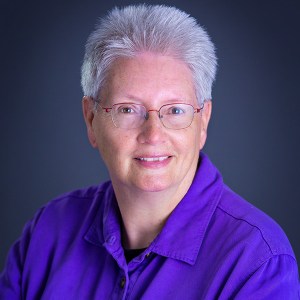
Mickey Eliason

Mickey Eliason

point, nor had these issues every been discussed in my formal education, except for an off-handed comment about homosexuality being a mental disorder in one psychiatric nursing course I took.

I talked to my research mentor at the time, who told me, “It’s all well and good that you do this type of research, but just make sure that you get 2 or 3 publications in legitimate areas for every one you do on this topic.” I did that, but even then, had some challenges when I came up for tenure.  I am glad to report that things have shifted in nursing since then, and articles on LGBTQ issues are becoming much more widespread. Now people are able to say LGBTQ and now what it means.  Even Donald Trump, halting and awkward as it was, uttered the initials at the Republican National Convention and called for equal rights (it might be the only sensible thing he has ever said on the campaign trail). We have made progress on LGB issues, but the growing edge of our movement in the past few years has been related to transgender issues.

In regards to this particular study, on nurses’ knowledge of transgender health care needs, our findings demonstrated that nurses’ willingness to work with diverse patients is laudable, but their lack of knowledge and fund of misinformation is quite alarming. This study was conducted in the San Francisco Bay Area, where presumably, nurses have much more exposure to LGBTQ issues than in many other places, but even here, we encountered negative attitudes and nurses saying that they never learned anything about this population in their educational programs or in continuing education.

This study was part of a much larger project on LGBTQ issues more broadly initiated by Rebecca Carabez, and a team

Rebecca Carabez

Rebecca Carabez

of nursing students worked on the project.  One identified as transgender, and we watched as they struggled with finding employment when the student’s appearance did not match their gender on legal documents, and who became more depressed as time wore on without meaningful employment. Transphobia has material consequences on individual’s daily lives—without adequate employment, transgender people are likely to live in poverty and suffer all the negative consequences of that poverty, from lack of any regular source of healthcare (leading to getting needed hormones and other treatments on the street), to “illegitimate” employment in the drug or sex trades, homelessness, and other serious issues.  We found in our study that many nurses laughed when talking about transgender issues—that nervous kind of laugh that means, “I’m really uncomfortable with this question.” They often gave long, rambling, circuitous answers to the questions that indicated that they really had no idea how to answer. Few were overtly negative about transgender patients, but imagine what it would be like for a transgender patient to try to communicate with a nurse who was that uncomfortable.

Marty Martinson

Marty Martinson

My co-authors and I had long discussions about gender.  We all identify as sexual minority women, but none of us as transgender or genderqueer. We tried to imagine ways to break down the gender binary that has been in operation in our own lives but like most others, we are somewhat entrenched in that system and it is hard to imagine life without the breaking down of people into two genders. It requires a radical transformation in thinking and in language itself. We firmly believe that this transformation is necessary, not just to improve services for transgender patients, but for all patient care, because the gender binary and gender stereotypes have hurt us all.

We hoped that our article might start some conversations among nurses about how to treat their transgender clients/patients more respectfully, but even more, about how to have hard conversations about the nature of gender and sexuality and ultimately, how we treat each other.  I am gratified that today, unlike the late 1980s when I started writing about LGBTQ issues in nursing, that there is now a willingness to publish articles on these topics and to discuss how to integrate them into  nursing education. Talking and writing about LGBTQ issues is a first step, but I challenge you to read the article and ask yourself, “What can I do personally to effect change for transgender patients in my nursing setting?”


Theory Integration to Explore Complexity


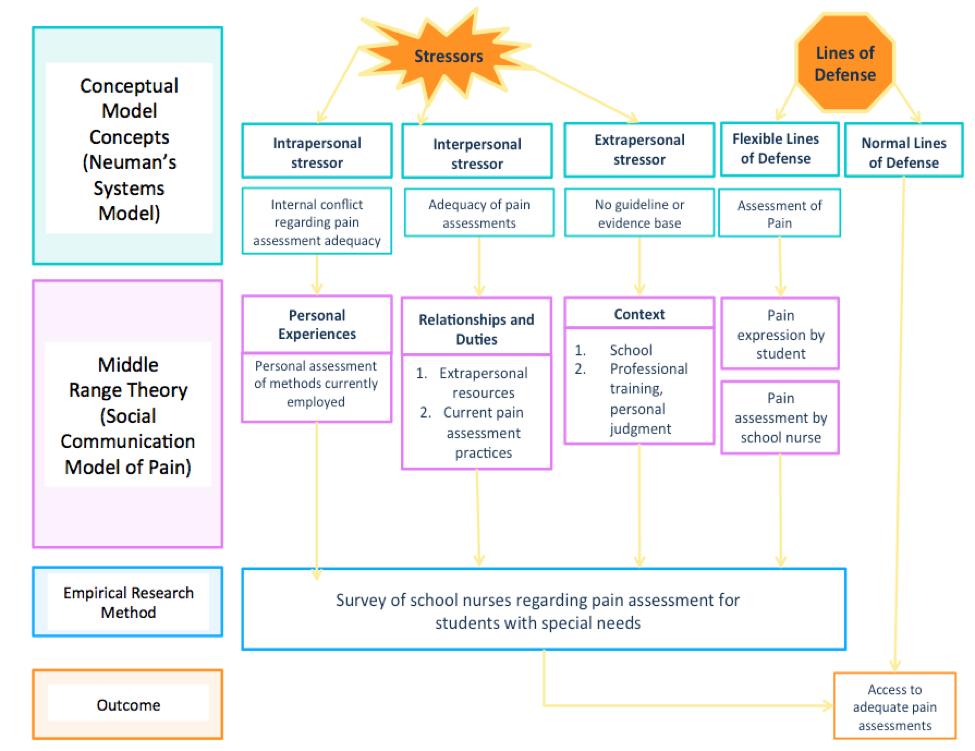
Our new featured article is titled “Using Theory Integration to Explore Complex Health Problems” by Brenna L. Quinn, PhD, RN, NCSN. We invite you to download the article while it is featured and return here to join discussion of these ideas.  In this message about her article, she describes the evolution of this article as a result of a rejection of another manuscript!

Brenna Quinn

Brenna Quinn

The idea for this article was actually born out of another article’s rejection. I met with my colleague Dr. Barbara Mawn to seek commiseration over the outright rejection and ask for help in writing an article about the importance of theory use and interdisciplinary integration, given that reviewer suggestions included removing the entire section on the study’s conceptual framework. Barbara’s mentorship was invaluable to the development of this article.  Said  conceptual framework is described in the ANS article as an example of interdisciplinary theory integration.

Use of theory to guide nursing research and clinical practice is underreported at best, but more likely is extremely underutilized. This is due to several factors, such as nurses receiving little education on theory use or confusion about how to interpret and apply theories to clinical practice.  Additionally, clinical nurses and nurse researchers may view nursing theories as too narrow to address the multi-faceted needs of patients or study populations.

Nurses know that they need to view patients and populations holistically, and cannot silo specific health problems.

Barbara Mawn

Barbara Mawn

For example: school nurses experience difficulty when assessing pain in children with intellectual and developmental disabilities. What kind of pain assessment tools has the nurse learned about? Has the school offered any continuing education opportunities regarding pain assessment for special populations? Do classroom teachers know which behaviors may be indicative of student pain? What is the ability of the student to report painful experiences?  Or, perhaps a nurse is working with a patient who has not been taking a medication prescribed for diabetes. The nurse must consider more than a presenting high blood glucose reading. Did the patient understand the nurse practitioner’s instructions for taking the medication? Can she access the pharmacy? Read the bottle? Administer the medication correctly? What is her level of cognition?

Many variables factor in to complex health problems faced by people today. However, this may not always appear clear to nurses and researchers when looking at nursing models. Using a non-nursing model, such as a model from psychology as described in the ANS article, can help frame the use of nursing theory components to the health problem at hand.

After reading this article, I hope nurses take the opportunity to explore both nursing and non-nursing theories that can guide and enlighten new approaches to clinical and research activities. Thank you for featuring this article on the ANS blog!

Quinn Picture1

Improving Mixed-methods Research in Nursing


The current featured article is titled “Mixed-Methods Research in the Discipline of Nursing” by Cheryl Tatano Beck, DNSc, CNM, FAAN and Lisa Harrison, MSN, PMHNP. We invite you to download this article while it is featured and return here to share your comments, questions and ideas for discussion.  Dr. Beck shared this background about her experiences with mixed methods:

This article was the culmination of a years’ worth of work that Lisa Harrison and I did. Lisa is a PhD student in

Cheryl Beck

Cheryl Beck

nursing at the University of Connecticut. She was assigned to me as a graduate assistant and for her assistance ship that year. Lisa worked with me on this review of mixed methods research in the discipline of nursing. Two years ago I presented one of my mixed methods studies in Boston at the Mixed Methods International Research Association’s inaugural research conference. At that conference there

were reports of the state of the science of mixed methods research in some disciplines but none focused on nursing. It was at that conference that I got the idea to conduct this focused review of mixed methods research in the discipline of nursing.

I began my interest in mixed methods research in earnest when about 6 years ago faculty at the University of Connecticut’s School of Nursing voted to add a mixed methods research design course to our core PhD curriculum. I was asked to teach this inaugural course and the rest is history. I have been teaching it every year since then. I have included in this blog a photo of my most recent mixed methods research class (spring 2016) when we

Lisa Harrison

Lisa Harrison

all went out for breakfast to celebrate the last day of class. Our PhD students are getting excited about the possibilities of mixed methods research. This past year we had 2 PhD students graduate who had conducted mixed methods dissertations.

I have conducted 4 mixed methods studies to date. Two have focused on secondary traumatic stress. One of these studies was with labor and delivery nurses and the other study was with certified nurse-midwives. Currently I have 2 other mixed methods studies in press. Both studies examined vicarious posttraumatic growth in obstetrical clinicians due to the struggles with caring for women during traumatic births.

We hope that our article published here in ANS will spark interest in students and faculty to conduct mixed methods research studies. This type of research can be the best of both worlds.

Front L toR: Lisa Sundean, Semin Park (PhD student in Business), and Wanli Xu. Back L to R: Cheryl Beck, Lucinda Canty, Lisa Nemchek, Nayomi Dawes.

Front L toR: Lisa Sundean, Semin Park (PhD student in Business), and Wanli Xu. Back L to R: Cheryl Beck, Lucinda Canty, Lisa Nemchek, Nayomi Dawes.