Skip to content

Posts from the ‘Featured Articles’ Category

Moving beyond Rhetoric to Action: Understanding Inequalities to Health Care Services


Rhetoric admonishing nurses and other health care professionals to address inequalities in health care is a common message; it is less often that we learn about concrete action to do just that!  In our current featured article, titled “Understanding Inequalities in Access to Health Care Services for Aboriginal People: A Call for Nursing Action” the authors describe a research initiative they undertook in partnership with Aboriginal people to create meaningful action addressing barriers that result in inequalities.  The authors, Brenda L. Cameron, PhD, RN; Maria del Pilar Carmargo Plazas, PhD, RN; Anna Santos Salas, PhD, RN; R. Lisa Bourque Bearskin, MN, RN; Krista Hungler, MSc have shared this very interesting description of their work:

Hello to Everyone on behalf of the Access Research Team and many thanks to Dr. Peggy Chinn and the Advances in Nursing Science Journal for the opportunity to accompany the article with a blog. Attached is an  Overview of the access initiative diagram and below is a photo of the authors of this article.

To begin: It was quite startling to come to the end of a two day community consultation workshop (2002) where ten areas identified as urgently needing health research were set aside. Instead a community request was issued to study access to
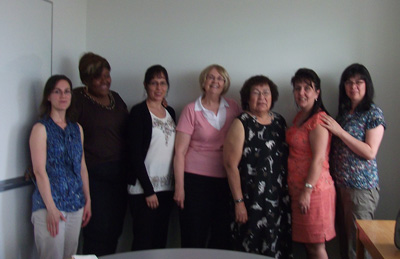
Krista Hungler, Sandra Kwagbenu, Maria del Pilar Camargo, Brenda Cameron, Elder Rose Martial, Raymonde Lisa Bourque Bearskin, and Anna Santos Salas. The photo is by Veronica Guerra Guerro

L to R: Krista Hungler, Sandra Kwagbenu, Maria del Pilar Camargo, Brenda Cameron, Elder Rose Martial, Raymonde Lisa Bourque Bearskin, and Anna Santos Salas. The photo is by Veronica Guerra Guerro

health care services for Indigenous and marginalized populations. Researchers from several health professions, healthcare professionals, community members with province-wide representation, and students of every level sat back and listened. This access research was not to be the current approach to access with numbers and statistics, i.e., how often Indigenous people saw specialist physicians, how many emergency visits. It was to be in collaboration with the Indigenous people and not couched only in terms of western research philosophies and methodologies.

From this request we sat down together and talked together for three years; at times coming to a consensus and moving forward, but other times, no movement at all. Sitting together at the table for this time was in a way, the research itself. It was an arduous, long process of building trust and relationships with each other with continuous clarifying of what was meant by each suggestion, what each step comprised that was decided upon, what possible fallout might occur. There were many issues on the table, some overt and some yet to appear but each one had to be thoroughly addressed before we could move on. Memoranda of Understandings had to be negotiated and signed, safety issues were addressed through the design of advisory groups and involvement of the people in each data gathering step was planned. We did not move forward without full agreement at the table. Others over this time period joined the table and again we renegotiated every step. During this time we agreed upon, designed and undertook three exploratory grants (Aboriginal populations in urban, inner city, and rural areas) in an open conversational manner with extensive advisory groups attached to each one as well as Elder scholars. The findings of these became the basis of our movement forward.

A focus on developing sensitive and comprehensive indicators for access to health care services for Indigenous people came into view early in the discussions. But we were also told by people participating in the exploratory grants that they had had enough of evaluation projects and reports. In the inner city exploratory grant, inner city residents took us to the Director’s office in one of the inner city agencies and pointed out the numerous reports that existed on the need for healthcare access appropriate to inner city and downtown core residents. They asked us: how will this study be different, there has been no action attached to these reports stemming over the last ten years. When will studies lead to action on the issues identified? Was there nursing action that had occurred in response to these reports? Will this work just enhance researcher’s careers or just prove that the healthcare system is doing something instead of nothing? These questions were the standard, the bottom line, which we were given not only from inner city residents but from all participants and healthcare professionals in our projects. We have learned that we must declare how particular research studies will benefit researchers as well as the knowledge development the studies would produce. We also had to plan how to move the findings to actions.

Moving forward: We placed Indigenous Healthcare workers called, Community Health Representatives (CHRs) in Canada, in healthcare sites with a high percentage of utilization by Indigenous people. This intervention turned out to be one of the cornerstones of our research initiative. This manuscript portrays some of this work. Our findings opened the door to understanding how even the most simple institutional mandated protocol when accompanied by overt rudeness or a stigmatizing comment, caused fright. And often there were unseen consequences down the road, i.e., never seeking care again until the condition was far advanced. Even if the institution triggered horrific memories of government residential schools (in Canada), the presence and health knowledge of an Indigenous CHR mitigated that fear. As well the CHR assisted them to communicate safely their healthcare history with few repercussions, judgments and racist practices from the institutions’ healthcare staff. Outcomes were more positive when the CHR was there. For further information see our Access Community report (2014) link below.

The call for action: The people in our studies talked about respect, feeling safe, undoing decades of harm from government and healthcare agencies, rejecting positioning statements from some past research and institutional practices, fighting for rights to have sensitive cultural and healthcare and Indigenous understandings at all points of access. Indeed our work to date shows a pressing need for joint interdisciplinary and intercultural efforts to reduce current health disparities through collaborative participatory work with Indigenous peoples.

Our findings suggest that nurses in particular the need to engage with Indigenous people and their culture to create safe access for them as often nurses are their first point of contact. All nurses know about the need to be aware of the social determinants of health and the health disparities that exist for certain populations. Nurses also know about the importance of honouring cultural traditions of health. But our research team is also aware that activating this knowledge in day to day practice needs additional careful attention and thought. As well increasingly so, the actions of nurses are prescribed by healthcare protocols and policies to ensure a specific outcome that is tied to an economic parameter. Caring for someone who is very ill takes a toll on the prescribed and allowable economic outcome for certain. Based on our studies to date in our specific healthcare institutions, our practicing nurses need support to take action to mitigate the growing and alarming reports of disingenuous care documented in our findings.

Perhaps it is again, sitting around a table with a social justice framework and consciousness raising activities to work toward incorporating research findings into actions. As health disparities climb even as we write this blog, the time to start this is now. There is much work to do to support nurses and other healthcare professionals who work under institutional dictates to then plan their care with the understanding that individuals and families with low SDOH need our special attention. We would also like to draw attention to the Indigenous social determinants of health identified by Loppie-Reading and Wein (2009) as a way to increase further understanding of implementing the SDOH in actual practices of nurses and allied healthcare professionals.

In undertaking specific action on identified issues, we honour the Indigenous peoples of Canada, our original inhabitants. In addition, we know that it will take a concentrated effort to achieve equity in access for Indigenous peoples and we challenge others to facilitate Indigenous communities to undertake their own studies.

We sincerely thank the Indigenous people and the communities that guided this investigation into access to healthcare services and know that this is just a very small step in addressing the health disparities of Indigenous peoples in these particular communities and wider systemic difficulties. We also learned that research on Indigenous topics must be led by Indigenous research scholars and the communities themselves. We very much look forward to your feedback and many thanks for the opportunity to do this blog.

References

Cameron, B. L., Martial, R., King, M., Santos Salas, A., Bourque Bearskin, R.L, Camargo Plazas, M.D.P., Hungler, K. (2014). Access Research Community Report: Reducing health disparities and promoting equitable access to health care services for Indigenous peoples: Community Report. Edmonton, AB: University of Alberta, Faculty of Nursing.

http://www.nursing.ualberta.ca/Staff/Emeritae/BCameron.aspx

Reading, CL, Wien, F. Health inequalities and social determinants of Aboriginal Peoples’ health. Prince George, BC: National Collaborating Centre for Aboriginal Health. 2009.

The article is available while it is featured for free download on the ANS web site!  We – the authors and I – would be delighted to know your comments, and welcome your discussion related to these very important issues!  Please use the space below to let us hear from you!

Reflections on experience researching LGBT health


Our current featured article titled “Enhancing our Understanding of Emancipatory Nursing: A Reflection on the Use of Critical Feminist Methodologies” by Judith Ann MacDonnell, PhD, RN, provides a rare glimpse in to the life of a researcher.  Dr. MacDonnell’s reflections are particularly significant given the focus on her scholarship – LGBT health.  Dr. MacDonnell shared this message for ANS readers, addressing how her article emerged, and the importance of this work for nursing education:

In my experience, there are just a few detailed research reflections in the published nursing literature. The idea for writing a reflection on my LGBT- and equity-focused research program came to me as I was going through the tenure process, a time when (it would be fair to

Judith MacDonnell

Judith MacDonnell

say) there’s lots of reflection and writing about what you have done, why you have done it and where you are going.    Using emancipatory nursing as a lens was the opportunity to move beyond this individual focus in an iterative way, situating these experiences in the larger contexts of higher education, the profession and the social landscape, opening space to consider what it might take to build LGBT-focused nursing research.

I expect many of us would agree that a nursing curriculum focus on cultural competence that is inclusive of LGBT issues is crucial.  Another approach to embed LGBT content in the curriculum is to expand nursing students’ exposure to and engagement with diverse critical feminist methodologies and LGBT-focused research in both nursing research and clinical courses at both the undergrad and graduate levels.. Framing in-class or clinical discussions with an emancipatory nursing lens may help broaden students’ understandings of the potential within diverse nursing  roles to identify injustices and take action. Highlighting how dimensions of emancipatory nursing are embedded in such research (e.g., praxis, situated privilege) may spark discussions of nurses’ everyday political practice and opportunities for nurses to open space to challenge heterosexism, biphobia, transphobia (and how they intersect with racialization, ableism, etc.)  in education, administration, direct clinical practice, research or policy arenas.

While this article is featured on the ANS web site, you can download it at not cost!  Take this opportunity to obtain you copy, and return here to share your comments and enter into a discussion about the issues addressed in this article!

When the Unimaginable is Real


Dilmi S. Aluwihare-Samaranayake, MSN, MBA, author of our current featured article titled “Representations, Forbidden Representations, and the Unrepresentable Creating Visibility for Mapping Emancipatory and Transformative Nursing Praxis,” brings to light the plight of people who suffer unimaginable suffering and harm.  She proposes that our inability, even unwillingness, to represent these horrific experiences in written and spoken language impedes both the science and the practice of emancipatory nursing – an approach to nursing that seeks justice and remedies for human pain and suffering.  She shared this reflection on her work for ANS readers:

I am honored that my paper has been featured in this current issue of ANS. Grappling with the concepts representation, forbidden representation and the un-representable, together with tragic, devastating and unthinkably horrific life experiences of people plus feeling a strong sense for the importance of finding ways to help people, led me to write this paper.

There are those who drive decisions intentionally or unintentionally and those who harm Dilmi300themselves without thinking of the short or long-term consequences they face or the consequences for those around them. There is also no easy or set prescription to fit the amalgam of human experiences because of the diversity of circumstances and histories that shape people’s lives.

These views lead me to reflect on the following questions:

“Is it within the realm of possibility for us to prevent or alleviate horrific life experience? Is it possible for us to avoid natural and human disasters? As humans do our actions demonstrate that we value and respect all human life? Or is it our lack of value, respect and our presumptions that lead us to contribute to harming others and ourselves explicitly or implicitly. Can we really help people?”

Not to belittle the questions or the potential answers, but I believe the answers to these questions begin with a yes, although at different levels with different margins. I also suggest, however, that some life experiences do not need to be so horrific, and there is enough intelligence in the world and lessons to be learned to prevent horrific experiences, or at the very least, help people who have lived through these experiences to move forward.

I realize that debates on the aforementioned questions may seem hugely philosophical for some readers with representation, forbidden representation and the un-representable being new concepts or concepts not taken up for discourse frequently because of its marshy nature. I also appreciate that many readers may prefer to avoid these topics and because of this, these topics have not received the attention they deserve. However, in the wake of continuous incomprehensible life experiences faced by many, I believe dialogue (through writing, voice, drama and/or poetry) needs to happen and our research agendas must bring attention to the mélange of issues to assist in providing emancipatory and transformative nursing praxis and social justice that is, empowering and reflective.

Your views are welcome. Thank you.

While this provocative article is featured on the ANS web site, you can download it at no cost!  I join Ms. Aluwihare-Samaranayake in welcoming your views and comments related to her work, so after you have an opportunity to consider her article, please return here and share your ideas!

Spirituality and Social Justice


In the current ANS featured article, author Sheryl Reimer-Kirkham, PhD, RN explores an area of scholarship that is rare in nursing literature – the interplay between social justice, religion, spirituality, health, and nursing. The article is titled “Nursing Research on Religion and Spirituality Through a Social Justice Lens.” Dr. Reimer-Kirkham uses the critical perspectives of postcolonial feminism and intersectionality to inform nursing’s perspectives on spirituality and social justice. She has shared this background about her work in this area:

Bringing together critical perspectives (such as postcolonial feminism and intersectionality) and research on religion and spirituality in nursing has opened up new and productive terrain.  And yet, conversations on religion/spirituality and social justice can be contentious:  for some religion is dismissed as too irrational, too political or violent, or too bound up in structures of power; for others religious/spiritual beliefs are held as too “sacred” for objective, scholarly analysis.  Such contentions leave many to appeal to secularism as the way to manage religion and spirituality in the public sphere.

Dr. Reimer-Kirkham

Dr. Reimer-Kirkham

However, attempting neat separations between religion and the secular can, according to philosopher Charles Taylor, do more to obscure what is going on in our world than clarify the moral issues we face.  Shying away from critical analyses of the intersections of faith with nursing, religion/spirituality with social justice and equity, leaves us open to incomplete analyses, and fails to account for influences on the values, beliefs and practices of many of our patients.  Several recently published books by nurse scholars move beyond generic approaches to spirituality to engage more specifically with the influence of various religious traditions.  See for example Stajduhar and Coward’s (2012) Religious understandings of a good death in hospice palliative care, SUNY Press; Taylor’s (2012) Religion: A clinical guide for nurses, Springer; and Fowler et al.’s (2011) Religion, Religious Ethics and Nursing,Springer.

My entrée into the integration of religion/spirituality with critical research came about during my doctoral research that examined intergroup relations in hospital settings.  As I conducted this ethnographic research, I realized that many of the hardspots described by nurses and patients in intergroup interactions were directly shaped by religious perspectives and often involved accommodating religious values and rituals, and yet these situations were nearly always conveyed to me as cultural matters.  While there is significant overlap between culture and religion/spirituality, there are also important distinctions. So I have worked toward more intentional analyses of religion and spirituality in the context of health and healthcare, and am convinced of the importance of intersectional approaches in such scholarship. Intersectional analyses inevitably require that we take seriously social relations of power mobilized through religion as it intersects with gender, race, class, ability, and other social categories; particularly as these social relations contribute to equity and inequity.  The relationship between social justice and religion is critical, but not always straight forward.  Human rights and religious accommodation can, in fact, represent competing interests (e.g., religious freedom vis-à-vis heteronormativity or patriarchy).

In this manuscript, I propose critical nursing scholarship on how religion and spirituality relate to social justice and social transformation in the context of health and healthcare. I look forward to your views on the matter!

I too hope you will read Dr. Reimer-Kirkham’s article and return here to join in a discussion of her ideas!  You can download the article at no cost while it is featured on the ANS web site!  

Literary Analysis of Global Female Identity, Health, and Equity


We are now featuring the article titled “A Literary Analysis of Global Female Identity, Health, and Equity” by Teresa L. Hagan, BSN, BA, RN and Susan M. Cohen, PhD, APRN.  This article summarizes the narratives of 4 female protagonists from popular novels to identify similarities between their personal and contextualized experiences. Based on their analysis, they offer suggestions for incorporating the shared female movement from domination and separation toward liberation and connection into modern health care practices that emphasize shared decision making, open communication, and social activism

Dr Hagan has shared this message for ANS readers about her work with Dr. Cohen:

The study began as Dr. Cohen and me doing something we love – reading good books! As we selected our choices, we wanted to pick books representing women from different cultures, time periods, and plots. A classic novel like Margaret Atwood’s A Handmaid’s Tale was an easy pick given its popularity and social commentary on gender concerns. Then Cohen_Hagan_V2Sandra Cisernos’s The House on Mango Street was a favorite of Dr. Cohen’s (and one I subsequently realized is a standard read for junior high students). Lisa See’s Snow Flower and the Secret Fan had become a popular film, and we wanted to read the novel on which it was based. Neither of us had heard of Woman at Point Zero by Nawal El Saadawi but had seen it referred to repeatedly as a compelling story of living as woman in Egypt.

As we began comparing the four novels, we saw an opportunity to explore these books thoroughly. If qualitative research is the rigorous analysis of texts, then why can’t the text also be literature? We brought in the ideas of health equity and social determinants of health to highlight the global truths revealed in the novels as well as their rich social context. Our hope is that readers (whether or not they have previously read these four novels) feel the experiences of the four female protagonists and see how their stories speak to universal truths of the state of women’s health.

Sometimes the arts and literature give us clearer views of ourselves than reality. While dramatized, the stories, relationships, and struggles described in these novels exaggerate the day to day experiences of women the world over. If this article succeeds in capturing how the women moved from voicelessness to connected strength, then hopefully these findings can in turn be translated from the dramatic to a reality.

This is an inspiring and creative article that lends significant insight from which nurses can form practices to reach toward health equity for women.  Download your no-cost copy of this article while it is featured, and return here to engage with the authors in a discussion of their work!

Towards Justice in Health


Our current featured article is by one of nursing’s prominent scholars advocating for social justice in nursing and health care – Adeline Falk-Rafael, PhD, RN, FAAN.  For this article, she and her colleague Patricia A Bradley, PhD, MEd,RN report a critical contextual analysis of 6 issues of a magazine published by “Nurses for Social Responsibility” between 1992 and 1995.  In the article, titled “Towards Justice in Health.”An Exemplar of Speaking Truth to Power, Drs. Falk-Rafael and Bradley bear witness to a voice that has been largely absent in the nursing literature, as well as providing evidence of a significant grassroots effort to seek social justice in nursing and health care.  Visit the ANS web site today to download your no-cost copy of this article, and return here to add your comments, questions and responses to their article!

Dr. Falk-Rafael and Dr. Bradley have shared their perspectives on this work, and have also invited two of the nurses responsible for the magazine to also speak here to ANS readers! 

From Adeline Falk-Rafael:

I had become aware of a group of nurses calling themselves the Nurses for Social Responsibility (NSR) in Toronto, Ontario in the mid-1990s while working on my doctoral dissertation. I had known some of the nurses both professionally and by reputation as their

Adeline Falk=Rafael

Adeline Falk=Rafael

advocacy activities for homeless persons often were reported in the media. Both Cathy Crowe

and Kathy Hardill have been guest speakers in my community health nursing course at York University and on one occasion several years ago, Cathy shared the 6 issues of the magazine this group had produced in the early 1990s, Toward Justice in Health (TJH). Her hope and mine was that they would serve as the focus for a textual or content analysis as a graduate student project. Although I was never able to interest a graduate student in this research, the opportunity finally presented itself for me to begin such an analysis. As I began the process, I realized that I needed a colleague with expertise first in selecting the most appropriate methodology for such a textual analysis and secondly in conducting the analysis. I am so grateful that Pat Bradley agreed to work on this project with me.

From the initial reading of the magazines, through the analysis and writing of the findings, I never cease to be amazed at the foresight and courage that a small group of nurses with a passion for social justice of which Florence Nightingale, Lillian Wald, Lavinia Dock, and other early nursing leaders would be proud. My hope is that this effort to make visible their efforts will inspire others similarly to advocate for transformative societal changes and reverse social injustices that result from public policies and social norms that privilege a few and disenfranchise so many.

From Patricia Bradley

I was not living in Ontario during the mid-1990s and was not aware of the Nurses for Social Responsibility (NSR). I was introduced to their history when Adeline Falk-Rafael graciously

Patricia Bradley

Patricia Bradley

invited me to be part of the analysis of the magazines. Through the process, and meaningful dialogue with Adeline, there was an opportunity to uncover the power and strength that resided in these nurses and to reveal the subsequent realm of possibilities when nurses gather together for a cause. The journey towards change is not always easy or easy to maintain. I wonder how many other silent nursing histories exist and what they can teach us about change and the momentum of change for social justice. These invisible nursing histories need to be brought into the light so we can all learn and be inspired.


We’ve invited 2 of the original founders of TJH –Cathy Crowe and Kathy Hardill – to reflect on their experiences more than 20 years ago and add their recollections of the challenges and successes of producing TJH:

From Cathy Crowe  

I’m so proud that a period of Canadian nursing feminism and activism is now recorded for

Cathy Crowe

Cathy Crowe

future generations to learn from. At the time, It seemed incongruous to have ‘peace, shelter, social justice, etc. as prerequisites for health’ drilled into us in nursing school (Ottawa Charter for Health Promotion, the Alma-Ata Declaration), while at the same time the same schools neglected to teach even a basic Economics 101 or Politics 101 to teach about the role globalization or militarization play in diverting resources away from healthy public policies such as daycare, affordable housing or decent welfare rates. I can only call it intentional neglect. So at NSR we taught ourselves, the whole while sharing our learnings with the public and other nurses in some of the most creative means I have ever seen.

"Justice In Health" (white cover)

“Justice In Health” (white cover)

This is a picture I took of our magazine on display with other prominent feminist publications in the window of the  ‘This Ain’t the Rosedale Library’ bookstore in Toronto.

From Kathy Hardill

Reading the analysis of “Towards Justice in Health” brought me back to a time that was “heady” with promise and potential for nurse activism. It was a tumultuous time on the planet

Kathy Hardill

Kathy Hardill

and, looking back, so much has changed. I find myself having to explain the nuclear arms race to younger people, not to mention the Cold War and the Berlin wall. I was recently reminded of a meeting I and others attended with representatives from the Registered Nurses Association of Ontario (RNAO) in about 1990 where we argued that organized nursing ought to speak out about homelessness. The nurses across the table from us blinked a few times and said “But what has homelessness got to do with nursing?”

For sure, times have changed! RNAO understands homelessness and many other upstream issues and has become outspoken on these issues within the parameters of its role. Although the language of TJH may at times have been “provocative, strident, and outrageous,” when I listen for the voices of progressive, radical nurses now, I strain to hear anything at all. The most progressive anti-poverty health care voices in Ontario at the moment are from medicine. Progressive nursing needs a radical rebirth in the 21st century!

The Imperative to Confront Inequitable Access to Health Care


In the current Editor’s Pick article, author Deanna Bickford, MN, RN challenges nurses to take a leadership role in confronting inequitable access to health care.  She believes that doing so is achievable to the extent that nurses draw on the diversity reflected in nursing’s fundamental patterns of knowing.  In her article, “Postcolonial Theory, Nursing Knowledge, and the Development of Emancipatory Knowing” she addresses ways to uncover social injustice and disrupt the status quo in order to move closer to social justice in health care.  She has provided this message about the origin of her work in this area, inviting us as readers to comments and reply to her ideas:

I began exploring issues of health inequities as a BScN student and was shocked to learn about the inequities that exist for the Aboriginal peoples in Canada. Most Canadians enjoy one of the highest life expectancy rates in the world. Yet, there are certain groups that exist within Canada, which due to a broad range of social, economic, personal, and environmental factors that go

Deanna Bickford with her grandson!

Deanna Bickford with her grandson!

beyond any individual choices they make, continue to experience health inequities. The Aboriginal peoples of Canada are one of these groups: they have a higher infant mortality rate, lower life expectancy at birth, higher rates of diseases of the circulatory system, digestive system, respiratory system, genital urinary system, nervous system, endocrine, nutritional and metabolic disease, infectious and parasitic diseases, dental and behavioral disorders, and neoplasms.

I have continued to follow this path of exploration throughout my studies and I am currently a PhD(c) at the University of Saskatchewan, College of Nursing. My research focuses on exploring health from the perspective of First Nations youth and seeks to understand First Nations ways of knowing and sharing knowledge for health. Guided by postcolonial theory this research aims to contribute to better understandings of the social, political, and colonial conditions that have lead to health inequities, to highlight the voices and strengths of those affected by these inequities, and ultimately contribute to the knowledge of the discipline. This article represents one part of my journey of discovery. Thank you for featuring this article and I look forward to the feedback.

Visit the ANS web site today to download your free copy of this article!  I join Ms. Bickford in welcoming your comments and feedback!

Caring across cultural groups


Our current featured article is an exemplar of research that provides evidence of cultural meanings of health and illness.  The article is titled  “Family Adjustment Across Cultural Groups in Autistic Spectrum Disorders” is by Sandra L. Lobar, PhD,

Dr. Sandra Lobar

Dr. Sandra Lobar

APRN, PPCNP-BC.  Dr. Lobar provides a summary of  literature related to ways in which signs and symptoms are interpreted differently in various cultures, and reports the findings of her research study – an ethnomethodological study examined perceptions of parents/caregivers of children diagnosed with autistic spectrum disorders concerning actions, norms, understandings, and assumptions related to adjustment to this chronic illness. The overall purpose of the study was to determine norms, understandings, and assumptions that reflect a person’s cultural milieu.  Her findings are informative and interesting, but as she indicates in her conclusion, more research is needed with multicultural subgroups in order to understand perceptions that are different for different groups, and from the assumptions of those who are providing care.  Understanding across cultural groups ultimately will contribute to better plans of care, particularly  for those who are disadvantaged and disenfranchised from the mainstream of health care.

While Dr. Lobar’s article is featured, you can download it at no cost from the ANS web site!  We welcome your discussion of this article and the issues it addresses here!

Informed Advocacy: An Emancipatory Nursing Perspective


The current ANS featured article is titled “Informed Advocacy: Rural, Remote, and Northern Nursing Praxis.”  In this article, the authors, Karen MacKinnon, PhD, RN; Pertice Moffitt, PhD, RN present present a synthesis of their combined research about nursing practices in Western and Northern Canada. They compared the stories of rural Canadian public health nurses with feminist and critical theoreticalnurse-advocate3_300 perspectives in order to discern evidence of informed advocacy as emancipatory nursing practice. In their conclusion they describe the elements of informed advocacy:

 . . . we learned that the informed advocacy work of rural, remote, and northern nurses includes the following dimensions: (1) ensuring that people’s concerns are heard  (by listening with intention and responding with action), (2) contextualizing practices  (by making visible or using information about the contexts of people’s lives to inform health care decision making), (3) safeguarding  (by ensuring that people remained safe), and (4) addressing systematic health inequities  (by mobilizing local resources and by providing leadership at the health system or health policy level).

We welcome your ideas and responses!  While this article is featured, it is available for free download, so visit the ANS web site now, read the article, and come back here to share your comments!

Nursing as Body Work


The current “Editor’s Pick ” article from the current ANS issue is titled “Critical Perspectives on Nursing as Bodywork,” authored by Karen Anne Wolf, PhD, APRN-BC, DFNAP. In this thought-provoking article, Dr. Wolf  calls for nurses to reject the objectification of the body and instead reclaim body work as integral to a holistic perspective.

Dr. Wolf shared this message about her work for ANS readers:

Nursing as work is the focus of my scholarship. In past work, I have explored the larger structural issues in the collective history of nursing. In this paper I explore the paradoxical nature of nursing as bodywork. Scratching beneath the surface of the issues of status and power opens a window on the variety of factors that shape the work of nurses in relation to their patients. The nurse-body relationship is so fundamental to nursing work that we are blind to its social impact. This results in contradictory images and experiences. For example, nurses are revered as “most trusted” and angelic in many countries yet Wolf300exposed to persistent degradation within the media and in public discourse.

Nursing work continues to be viewed as low status despite professionalization efforts. The social discomfort with the human body contributes to the paradoxes in nursing as bodywork. The relational boundaries between nurses and patients blur ordinarily taboo spaces. The intimacy of providing physical care carries the stigma of nursing as dirty work. Yet this same intimacy throughout the sacred rituals of birth, death, and vulnerability contributes to the entrusted relationship. De-stigmatizing nursing as bodywork begins with accepting our bodywork relationship. Without such an acceptance, there is a tendency to distance nursing from the body through the increasing use of ancillary nursing workers or technology. Recognizing the paradox of nursing as bodywork is a critical to the future of the profession. I would suggest that we consciously claim and embrace the relational care for the body rather than reject it. Nurses must be mindful and respect the power inherent in their privileged and intimate relationship with patients.

Download your copy of Dr. Wolf’s article at no cost while it is featured on the ANS web site! We welcome your thoughts and comments in response!