Skip to content

Posts from the ‘Journal Information’ Category

Structuring Nursing Knowledge


The current ANS featured article presents a new way of structuring nursing knowledge.  It is title “The Nursing Knowledge Pyramid: A Theory of the Structure of Nursing Knowledge” by Veronica B. Decker, DNP, PMHCNS-BC, MBA and Roger M. Hamilton, PhD.  This article is available to download at no cost while it is featured, and I join the authors in inviting you to post your comments here, and to join in a discussion of their work!  Dr. Decker shared this message about the evolution of this work:
Veronica Decker

The idea for the Nursing Knowledge Pyramid started in the fall of 2012 when I was in my first semester of a Doctor of Nursing Practice (DNP) program at Wayne State University. I was going to school full time and working full time. I was (and still am) living in Orlando Florida and I attended my courses synchronously on-line. The internal visual I maintain from this time includes seeing my cohort in their classroom seats in downtown Detroit, while I was in front of my lap top video cam in the den of my home, in sunny Florida. Most of the time, my fellow classmates would instant message me that they were a little jealous of the weather.

I was taking a course on foundations in nursing from doctors Nancy George and Rosalyn Peters when my work on knowledge development started. I was trying to get my head around integrating philosophical and theoretical perspectives of nursing to create a solid foundation for nursing practice and meet the requirements of an assignment for the course, which included a very detailed rubric. The paper I submitted to my professors was titled Toward a Theory of Cancer Coping. I titled it after Imogene King’s 1971 – Toward a Theory for Nursing: General Concepts of Human Behavior in mind. It made sense to me because I realized my ideas weren’t fully established yet, but I had made a solid start. This first document included a concept map that aligned King’s conceptual system with my own nursing system model, which included the Nursing Knowledge Pyramid. Over the next two years, nearly every assignment even remotely asking for use of theory, I would continue to enhance and better define this work.

As many of you know, DNPs are required to complete projects rather than the traditional PhD dissertation. To meet the requirements of my program, I completed two projects. A clinical performance improvement project (Decker, Howard, G.S., Holdread, H., Decker, B.D., Hamilton, R.M. 2016). and a theoretical application by developing a practice theory called Substructing a Cancer Coping Rule-base, which included the Nursing Knowledge Pyramid.

The Nursing Knowledge Pyramid (NKP) is a practical approach to support nursing practice. In my DNP program I was able to use the pyramid as a means of bridging the gap between theory and practice. As an experienced psychiatric mental health advanced practice nurse (APRN), I could operationalize the research project by methodically going from abstract knowledge (bottom of the NKP) to the concrete knowledge (top). The abstract level of the project was my knowledge as an APRN developed over my 30 years of experience. The middle tiers indicate the theoretical underpinnings and evidence-based practice. The most concrete knowledge at the top of the pyramid was the rule-base used to offer my patients coping strategies to handle their distress. Most recently we utilized the NKP to help develop the key conceptual relationships and theoretical foundation for a case study where the patient had an unrealistic fall risk appraisal. The patient was treated with a feedback strategy to reframe her perception of risk of falling. I’m interested in feedback from others who are considering using the NKP in their research.

References

Decker, V.B., Howard, G.S., Holdread, H., Decker, B.D., Hamilton, R.M. (2016). Effects of an Automated Distress Management Program in an Oncology Practice. Clinical Journal of Oncology Nursing, 20(1), e9-15.

King, I.M. (1971). Toward a Theory for Nursing: General Concepts of Human Behavior. New York, NY: Wiley.

Nursing Health Assessment Using Storytelling


The current ANS featured article reports a project that demonstrates how storytellng as a means of assessment has the potential to expose the complexities of health experiences that are not readily uncovered using standard assessment approaches.  The article is titled “Narrative Inquiry Into Shelter-Seeking by Women With a History of Repeated Incarceration: Research and Nursing Practice Implications,” authored by by Amanda Marie Emerson, PhD (English), PhD (Nursing), RN.  Dr. Emerson shared this information about her work:

I had the enormous good fortune during my PhD program in nursing (2017,

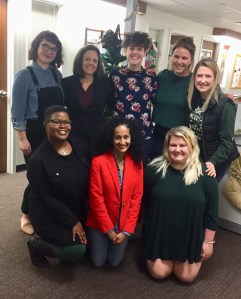
“The Sexual Health Empowerment (SHE) for Cervical Health Literacy and Cancer Prevention study team, December 2017: (Back row) Katherine Gwynn, Amanda Emerson, Molly Allison, Brynne Musser. (Front row) Joi Wickliffe, Megha Ramaswamy (PI), Shelby Webb. Used by permission.

University of Missouri-Kansas City) to become part of an interprofessional team (RNs, public health professionals, health educators, medical residents, social workers, a sociologist, and even a historian!) doing cervical cancer prevention research led by Dr. Megha Ramaswamy (PI) at the University of Kansas Medical Center, and my mentor Dr. Patricia Kelly (Co-I) (UMKC). The Sexual Health Empowerment (SHE) study, funded by the National Cancer Institute, sought to learn whether a interactive, trauma-informed, small-group intervention centered on cervical health literacy and feminist principles would increase up-to-date Pap screenings among women detained in county jails. We implemented the program with successive cohorts of women over 2 years beginning in 2014 and have been following up for 3 years. In addition to my role in the intervention itself, I took part in an ethnographic sub-team that conducted interviews and participant observation with a group of volunteers in the community after their release.

The Advances in Nursing Science article reports on a series of particular interviews I conducted with those women. We were initially impressed by the variety of strategies women used in highly challenging circumstances (i.e., poverty, physical and emotional abuse, child separation, even during incarceration) to get and give social support to one another. In my analysis of the interviews—a course of coding, reiterative reading for themes, memoing, discussion with team members—a particular set of stories coalesced. Almost to a woman, the participants in our follow-up research struggled to find secure housing when they returned to the community. This basic need drove many of the stories they told, organizing how they perceived and interacted with others and impacted how they understood choices related to their health and safety. It bears noting that I have a background in literature as well (PhD, 2004) where I learned to recognize the power of stories to give form to versions of self and other, to shape feeling and motivate behavior. The stories about shelter-seeking told by women with histories of repeated incarcerations in this study were not long, but they were rich in implications for the women’s health. The analysis I present in this narrative inquiry maps a couple key trajectories the stories about shelter seeking take and serves as a call to nurses who work with women in the community who may have backgrounds involving incarceration. I urge nurses to listen up, to make stories part of the assessment. As my analysis illustrates, those narratives can carry otherwise unavailable information about threats to health and safety and open up valuable opportunities for nurse-led education and advocacy.


Planned featured topic: Nursing Theory for 2020


The significance of nursing perspectives has gained renewed interest as social pressures to reform healthcare have created challenges for care that is more effective, more effective and more economically sound. In both theory and in practice, nursing offers possibilities that address each of these goals.  We are inviting articles that address the state of the art of nursing theory as we approach the third decade of the 21st century, revealing important contributions that nursing brings to create needed change.  We welcome articles addressing the full range of theoretic development: articles that report empiric research structured from existing nursing theories, philosophic analyses related to theory and knowledge of the discipline, critiques of existing theoretical approaches, and descriptions of new and evolving nursing theories. Manuscripts are due by: July 15, 2019, but are welcomed any time!

Caring for People with Dementia


Our current featured article is a report of a phenomenological, hermeneutic investigation titled “Former Work Life and People With Dementia” authored by Bente Nordtug, PhD, MA, RN; Karin Torvik, PhD, MA, RN; Hildfrid V. Brataas, PhD, MA, RN; Are Holen, PhD, MD (psychiatrist); and Birthe Loa Knizek, PhD, MA.   The research team was led by Dr. Bente Nordtug, a registered nurse, specializing

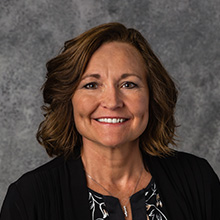
Bente Nordtug

in dementia care. She has a PhD in Health Science from Norwegian Science and Technology University (NTNU). Currently she works as an associate professor at the Department of Nursing and Health Sciences at Nord University (NU). Her research has mainly concerned issues such as the mental health of informal caregivers of patients, and how social support affects the caregivers’ caring burden.

This article is available to download at no cost while it is featured!  We invite all comments and ideas related to this work – leave you message below!

Healing Genocide Rape Trauma


Our current featured article is representative of a long ANS tradition – articles that address topics that are rarely brought to public attention.  The article is titled “Genocide Rape Trauma Management: An Integrated Framework for Supporting Survivors” authored by Donatilla Mukamana, PhD, RN; Petra Brysiewicz, PhD, RN; Anthony Collins, PhD; and William Rosa, MS, RN, LMT, AHN-BC, AGPCNP-BC, CCRN-CMC. The article is available for download here at no coast while it is featured. Dr. Mukamana shared this information about the background of this article:

The idea of writing about  genocide rape trauma came after a discussion I had with one of my patients in 2000. She had been gang

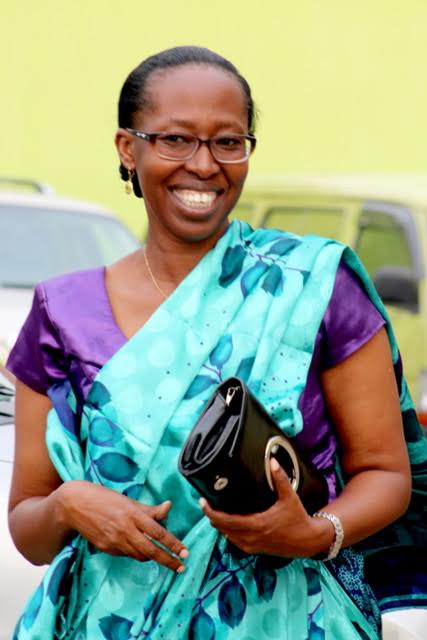
Donatilla Mukamana

raped and contaminated with HIV during the genocide against Tutsi in 1994,  At that time we met in 2000 she  was  dying.

She told me: “ Go and tell the world about the unspeakable cruelty of genocide rape which leaves the victim as living dead… then those who are in power should  prevent the occurrence of rape”

Rape used as a weapon of genocide affects all aspects of the survivor’s life. Therefore the healing process requires a holistic approach, one that I attempt to present in the current article.

I join the authors in welcoming your ideas, comments and questions about this work in the “comments” section below.

End-of-Life Communication


The current ANS featured article is titled “End-of-Life Communication: Nurses Cocreating the Closing Composition With Patients and Families” by Mary J. Isaacson, PhD, RN, CHPN and Mary E. Minton, PhD, RN, CNS, CHPN.  This article also is the first ANS continuing education offering, and the article is available to download at no cost while it is featured.  Here is Dr. Isaacson’s message about this work, which includes the authors’ own stories of end-of-life relationships:

Professionally both authors promote the importance of early and frequent communication with patients and families about their wishes or healthcare goals. Our personal lives have enriched and informed our passion. We’ll take this opportunity to give you a brief snapshot of two contrasting personal experiences. It is our hope that these experiences will inspire you to read our article on end-of-life communication. We will begin with Mary Isaacson’s personal account of an experience, where she tells of the challenges of honoring the patient’s wishes, while at the same time preparing the family. We conclude with Mary Minton’s personal story of being with her father and siblings during their father’s final weeks.

Mary Isaacson:

As a former rural hospice nurse, I was privileged to provide end-of-life care to patients and families in my home community. Through this experience, I learned that simply because of my rural location and staffing, I might be related to or know very

Mary Isaacson

well many of the patients and families entrusted into my care. Though no longer actively providing hospice care, this unique skill-set, (e.g., presence and communication) became pivotal as I worked with my husband’s Uncle Don in March 2017. Uncle Don, a retired Air Force Master Sergeant, Vietnam and Korean War Veteran, was diagnosed with recurrence of his lung cancer from 6 years ago. He was not tolerating the oral chemotherapy and had decided to enter into hospice care. My husband and I traveled from South Dakota to Idaho to say our “final good-byes.” Upon our arrival, Uncle Don promptly informed us that his oncologist felt that there was one more treatment that he should try. As Uncle Don stated, “She’s my oncologist. She knows what’s best and I really like her. So, I am going to do it.”

Our Aunt Donna, however, was less than enthusiastic about the prospect of more chemo. She shared how weak Don had become over the past 4 months. She feared that she would awaken to him “dead” beside her. Her words, “He’s dying. I don’t want to lose him, and I don’t want him to have the chemo either. But, I’m not going to tell him that.”

Over the 4 days that we spent with Uncle Don, Aunt Donna, and their cherished grandson’s family, I knew I had to help them begin to communicate their wishes to each other. One way I engaged Uncle Don in one-on-one conversation was while performing head and hand massage. We reminisced and talked about his future. In these conversations, he remained deeply

with Uncle Don

committed to trying another round of chemotherapy. On the other side, Aunt Donna remained fearful of their future. She could see, along with her grandson and his wife, the physical deterioration of Uncle Don and asked for guidance as to what to do. I prepped them in the questions (e.g., prognosis, likelihood of remission with the chemotherapy, quality of life, palliative care consult) to ask the oncologist at their next visit. When we returned home to South Dakota, I left with a heavy heart knowing that I wasn’t able to help them speak to one another. However, I was somewhat comforted knowing that I had prepared Aunt Donna and her grandson in what to do when Uncle Don’s condition deteriorated.

Two days later, Uncle Don was too weak to get out of bed. They transported him via ambulance to the hospital, where among the plethora of diagnostic tests and consults with specialists, his grandson successfully advocated for and they received a palliative care consult. His condition was stabilized enough for him to return home and with the help of hospice, he peacefully died 5 days later, in his home surrounded by his family.

This story, while difficult, portrays the importance of honoring the patient’s wishes, while also being realistic about the disease trajectory. Even though Uncle Don wasn’t ready to accept that cure was no longer possible, Aunt Donna was. Thus, my communication varied between the two. For Uncle Don, I provided a listening ear for him to share his legacy; for Aunt Donna and her grandson, we developed a plan to help them prepare for his death.

Mary Minton:

I was most fortunate. My parents were united in a pragmatic belief about advance care planning—although that term was never used. They routinely reviewed their advanced directives, asked me and my siblings to choose in advance sentimental items we might want, and they planned their memorial services.  Having survived the Depression Era, they saved wisely and

Mary Minton

lived sparsely. In their retirement years, Mom and Dad continually downsized. Following Mom’s death, my Dad kept this rhythm, sometimes to our chagrin when we still wanted something of Mom’s. However, his German preference for orderliness was such that my sister and I needed only a couple days for discarding or distributing my father’s belongings following his death.

My siblings and I supported our parent’s end of life wishes, as did their long time family practice doctor. My mother died of a chronic respiratory condition at the age of 87.  When I arrived for a weekend visit after not seeing her for nearly 6 months, I immediately sensed her struggle to stay alert. Her breathing was quite labored, yet she greeted me at their apartment door with her trademark smile and open arms.  As she and Dad watched TV that evening, I rubbed her feet and clipped her toenails (the home health nurse in me!).  She was coherent but her breathing was labored and she was flailing her arms occasionally. I queried Dad about this behavior—was this her norm lately, I asked?  He calmly replied yes.  He was her abiding caregiver and though we didn’t talk about her dying process, we both knew what was happening. A peaceful gratitude for simply being together prevailed.  The next morning Mom died in bed with Dad beside her. As her parting gift, she had waited for me to come home.

Following Mom’s death, Dad’s planning was once again in high gear as he enlisted my sister’s help in ensuring his estate and

with father and siblings

his will were updated and accurate.  I followed Dad’s health care needs during the next four years and my sister handled the financial details. Our brother offered moral support. At the age of 92. Dad’s health declined following a hip fracture. In the final six months of his life he transitioned from independent living to assisted living to skilled care. In that journey his cognitive ability declined and culminated in a hospitalization for delirium. His family doctor advised a palliative care consult and I remain forever grateful to the compassionate and skilled palliative care physician who guided the final steps of my Dad’s life which included a 2 week stay in hospice. I have poignantly beautiful memories of the nurses (who firmly but kindly encouraged me to be the daughter rather than the nurse), the social worker who acknowledged feelings I could not yet name, the music therapists who touched Dad’s soul with cherished hymns, the therapy dog, and pastoral care.

As both a recipient and observer of Dad’s skillfully orchestrated care, I had been given a ringside seat to experiencing the best of advance care planning, palliative and end-of-life care. Dad’s last days were marked by a peaceful acceptance of his dying process and cherished moments spent with my siblings. My parents’ legacy includes their example of how to live and how to die.


The Roy Adaptation Model to guide nursing practice


Karen Jennings, PhD, RN, PMHNP-BC is the author of our current featured article titled “The Roy Adaptation Model: A Theoretical Framework for Nurses Providing Care to Individuals With Anorexia Nervosa.” Her article is available for download at no cost while it is featured – we invite you to read the article and return here to share your ideas, questions and comments!  Here is Karen, sharing more about her work.

Palliative Care Nursing: A Concept Analysis


The current featured ANS article is titled “A Concept Analysis of Palliative Care Nursing: Advancing Nursing Theory” by Amanda J. Kirkpatrick, MSN, RN-BC; Mary Ann Cantrell, PhD, RN, FAAN; and Suzanne C. Smeltzer, EdD, RN, FAAN. The article is available for download at no cost while it is featured, and we welcome your comments about the article here!  Here is a message from Amanda Kirpatrick about her work:

When I first graduated with my BSN and began working as a nurse I quickly realized how unprepared I felt to deliver palliative care to seriously ill patients, and to handle patient issues surrounding the end of life. I am now an experienced nurse and nurse educator who teaches students about the importance of early referral to palliative care to ensure that patients receive the best symptom

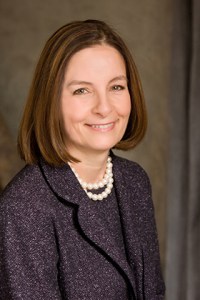
Amanda J. Kirkpatrick

management and achieve the highest quality of life possible while managing a serious life-limiting illness. In support of this aim, and as part of my doctoral studies, I began researching how nurses attain competence in palliative care nursing. I discovered that there was a gap in the literature related to palliative care nursing theory, and determined that a concept analysis of palliative care nursing (using Walker and Avant’s methodology) was needed. I believed a concept analysis was the best way to identify the antecedents of palliative care nursing competence, as well as to clearly describe the nursing behaviors that demonstrate that palliative care nursing competence is achieved.

This concept analysis is very timely considering the American Association of Colleges of Nursing’s (AACN) January 2016 release of 17 Competencies and Recommendations for Educating Undergraduate Nursing Students (CARES) for Preparing Nurses to Care for the Seriously Ill and their Families. This concept analysis fills an international knowledge gap in the theoretical understanding of palliative care nursing, which currently limits the potential for nursing education and research in this area. Establishing a clear understanding of how palliative care nursing competence is developed and translates into practice holds value for nurses who implement this important care, nursing educators who must prepare these nurses to meet the AACN competencies, and researchers investigating palliative care nursing practice.

ANS Featured Topics


ANS continues the fine tradition of featuring topics of particular current interest, but we also include articles generally relevant to the purposes of the journal. The purposes of ANS are to advance the development of nursing knowledge and to promote the integration of nursing philosophies, theories and research with practice. We expect high scholarly merit and encourage innovative, cutting edge ideas that challenge prior assumptions and that present new, intellectually challenging perspectives. We seek works that speak to global sustainability and that take an intersectional approach, recognizing class, color, sexual and gender identity, and other dimensions of human experience related to health.  We welcome submission of manuscripts consistent with these purposes at any time, but if your scholarship is related to any of the planned featured topics, note the due dates below, and the description of what we seek related to these topics!

Child and Adolescent Health
Vol 41:3 –   September 2018
Manuscript due date: January 15, 2018

The health of children and adolescents is crucial to the future well-being of all nations and the earth itself. Children are exposed to social, environmenal, technologic and political forces never before experienced, and nursing insights related to the health of children’s mind/body/soul are crucial. We are seeking manuscripts that provide innovative, cutting edge scholarship related nursing care of children and adolescents.  Articles are sought that provide research evidence related to nursing approaches to care, theoretical perspectives that inform nursing care, and articles that address philosophic, including ethical, perspectives that inform nursing care. ​​​​

Emancipatory Nursing
Vol 41:4 –  December 2018
Manuscript due date: April 15, 2018 

Emancipatory approaches to nursing research and practice have escalated in the context of major political and cultural upheavals worldwide. Emancipatory approaches include critical, feminist, poststructural and post colonial approaches, or any approach with an explicit purpose to create social and political change to improve health and well-being. For this issue we seek scholarship that informs emancipatory nursing practice and research. We welcome research reports that use emancipatory methodologies, emancipatory philosophic analyses, critical and feminist critiques of existing discourses and practices, description of and evidence supporting emancipatory nursing practices. ​

The Focus of the Discipline
Vol 42:1 –  March 2019
Manuscript due date: July 15, 2018 

Since the publication of the Newman, Sime and Corcoran-Perry article titled “The Focus on the Discipline of Nursing” in ANS in September, 1991, there has been growing discussion to clarify, amplify and explore not only the definition, but the implications of various interpretations of the focus of the discipline. Over these decades advances in other disciplines and the growing demand for interdisciplinary cooperation have influenced the discussion of nursing’s focus and where it fits int he interdisciplinary context. For this issue of ANS, we seek articles that advance these discussions. We welcome articles that reflect empirical or philosophic methodologies. Articles must address the development of nursing knowledge that informs nursing practice, education and research.

Culture, Race and Discrimination in Healthcare
Vol 42:2 –  June 2019
Manuscript due date: October 15, 2018 

In the past decade, issues of discrimination based on culture and race have risen to the surface in many countries worldwide, along with a growing nationalist movement that rejects “the other.”  In this issue of ANS we seek manuscripts that address these factors as they influence health and well-being of individuals, groups and communities, and the delivery of nursing and heatlhcare in culturally diverse communities.  Articles must address the development of nursing knowledge that informs nursing practice, education and research.

Critique and Innovation
Vol 42:3 –  September 2019
Manuscript due date: January 15, 2019 

Consistent with the journal’s tradition, we encourage nursing scholars to reflect on work previously published in ANS, and use critical insights to present innovations in nursing theory, research, practice and policy. We encourage cutting edge ideas that challenge prior assumptions and that present new, intellectually challenging perspectives. We seek works that speak to global sustainability and that take an intersectional approach, recognizing class, color, sexual and gender identity, and other dimensions of human experience related to health.​

Artificial Intelligence & Robotics
Vol 42:4 –  December 2019
Manuscript due date: April 15, 2019

Artificial intelligence and robotics have been evolving in nursing for some time. We are planning to feature articles in this issue that address the relationship of artificial intelligence and robotics to patient outcomes and quality of care from a nursing perspective. We welcome philosophic analysis, including ethical implications, empiric research reports, and the development of innovative methodologies related to artificial intelligence. Articles must focus on the development of nursing knowledge that informs nursing practice, education and research.

Mixed Research Synthesis of Stress in Mothers of Preterm Infants


The current featured ANS article is titled “Posttraumatic Stress in Mothers While Their Preterm Infants Are in the Newborn Intensive Care Unit: A Mixed Research Synthesis” by Cheryl Tatano Beck, DNSc, CNM, FAAN and Jennifer Woynar, BSN, RN.  The article is available to download at no cost while it is featured on the ANS site!  Here are messages from each of the authors about their work:

Cheryl Beck:

In my qualitative program of research on traumatic childbirth, mothers have repeatedly shared how traumatic giving birth

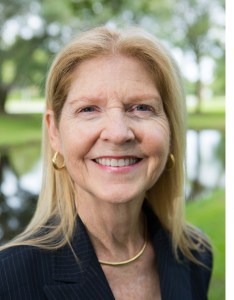
Cheryl Tatano Beck

prematurely was. Their posttraumatic stress did not stop after giving birth but continued as their fragile infants were now in the NICU fighting for their lives.  I wanted to get a handle on just how pervasive mothers’ posttraumatic stress is while their infants are in the NICU. I decided to synthesize all the published literature I could locate- qualitative studies, quantitative studies, and mixed methods studies. In order to integrate these qualitative and quantitative findings in a single systematic review, I chose to do a mixed research synthesis. In the past I have published metasyntheses and meta-analyses but never a mixed research synthesis.  I wanted to try my hand at this type of literature review. Another reason I had for conducting this mixed research synthesis was that in teaching my PhD students I love to provide them with my own concrete examples of research that I have done to help them understand the various methods.  Over the semester I conducted this mixed research synthesis I was fortunate to have Jennifer Woynar, my wonderful co-author, as my graduate assistant. This opportunity provided Jen with hands on experience with doing this type of research synthesis which can enhance the breadth and depth of understanding complex problems or phenomena.

Jennifer Woynar

Jennifer Woynar:

As a first-year BSN-PhD student, I was excited to embark on this mixed research synthesis adventure with Dr. Beck. The connection between the qualitative and quantitative data provided me, as the reader, with both the emotional journey of mothers with preterm infants, as well as interventional studies to build on that data.  Rating the articles based on the CASP scores was engaging and I felt supported in discussing and resolving any incongruences with these ratings.  Overall this was a very meaningful experience and I hope that the reader enjoys this work.