Skip to content

Posts from the ‘Theory’ Category

Nursing perspectives on culture and health


The article now featured in our “Editor’s Picks”by Martha Baird illustrates perfectly, to me, many of the features that characterize nursing perspectives.  The article, titled “Well-being in Refugee Women Experiencing Cultural Transition,” recounts two research studies that Dr. Baird conducted.  These studies provided evidence from which she developed a situation-specific theory of wellness among South Sudanese refugees in her community.  The concepts that stand out as specific concerns for nursing include culture, wellness, transition, family, relationships and health.  Here Dr. Baird describes the experience of this research, and the South Sudanese family who helped make her work possible:

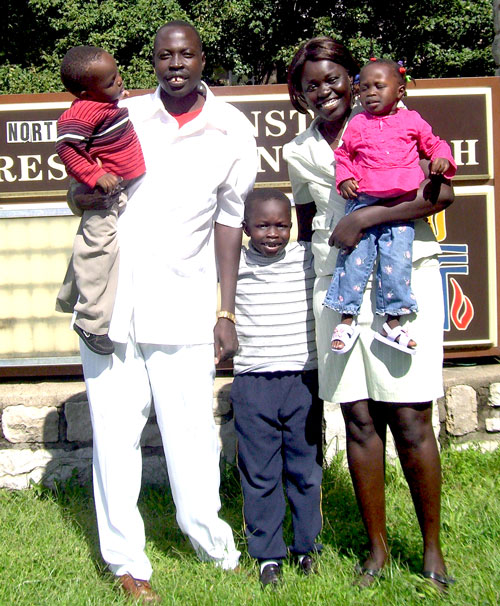
The research that led to the Theory of Well-being in Refugee Women in Cultural Transition would not have been possible without the help and guidance of Rebecca Mabior and John Akuei, my friends, translators, and interpreters. They have not only served as culture brokers between the South Sudanese community and myself, but have become part of our extended family.

John and Rebecca came to the US in 2001 as refugees. John was one of the Lost Boys of Sudan from the Kakuma Refugee Camp in Kenya. Rebecca came from Khartoum, the capital of Sudan, where she was practicing as a registered nurse. She and John met in the US, married, and have three children Atem 8 years, and Akon and Akuei, 3 year-old twins (see family picture). Their families still live in South Sudan and have never met their three children. Since South Sudan became a separate nation on July 9, 2011, they are able to visit their homeland for the first time in over 10 years. Next year, their oldest son, Atem will meet his grandparents for the very first time.

Working with the Sudanese refugee community on these two research projects has taught me the importance of long-term and sustainable relationships with the communities we are serving and hoping to effect positive health change.
Improving transition outcomes


Carol Geary and Karen Schumacher explain some of the most vexing issues in nursing care – effective transitions for patients who move from one care setting to another.  The evidence points to major issues in health care that add up to astounding costs – readmissions for Medicare patients alone add up to billions of dollars.  Geary and Schumacher address this issue theoretically by proposing an integration of transitions theory and complexity science.  Their work provides a new and expanded perspective that can improve outcomes for people who are transitioning from hospital to home.
Carol Geary shares this message about her work:
My research addresses care transitions from hospital to skilled nursing facilities among aging patients with advanced chronic disease. I am specifically interested in the multiple perspectives of patients, informal caregivers, and health care providers as described within this paper and suggested by viewing the phenomenon through a complexity lens.
Professionally, as an administratively focused nurse functioning both within and as a consultant to hospitals, the dynamic of care “across the continuum” intrigued me. When Dr. Sheila Ryan introduced me to complexity science in an informational interview for the PhD program in nursing at UNMC, my initial response was: “THIS changes everything.”  After two years of study, I remain fascinated by the challenge of viewing the world through this new lens.

From the Author: Lynn Rew


It is a pleasure to introduce Lynn Rew, lead author on one of my Edtitor’s Picks for the current issue.  I suspect that most ANS readers have had some connection to the experience of adolescence, either personally or professionally!  The current “Editor’s Pick” article by Lynn Rew and her colleagues Diane Tyler, Nina Fredland and Dana Hannah reports a research study that sheds light on changes that occur during this highly-charged experience.  Their research provides significant evidence that can guide nursing practice, research and theory development.  Their article is titled “Adolescents’ Concerns as They Transition Through High School”, and while it is featured you can download it for free from the ANS Web site!

Here is a message from Dr. Rew about her experiences of working with adolescents, and some background on the experience of conducting this study:

Not everyone shares my enthusiasm for studying adolescents. Having been an adolescent and parenting two adolescents, I am always curious about how they  change so rapidly and adapt (or not) to these changes. I want to know what adolescents are thinking and doing and why. I began with a longitudinal study of pre-adolescents (4-6thgraders) and found that, for the most part, they engaged in health and safety behaviors; however, when they made the transitions from grade school to middle school and then to high school, many of these behaviors were replaced with what I called health-risk behaviors.

Data for this article came from a longitudinal study of over 1200 adolescents who reside in rural areas in central Texas. For the analysis, I assembled a team that included two family nurse practitioners and a pediatric nurse practitioner.  We met often to determine how we would analyze the written responses of these kids to the prompt, “My main concern is . . .” This writing experience was fun and exciting, not only because we enjoyed reading and interpreting these responses, but also we began to recognize strengths and talents in each other that we hadn’t known before.

Faculty often complain that there is never enough time to write, but when you have a team of nurses who are willing to learn, not only from analyzing the data, but also from each other, writing becomes a joy! I was blessed to be part of such a team.

“Editor’s Picks” available now!


We have added a new feature to the ANS web site … Editor’s Picks from the current issue.  The Editor’s Picks will change every couple of weeks, and while an article is featured, it will be available for a free download!  Each week I will post information on this blog about one of the articles on the current “Editor’s Picks” list, giving some background and information about the article that I believe makes the article important for our readers.

Barbara Reigel (University of Pennsylvania), with her colleagues from Sweden Tiny Jaarsma and Anna Strömberg (Linköping University) are the authors of one of our first features, titled “A Middle-Range Theory of Self-Care of Chronic Illness.”  The theory was developed from self-care studies that the authors have conducted in several countries around the world; the article cites the studies so that you can trace the specific evidence on which the theory is based.

The authors address a central concern of nursing practice – the nature of the relationship between a nurse and a patient.  They explain the connection between that relationship and self-care of chronic illness as follows:   “When providers interact with patients their intention is that the partnership they form will motivate patients to engage in self-care that can be incorporated into their lifestyle. It is within this context of a mutually rewarding relationship that the self-care of chronic illness takes place.”

This theory was developed from sound research evidence, and in turn it provides an important resource to guide nursing practice.  It is based on deep analysis and clarification of some of the most persistent challenges that nurses face in building relationships with people living with chronic illness. This article  is an exemplar of one approach to the development of nursing theory that serves to guide nursing practice.

Check out the article now and add your ideas and thoughts about this article by replying to this post!  I look forward to hearing from you!

New paper in Journal of Healthcare Risk Management


Just had my latest paper published in the Journal of Healthcare Risk Management:

Cox, T. (2011), Exposing the true risks of capitation financed healthcare. Journal of Healthcare Risk Management, 30: 34–41. doi: 10.1002/jhrm.20066

The key points:

Small insurers are inefficient insurers: They have lower probabilities of achieving modest profit goals, higher probabilities of incurring operating losses, and higher probabilities of Insurance "not allowed"insolvency than larger insurers when both randomly select policyholders from the same populations.

Small insurers also have to cut benefits to match larger insurer’s probabilities of achieving modest profit goals, avoiding operating losses, and avoiding insolvency.

Despite this, and the obvious impact it has on service quality and quantity, almost every proposal for trimming health care costs assumes Read more

Regulating Medical Loss Ratios


I was just thinking about a new paper in the American Journal of Managed Care:

—————————————————————————————————————————————————
Regulating the Medical Loss Ratio: Implications for the Individual Market
Jean M. Abraham, PhD; and Pinar Karaca-Mandic, PhD
(Am J Manag Care. 2011;17(3):211-218)

“Results:In 2009, using a PPACA-adjusted MLR definition, we estimated that 29% of insurer-state observations in the individual market would have MLRs below the 80% minimum, corresponding to 32% of total enrollment. Nine states would have at least one-half of their health insurers below the threshold. If insurers below the MLR threshold exit the market, major coverage disruption could occur for those in poor health; we estimated the range to be between 104,624 and 158,736 member-years.”Conclusion: The introduction of MLR regulation as part of the PPACA has the potential to significantly affect the functioning of the individual market for health insurance.”————————————————————————————————————————

The Robert Wood Johnson Foundation thought enough of it to post it on their website and I did a post over there

http://www.rwjf.org/coverage/product.jsp?id=72089&cid=XEM_910232#disqus_thread

but sometimes they don’t like them, so I’ll edit it and redo it here because I think Read more