Skip to content

Identifying Coping Mechanisms for Veterans Suffering Moral Injury


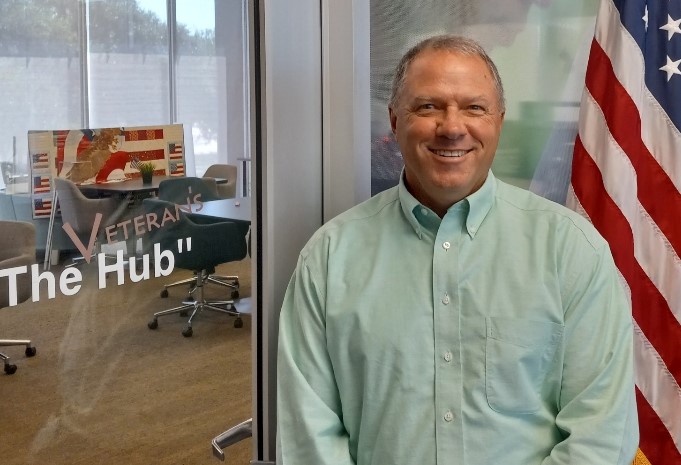
The current ANS featured article is titled “Moral Injury in Veterans: Application of the Roy Adaptation Model to Improve Coping” authored by Michael Cox, DNP, MHA, RN; Vonda Skjolsvik, DNP, RN, CHSE; Becki Rathfon, MS, CCMHC; and Ellen Buckner, PhD, RN, CNE, AE. We invite you to download this article at no cost while it is featured, and return here to leave your comments and questions! Dr. Cox has shared his personal reflections about this article for ANS readers:

Michael Cox

The concept that one’s morally transgressive behavior may result in lasting harm to the individual’s well-being is thoroughly documented in historical literature, as ancient cultures struggled to explain and cope with warrior reintegration. In more modern times, Civil War soldiers were diagnosed with “soldiers’ heart” or profound melancholy. In WWI, the condition was described as “shell shock.” WWII introduced the term “battle fatigue,” and the Vietnam Veterans were diagnosed with Post Traumatic Stress Disorder (PTSD). However, mental health professionals are beginning to understand that these terms do not fully capture war’s moral and ethical implications. As a result, they fail to fully capture the soldiers’ challenges as they transition into civil society.

Shortly after the start of the wars in Afghanistan and Iraq, my military colleagues and I began to recognize the harmful effects of deployment. The concerns about our comrades’ psychological well-being escalated as current treatment modalities proved to be ineffective. The inability to explain our observations prompted us to refer to these soldiers “as broken.” Currently, 22 veterans commit suicide each day in the United States, and the rate of suicide among veterans 18 to 34 years of age has risen 80% compared to the civilian population.

Acknowledgment that the suffering of these soldiers does not resolve upon exiting the military; prompted our team to explore the concept of moral injury (MI) in relation to veteran suicide. MI is the damage done to one’s conscience or moral compass when the person perpetrates, witnesses, or fails to prevent acts that transgress one’s own moral beliefs, values, or ethical code of conduct. Our study describes the struggles veterans face as they try to reassemble their lives post-war.

Breaching moral boundaries has created dissonance between the veterans’ conscience and subconscious thoughts regarding right and wrong, resetting the individual’s fundamental identity and impeding their ability to develop relationships and maintain group identity. This inner struggle helps explain the previously determined feelings of betrayal, guilt, and irredeemablity frequently seen in veterans with MI. Unfortunately, I feel like I am reliving the past as the trauma experienced by our health care providers due to Covid-19 is manifesting in the same manner that we witnessed in those returning from deployment. It creates an environment where clinicians, similar to our veterans, struggle to reconcile the incongruence between their perceived ethical standards and those they are witnessing daily. Exploring the implications of this moral discord may be necessary to avert a similar crisis in our healthcare professionals. 

Nursing With the People


The current featured ANS article is titled “Nursing With the People: Reimagining Futures for Nursing” authored by Jessica Dillard-Wright, PhD, MA, RN, CNM and Vanessa Shields-Haas, MSN, MA, RN, FNP-BC, SAFE-ME – available to download at no cost while it is featured! The authors describe what this article adds to the literature as being “. . . a robust discussion of nursing’s resistance to and complicity with structures of white supremacy and neoliberalism. This then serves as a platform to engage a radical imagination for the future of nursing.” The authors shared this message about their work:

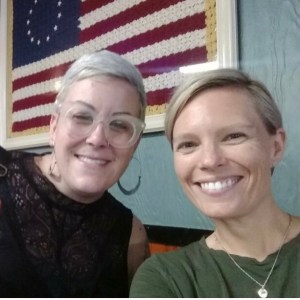
L-R – Jess, Vanessa

Nursing is limited only by what we can imagine as possible. With “Nursing With the People: Reimagining Futures for Nursing,” we (Vanessa and Jess) are hoping to invite a broader dialogue in nursing around what is possible for our discipline, where we have been, where we are going, and what shapes the terrain we navigate. The circumstances of the ongoing COVID19 pandemic and the inequities laid bare in the wake of civil protests against police brutality demands our full attention. To this end, in our paper we recognize the deeply political nature of nursing work, attending to the ways our profession has, by turns, upheld oppression and fostered liberation. We sketch out a brief schema for thinking about change in nursing, outlining approaches including reform, whistleblowing, and radical resistance, recognizing the complexities and complicities of our disciplinary history. We use the tensions that arise when we complicate our history to invoke a radical imagination for nursing, a doorway to alternate possibilities for the future of health, wellbeing, nursing, and healthcare.

This paper is, in some ways, a culmination of sorts. We first “presented” what would eventually become this paper at Nursing Mutual Aid’s 2020 Twitter conference, a radical and unique event designed to connect nurses to one another in a time when sheltering in place led us to seek connection in new ways. We presented a more refined version of the topic at the 2021 Nursing Theory Conference, where ideas, engagement, and feedback from participants in that space propelled us forward. Our collaborative scholarship here was forged through our grassroots efforts with Radical Nurses Collective, a space for organizing and action. The kernel for Radical Nurses Collective was planted in another radical space, the 2018 NurseManifst Nurse Activism Think Tank organized by Peggy Chinn. “Nursing With the People” creates a tidy sort of symmetry that way.

In many other ways, it is a starting place – a foundation for dreaming up what is just, what is equitable, what is possible, if we choose to see it. We hope you read our paper. We hope you share your thoughts here. We want to know what you see for the future of nursing, for the care we provide. And we want to build that together. We invite you to contemplate nursing’s past to understand where we find ourselves now. We welcome you to activate your radical imagination. To paraphrase the inimitable Ursula Le Guin, we close with the reminder that, although the structures and systems that exist seem immutable, at points past “so did the divine right of kings. Any human power can be resisted and changed by human beings.” What it takes is imagination and collective will. We hope you will join us.


Biopower in the Dual Pandemics of COVID-19 and Racism


The current featured article of the latest issue of ANS is titled “‘I Can’t Breathe’: Biopower in
the Time of COVID-19: An Exploration of How Biopower Manifests in the Dual Pandemics of
COVID and Racism” authored by Christine R. Espina, DNP, MN, RN and Robin A. Narruhn, PhD, RN. This article is available at no cost while it is feature on the ANS website! Here is a message about this work from Dr. Espina:

Fissures, rupture, chaos, and change. These words describe the past 16 months of the COVID-19 pandemic. In an interview, Paul Farmer stated, “…pandemics reveal a lot about a society. They expose all the fissures and cracks of the ravages of history. And so looking back at previous epidemics…we’ve really seen again and again that social disparities shape not only the epidemics, but our responses to them” (Garcia-Navarro, 2020). Farmer ends his interview on a more optimistic note by saying that we, as a collective, can improve our response. In a similar vein, novelist Arundhati Roy writes, “historically, pandemics have forced humans to break with the past and imagine their world anew. This one is no different. It is a portal, a gateway between one world and the next” (2020). The artist-activist Kill Joy visualized Roy’s quote as an erupting volcano as depicted here:

Kill Joy, Pandemic as Portal, 2020
Christine Espina

As academic-activists, we imagine centuries-old forces—the “ravages of history”—rumbling beneath the earth’s surface converging and erupting. The pandemics are further manifested in the extreme global climate change we are experiencing now. For BIPOC communities, the ground has always trembled with racism and health inequities. The virulence of COVID and structural racism expose the fragility of the protective factors of white privilege and other intersecting privileges. With these recent and public ruptures, a portal has opened more opportunities for some to choose an increased conscientization.

In early 2020, we were trying to make sense of the violent events converging publicly in our communities and across the nation: increased mainstream media attention to and public outrage at racist, state-sanctioned murders of George Floyd, Breonna Taylor, Daunte Wright, and countless others, police violence against Seattle and Portland protestors, the political downplay of this novel disease clearly and disproportionately impacting low-income BIPOC communities…just to name a few of the events troubling us.

Robin Narrhun

Agamben’s theory of biopower (2005) provides a useful framework to understand the eruption of the dual pandemics of COVID and racism. Biopower begets violence–whether acute acts of violence like police brutality and the murders of Black and Indigenous peoples or the chronic, slower violence of health inequities among BIPOC communities due to structural racism. We have been struck by Jane Georges’ work (2008; 2011; 2013) on Agamben’s theory of biopower and its relevance to nursing. It clicked for us: all these recent connected events were biopower at play before our very eyes.

In our paper, we connect Agamben’s theory of biopower with examples and illustrations from the dual pandemics, with the hope of showing how theory can provide a way to understand and name injustice. We also explore nurses’ ethical and moral responsibilities and introduce actions for nurses—particularly nurse educators—to respond to these dual pandemics. We look forward to the realization and praxis of a more just and equitable world.

References

Garcia-Navarro, L. (2020). Anthropologist Paul Farmer’s new book explores the failures of an Ebola epidemic. [Interview]. National Public Radio; Weekend Edition Sunday. https://www.npr.org/2020/11/15/935112347/anthropologist-paul-farmers-new-book-explores-the-failures-of-an-ebola-epidemic

Georges, J. M. (2008). Bio-power, Agamben, and emerging nursing knowledge. Advances in Nursing Science, 31(1), 4–12. https://doi.org/10.1097/01.ANS.0000311525.50693.9c

Georges, Jane M. (2011). Evidence of the unspeakable: Biopower, compassion, and nursing. Advances in Nursing Science, 34(2), 130-135. https://doi.org/10.1097/ANS.0b013e3182186cd8

Georges, Jane M. (2013). An emancipatory theory of compassion for nursing. Advances in Nursing Science, 36(1), 2-9. https://doi/org/10.1097/ANS.0b013e31828077d2

Kill Joy. (2021). Justseeds Artist Cooperative. Non Commercial-No Derivs CC BY-NC-ND Creative Commons License. Retrieved on July 12, 2021: https://justseeds.org/graphic/pandemic-as-portal/

Roy, A. (2020, April 3). The pandemic is a portal. Financial Times. https://www.ft.com/content/10d8f5e8-74eb-11ea-95fe-fcd274e920ca

Ethical Nursing Care


The current ANS featured article is titled “A Critical Analysis of the American Nurses Association Position Statement on Workplace Violence: Ethical Implications” authored by Darcy Copeland, PhD, RN. Please visit the ANS website over the coming 2 weeks to download this thought-provoking article at no cost. Dr. Darcy provided this message reflecting on this work:

Darcy Copeland

“I have been researching workplace violence in nursing for several years.  Increasingly, I hear nurses in many settings describe violence directed towards nurses in very polarized ways.  For example, some nurses contend that violence is an inherent risk associated with our work while others contend that violence ought not be part of our jobs.  Amidst these polarized views are workplace policies reinforcing a zero tolerance to violence stance.  The American Nurses Association adopted such a stance in their position statement on workplace violence.  Such a position, however, is not in alignment with our ethical framework. Zero tolerance policies are absolutely appropriate with respect to family/visitor or employee violence.  They are not appropriate in the context of patients, however. Zero tolerance policies have a punitive and moralist history; they are also ineffective at actually preventing violence.  Adherence to zero tolerance policies in the context of patient violence has the potential to negatively impact the RN-patient relationship, erode public trust, and criminalize illness behavior.  After a critical analysis of the ANA’s position statement it is recommended that the ANA draft separate position statements. One addressing patient violence and a separate document addressing employee and visitor/family violence.  Nurses have very different duties, obligations and power in RN-patient relationships than in relationships with coworkers and relationships with families/visitors.  Those duties, obligations and power dynamics ought to inform our response to patient violence.”  

Normalization of Deviance


The current ANS featured article is titled “Normalization of Deviance Concept Analysis” authored by M. Imelda Wright, PhD, RN, CNOR; Barbara Polivka, PhD, RN, FAAN;Jan Odom- Forren, PhD, RN, CPAN, FASPAN, FAAN and Becky J. Christian, PhD, RN, FAAN. The article is available at no cost while it is featured on the ANS website. Dr. Wright provided this video abstract of the article.

Secondary Traumatic Stress in Nursing


The current featured ANS article is titled “Secondary Traumatic Stress in Nursing: A Walker and Avant Concept Analysis,” authored by Marni B. Kellogg, PhD, RN, CPN, CNE, and it is available for download at no cost while it is featured. Here is a description of her work from Dr. Kellogg:

My primary research interest is secondary traumatic stress in nursing. As a pediatric nurse, my interest came about as I wondered if stress in nursing was different or more intense for pediatric nurses than nurses in other settings. As time has gone on, particularly with the pandemic, my research program has expanded to include stress and trauma in all nursing settings.

“Secondary Traumatic Stress in Nursing: A Walker and Avant Concept Analysis” resulted from my work overtime and was written to address a gap in the literature. Secondary traumatic stress is the stress a nurse faces when something upsetting happens to their patient. I propose a new definition in the article which explains what secondary traumatic stress is and what it is not. The phenomenon is frequently confused with the terms burnout, compassion fatigue, and vicarious traumatization; they are not all synonymous. Additionally, secondary traumatic stress has many of the same symptoms as Acute Stress Disorder and Post Traumatic Stress Disorder; therefore, nurses must be aware of this phenomenon to protect their mental health. A purer meaning of secondary traumatic stress in nurses is needed to distinguish it from each of the closely related terms. Clarity in the definition of secondary traumatic stress allows for the appropriate measurement and advancement of research related to its occurrence, treatment, and prevention in nursing.

It is vital to address traumatic stress in nurses as we emerge from the COVID-19 pandemic. Over the last year, I have completed some research with colleagues in psychology; nurses are suffering from traumatic stress. I am currently working with my team to explore the impact of the COVID-19 pandemic on nurses in the United States. We plan to develop appropriate interventions to help nurses. I worry about experienced nurses leaving their specialties or the profession because of the stress from the pandemic. Nurse educators must be aware of traumatic stress and work to build strong, resilient nurses who are mindful of the importance of self-care and mental health. Healthy nurses are effective nurses and will benefit our community.

I look forward to your feedback. Please take good care.

End-of-Life Care Terminology


Zahra Rahemi

Our current featured article is titled “End-of-Life Care Terminology: A Scoping Review” authored by Zahra Rahemi, PhD, RN andTracy Fasolino, PhD, FNP-BC, ACHPN. The article is available at no cost while it is featured, and we welcome your comments in response! Here is a message that Dr. Rahemi provided about their work:

End of life care research mostly focuses on end-of-life care options, cost of care, and advance care planning. However, the type of language and terminology that is used in end-of-life care literature and advance care planning forms is overlooked. The terminology used regarding end-of-life care options can convey positive, negative, or neutral meanings. For example, the term “intensive care” might convey a negative connotation compared to “comfort care”. Using these two terms in advance care planning forms and literature may influence individuals’ understanding and decisions about preferred end-of-life care options. Terminology and language are important in caring and nursing sciences, especially in the field of end-of-life care wherein the importance of culture and diversity is emphasized. The focus of this scoping review is to recommend healthcare professional, researchers, and policy makers to use neutral connotative language and terms when designing end-of-life care or advance care planning methods.

Addressing health disparities: the importance of culturally tailored interventions


Eun-Ok Im

The current featured article is titled “Components of Culturally Tailored Interventions: A Discussion Paper” authored by Eun-Ok Im, PhD, MPH, RN, CNS, FAAN and Wonshik Chee, PhD. This article is available for 2.5 professional development credits, and is available for download at no cost while it is featured! Dr. Im has provided this background information that adds further to their article!

Throughout nursing history, we, nurses, have been on the frontline of the battles against health disparities, and have strived to provide culturally competent care for racial/ethnic minorities who are frequently discriminated and underserved in our health care systems.  Culturally tailored interventions are one of the products from the battles to have us equipped with necessary competence to provide better health care for all human beings regardless of their race/ethnicity. Considering the recent rise of racially motivated violence and discrimination against racial/ethnic minorities, it would be meaningful for us to reflect on culturally tailored interventions that have been our instruments in the battles against health disparities.

To start this blog, I am including a picture of a modern high-rise building with a Buddhist temple entrance. This is a typical scene of our daily life with a mixture of cultures that supports ourselves as cultural beings. As a researcher working on cross-cultural women’s health issues, from the beginning of my career as a nurse researcher/scientist, I have been frequently involved in the discussions on human beings as cultural beings, the complexity of culture, and culturally appropriate and sound approaches to culturally diverse populations. Many nurse researchers and scholars have talked about how to ensure cultural equivalence of wordings used in the questionnaires, how to ensure the accuracy of translations in research process, and if cultural matching would be needed, etc.  Also, nurse researchers and scholars have talked about inherent post-modern dilemmas in cross-cultural research (e.g., generalizability, etc.). However, it is very recent that our nursing community begins to talk about what makes an intervention be a “culturally tailored” intervention.In recent years, “cultural tailoring” became a buzz word among nurse researchers/scientists who are working with racial/ethnic minorities. With a recent high funding priority on health disparity research, an increasing number of nurse researchers/scientists began to develop and test culturally tailored interventions among specific cultural groups of racial/ethnic minorities.  Cultural tailoring sounds very simple in a way, but it requires researchers/scientists to give their special attention to many complex and various aspects of the interventions.  However, very little is still clearly known about the principles and processes of cultural tailoring although there have been some advances in the tailoring methods (e.g., surface tailoring, deep tailoring).

In this paper, we proposed suggestions for what would be essential in culturally tailored interventions based on our experience in multiple culturally tailored intervention studies, especially technology-based interventions.  Thus, the components that we are proposing might not be easily generalizable to the interventions that are not technology-based.  However, we made an assumption that cultural tailoring in both technology-based interventions and non-technology-based interventions would be similar in most aspects except the intervention medium.  Yet, technology-based interventions do not require physical transportation of the users and may not provide tangible in-person interactions.  Also, there are many unique characteristics of technology-based interventions that traditional interventions might not have (e.g., 24 hour access, required computer literacy, etc.). Thus, I hope that readers would be careful about the interpretation of the findings and suggestions.

Despite the limitations of the findings and suggestions that we made in this paper, most of our suggestions could be easily applicable to any culturally tailored interventions.  For instance, the suggestion to consider if their interventions specifically meet culturally unique needs of target populations could be applicable to any culturally tailored interventions using various different intervention media.  Cultural tailoring definitely needs to address culturally unique needs of the specific population. Otherwise, the intervention would not be easily accepted by the target group, and the intervention would be useless without the acceptance by the actual users. Also, the suggestion on the use of multiple languages and culturally matched bilingual research team members would be applicable to any culturally tailored interventions in a different medium.  For surface tailoring, the use of multiple languages and culturally matched bilingual research team members has been frequently emphasized in any culturally tailored interventions although it is new to find that they are essential even for non-face-to-face technology-based interventions.  Indeed, at the beginning era of the Internet usages, researchers thought that non-face-to-face interactions would eliminate the influences of race/ethnicity on human interactions. However, the findings reported in this paper support that culturally tailoring is necessary even for technology-based interventions, and the impact of race/ethnicity on human interactions still remain even in non-face-to-face interventions using computers and mobile devices.

All the suggestions, however, need researchers’ careful reflections on the benefits and costs involved.  For instance, we suggested researchers’ flexibility in intervention process (e.g., timing, intervention medium) to accommodate special and unique needs of their target populations. This flexibility will definitely increase the recruitment rate of potential research participants and will be helpful in retaining the participation throughout the intervention period.  However, at the same time, this could be a source of biases in determining the effects of the intervention on targeted outcomes of the research participants. Thus, researchers who are thinking of adopting flexible arrangements/strategies for their research participants need to consider possible biases that would be brought up by the arrangements/strategies and need to balance the losses and gains from adopting the arrangements/strategies.

We really appreciate this opportunity to discuss about the essential components in culturally tailored interventions, which would be pivotal for future nursing care and practice with racial/ethnic minority populations.  Hope that this article would urge nurses to further reflect on and discuss about future directions of culturally tailored interventions in nursing and contribute to advances in practical knowledge that is needed for development, implementation, evaluation, and refinement of culturally tailored interventions for racial/ethnic minority populations who are in great needs.  These efforts would definitely strengthen our instruments for future usages in our battles against health disparities.

Decolonizing the Language of Nursing


Daniel Suárez-Baquero

The current featured ANS article is titled “Critical Analysis of the Nursing Metaparadigm in Spanish-Speaking Countries Is the Nursing Metaparadigm Universal?” by Daniel F. M. Suárez-Baquero, MSN, RN;and Lorraine Olszewski Walker, EdD, MPH, RN. This article is available to download at no cost while it is featured, and we welcome your comments and questions here. Here is author Suárez-Baquero’s message for ANS readers about this work:

ENGLISH

This paper presents a critical analysis about the dominance of the English language as tool for colonization. We start from the use of the nursing metaparadigm – as the central component of Nursing knowledge – to elucidate the conceptual differences in Nursing foundations that exist due to social and linguistic differences.

For those nurses who learn Nursing in Spanish, the concept of Cuidado – amalgamation of the nuances of Care and Caring – is the cornerstone of the core disciplinary Nursing knowledge. However, this foundational perspective, rooted in most of the Nursing spoken in Romance languages, has been historically underrecognized. Several academic discussions about Nursing concepts and theories that I had with well-known nursing theorists during my doctoral studies brought up an overlooked issue: Meanings differences in the nuances and concepts from languages other than English.

Importantly, this issue has limited the expansion of disciplinary nursing knowledge. Therefore, in several instances, Nursing knowledge turns into a dogmatic believe that cannot be discussed; so that we, scholars who discuss the universality of Nursing knowledge, are seen as heretics in a seemingly homogenous and hegemonic vision of nursing.

This paper is an invitation to discuss, it is an awareness of the multiculturality that must be addressed for the growth of Nursing as a Science; it is a call to the nurses of color around the world, to let them know that the time has come to speak up and share our vision of Nursing. Nonetheless, the decolonization of disciplinary Nursing knowledge cannot be done without the support by the nursing community that dictates “what [Nursing] is, and what it is not.”


ESPAÑOL

Este artículo presenta un análisis crítico acerca del dominio de la lengua inglesa como herramienta de colonización. Partimos del uso del metaparadigma de Enfermería – como el componente central del conocimiento enfermero – para elucidar las diferencias conceptuales en los fundamentos de la Enfermería que existen debido a las diferencias sociales y lingüísticas.

Para aquellas enfermeras y enfermeros que aprenden Enfermería en español, el concepto de Cuidado – amalgama del acto de enfermería y el acto de cuidar con amor o cariño – es la piedra angular del conocimiento central de la Enfermería. Sin embargo, esta perspectiva fundacional, arraigada en la mayor parte de la Enfermería hablada en lenguas romances, ha sido históricamente poco reconocida. Varias discusiones académicas sobre conceptos y teorías de enfermería que mantuve con conocidas teóricas de la enfermería durante mis estudios de doctorado sacaron a relucir una cuestión que se había pasado por alto: Las diferencias de significado en los matices y conceptos de otros idiomas distintos al inglés.

Es importante destacar que este problema ha limitado la expansión del conocimiento disciplinar de la Enfermería. Por lo tanto, en varios casos, el conocimiento de Enfermería se convierte en una creencia dogmática que no puede ser discutida; de modo que nosotros, los académicos que discutimos la universalidad del conocimiento enfermero, somos vistos como herejes en una visión aparentemente homogénea y hegemónica de la enfermería

Este artículo es una invitación a la discusión, es una toma de conciencia de la multiculturalidad que debe ser abordada para el crecimiento de la Enfermería como ciencia; es un llamado a las enfermeras y enfermeros de color de todo el mundo, para hacerles saber que ha llegado el momento de hablar y compartir nuestra visión de la Enfermería. Sin embargo, la descolonización del conocimiento disciplinar de Enfermería no puede hacerse sin el apoyo de la comunidad enfermera que dicta “qué es, y qué no es [Enfermería] “.


Database Integrity


The first ANS featured article in the newly released Volume 44:2 is titled “Integrity of Databases for Literature Searches in Nursing Avoiding Predatory Journals” authored by Marilyn H. Oermann, PhD, RN, ANEF, FAAN; Jordan Wrigley, MA, MSLS; Leslie H. Nicoll, PhD, MBA, RN, FAAN; Leila S. Ledbetter, MLIS, AHIP; Heather Carter-Templeton, PhD, RN-BC, FAAN; and Alison H. Edie, DNP, APRN, FNP-BC. The article is published open access, which means it is available at no cost from the date of publication going forward. Here is an informative explanation of this article by co-author and librarian Jordan Wrigley – followed by the transcript of her video.

Jordan’s narrative for the ANS Blog

Librarians and information professionals are valuable collaborators in data-based research where intimate understanding of the “behind the scenes” aspects of digital systems and human-information interaction are needed. This may include bibliometrics, metadata, meta-analyses, text mining, and content analysis among others. Librarians are also experts in understanding information-seeking behaviors and often facilitate research literacies including efficient literature searching and evaluation.

This project combined several of these aspects in the context of nursing publication. The goal of this project was to identify to what extent articles originating from potentially predatory and low-quality journals were penetrating databases commonly searched by nursing scholars and students. To achieve this, novel data collection strategies were required to create an original dataset. This included use of unique searching syntax across multiple databases and triangulation with authoritative sources to confirm data validation.

To create the dataset that would be the basis of this manuscript, I created a search algorithm based on journal metadata, such as International Standard Serial Number or ISSN, in one database. Then I translated it to the syntax of other databases. However, because low-quality journals do not consistently participate in processes such as ISSN registration, this dataset also required merging ISSN data with other metadata including journal titles, dates of publication, and publisher. Automated digital processes in databases are also imperfect, sometimes allowing low-quality articles to slip in through non-typical means such as being referenced in valid studies. This also needed to be accounted for in the dataset. The final dataset for this article allowed the team to make informed recommendations for nursing teaching faculty when facilitating research literacies as well as clinicians and researchers when considering where to search for literature.

Data- and digitally-intensive research is often more nuanced and complicated than it first seems. There is an endless amount of data to be used to inform research and teaching practices in nursing as well as other fields. Librarians and information professionals have intimate knowledge of the “behind the scenes” of data and human-information interaction. Please consider engaging a librarian or information professional as a collaborator in a research project to identify the potential unexplored areas of data-based research. Thank you for watching or listening to this video and, to learn more about our team’s findings based on this dataset, have a read of our “Integrity of Databases for Literature Searches in Nursing: Avoiding Predatory Journals” in Advances in Nursing Science.