Skip to content

A Scoping Review: Transitions, Stress & Adaptation among Emerging Adults


The first featured article for ANS 41:3 is titled “A Scoping Review of Transitions, Stress, and Adaptation Among Emerging Adults” by Kathleen M. Hanna, PhD, RN; Katherine Laux Kaiser, PhD, RN; Sara G. Brown, EdD, RN; Christie Campbell-Grossman, PhD, RN; Alissa Fial, MA, MLIS; Amy Ford, DNP, ARPN-NP, WHNP-BCS; Diane B. Hudson, PhD, RN; Rebecca Keating-Lefler, PhD, RN; Heidi Keeler, PhD, RN; Tiffany A. Moore, PhD, RN; Audrey E. Nelson, PhD, RN; Peggy Pelish, PhD, ARNP-NP and Susan Wilhelm, PhD, RNC.  The article is available at no cost on the ANS website while it is featured!  Here is a message from Dr. Hanna about their work:

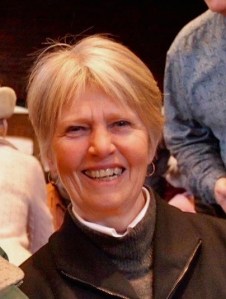
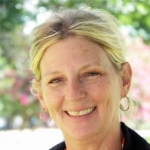
This manuscript was the result of a project conducted by the College of Nursing Parent-Child Scholarship Group at the University of Nebraska Medical Center. These practice, education and

Kathleen Hanna

research scholars chose transitions as a focus for several reasons.

As articulated by Dr. Afaf Meleis and colleagues, transitions, important to the nursing discipline, are stressful, require adaptation and have consequences for health and well-being of those experiencing them. Those in the specialty of parent-child nursing have long addressed transitions. One has only to read the pioneering works of Reva Rubin and Ramona Mercer around the transition to motherhood to see an example.

When parent-child nurses work with infants, children, adolescents, emerging adults and parents, they incorporate developmental transitions as they address health/illness transitions such as diabetes, cystic fibrosis or cerebral palsy, to name a few. The focus on transitions was also congruent with the expertise of the co-leader and myself as leader. Dr. Kaiser, the co-leader, has expertise in transitions, developed from practice in public and community health nursing and research with high risk families with young children. Her most recent research focus has been with the transition of becoming a mother and risk. I have worked with adolescents and emerging adults throughout most of my career.

Most recently, I conducted research among emerging adults with type 1 diabetes. These youth are at risk as it is a period of multiple, co-occurring transitions such as the newly named developmental period of “emerging adulthood;” the health/illness one of type 1 diabetes; and situational ones of moving out of parental homes, graduating high school and/or entering the work force.  Thus, the first project for this Parent-child Scholarship Group was a scoping review of transitions, stress, and adaptation among emerging adults who are in this newly recognized developmental period and at high risk.

The findings of this review highlight the many common transitions these youth are experiencing as well as the variety of health outcomes such as management of a health/illness condition, typical-youth-related behaviors and/or developmental achievements.  We suggest further theoretical development and research among emerging adults experiencing multiple and sometimes co-occurring transitions.

Professional Governance


The current featured article in ANS is titled “Professional Governance Scale: Instrument Development and Content Validity Testing” by Marla J. Weston, PhD, RN, FAAN; Joyce A. Verran, PhD, RN, FAAN; Joanne T. Clavelle, DNP, RN, NEA-BC, FACHE and Tim Porter-O’Grady, DM, EdD, APRN, NEA-BC, FAAN. The article is available at no cost from the ANS website while it is featured.  Dr. Weston shared this message for ANS readers about this work:

The Professional Governance Scale research team began meeting over four years ago with the goal of developing and refining a new instrument to measure shared governance that could be used by aspiring and current Magnet® organizations. After more than thirty years of experience and maturation with shared governance, the team recognized that the context and concept had evolved and so there was a need to examine the concept with a fresh, contemporary perspective. One of the most insightful observations was that the term shared governance was originally selected in order to limit management resistance to legitimate nurse power over their practice and that it often created more confusion than clarity by leaving the content of what was shared in governance undefined. With deep analysis of excellence in nursing practice, the term professional governance was recognized as more accurately describing the practice of legitimate autonomy and control over the structures and processes of nursing care.

A concept analysis enabled the clarification of attributes and characteristics of professional governance, and subsequently guided item development. The second most interesting discovery of this work was during content validity testing of the instrument. Two groups of subject matter experts were used – those with expertise in instrument development and those with expertise in professional governance. Unexpectedly, relevancy ratings differed between the two groups of subject matter experts indicating that the unique perspective and expertise offered by each set of experts provided valuable input into the items and instrument development. This finding reinforces the importance of thoughtfully selecting content validity experts.

Upon reflection, this discovery also highlights one advantage of the composition of the research team. The combination of expertise in both instrument development and content on shared/professional governance facilitated a rich analysis and contribution to understanding an important facet of the professional practice of nursing.


Nursing Intervention for People Living with Parkinson’s Disease


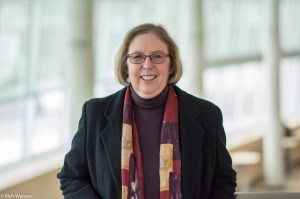
The currently featured ANS article is  “It Is Hard Work, But It Is Worth It” – Patients and Spouses’ Experiences of a Nursing Intervention to Promote Adjustment to Deep Brain Stimulation for Parkinson’s Disease—A Feasibility Study by  Anita Haahr, PhD, MScN, RN; Karen Østergaard,

Anita Haahr

DrMSc, MD and Marit Kirkevold, DrEd, RN. We invite you to download this article (no cost) while it is featured, and share your comments here.  As leader of the Denmark/Norway team of researchers, Dr. Haahr shared this background about her interest in working with people living with Parkinson’s disease:

Parkinson’s disease has been my research focus for more than a decade. My interest in and passion for caring for persons living with Parkinson’s disease and their spouses, began when I was a nursing student. My passion developed further during my work as a neurological nurse. As a nurse researcher I have had a specific interest in exploring everyday living and coping with Parkinson’s disease when receiving deep brain stimulation. This focus has developed over time, focusing on how nurses and other health care professionals can support persons living with the disease and their spouses when coping with and adjusting to the unpredictability of living with the disease in the advanced stage, whether they are being treated with Deep brain stimulation, or in a general rehabilitation setting.

Lee Geropalliative Caring Model


The current ANS featured article comes with Continuing Education, and addresses one of the most pressing, and important challenges in nursing – end-of-life care.  The article is titled “Lee Geropalliative Caring Model: A Situation-Specific Theory for Older Adults,” authored by Susan M. Lee, PhD, RN, NP-C, ACHPN, FAAN.  The article is available to download at no cost while it is featured.  Here is a message from Dr Lee about her work:

As a nurse scientist at Massachusetts General Hospital, my nurse colleagues taught me that they face daily challenges with aggressive end-of-life treatments, particularly among older adults, that do not make a difference.  In fact, the treatments that nurses are called upon to deliver caused more suffering. They looked for direction, language, frameworks that would give them a more credible voice on behalf of patients and families. With HRSA funding, we were able to bring novel education in ethics, geropalliative care, and evidence-based practice that helped to build moral courage and knowledge.  Ultimately, these programs and their extraordinary faculty, helped them to be more effective in the murky crossroads of humans and healthcare.

One education program, AgeWISE, was disseminated nationally to determine its transferability to nurses in other hospitals. It yielded similar outcomes among rural and urban nurses. Universally, nurses want guidance. The model presented in ANS this month is a synthesis of research, ANA standards, ethics, and nursing theory that can help nurses focus on what is most important. These are tough situations that are fraught with emotion, competing values, power imbalances, and ego. Even in situations where nurses cannot change the plan of care, the model reminds nurses that there are are almost limitless opportunities to make a difference to patients and families by comforting body/mind/spirit and helping families transition to a new reality.

Theory-guided practice is more important than ever. It is intimately linked to our disciplinary values. Situation-specific theories can help nurses navigate situations that are difficult to sort out. I welcome conversation at susan.lee@umb.edu


Cancer Survivorship


The current featured article in ANS is titled “Transition to Cancer Survivorship: A Concept Analysis” by Sylvia K. Wood, DNP, ANP-BC, AOCNP. This article is available for download at no cost while it is featured. The author explains that ” . . .  it is when treatment ends when life as a new cancer survivor can fall apart. It is during this time of transition, a time of “in-between” having completed therapy, entering a new life in survivorship that both patients and providers are not well prepared” (p. 145).  Dr. Wood provided this background about her work:

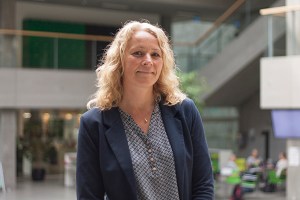
Throughout my nursing career, I have always been in awe of my patients.  More than any one thing, patients have been my best teachers, witnessing their intimate struggles, their triumphs,

Sylvia K. Wood

supporting them through living with and surviving cancer.

Research has come so far in changing our prognostic expectations as precision medicine and symptom science are guiding therapeutic approaches with improved response rates. However, knowing how to care for survivors after cancer treatment ends, a distinct phase in the continuum of care throughout the rest of one’s life is developing survivorship science.

There is a wealth of knowledge about the early effects of cancer treatment, yet much more needed for late effects. There is knowledge of survivorship needs for some cancer types but much less for others.

Due to the heterogeneity of cancer disease states, and the diverse populations it affects opens unchartered territory for further research in the personal, sociopolitical and cultural aspects of cancer survivorship to promote health and well-being.

Transition to survivorship is lexicon commonly describing a timeframe, although the richness of past research that can illuminate a holistic understanding of this concept is lost without definition. Weaving together diverse strands of prior research and knowledge uncovers the depth of meaning, context, and gives voice to the multidimensional and temporal nature of this concept.

I hope that interested researchers can use this concept analysis to build theory and new knowledge adding to the growth of survivorship science that will improve the care we give enriching the lives of cancer survivors.

“The real voyage of discovery consists not in seeking new landscapes, but in having new eyes.”    ~ Marcel Proust

Futago-no-baka. (2013) Traveler [Photograph]. Copyright [2018] by Zerochan Anime Images. Retrieved from https://www.zerochan.net/1431033


Planned featured topic: Nursing Theory for 2020


The significance of nursing perspectives has gained renewed interest as social pressures to reform healthcare have created challenges for care that is more effective, more effective and more economically sound. In both theory and in practice, nursing offers possibilities that address each of these goals.  We are inviting articles that address the state of the art of nursing theory as we approach the third decade of the 21st century, revealing important contributions that nursing brings to create needed change.  We welcome articles addressing the full range of theoretic development: articles that report empiric research structured from existing nursing theories, philosophic analyses related to theory and knowledge of the discipline, critiques of existing theoretical approaches, and descriptions of new and evolving nursing theories. Manuscripts are due by: July 15, 2019, but are welcomed any time!

Philosophy, Nursing Knowledge, and Nursing Practice


In the current featured ANS article, the authors explain how two philosophic lines of thought — realism and relativism — are useful in helping nurses improve the health of patients and society at large. The article is titled “Realism and Relativism in the Development of Nursing as a Discipline” by Shela Akbar Ali Hirani, MScN, RN, BScN, IBCLC; Solina Richter, PhD, RN, DCur and Bukola Oladunni Salami, PhD, RN, MN. The article is available to download at no cost while it is featured; we welcome your comments and feedback. Ms. Hirani sent this description of the experience that drew her to explore these philosophic ideas and relationship to nursing practice and nursing knowledge development:

On entering into my doctoral studies, during my nursing philosophy class, I came across the terms realism and relativism. Upon learning about theses philosophical schools of thoughts and listening to my colleagues who often used to find these philosophical schools of thought a bit

Shela Hirani

confusing and challenging, I had a feeling that we as nurses often apply these schools of thoughts in a variety of our practice settings without being aware of them. To give tribute to the work of nurses that is often based on the philosophical schools of thought of realism and relativism, under the mentorship of my professors, I decided to write this article entitled “Realism and relativism in the development of nursing as a discipline”. This paper presents the role of realism and relativism in the development of the discipline of nursing, as well as underscores the contribution of these two schools of thought to the work of nurse clinicians, nurse researchers, nurse educators and nurse theorists. As the target audience of the journal “Advances in Nursing Science” include nurses from different specialty areas who have varying levels of understanding about philosophy, while touching upon the basics, this paper intends to discuss the role of realism and relativism in nursing education, nursing research, evidence-based nursing practice, and nursing theory. Specific examples of nursing activities have been discussed in the paper to facilitate the readers to understand how realism and relativism shape the amazing work of nurses and contribute to the development of nursing as a discipline.

Commercial Sexual Exploitation of Children


The current ANS featured article addresses a hidden, but urgent, threat to the health of children.  The article is titled “School Nurses’ Awareness and Attitudes Toward Commercial Sexual Exploitation of Children” authored by Hannah E. Fraley, PhD, RN; Teri Aronowitz, PhD, APRN, FNP-BC, FAAN; and Emily J. Jones, PhD, RNC-OB.  We are offering continuing education credit with this article because this type of challenge is significant for all nurses. This study reveals the key roles that nurses play in protecting the health and well-being of people who are vulnerable and disadvantaged.  The article is available to download at no cost while it is featured, and we invite you to read it, and share your comments here!  Dr. Fraley has shared this information about her work for ANS blog readers!

I am a nurse educator and scholar and am passionate about vulnerable populations, health disparities, health access, and human rights. With an extensive background in working with vulnerable women and children, I have developed a focused research program targeting youth

Hannah Fraley

violence prevention and risk reduction. As I became aware of the nation-wide problem of child sex trafficking I knew that nurses are in such a pivotal position to be able to identify trafficking victims and intervene. Further, in my extensive study of child trafficking in the U.S. I was led to the unique and frontline role specifically of school nurses; school nurses have routine interaction with youth and are often the only health care provider youth interact with. I knew that school nurses can intervene and prevent child sexual exploitation, but also knew from studying the health care provider role that providers may lack awareness of child sex trafficking and also may have negative perceptions about youth who are most vulnerable impeding identification and intervention. Understanding that perceptions that we internally hold are shaped by our own life experiences and also shaped by societal and institutional influences became the backbone of my work with school nurses given youth who are most at risk of sexual exploitation are often those whom society, institutions, ourselves label as ‘difficult to work with’ or ‘trouble’. These children cross their school nurses’ path day in and day out and their exploitation may not be seen or recognized due to low awareness of sex trafficking coupled with shaped perceptions. This has become the driving force of my work aiming to build sustainable programs for school nurses and multidisciplinary school teams targeting prevention of commercial sexual exploitation of children.

Nursing Practice and the Criminal Justice System


The current issue of ANS features two articles focused on Crime, Justice and Health.  The first of these two articles is titled “In a Spirit of Restoration: A Phenomenology of NursingPractice and the Criminal Justice System” by Geraldine Gorman, PhD; Rebecca M. Singer, ND; Erin Christmas, MS; Catherine Herbstritt, MS; Layne Miller, MS; Mary Murphy, MS; Cailan Shannon, MS; and Katrina Wyss, MS.  We invite ANS readers to download this article while it is featured (no cost), and share your reflections in the comments section below.  Dr. Gorman shared this summary of her work, and how she became dedicated to addressing this timely and important social justice issue, followed by a message from co-author and faculty colleague Rebecca Singer:

From Geraldine Gorman:

Tragedy and crisis divert our attention from other tragedy and crisis. I became interested in prison reform back in the 90’s when I attended a forum focused on the impact of Buddhism on healthcare.  A Religious Studies professor from DePaul University in Chicago talked about  the

Geraldine Gorman

sangha he initiated for the men imprisoned in the maximum security facility in Michigan City, IN. I was intrigued and Ron invited me to attend one of their Zen Buddhist sittings. For the next 15 years I went into the prison as a volunteer with the Buddhist group, sitting and chanting in Korean– not a word of which I understood– and getting to know the men, some of whom had spent time on death row. During those years  3 executions took place, one which took the life of one of the members of the sangha. A peaceful protest accompanied each state-sanctioned murder with black robed Buddhists  sitting silently in the parking lot, from dusk till dawn. The reverberations from each death ran deeply.

But then 9/11 shook the world and my nursing conscience turned from the injustices of the prison industrial complex to the horrors of war. I continued going into the prison but war dominated my thoughts and words and  outrage.  This is what happens when the dike starts springing too many leaks. We have only so many hands, so much time.  It goes without saying that our current political dike has become a sieve.

Ten years ago as part of our public health nursing class, I began bringing students to the Indiana prison. They were able to walk through the cell blocks, observe what passes for healthcare, listen to men describe their journey to and through incarceration. Chicago’s own Cook County Jail had remained an impenetrable fortress until very recently when our reform-minded Sheriff reached out to the College of Nursing and we began providing health education to the men and women detained in the cavernous jail. Our article describes the initiation of this project, along with the gratifications and challenges faculty and students encountered.

We appreciate the opportunity to share this with the ANS audience. While we must pay close attention to the ever present rumors of war and more war, we cannot allow our attention to be diverted from the injustices in our own communities.  And we need to expose our students to what is done in our names without paralyzing them. Such is the challenge for nursing practice, education and scholarship: to witness and confront insurmountable suffering and to move forward.

From Rebecca Singer:

My primary area of practice is within humanitarian response work which takes me to conflict or post-conflict zones where I try to provide services with few resources to displaced peoples who have lost nearly everything but their lives. In my work with students, they express interest in this work and often ask what they should do to prepare for a job in humanitarian response. After

Rebecca Singer

several weeks in the jail, I realized that Cook County Jail was the closest I had ever come to a refugee camp in Tanzania or a displaced persons’ settlement in South Sudan while never traveling beyond my own city’s limits. The students and I needed to travel no further than 26th and California, just over 2.5 miles from our own College of Nursing, to be surrounded by displaced peoples who have lost nearly everything but their lives and to provide health education with few resources but our wits, several pieces of paper and a poster board.

As the weeks passed and we struggled to understand the rules, to navigate the bleak halls, and to be heard over the din, I came to see how much like a foreign country the jail was. Each time we enter the jail, we repeatedly are asked to show our ID and permission letter, which serve as our passport to this foreign land. We pass through metal detectors and check-points which remind me of the international borders and military check-points I cross to get to my other work. They check our bags and confiscate anything that might pass as contraband; this week a permanent marker and next week a roll of tape. We must pack our bags with care.

The people who get caught up in our criminal justice system live in the same city that we do, yet their lived reality is essentially foreign to me and to most of the students.  They often speak a different language, using slang that I have never heard.  Coming from parts of the city with higher rates of unemployment and lower rates levels of education, they function in an economy far removed from the Loop that I can see from our campus. The exchange of illegal items, including illicit drugs and the firearms that drive up the rates of violence in their communities, render the currency they use different from ours. And while our city is diverse, the range of brown and black people I meet in the jail do not look like the faculty I call my colleagues at our university.

Yet, it is only like a foreign country, because, in fact, this jail is in our city. It houses fellow citizens of our Midwestern city–polite, friendly sports’ fans who love to complain about the weather. They are fellow citizens whose current conditions serve as a stark and vivid reminder that the social determinants of health are at play right here. Now when students ask me about my humanitarian response work and express interest in doing it, I can encourage them to come with us to do that very work without traveling more than 2.5 miles—no passport necessary—just pack with care.

Ethnic Diversity and Advanced Health-related Decisions


Our latest featured article it titles “Health-Related Decisions for Serious Illness Among Ethnically Diverse Older Adults” by Zahra Rahemi, PhD, RN; Christine Lisa Williams, DNSc, RN, PMHCNS; Ruth Marchand Tappen, EdD, RN, FAAN and Gabriella Anna Engstrom, PhD. The article is available for free download while it is featured, and we welcome your comments here! In this article, the authors discuss the evidence from their study that supports the great variability in individual situations at the end of life, and the importance of nursing care that remains responsive to each particular situation.  Dr. Rahemi provided this background for ANS reviewers:

Universally, the population of older adults is dramatically growing. In the United States, culturally and ethnically diverse older adults are one of the fastest growing population. Cultural factors, including ethnicity, acculturation, and spirituality, have significant influence on diverse older adults and how and what they plan for their healthcare. Therefore, there is a need for multiple care options to avoid predetermined clinical practice guidelines for ethnically diverse older adults.

Cultural beliefs and value systems frequently prevent people from healthcare service use and healthcare decision making, which contribute to healthcare disparities for ethnically diverse older adults. In my current studies, I am interested in investigating factors that are pivotal for communication of decisions in advance. Innovative strategies to help individuals determine their goals of care are needed to clarify health-related decisions that ethnically diverse individuals may find challenging to articulate. Because ethnically diverse communities have strong family ties in general, the authors encourage informal and general discussions about goals of care among these communities. These conversations may ultimately inform significant others who are called upon to make decisions when older adults cannot. The new strategies recommended in this study may open new venues for professional development in nursing and ultimately promote culturally competent care.

In the field of ethnically diverse older adults and their healthcare decisions and preferences, the I started with a broad literature review and an integrative review that was published in ANS. Later, I continued my research in different ethnically diverse communities using different lenses, such as end-of-life preferences, health-related decisions for serious illness, and attitudes and behaviors regarding planning ahead for end-of-life care. I hope to introduce more innovative strategies to encourage ethnically diverse older adults to communicate their desired care choice when they are capable to communicate.