Skip to content

Deliberative Dialogue and Knowledge-to-Action


The currently featured ANS article is titled “Toward Relational Practices for Enabling Knowledge-to-Action in Health Systems: The Example of Deliberative Dialogue” by Katrina Plamondon, MSc, RN; Susana Caxaj, PhD, RN (available at no coast while featured). In this article the authors raise critical questions that deserve our consideration, and offer promising approaches for addressing these questions.  Here is the authors’ account of how this work evolved, and vision for the future:

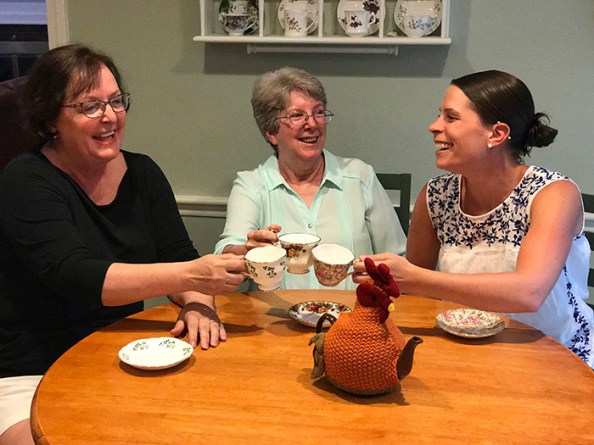
The idea for this article was sparked over several coffee dates with Katrina, with us both reflecting on different health inequities in the world, and genuinely wondering, what tools do we need to affect change? We shared several of our own experiences and

Susana Caxaj (L) and Katrina Plamondon (R)

noticed the common thread of relational practices and intentional collaboration. Katrina has spent a lot of time exploring the potential of deliberative dialogue to provide a framework for such initiatives in her doctoral work, and she proposed that writing about our past projects through this lens could encourage others to create collaborative spaces to tackle the complex health issues of our time.

 
We look forward to contributing further to the necessary discussion about the best ways to bring about change. Ultimately, we hope that readers take away the importance of process and incremental outcomes to envision the most transformative, bold and radical changes that are needed in our world.

End-of-Life Communication


The current ANS featured article is titled “End-of-Life Communication: Nurses Cocreating the Closing Composition With Patients and Families” by Mary J. Isaacson, PhD, RN, CHPN and Mary E. Minton, PhD, RN, CNS, CHPN.  This article also is the first ANS continuing education offering, and the article is available to download at no cost while it is featured.  Here is Dr. Isaacson’s message about this work, which includes the authors’ own stories of end-of-life relationships:

Professionally both authors promote the importance of early and frequent communication with patients and families about their wishes or healthcare goals. Our personal lives have enriched and informed our passion. We’ll take this opportunity to give you a brief snapshot of two contrasting personal experiences. It is our hope that these experiences will inspire you to read our article on end-of-life communication. We will begin with Mary Isaacson’s personal account of an experience, where she tells of the challenges of honoring the patient’s wishes, while at the same time preparing the family. We conclude with Mary Minton’s personal story of being with her father and siblings during their father’s final weeks.

Mary Isaacson:

As a former rural hospice nurse, I was privileged to provide end-of-life care to patients and families in my home community. Through this experience, I learned that simply because of my rural location and staffing, I might be related to or know very

Mary Isaacson

well many of the patients and families entrusted into my care. Though no longer actively providing hospice care, this unique skill-set, (e.g., presence and communication) became pivotal as I worked with my husband’s Uncle Don in March 2017. Uncle Don, a retired Air Force Master Sergeant, Vietnam and Korean War Veteran, was diagnosed with recurrence of his lung cancer from 6 years ago. He was not tolerating the oral chemotherapy and had decided to enter into hospice care. My husband and I traveled from South Dakota to Idaho to say our “final good-byes.” Upon our arrival, Uncle Don promptly informed us that his oncologist felt that there was one more treatment that he should try. As Uncle Don stated, “She’s my oncologist. She knows what’s best and I really like her. So, I am going to do it.”

Our Aunt Donna, however, was less than enthusiastic about the prospect of more chemo. She shared how weak Don had become over the past 4 months. She feared that she would awaken to him “dead” beside her. Her words, “He’s dying. I don’t want to lose him, and I don’t want him to have the chemo either. But, I’m not going to tell him that.”

Over the 4 days that we spent with Uncle Don, Aunt Donna, and their cherished grandson’s family, I knew I had to help them begin to communicate their wishes to each other. One way I engaged Uncle Don in one-on-one conversation was while performing head and hand massage. We reminisced and talked about his future. In these conversations, he remained deeply

with Uncle Don

committed to trying another round of chemotherapy. On the other side, Aunt Donna remained fearful of their future. She could see, along with her grandson and his wife, the physical deterioration of Uncle Don and asked for guidance as to what to do. I prepped them in the questions (e.g., prognosis, likelihood of remission with the chemotherapy, quality of life, palliative care consult) to ask the oncologist at their next visit. When we returned home to South Dakota, I left with a heavy heart knowing that I wasn’t able to help them speak to one another. However, I was somewhat comforted knowing that I had prepared Aunt Donna and her grandson in what to do when Uncle Don’s condition deteriorated.

Two days later, Uncle Don was too weak to get out of bed. They transported him via ambulance to the hospital, where among the plethora of diagnostic tests and consults with specialists, his grandson successfully advocated for and they received a palliative care consult. His condition was stabilized enough for him to return home and with the help of hospice, he peacefully died 5 days later, in his home surrounded by his family.

This story, while difficult, portrays the importance of honoring the patient’s wishes, while also being realistic about the disease trajectory. Even though Uncle Don wasn’t ready to accept that cure was no longer possible, Aunt Donna was. Thus, my communication varied between the two. For Uncle Don, I provided a listening ear for him to share his legacy; for Aunt Donna and her grandson, we developed a plan to help them prepare for his death.

Mary Minton:

I was most fortunate. My parents were united in a pragmatic belief about advance care planning—although that term was never used. They routinely reviewed their advanced directives, asked me and my siblings to choose in advance sentimental items we might want, and they planned their memorial services.  Having survived the Depression Era, they saved wisely and

Mary Minton

lived sparsely. In their retirement years, Mom and Dad continually downsized. Following Mom’s death, my Dad kept this rhythm, sometimes to our chagrin when we still wanted something of Mom’s. However, his German preference for orderliness was such that my sister and I needed only a couple days for discarding or distributing my father’s belongings following his death.

My siblings and I supported our parent’s end of life wishes, as did their long time family practice doctor. My mother died of a chronic respiratory condition at the age of 87.  When I arrived for a weekend visit after not seeing her for nearly 6 months, I immediately sensed her struggle to stay alert. Her breathing was quite labored, yet she greeted me at their apartment door with her trademark smile and open arms.  As she and Dad watched TV that evening, I rubbed her feet and clipped her toenails (the home health nurse in me!).  She was coherent but her breathing was labored and she was flailing her arms occasionally. I queried Dad about this behavior—was this her norm lately, I asked?  He calmly replied yes.  He was her abiding caregiver and though we didn’t talk about her dying process, we both knew what was happening. A peaceful gratitude for simply being together prevailed.  The next morning Mom died in bed with Dad beside her. As her parting gift, she had waited for me to come home.

Following Mom’s death, Dad’s planning was once again in high gear as he enlisted my sister’s help in ensuring his estate and

with father and siblings

his will were updated and accurate.  I followed Dad’s health care needs during the next four years and my sister handled the financial details. Our brother offered moral support. At the age of 92. Dad’s health declined following a hip fracture. In the final six months of his life he transitioned from independent living to assisted living to skilled care. In that journey his cognitive ability declined and culminated in a hospitalization for delirium. His family doctor advised a palliative care consult and I remain forever grateful to the compassionate and skilled palliative care physician who guided the final steps of my Dad’s life which included a 2 week stay in hospice. I have poignantly beautiful memories of the nurses (who firmly but kindly encouraged me to be the daughter rather than the nurse), the social worker who acknowledged feelings I could not yet name, the music therapists who touched Dad’s soul with cherished hymns, the therapy dog, and pastoral care.

As both a recipient and observer of Dad’s skillfully orchestrated care, I had been given a ringside seat to experiencing the best of advance care planning, palliative and end-of-life care. Dad’s last days were marked by a peaceful acceptance of his dying process and cherished moments spent with my siblings. My parents’ legacy includes their example of how to live and how to die.


Delineating parenting competence concepts


We are currently featuring the article titled “Delineating Among Parenting Confidence, Parenting Self-Efficacy, and Competence” by Ashlee J. Vance, MA, RN, RNC-NIC and Debra H. Brandon, PhD, RN, CNS, FAAN (avaliable at no cost while it is featured!). Here is a message from Ms. Vance about her work:

“Always remember you are braver than you believe, stronger than you seem, and smarter than you think.” Christopher Robin

 This quote reminds me of how I felt as a new neonatal nurse, of the parents I’ve interacted with in a NICU, and those babies in our care that would surprise you day by day with their will to survive.

 Parent confidence is something all parents strive for; yet, often struggle with due to ongoing self-doubt. Then, if a parent

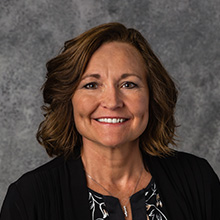
Ashlee Vance

experiences having a baby who requires hospitalization after birth due to prematurity or a life-threatening diagnosis; how in the world do they gain confidence in the hospital environment? This is my starting point. This question guides how I practiced at the bedside and how I interacted with parents, and how I develop my program of research. In the process of writing this manuscript, I discovered the language to help me describe why I was so passionate being a neonatal researcher. I wanted to understand parent confidence because I believe (and there is research to support) this could lead to happier, healthier parents and babies.

 In this paper, it was important for me to clearly operationalize parent confidence to provide a foundation for the concept itself and identify is as separate from other commonly used terms. With this foundation, we can better understand the current literature to compare results and inform future research.  As I continue to understand this dynamic human process, I foresee future results guiding interventions and strategies to enhance the hospital environment, ultimately impacting infant health and developmental outcomes.

Video Games and Adolescent Health


The latest featured article in the current issue of ANS is titled “’It Feels More Real’ – An Interpretive Phenomenological Study of the Meaning of Video Games in Adolescent Lives” authored by Susan R. Forsyth, PhD, RN; Catherine A. Chesla, PhD, RN, FAAN; Roberta S. Rehm, PhD, RN, FAAN and Ruth E. Malone, PhD, RN, FAAN.  I join the authors in encouraging you to download and read this article (available at no cost while it is featured!), and share your ideas and comments here!  Dr. Forsyth shared this background about her work, and the emergence of this particular report:

Youth today are growing up with electronic media embedded in their lives, different from all previous generations.  In my master’s work (and as a mother of a preteen) I became interested in this phenomenon and how exposure to and engagement with various imagery types might mediate adolescent perceptions of health and risk-taking. I was also interested in why adolescents still use

Susan Forsyth

tobacco products, despite knowing the associated risks. Looking at the research, I found that one reason is the continued normalization of smoking as a choice, especially within communities that are heavily marketed to by the tobacco industry. Thinking about this led me to focus my dissertation work on how adolescents and young adults perceived tobacco imagery in video games.  In a systematic review, I found that little had been done in this area, and that there was a perception that tobacco content was minimal in video games. Guided by my dissertation committee, I designed a qualitative study that allowed me to interview gamers online and in-person to ask them about the games they played, the role gaming had in their lives and their experiences with tobacco content in games.  I also examined each of the mentioned games for tobacco content.  One of the initial findings was that tobacco content was indeed present in more than 40% of the games mentioned by adolescents and young adults, and they ascribed meaning and value to that content.

This paper grew out of that work, and is one of five papers from my dissertation. It is the only paper that does not explicitly deal with tobacco content in video games.  After interviewing twenty young people about their experiences game playing and the meaning that playing had for them, it was clear that the experience of electronic gaming was qualitatively different than playing, for example, board games.  We found that the adolescents were telling stories of identity development, of relationships and how they were “in” the game world.  We realized that for participants, gaming served as another space they could go to practice and develop possible versions of themselves, with the addition of being able to use a disembodied electronic proxy as a way of presenting to others in the gaming community.  As a nurse interested in how corporate, societal and cultural forces influence identity development and health choices in adolescents, this was a provocative finding, pointing to a need for our profession to consider how adolescents use their electronic media when designing both individual patient plans and larger policy positions to maximize health for all of people for which we care.


Concept Analysis of “Calling to Nursing”


The current featured article in ANS is titled “Calling to Nursing: Concept Analysis” by Christie Emerson, MSN, RN. The article is available at no cost while it is featured, and I join the author in inviting you to share your responses and thoughts about this concept, and the information provided in the article!  Here is Emerson’s message sharing background about her work:

Throughout my nursing career in the United States (US), my colleagues and I have had regular discussions about our belief that nursing is a calling. In 2009, I began working with nursing colleagues and students in the United Arab Emirates and the Sultanate of Oman, an area of the world where nursing is not a particularly well respected profession.  I found that the concept of a calling to

Christie Emerson

nursing was unfamiliar to them; however, they often described the same strong desire to enter nursing as my US colleagues, despite the poor image.

I am fascinated by this seemingly global phenomenon in our profession, and therefore, decided to explore the concept of a calling to nursing in my doctoral studies. I had many ideas for research topics, such as:

  • Can a calling to nursing develop after someone has been educated and is already engaged in nursing practice?
  • What is the relationship between a calling to nursing and the quality of nursing care?
  • What is the relationship between a calling to nursing and the character of nursing care?
  • Do patients perceive a difference between nurses with a calling to nursing versus without a calling?
  • Does a calling to nursing affect the length of a nursing career?
  • Is there a relationship between nurses with a calling and leadership?
  • How is a calling to nursing conceptualized across diverse cultures?
  • What is the difference between a calling to nursing and a calling to medicine?

I was ready to begin research regarding this concept, but I found that while considerable research on calling has been done in the social science disciplines, there is no consensus on how a calling is defined. There is very little nursing literature that addresses the concept, and no nursing studies that attempt to define it. My goal in this article was to analyze the concept of calling as it relates to nursing and develop a definition with the detail needed to guide reliable research.

I look forward to ideas and feedback from my nursing colleagues around the world about the concept of a calling to nursing.

The Roy Adaptation Model to guide nursing practice


Karen Jennings, PhD, RN, PMHNP-BC is the author of our current featured article titled “The Roy Adaptation Model: A Theoretical Framework for Nurses Providing Care to Individuals With Anorexia Nervosa.” Her article is available for download at no cost while it is featured – we invite you to read the article and return here to share your ideas, questions and comments!  Here is Karen, sharing more about her work.

Palliative Care Nursing: A Concept Analysis


The current featured ANS article is titled “A Concept Analysis of Palliative Care Nursing: Advancing Nursing Theory” by Amanda J. Kirkpatrick, MSN, RN-BC; Mary Ann Cantrell, PhD, RN, FAAN; and Suzanne C. Smeltzer, EdD, RN, FAAN. The article is available for download at no cost while it is featured, and we welcome your comments about the article here!  Here is a message from Amanda Kirpatrick about her work:

When I first graduated with my BSN and began working as a nurse I quickly realized how unprepared I felt to deliver palliative care to seriously ill patients, and to handle patient issues surrounding the end of life. I am now an experienced nurse and nurse educator who teaches students about the importance of early referral to palliative care to ensure that patients receive the best symptom

Amanda J. Kirkpatrick

management and achieve the highest quality of life possible while managing a serious life-limiting illness. In support of this aim, and as part of my doctoral studies, I began researching how nurses attain competence in palliative care nursing. I discovered that there was a gap in the literature related to palliative care nursing theory, and determined that a concept analysis of palliative care nursing (using Walker and Avant’s methodology) was needed. I believed a concept analysis was the best way to identify the antecedents of palliative care nursing competence, as well as to clearly describe the nursing behaviors that demonstrate that palliative care nursing competence is achieved.

This concept analysis is very timely considering the American Association of Colleges of Nursing’s (AACN) January 2016 release of 17 Competencies and Recommendations for Educating Undergraduate Nursing Students (CARES) for Preparing Nurses to Care for the Seriously Ill and their Families. This concept analysis fills an international knowledge gap in the theoretical understanding of palliative care nursing, which currently limits the potential for nursing education and research in this area. Establishing a clear understanding of how palliative care nursing competence is developed and translates into practice holds value for nurses who implement this important care, nursing educators who must prepare these nurses to meet the AACN competencies, and researchers investigating palliative care nursing practice.

ANS Featured Topics


ANS continues the fine tradition of featuring topics of particular current interest, but we also include articles generally relevant to the purposes of the journal. The purposes of ANS are to advance the development of nursing knowledge and to promote the integration of nursing philosophies, theories and research with practice. We expect high scholarly merit and encourage innovative, cutting edge ideas that challenge prior assumptions and that present new, intellectually challenging perspectives. We seek works that speak to global sustainability and that take an intersectional approach, recognizing class, color, sexual and gender identity, and other dimensions of human experience related to health.  We welcome submission of manuscripts consistent with these purposes at any time, but if your scholarship is related to any of the planned featured topics, note the due dates below, and the description of what we seek related to these topics!

Child and Adolescent Health
Vol 41:3 –   September 2018
Manuscript due date: January 15, 2018

The health of children and adolescents is crucial to the future well-being of all nations and the earth itself. Children are exposed to social, environmenal, technologic and political forces never before experienced, and nursing insights related to the health of children’s mind/body/soul are crucial. We are seeking manuscripts that provide innovative, cutting edge scholarship related nursing care of children and adolescents.  Articles are sought that provide research evidence related to nursing approaches to care, theoretical perspectives that inform nursing care, and articles that address philosophic, including ethical, perspectives that inform nursing care. ​​​​

Emancipatory Nursing
Vol 41:4 –  December 2018
Manuscript due date: April 15, 2018 

Emancipatory approaches to nursing research and practice have escalated in the context of major political and cultural upheavals worldwide. Emancipatory approaches include critical, feminist, poststructural and post colonial approaches, or any approach with an explicit purpose to create social and political change to improve health and well-being. For this issue we seek scholarship that informs emancipatory nursing practice and research. We welcome research reports that use emancipatory methodologies, emancipatory philosophic analyses, critical and feminist critiques of existing discourses and practices, description of and evidence supporting emancipatory nursing practices. ​

The Focus of the Discipline
Vol 42:1 –  March 2019
Manuscript due date: July 15, 2018 

Since the publication of the Newman, Sime and Corcoran-Perry article titled “The Focus on the Discipline of Nursing” in ANS in September, 1991, there has been growing discussion to clarify, amplify and explore not only the definition, but the implications of various interpretations of the focus of the discipline. Over these decades advances in other disciplines and the growing demand for interdisciplinary cooperation have influenced the discussion of nursing’s focus and where it fits int he interdisciplinary context. For this issue of ANS, we seek articles that advance these discussions. We welcome articles that reflect empirical or philosophic methodologies. Articles must address the development of nursing knowledge that informs nursing practice, education and research.

Culture, Race and Discrimination in Healthcare
Vol 42:2 –  June 2019
Manuscript due date: October 15, 2018 

In the past decade, issues of discrimination based on culture and race have risen to the surface in many countries worldwide, along with a growing nationalist movement that rejects “the other.”  In this issue of ANS we seek manuscripts that address these factors as they influence health and well-being of individuals, groups and communities, and the delivery of nursing and heatlhcare in culturally diverse communities.  Articles must address the development of nursing knowledge that informs nursing practice, education and research.

Critique and Innovation
Vol 42:3 –  September 2019
Manuscript due date: January 15, 2019 

Consistent with the journal’s tradition, we encourage nursing scholars to reflect on work previously published in ANS, and use critical insights to present innovations in nursing theory, research, practice and policy. We encourage cutting edge ideas that challenge prior assumptions and that present new, intellectually challenging perspectives. We seek works that speak to global sustainability and that take an intersectional approach, recognizing class, color, sexual and gender identity, and other dimensions of human experience related to health.​

Artificial Intelligence & Robotics
Vol 42:4 –  December 2019
Manuscript due date: April 15, 2019

Artificial intelligence and robotics have been evolving in nursing for some time. We are planning to feature articles in this issue that address the relationship of artificial intelligence and robotics to patient outcomes and quality of care from a nursing perspective. We welcome philosophic analysis, including ethical implications, empiric research reports, and the development of innovative methodologies related to artificial intelligence. Articles must focus on the development of nursing knowledge that informs nursing practice, education and research.

Mixed Research Synthesis of Stress in Mothers of Preterm Infants


The current featured ANS article is titled “Posttraumatic Stress in Mothers While Their Preterm Infants Are in the Newborn Intensive Care Unit: A Mixed Research Synthesis” by Cheryl Tatano Beck, DNSc, CNM, FAAN and Jennifer Woynar, BSN, RN.  The article is available to download at no cost while it is featured on the ANS site!  Here are messages from each of the authors about their work:

Cheryl Beck:

In my qualitative program of research on traumatic childbirth, mothers have repeatedly shared how traumatic giving birth

Cheryl Tatano Beck

prematurely was. Their posttraumatic stress did not stop after giving birth but continued as their fragile infants were now in the NICU fighting for their lives.  I wanted to get a handle on just how pervasive mothers’ posttraumatic stress is while their infants are in the NICU. I decided to synthesize all the published literature I could locate- qualitative studies, quantitative studies, and mixed methods studies. In order to integrate these qualitative and quantitative findings in a single systematic review, I chose to do a mixed research synthesis. In the past I have published metasyntheses and meta-analyses but never a mixed research synthesis.  I wanted to try my hand at this type of literature review. Another reason I had for conducting this mixed research synthesis was that in teaching my PhD students I love to provide them with my own concrete examples of research that I have done to help them understand the various methods.  Over the semester I conducted this mixed research synthesis I was fortunate to have Jennifer Woynar, my wonderful co-author, as my graduate assistant. This opportunity provided Jen with hands on experience with doing this type of research synthesis which can enhance the breadth and depth of understanding complex problems or phenomena.

Jennifer Woynar

Jennifer Woynar:

As a first-year BSN-PhD student, I was excited to embark on this mixed research synthesis adventure with Dr. Beck. The connection between the qualitative and quantitative data provided me, as the reader, with both the emotional journey of mothers with preterm infants, as well as interventional studies to build on that data.  Rating the articles based on the CASP scores was engaging and I felt supported in discussing and resolving any incongruences with these ratings.  Overall this was a very meaningful experience and I hope that the reader enjoys this work.


Model of Parental Stress in Pediatric Cardiac Intensive Care


WE are currently featuring  the article titled “The Pediatric Cardiac Intensive Care Unit Parental Stress Model: Refinement Using Directed Content Analysis” by Amy Jo Lisanti, PhD, RN, CCNS, CCRN-K; Nadya Golfenshtein, PhD, RN; and Barbara Medoff-Cooper, PhD, RN, FAAN. Download and read this article at no cost while it is featured, and return here to share your feedback, comments and ideas!  Dr. Lisanti sent this message about her work:

Amy Jo Lisanti

My research focuses on the stress of parents whose infants are born with congenital heart disease requiring surgery in the neonatal period.  The recent article published in ANS built upon my dissertation work on maternal stress in a pediatric cardiac intensive care unit, where I used research instruments to quantitatively measure stress and anxiety. The study elucidated some of the relationships between maternal stress and anxiety in the critical care environment, but I was hungry to understand more.  I wanted to conduct another study to examine additional factors influencing the stress experience for mothers using the model I had created for my dissertation, the PCICU Parental Stress Model. The ANS publication represents the fruition of the work that I was able to complete under the leadership of my postdoctoral mentor, Dr. Barbara Medoff-Cooper, and with my colleague, Dr. Nadya Golfenshtein. We conducted focus groups with mothers and used directed content analysis to clarify specific foci of stress and to refine the PCICU Parental Stress Model. My goal is continue to use the model as a foundation for future research.  In my current postdoctoral fellowship at the University of Pennsylvania School of Nursing, I am expanding my research on parental stress to include the use of biomarkers and to begin to test interventions to reduce parental stress in this population.