Skip to content

Working with Patients Living with Obesity


Our current featured article is titled “Working With Patients Living With Obesity in the Intensive Care Unit: A Study of Nurses’ Experiences” by Jacqueline Marie Shea, RN, BScN, MScN and Marilou Gagnon, RN, PhD.  This article article is available “open access,” meaning that it is permanently available for download without charge. The authors provide sections in conclusion that address the implications of their study for research, nursing theory, and education – sections that I am sure ANS readers will find useful and interesting.  Dr. Gagnon has provided this background information about their work:

This article presents the findings of a thesis project examining the experience of ICU nurses who work with people living with obesity (PLWO). The idea for this project was first discussed in 2011 when the first author (Jacqueline Shea) was taking an advanced nursing practice course with the second author (Marilou Gagnon), who later became her thesis supervisor. For the purpose of the course, she completed a concept analysis on

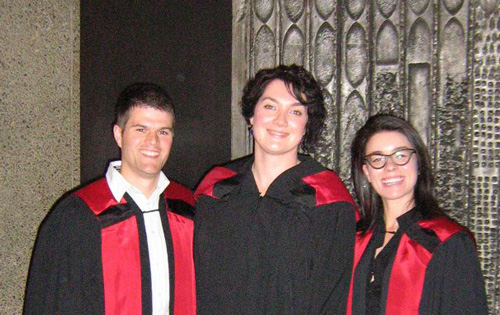
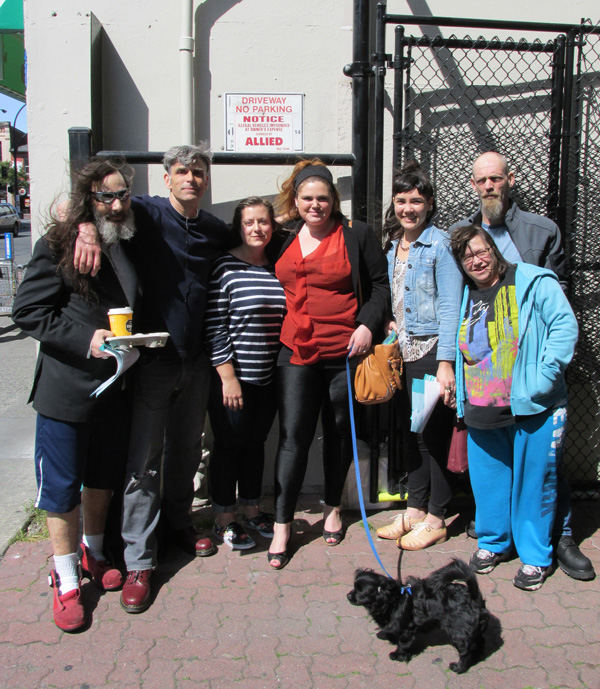
L-R: Jean Daniel Jacob, Jacqueline Shea, Marilou Gagnon

L-R: Jean Daniel Jacob, Jacqueline Shea, Marilou Gagnon

Othering after reflecting on the experience of taking care of PLWO in the ICU context. Building on this assignment and a decade of clinical experience in acute care, the two of them embarked on a journey together and conducted a qualitative study on two ICU units in a large urban centre in eastern Ontario (Canada). With the support of a strong thesis committee (Dr. Jean Daniel Jacob and Dr. Christine McPherson) as well as the support of staff and nurse educators on both ICU units, the study was completed at the beginning of 2014 and the thesis was successfully defended in the summer of 2014 (see picture).

PLWO are thought to be at a higher risk for developing a number of illnesses and diseases. PLWO who are admitted to hospital are also more likely to develop complications. As a result of complications and more complex health issues, PLWO have longer lengths of stay in ICU and require mechanical ventilation for longer periods of time. In addition, they have a higher mortality rate than patients with lower BMIs. When PLWO are critically ill, they present an increased rate of morbidity and mortality. This not only impacts their overall physical health but also the type of care required and the level of complexity that needs to be addressed when planning nursing care in the ICU context. At times, this may result in increased difficulties providing safe, competent, supportive and high quality nursing care to this patient population as well as increased in workloads for nurses.

It is important to point out that ICU nurses in the United States and in Canada encounter a growing number of PLWO in clinical practice. This trend is consistent with the increasing weight and BMI of the general population. Many authors suggest that the number of PLWO who are admitted to the ICU will continue to increase as this trend continues to increase. The rise in the number of PLWO admitted to the ICU, and its implications for nursing practice, have been reported in the media in Canada, more specifically in an article entitled “Caring for obese patients poses daunting challenges: Intensive care units are reporting a rise in the number of patients with extreme body weight,” published in The Montreal Gazette in 2011. Yet, there has been very limited research on the experience of nurses providing care to PLWO and no study conducted in the ICU specifically. To our knowledge, this was the first study conducted in this setting.

The goal of the study was to look specifically at the experiences of ICU nurses and how these experiences affect the way nurses provide care to PLWO. More specifically, it was designed to describe and explore both inclusionary and exclusionary practices (as defined by Dr. Mary K. Canales) developed by nurses who provide care to PLWO. The study was guided by Canales’ theoretical framework on Othering in nursing practice which was originally published in ANS in 2000. The findings presented in the article contribute to the application (new context and new population) and critique of the original Othering framework. It also addresses many of the limitations identified by Canales in her 10-year analysis (published in ANS in 2010) and by Canadian scholars who used this framework to understand the experiences of South Asian immigrant women in health care (Johnson and colleagues, 2004). Lastly, it adds to the original framework by exploring structural and contextual dimensions of Othering that have not, to our knowledge, been clearly described in the literature to date.

The study findings suggest that the experience of nurses who provide care to PLWO in the ICU environment is much more complicated than nurses simply having negative attitudes, perceptions and feelings toward this patient population. Therefore, if nurse researchers focus predominantly on these negative attitudes, perceptions, feelings and individual behaviours, they only observe a small aspect of the larger picture and, by extension, a small portion of the problem. As this study has shown, there are social, situational, organizational and institutional factors that have not been acknowledged to date in the literature, despite the fact that they contribute to exclusionary Othering; these unacknowledged factors influence nurses themselves and the way they provide care to PLWO as a result. Exploring these influences in a subsequent study could provide insight into how this phenomenon takes place in the ICU, and might raise important questions on the role of macro-level influences in shaping nurse–patient interactions.

We welcome your comments and ideas!  Let us hear from you!


Spiritual Healing for Men Traumatized by Childhood Maltreatment


This featured article titled  “Spiritual Healing in the Aftermath of Childhood Maltreatment: Translating Men’s Lived Experiences Utilizing Nursing Conceptual Models and Theory” is an exemplar that provides specific primary, secondary and tertiary nursing interventions framed within nursing theories and models, addressing the benefits of engaging spiritual faith traditions in the healing process.

The authors are Danny G. Willis, DNS, RN, PMHCNS-BC; Susan DeSanto-Madeya, PhD, RN, CNS; Richard Ross, SJ, RN, M Div, STL; Danielle Leone Sheehan, MS, RN; and Jacqueline Fawcett, PhD, RN, FAAN. Dr. Willis has shared this background about their work:

The article “Spiritual Healing in the Aftermath of Childhood Maltreatment: Translating Men’s Lived Experiences Utilizing Nursing Conceptual Models and Theory” that I wrote with my co-authors (DeSanto-

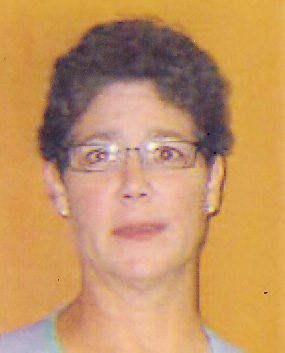
Danny G Willis

Danny G Willis

Madeya, Ross, Sheehan, & Fawcett) is an outcome of qualitative research with adult male survivors who self-identified as healing from maltreatment when they were children. Because very little is written in the nursing science literature about men’s experiences of healing and spirituality, especially in the aftermath of  childhood maltreatment, we felt it necessary to publish our research. Through the publication of our article, we aim to advance knowledge about men’s ways of healing from childhood trauma and abuse experiences. Likewise, because nursing conceptual models and theory provide guidance for nursing assessments and healing modalities/interventions, we translated our findings about spiritual healing within the context of extant models and theory. Translation of research findings within nursing conceptual models and theory can advance disciplinary substance and guide nursing practice.

Spiritual and existential issues become salient in the lives of men traumatized by childhood maltreatment as well as for other traumatized populations. Our future work will continue to explore the phenomenon of spiritual and existential healing in the aftermath of traumatic, abusive, and life-threatening experiences. Within the context of the healing science and art of nursing, healing modalities and interventions to promote spiritual and existential healing can be developed and utilized to engender survivors’ sense of well-being and promote human flourishing.

You can download the article without charge while the article is featured on the ANS web site! We welcome your comments and feedback here!

New ANS Issue Just Released Featuring “Translational Scholarship”


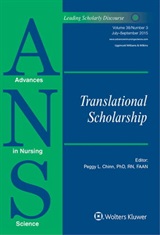
Today we released ANS 38:3, which features articles on the topic “Translational Scholarship” as well as two “General Topic” articles!  I am particularly excited about this issue because it contains ground-breaking 38-3 coverinformation that has real implications for both nursing practice and nursing knowledge development.  Please take a few minutes to browse the Table of Contents.  I am confident that you will see something in this issue that you will want to read, and/or share with someone you know!

Thanks to all of the dedicated scholars who contributed to this issue.  As with most issues of ANS, the authors include some well-known scholars whose work is already widely recognized for its importance to the discipline.  But there are also authors who are early in the development of their careers and whose work promises to become increasingly valuable as they move forward.

As always, we would love to hear from you about this issue.  Each article will be featured here on the blog, with a message from the authors, over the next 12 weeks. Remember, while each article is featured it will be available for download without charge!   If you want to be notified when this happens, just subscribe to this blog, and an email will be delivered with content from the featured blog post!

Measurement of Holistic Nursing Values


In the current ANS featured article, author Elizabeth Kinchen, PhD, RN, AHN-BC, addresses the challenges facing nursing to address the primary care needs of populations now served because of access to the U.S. Patient Protection and Affordable Care Act.  The article, titled “Development and Testing of an Instrument to Measure Holistic Nursing Values in Nurse Practitioner Care” provides evidence of the effectiveness of nurse practitioner care.  Dr. Kinchen provided this description of her work:

Elizabeth-Kinchen

Dr. Elizabeth Kinchen

With the expansion of health care accessibility in the United States, nurse practitioners (NPs) are projected to assume increased responsibility for a large portion of primary care delivery. This article derives from my dissertation research, in which I explored the patient’s perception of the nature of the nurse practitioner’s care, specifically the preservation of holistic nursing values. I think this topic has special importance in describing the unique contribution which NPs make to primary care delivery.

The impetus for this research came from my experiences in working with and being cared for by nurse practitioners in acute care, academic, and clinic settings. Many of the patients I came in contact with confided that they preferred the nurse practitioner’s care because NPs take time to listen to them and consider all aspects of their circumstances when providing care. These qualities are hallmarks of nursing care, which, I contend, is by tradition and definition holistic in nature. Furthermore, the incorporation of holistic nursing values in NP care exemplifies the value of the NP role for patients.

The majority of research into NP care has hitherto focused on satisfaction and practice style, and has been mainly qualitative in design, so this study, using a newly-developed instrument, represents a contribution to quantitative research on NPs that does not address provider-driven indices such as satisfaction, but rather patients’ perceptions of the preservation of nursing values in NP care.

My dissertation research, guided and supported by Dr. Bernadette Lange and Dr. Ruth McCaffrey, was undertaken to develop and test the Nurse Practitioner Holistic Caring Instrument (NPHCI), a new instrument designed to gauge the extent to which nurse practitioners preserve holistic nursing values in their care. Results from this study support previous research findings regarding the holistic qualities of NP care, wherein NPs report incorporating holistic nursing values in practice; namely, patient advocacy, listening, non-judgmental acceptance of patient choices, and viewing patient conditions from a comprehensive, whole-person perspective. These are attributes which define holistic nursing care, and which the IOM1 cites as defining primary care delivery.

Nurse practitioner care is posited to differ in essential ways from purely medical practice, most importantly in its attention to a relationship-centered, coordinated and comprehensive mode of care delivery. Exploring a care model which highlights the incorporation of nursing values in NP practice therefore has great significance for patients, practitioners, and educators in guiding care, improving practice, and planning academic curricula. In addition, it is hoped that studies documenting the nature and value of NP care will also inform policy creation and reform, especially in matters such as reimbursement, scope of practice, and collaborative regulation.

Therefore, as next steps in this research, I hope to explore how holistic nursing values are incorporated in nurse practitioner care in larger, more diverse patient samples, and in NP program curricula, by revising the NPHCI for use in nursing faculty populations.

1. Institute of Medicine. The future of nursing: Leading change, advancing health. http://www.iom.edu/~/media/Files/Report%20Files/2010/The-Future-of-Nursing/Future%20of%20Nursing%202010%20Report%20Brief.pdf. Published October 2010. Accessed October 18, 2014.

Download this important article now at now cost, while it is featured!  Then return here to participate in discussion of your ideas based on Dr. Kinchen’s article!

A New Model for Enacting the Scope of Nursing Practice


The current ANS featured article addresses the disconnects that prevail between the full scope of nursing practice, and the practices that actually are enacted.  The article is titled “Influences on and Outcomes of Enacted Scope of Nursing Practice: A New Model” by Johanne D´ery, PhD, RN; Danielle D’Amour, PhD, RN; R´egis Blais, PhD and Sean P. Clarke, PhD, RN, FAAN.  Dr. D’ery has shared this message about their work:

This article “Influences on and outcomes of enacted scope of nursing practice. A new Model” explains the conceptual thinking that guided my PhD thesis and is at the heart of my ongoing program of research. Scope of nursing practice, especially enacted (real) scope of practice, is the extent to which nurses use the full breadth of their knowledge and Derycompetencies in their daily work. I’m interested not only in work characteristics and nurse personal attributes that affect scope of practice, but also the outcomes from organizational and patient perspectives that may change as a result of differences in the implementation of the nursing role.

I am currently Assistant Director of Nursing (Research Development) at Hôpital Ste-Justine (Montreal, Canada), one of the largest maternal-child academic health sciences centers in the French-speaking world. I have had the good fortune to do PhD work where I tested the model described in the article under the supervision of Dr Danielle D’Amour. In the next months, I’ll begin postdoctoral training with Drs. Sean Clarke (Boston College) and Mélanie Lavoie-Tremblay (McGill University, Montreal, Canada).   I plan on continuing my work around scope of practice in some new contexts.

To me, scope of practice is not only a vital issue for the nursing profession, and relates to nurses’ experiences and public perceptions of nursing work, but it also holds promise in improving access to care, as well as quality and continuity of care and patient safety. Only when nurses are working to full scope can we expect patients to benefit fully from nurses’ presence in health care settings.

In this article, I was looking for a way to bring together some important theoretical ideas to a better understanding of characteristics on which nursing administrators should consider when developing new strategies around nurses’ use of their knowledge and skills.

I and my coauthors hope the discussion will be helpful to educators, administrators and researchers concerned with this concept, as I said before, a vital issue for our profession. It deserves continued and focused attention from various quarters in nursing.

We do welcome your comments and ideas related to the important issues discussed in this article!  You can download this article while it is featured on the ANS web site – then return here to share your comments!

Evidence guiding culturally safe nursing practice


The current ANS featured article titled “Toward Cultural Safety Nurse and Patient Perceptions of Illicit Substance Use in a Hospitalized Setting”  is based on a collaborative project that focuses on cultural safety in health care.  The authors, Bernadette (Bernie) Pauly, PhD, RN; Jane McCall, MSN, RN; Annette J. Browne, PhD, RN; J. Parker, MA and Ashley Mollison, MA shared this background about their work:

Our article describes an ethnographic research project examining the experiences of people who use illicit drugs and nurses who provide care for them in acute care settings. The idea for this research emerged from a recognition that people who are identified as using illicit drugs and facing socio-economic disadvantages often experience stigma when accessing health care services. Nurses working at Insite, Vancouver’s supervised injection site, found that cultural safety helps to mitigate stigma when working with people who use illicit drugs, so this project set out to explore what cultural safety might look like with this population in other settings. Cultural safety was developed in New Zealand to address persistent health inequities experienced by Maori people and has been a strategy to enhance care for people experiencing the negative effects of stigma, racism and other forms of discrimination, and ongoing marginalization.

In exploring the meaning of cultural safety, from the perspectives of people who use illicit drugs and nurses, participants described 3 main conceptualizations of illicit drug use, as 1) individual failings; 2) criminal activity, and 3) a disease of ‘addiction’. They discussed how these intersect to negatively impact access to care, management of pain, and access to of harm reduction supplies.

In relation to illicit drug use, cultural safety can prompt nurses and other healthcare providers about the importance of situating drug use in the history of the criminalization of drug use, and how continued legacies of that criminalization impact the care that people receive, preventing people from accessing health services now and in the future. Creating culturally safe(r) environments involves health care professionals
examining their own values and conceptualizations of drug use, and about people who use drugs, and how that might affect practices and policies in acute care settings.team

This project would not have been possible without the leadership and input from a peer advisory committee comprised of members of the Society of Living Illicit Drug Users (SOLID), an organization run by and for people who use(d) illicit drugs. The peer advisory met regularly throughout the project to provide direction on the interview questions, strategies for data collection, and input on research findings. A nurse advisory committee provided parallel leadership and direction to the research process. The advisory groups ensured that the research questions were relevant, that the process of data collection was attentive to needs of participants, and that the research findings were interpreted within an appropriate context of lived experience and practice. Together with the research team, the nurses and peers developed a practical set of recommendations for practice.

The results of the research were presented at two hospital forums where advisory committee members, nurses and managers discussed how research recommendations could be implemented through changes to hospital policy and practice. As a result of the research there have been changes to hospital harm reduction policies and practices. Today, the cultural safety bulletin is being mobilized by SOLID to offer peer-run trainings to front line health and social service providers.

This article is available for download without cost while it is featured on the ANS web site!  Download and read it now!  Then come back here and share your comments – we would be delighted to hear from you!

Two articles just published ahead of print!


There are two articles now available ahead of print, scheduled to appear in ANS 38:3.  They are:

“Spiritual Healing in the Aftermath of Childhood Maltreatment: Translating Men’s Lived Experiences Utilizing Nursing Conceptual Models and Theory” by Danny G. Willis, DNS, RN, PMHCNS-BC; Susan DeSanto-Madeya, PhD, RN, CNS; Richard SJ Ross, RN, M Div, STL; Danielle Leone Sheehan, MS, RN and Jacqueline Fawcett, PhD, RN, FAAN.  Access this article here.

“Working With Patients Living With Obesity in the Intensive Care Unit: A Study of Nurses’ Experiences” by Jacqueline Marie Shea, RN, BScN, MScN and Marilou Gagnon, RN, PhD.  Access this open-access article here.

Watch this blog for more information about these articles!

Moving toward LGBT Equality in Healthcare


The current ANS featured article explores the complex issues involved in overcoming homonegativity in healthcare.  The article titled “Cues-to-Action in Initiating Lesbian, Gay, Bisexual, and Transgender-Related Policies Among Magnet Hospital Chief Nursing Officers: A Demographic Assessment” is by Ralph Klotzbaugh, PhD, RN, APRN and Gale Spencer, PhD, RN. Dr. Klotzbaugh provided this background related to the article:

I started doing this research as a result of reviewing the Human Rights Campaign’s annual Healthcare Equality Index that looks at protective policies for patients and employees that identify as LGBT. The year I looked at must have been

Ralph Klotzbaugh

Ralph Klotzbaugh

around 2012. The end of the HEI puts together a list of participating medical institutions and their scores from the policy survey. I started perusing this list and began to notice two things that really surprised me. First, not all Magnet designated hospitals had responded to the survey (the survey is voluntary) and of those Magnet designated hospitals that had responded to the survey, many had few if any protective policies in place. I had assumed Magnet would require lgbt specific policies and was disappointed to find out that indeed they had not.

As I worked through the development and analysis of this study, I started thinking through some larger questions of the nursing profession and what it might mean to future nursing research. Mainly, how will nurses gain or improve administrative authority? Further, how might nurses use our insights to the social/political/economic conditions faced by the patients that we care for in influencing these administrative changes?

I believe these questions are of particular importance to nursing. Regardless of where our practice has taken us, we all started out at the bedside caring for patients. Caring for patients. It is time for our profession to recognize the value of caring, not only as it relates most importantly to the treatment of all patients as well as our colleagues, but to how this necessarily has to inform policy, politics, and administration.   I hope my research contributes toward developing a better sense of the problem and the directions that we might take as nurses. I look forward to continuing my research in my new position as Assistant Professor at University of Massachusetts, Boston. Finally, I would like to thank my coauthor Gale Spencer at Binghamton University who made the space for me to do LGBT specific work, and for others to follow.

This article is available for download at no cost while it is featured on the ANS web site, so read it now, and come back here to share your comments and responses!

Producing Environments of Care


The current featured ANS article is titled “A Practice Theory Approach to Understanding the Interdependency of Nursing Practice and the Environment: Implications for Nurse-Led Care Delivery Models” by Miriam Bender, PhD, RN and Martha S. Feldman, PhD.  The article is available for free download while it is featured on the ANS web site.  Dr. Bender has shared this story of how this work evolved, and the importance of networks in the evolution of theoretical ideas:

This article is the product of more than two years’ immersion in a multi-disciplinary practice theory reading group created by Martha S. Feldman at the University of California, Irvine (UCI). Martha is an organization theorist best known for her work on organizational routines, and routine dynamics

Dr. Miriam Bender

Dr. Miriam Bender

in particular.

In 2012, I was working on my doctoral research, which focused (and still does) on a care delivery model that integrates a new nursing role, the clinical nurse leader. I wanted to understand the mechanisms by which this reorganization and implementation of nursing care delivery produced documented improvements in care quality and outcomes.

I chanced upon Martha’s and Brian T. Pentland’s article Organizational Routines As A Unit Of Analysis (2005) via an exploratory Google Scholar search. Fascinated, I found and read more of her articles, which opened my eyes to a theoretical lens and body of work on organization dynamics that I felt could be leveraged to better understand and explain the complexity of multi-disciplinary healthcare delivery.

I gathered my courage to contact Martha (with a supportive push from Dr. Ann M. Mayo, one of my outstanding doctoral committee members), and she very graciously met with me and even invited me to join the practice theory reading group, which had its first meeting January 2013. The reading

Dr. Martha Feldman

Dr. Martha Feldman

group includes nursing, social ecology, business, education, informatics, and many other interdisciplinary scholars who meet every month for a couple of hours to engage with practice theory and empirical research that uses a practice theory lens.

As I am learning, practice theory offers a new way of understanding and explaining social phenomena such as contemporary organizing, which is increasingly understood to be complex, dynamic and distributed. A philosophical premise of practice theory is that there are no boundaries separating subject and object, mind and body, or structure and action, but rather they only exist in a recursive relationship of mutual constitution. Mutual constitution means social orders (structures, institutions, routines, etc.) cannot be conceived without understanding the role of actions in producing them, and similarly, human actions should be understood as always already configured by structural conditions. This continuous co-production of action and structure in practice means neither is static or stable, but rather they are continuously refreshed, adapted or perpetuated.

The more I became immersed in this strange new world of mutual constitution, the more I began to think about nursing practice in relation to the spaces where nurses practice. Current theory and research on nurse practice environments focus on the ‘things’ necessary to create environments that nurses then populate and practice within. Bad environments make nursing practice difficult, good environments make nursing practice easy. Partial or thwarted nursing practice negatively influences patient health outcomes, while fully engaged nursing practice positively influences patient health outcomes.

I slowly began to realize that in this conceptualization, no meaning is ascribed to nursing practice contributing to the environment where all this occurs. Using a practice lens, I began to understand that nurses, along with patients and everyone else on the healthcare team, through their practices, are always meaningfully constituting their environments of care and conditions for practice. There is in fact no externally defined environment that nurses and others populate and act within, but rather the environment is embedded in their activities.

Once that became clear to me, I made another realization; there is currently no proposition explicitly linking nursing practice and the environment in the nursing metaparadigm, which I believe has led conceptually and methodologically to nursing knowledge that is also preconfigured and separate. In other words, because we have not linked nursing practice and the environment theoretically, we have not considered the ways they are linked empirically and have instead studied them in isolation from each other.

Once that became clear to me, I felt challenged to address this theoretical gap as a first step towards creating awareness of nurses’ critical role in shaping environments through their practices. Hence the published article, which argues that a refined conceptualization of the interdependency of nursing practice and environment is necessary to identify, theorize and promote nursing practices that are beneficial to the environment of care as part of an explicitly proposed domain of nursing knowledge and practice.

The significance of a focus on the mutual constitution of nursing practice and environment is that it enables the conceptualization and development of holistic models of care that better integrate the dynamics of practice and the conditions for health into the organization of healthcare delivery. Implications include healthcare practice patterns that patients, nurses and the multi-professional healthcare team consider healing and health promoting.

This has been a long, long journey that really is only just beginning. Over the last few years I have transitioned from doctoral student to assistant professor at UCI, which allows me to continue my engagement in this incredibly generative cross-disciplinary practice theory forum that Martha initiated and which continues to flourish. I am grateful to Martha and all participants of the reading group, who challenge me to further explore practice and the duality of structure and action in relation to nursing and healthcare delivery, and to better understand how healthcare practice patterns are produced, reinforced and/or adapted, and how they generate both expected and unexpected outcomes and the conditions for further practice.


Future Issue Topics Update!


One of the hallmarks of ANS has always been our future issue topics, calling forth a collection of current scholarly articles that address a particular theme or topic.  While the topics form a focus, they also embrace a wide range of scholarship, so in each issue you are likely to find something that introduces a new idea or challenges “old” ideas!  Recently we added a feature we are calling “ANS General Topic” to accommodate cutting-edge scholarship that is not quite fitting for our issue topics.  Still, there is a strong interest in our topics, so we are continuing to encourage scholars to watch for topics that are well suited to their work!  Here are the topics that are currently on the schedule, with links to the descriptions on the ANS web site:

ANS General Topic
Submissions any time

39:1 – Technologies, Nursing & Health – March 2016
Manuscript Due Date – July 15, 2015

39:2 – Women & Girls – June 2016
Manuscript Due Date – October 15, 2015

39:3 – Palliative Care – September 2016
Manuscript Due Date – January 15, 2016

39:4 – Toxic Stress – December 2016
Manuscript Due Date – April 15, 2016