Skip to content

Racism and Children’s Mental Health: Evidence for Practice


The authors of the current ANS feature article titled “Perceived Discrimination and Children’s Mental Health Symptoms,” Cheryl L. Cooke, PhD, MN, RN; Bonnie H. Bowie, PhD, MBA, RN; and Sybil Carr`ere, PhD, present the results of their study the association between perceived discrimination and children’s symptoms of anxiety and depression. The results of their study contributes to evidence that is needed for research, teaching and practice that can intervene to alleviate the harmful effects of racism and discrimination. I am delighted to include here a video they have prepared for the ANS audience, followed by a written message providing more background about their work! I encourage you to download the article while it is featured from the ANS web site, read it and then return here to engage wth us in discussion of the very important issues that their work has addressed.

More from the authors:

Our article on health inequities is based on data from our five-year longitudinal study of families with a child transitioning from middle childhood to adolescence – the Family Health Project. All 3 of us were members of the University of Washington School of Nursing. At the beginning of the Family Health Project in 2000, Cheryl Cooke was a post-doctoral fellow, Bonnie Bowie was a doctoral student, and Sybil Carrère was a research professor. Our goal was to look at family emotional dynamics, and more specifically, parenting practices that were associated with children exhibiting good physical and mental health.   We wanted to learn from “expert” parents what works best in raising happy, healthy children who do well in social and academic worlds. Our premise was that when parents help their children to learn about their emotions and what to do in emotionally overwhelming situations (e.g., bullies at school, grief, anger, stress), that the children are better able to meet the challenges that society presents them. The longitudinal study was funded by a grant from the National Institute of Mental Health (MH42484). Our work was also supported by subsequent funding from the National Institute for Nursing Research (P30 NR04001; T32 NR07039)), National Institute of Child Health and Human Development (P30 HD 02274) and the National Institute of Minority Health and Health Disparities (P20MD002722), and National Institute on Drug Abuse (T32 DAO7257-14).

Our initial plan was to recruit a sample of families in the Puget Sound area which over-represented ethnic and racial minorities, relative to the demographics of the area. As we began recruiting our sample for the study, we found a high number of Multiracial families volunteering to be a part of the study. This happy coincidence led us to alter our sampling strategy such that we created 3 matched groups of families: Multiracial, African American, and European American families. The families were matched on marital satisfaction and neighborhood crime statistics.

As we interacted with our families in their homes and in our laboratory, we began to see some compelling patterns in the kinds of information parents imparted to their children in order to help their children’s emotional development and ability to navigate the stressors of childhood. We observed that racial and ethnic minority family members discussed some of the discrimination they encountered – both the parents and the children. This lead us to the conclusion that we needed to assess both the parents and the children’s perceptions of discrimination, even if the timing of our anecdotal observations meant we would only be able to measure perceived discrimination in the final time point of the study. We wanted to find a questionnaire that would tap into discrimination that might be experienced by any ethnic or racial group. This proved a challenge because most of the perceived discrimination scales at the time of our study focused on the African American experience. We were fortunate to find the Perceived Ethnic Discrimination questionnaire by Brondolo and her colleagues (2005) that measures perceived discrimination experienced by any racial or ethnic group. We were able to use the questionnaire with the parents and children in our 3rd and final time point of the study. The results of this paper stem from the inclusion of this questionnaire in our research project.

One of the joys of the Family Health Project was the strong collegial bonds and friendship the three of us have developed and maintained over the course of our work on the research. This paper brings together our interests in the impact of discrimination on families – particularly families of color, parenting practices that lead to optimal trajectories of children’s emotional development, and health inequities. We are very excited about what we learned from the analyses presented in this paper – but, as usual, it raises many more questions that we hope to pursue, together, in the future.

Brondolo, E., Kelly, KP, Coakley, V., et. al. The perceived discrimination questionnaire; development and preliminary validation of a community version. Journal of Applied Social Psychology. 2005. 35(2): 335-365.

New ANS issue just published!


ANS 37:4 was just published! This issue contains Part II of our focus on “Health Equities.” Both of these articles address equities related to specific populations – African American mothers living with HIV, and children with mental health symptoms. The planned topic for this issue – “Post-Hospital Nursing” is one that is becoming increasingly significant for 37-4 covernurses, as health care shifts more and more to the home and the community. Each article in this issue will appear on the ANS blog with messages from the authors, inviting you to engage in discussions of their work. Join us in this conversation!

Here is what you will find in this issue!

Health Equities Part II

Using an Intersectional Approach to Study the Impact of Social Determinants of Health for African American Mothers Living With HIV by Courtney Caiola, MSN, MPH, RN, Sharron Docherty, PhD, PNP-BC, FAAN, Michael Relf, PhD, RN, ACNS-BC, AACRN, CNE, FAAN, and Julie Barroso, PhD, ANP-BC, APRN, FAAN

Perceived Discrimination and Children’s Mental Health Symptoms by Cheryl L. Cooke, PhD, MN, RN, Bonnie H. Bowie, PhD, MBA, RN, and Sybil Carr `ere, PhD

Post-Hospital Nursing

Can Nurses Tell the Future?: Creation of a Model Predictive of 30-Day Readmissions by Adonica Dugger, MSN, Susan McBride, PhD, and Huaxin Song, PhD

Analysis of Barriers to Cognitive Screening in Rural Populations in the United States by Lisa Kirk Wiese, PhD, RN, Christine L. Williams, RN, DNSc, PMHCHS-BC, and Ruth M. Tappen, RN, EdD, FAAN

Tried and True: Self-Regulation Theory as a Guiding Framework for Teaching Parents Diabetes Education Using Human Patient Simulation by Susan Sullivan-Bolyai, DNSc, CNS, RN, FAAN, Kimberly Johnson, BSN, CDE, RN; Karen Cullen, BSN, CDE, RN, Terry Hamm, BSN, CDE, RN, Jean Bisordi, BSN, CDE, RN, Kathleen Blaney, MPH, RN, Laura Maguire, MS, RN, and Gail Melkus, EdD, RN, FAAN

Predicting Transition to the Supine Sleep Position in Preterm Infants by Sherri L. McMullen, PhD, RN, NNP-BC, and Mary G. Carey, PhD, RN, CNS

Toward an understanding of social determinants of health


The current featured article in ANS, titled “Using an Intersectional Approach to Study the Impact of Social Determinants of Health for African American Mothers Living With HIV,” addresses the very difficult challenges involved in ameliorating social determinants of health that result in health inequities.  The authors, Courtney Caiola, MSN, MPH, RN; Sharron L. Docherty, PhD, PNP-BC, FAAN; Michael Relf, PhD, RN, ACNS-BC, AACRN, CNE, FAAN; and Julie Barroso, PhD, ANP-BC, APRN, FAAN use an example based on Courtney Caiola’s research to explore ways in which an intersectional approach can be used to better understand social determinants of health

I came to doctoral studies in my forties after a fairly solid stint of working as maternal/child health nurse both domestically and in a limited resource setting. My writing skills were rusty and forming a paragraph longer than a typical email was a challenge, but I felt strongly about the health inequities I was observing as a frontline health worker and learning to co-create research seemed like a logical approach to addressing such social injustice.Caiola250

So, I entered a doctoral program and set about the task of reading the works of giants. The words of intersectional scholars resonated with me immediately.

Their work gave me a framework to examine the structural inequities and power dynamics I had been observing in the clinical setting for years. They helped me to develop my own thoughts on how social determinants, social location and intersecting identities of race, class, gender and other social roles like motherhood generate health outcomes. Additionally, I have come to appreciate and embrace the important role nursing scholarship can play in the social transformation.

I have received very important critiques from mentors, colleagues, study participants and reviewers during this process – the kind of critiques that sting, critically and rightfully exposing my assumptions often steeped in my whiteness. I am extremely grateful for all of the feedback and thankful to have the most patient dissertation committee on the planet. I realize this manuscript is a work in a progress – work that I imagine will take a lifetime of study, introspection, partnerships, critical dialogue, and thoughtful actions to develop.

We welcome your feedback and appreciate ANS for providing a forum in which such critical dialogue can occur in a dynamic and timely way – so, please, let us know your thoughts! – Courtney

You can download this article while it is featured on the ANS web site  – visit the site today and return here to share your ideas, feedback and questions!

Ethics and Democratic Professionalism in Nursing


Our current featured article, titled “Discourses of Social Justice Examining the Ethics of Democratic Professionalism in Nursing” by Janice L. Thompson, PhD, RN is a thought-provoking article that challenges all nurses – in practice, academics or research – to contribute to social justice in health care.  Dr. Thompson has shared this

My article “Discourses of Social Justice: Examining the Ethics of Democratic Professionalism in Nursing” was written between December 2011 and  May 2014.  I’m very happy to see this paper published in the current issue of ANS.  In this instance like others, as the manuscript developed, my writing progressed to a finished product that addressed other outcomes than I originally intended. I’m forever thankful to my colleagues for inviting me to begin a writing project on the topic of emancipatory philosophies and practices of social justice in nursing, and for their support in suggesting a re-direction of this manuscript for publication in ANS.

    Here I want to acknowledge the help and influence of three scholars who offered important comments and suggestions during the composition of this essay. As always, Peggy Chinn provided insightful meta-analytic perspective, helping me to remember the Thompson400importance of thoughtfully balancing the work of intellectuals in nursing and philosophers in other fields of study. Similarly Paula Kagan offered important and welcome support in collegially inviting me to consider emancipatory interests in nursing. Her helpful comments on the relevance of the work of Cornel West were most welcome.  Finally, Richard Pattenaude’s critical reading helped me to recognize the centrality of the concept of democratic professionalism in my analysis. His thoughtful suggestion provided important affirmation, helping me to recognize a recent turn to questions of democratic professionalism in my work.

    I write from a position that considers professional formation in nursing. I do this with a background and context of having practiced now in the U.S. and in Canada. I’m employed as a professor of nursing at the University of New Brunswick in Fredericton, New Brunswick, Canada. There I teach undergraduate and graduate students in nursing and interdisciplinary PhD students. My teaching and research examine the ethics and epistemic conditions of social justice and caring in nursing and health care. I consider practice with marginalized populations from a critical theoretical perspective in transcultural nursing.  I foreground the importance of anti-racist, anti-colonizing and feminist post-structuralist analysis in my research.  And I use theories of nursing in an interpretive (hermenetic) interface with interdisciplinary work to understand the formation of nursing as a profession. I recognize that these phrases mark me as an academic , although I hope I am still an organic intellectual in nursing.  

     I’ve practiced as a registered nurse for thirty eight years, first in the United States and more recently, in Canada. My work includes 31 years as an educator in nursing and interdisciplinary studies in public universities. My permanent residence is in the United States, in the state of Maine. This lifestyle arrangement carries with it a fair amount of border crossing (literally and symbolically). I maintain registration as a nurse in Canada and the U.S. For the last eight years, I’ve worked and resided temporarily in Canada while retaining my U.S. citizenship.  I maintain active connections with nursing educators on both sides of the Canadian and U.S. border.   These life choices have produced a growing “border subjectivity” with deepening recognition of the similarities and differences between Canada and the United States and with growing appreciation for nursing practice internationally.

    Increasingly, I’m noticing the historical influence of nursing leaders from Canada and the United States who worked together, sometimes as close friends, to address issues related to the formation of our profession.  I’ve become somewhat preoccupied with thinking about those nursing leaders who engaged important transnational issues of professional formation at the turn of the twentieth century. It’s been important for me to see how American and Canadian nurses have worked together as leaders, frequently in friendship, to address common concerns. Adelaide Nutting and Lavinia Dock are examples of Canadian and American women who provided “wicked” strong leadership to ensure the formation of professional nursing practice in North America during the early decades of the twentieth century. Their collegial influence as global citizens and global thinkers inspired a larger vision of nursing education and regulatory authority, influencing what nursing could be as a unique profession.  Similarly, scholars Bertha Harmer and Virigina Henderson worked collaboratively finding common ground in North  America by focusing on core knowledge of the profession. And of equal interest, nurses on both sides of the U.S. – Canadian border learned together in the early decades of the twentieth century to engage practice and policy in the settlement house movement –addressing urban health equity for immigrants and refugees.

    What is common for me in these examples is the willingness of Canadian and American nurses to engage together and to learn from each other, despite important differences in the way our political economies have organized the delivery of health care. These collaborative experiences were bound by strong commitments to social justice and health equity. They demonstrated a kind of leadership that remains highly relevant, in practices that were guided by commitments to a common model of democratizing professional ethics, despite cultural differences. That model of ethics in professional practice, found in our history and today, is different from one shaped only by social trustee professionalism.  As I’ve suggested in my article, democratic professionalism sees nurses working collaboratively with each other and with others in activity that shares power and empowers citizens and communities, improving access to care and improving health outcomes in marginalized communities by addressing the social determinants of health.  This kind of democratic professionalism, in hospitals and in other community contexts, operates with a complex constellation of ethical capacities, with a keen sense of local, regional, and transnational politics, fully understanding the importance of correcting injustices in the political economy of health, and tending to policy level innovations that correct health disparities in advanced post industrial capitalism. These sensibilities include an understanding of contradictions that occur when the ethics of health care systems are organized in privatizing ways within market economies .

    Democratic professionalism has been practiced historically and is alive in North America. In nursing and in other professions in the early decades of the twentieth century, it was closely tied to the scientific vision of practice found in the philosophy of North American pragmatism. That model of professionalism and that philosophy of science had much to offer North America in the first decades of our growing democracies. Its contemporary revisions in critical American pragmatism continue to have important relevance  today.  

    My essay explores some of these ideas.  I’m interested in critical American pragmatism as  a philosophy that provides coherent epistemic, ethical and ontological connections  between a model of scientific activity and a democratising ethics in professional practice. I’m interested in understanding how professional commitments and the formation of nursing as a profession can be helped by a democratizing model of practice and how that model of practice can support the health of my American democracy.  As I reflect, I think perhaps my essay may be informed by a maturing sense of love for my profession, despite its flaws. Understanding it now from a different place-with more appreciation for cultural and transcultural influences, and with an abiding faith in the healing influence of professional formation of nursing, I take inspiration from generations of nurses who also have seen themselves as “organic intellectuals.”            

Please visit the ANS web site and download Dr. Thompson’s manuscript while it is featured!  We welcome your responses and ideas – let’s have a lively discussion of the issues and possibilities that Dr. Thompson unveils!


Moving beyond Rhetoric to Action: Understanding Inequalities to Health Care Services


Rhetoric admonishing nurses and other health care professionals to address inequalities in health care is a common message; it is less often that we learn about concrete action to do just that!  In our current featured article, titled “Understanding Inequalities in Access to Health Care Services for Aboriginal People: A Call for Nursing Action” the authors describe a research initiative they undertook in partnership with Aboriginal people to create meaningful action addressing barriers that result in inequalities.  The authors, Brenda L. Cameron, PhD, RN; Maria del Pilar Carmargo Plazas, PhD, RN; Anna Santos Salas, PhD, RN; R. Lisa Bourque Bearskin, MN, RN; Krista Hungler, MSc have shared this very interesting description of their work:

Hello to Everyone on behalf of the Access Research Team and many thanks to Dr. Peggy Chinn and the Advances in Nursing Science Journal for the opportunity to accompany the article with a blog. Attached is an  Overview of the access initiative diagram and below is a photo of the authors of this article.

To begin: It was quite startling to come to the end of a two day community consultation workshop (2002) where ten areas identified as urgently needing health research were set aside. Instead a community request was issued to study access to
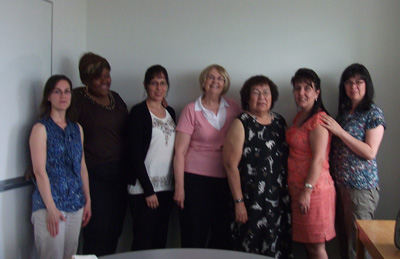
Krista Hungler, Sandra Kwagbenu, Maria del Pilar Camargo, Brenda Cameron, Elder Rose Martial, Raymonde Lisa Bourque Bearskin, and Anna Santos Salas. The photo is by Veronica Guerra Guerro

L to R: Krista Hungler, Sandra Kwagbenu, Maria del Pilar Camargo, Brenda Cameron, Elder Rose Martial, Raymonde Lisa Bourque Bearskin, and Anna Santos Salas. The photo is by Veronica Guerra Guerro

health care services for Indigenous and marginalized populations. Researchers from several health professions, healthcare professionals, community members with province-wide representation, and students of every level sat back and listened. This access research was not to be the current approach to access with numbers and statistics, i.e., how often Indigenous people saw specialist physicians, how many emergency visits. It was to be in collaboration with the Indigenous people and not couched only in terms of western research philosophies and methodologies.

From this request we sat down together and talked together for three years; at times coming to a consensus and moving forward, but other times, no movement at all. Sitting together at the table for this time was in a way, the research itself. It was an arduous, long process of building trust and relationships with each other with continuous clarifying of what was meant by each suggestion, what each step comprised that was decided upon, what possible fallout might occur. There were many issues on the table, some overt and some yet to appear but each one had to be thoroughly addressed before we could move on. Memoranda of Understandings had to be negotiated and signed, safety issues were addressed through the design of advisory groups and involvement of the people in each data gathering step was planned. We did not move forward without full agreement at the table. Others over this time period joined the table and again we renegotiated every step. During this time we agreed upon, designed and undertook three exploratory grants (Aboriginal populations in urban, inner city, and rural areas) in an open conversational manner with extensive advisory groups attached to each one as well as Elder scholars. The findings of these became the basis of our movement forward.

A focus on developing sensitive and comprehensive indicators for access to health care services for Indigenous people came into view early in the discussions. But we were also told by people participating in the exploratory grants that they had had enough of evaluation projects and reports. In the inner city exploratory grant, inner city residents took us to the Director’s office in one of the inner city agencies and pointed out the numerous reports that existed on the need for healthcare access appropriate to inner city and downtown core residents. They asked us: how will this study be different, there has been no action attached to these reports stemming over the last ten years. When will studies lead to action on the issues identified? Was there nursing action that had occurred in response to these reports? Will this work just enhance researcher’s careers or just prove that the healthcare system is doing something instead of nothing? These questions were the standard, the bottom line, which we were given not only from inner city residents but from all participants and healthcare professionals in our projects. We have learned that we must declare how particular research studies will benefit researchers as well as the knowledge development the studies would produce. We also had to plan how to move the findings to actions.

Moving forward: We placed Indigenous Healthcare workers called, Community Health Representatives (CHRs) in Canada, in healthcare sites with a high percentage of utilization by Indigenous people. This intervention turned out to be one of the cornerstones of our research initiative. This manuscript portrays some of this work. Our findings opened the door to understanding how even the most simple institutional mandated protocol when accompanied by overt rudeness or a stigmatizing comment, caused fright. And often there were unseen consequences down the road, i.e., never seeking care again until the condition was far advanced. Even if the institution triggered horrific memories of government residential schools (in Canada), the presence and health knowledge of an Indigenous CHR mitigated that fear. As well the CHR assisted them to communicate safely their healthcare history with few repercussions, judgments and racist practices from the institutions’ healthcare staff. Outcomes were more positive when the CHR was there. For further information see our Access Community report (2014) link below.

The call for action: The people in our studies talked about respect, feeling safe, undoing decades of harm from government and healthcare agencies, rejecting positioning statements from some past research and institutional practices, fighting for rights to have sensitive cultural and healthcare and Indigenous understandings at all points of access. Indeed our work to date shows a pressing need for joint interdisciplinary and intercultural efforts to reduce current health disparities through collaborative participatory work with Indigenous peoples.

Our findings suggest that nurses in particular the need to engage with Indigenous people and their culture to create safe access for them as often nurses are their first point of contact. All nurses know about the need to be aware of the social determinants of health and the health disparities that exist for certain populations. Nurses also know about the importance of honouring cultural traditions of health. But our research team is also aware that activating this knowledge in day to day practice needs additional careful attention and thought. As well increasingly so, the actions of nurses are prescribed by healthcare protocols and policies to ensure a specific outcome that is tied to an economic parameter. Caring for someone who is very ill takes a toll on the prescribed and allowable economic outcome for certain. Based on our studies to date in our specific healthcare institutions, our practicing nurses need support to take action to mitigate the growing and alarming reports of disingenuous care documented in our findings.

Perhaps it is again, sitting around a table with a social justice framework and consciousness raising activities to work toward incorporating research findings into actions. As health disparities climb even as we write this blog, the time to start this is now. There is much work to do to support nurses and other healthcare professionals who work under institutional dictates to then plan their care with the understanding that individuals and families with low SDOH need our special attention. We would also like to draw attention to the Indigenous social determinants of health identified by Loppie-Reading and Wein (2009) as a way to increase further understanding of implementing the SDOH in actual practices of nurses and allied healthcare professionals.

In undertaking specific action on identified issues, we honour the Indigenous peoples of Canada, our original inhabitants. In addition, we know that it will take a concentrated effort to achieve equity in access for Indigenous peoples and we challenge others to facilitate Indigenous communities to undertake their own studies.

We sincerely thank the Indigenous people and the communities that guided this investigation into access to healthcare services and know that this is just a very small step in addressing the health disparities of Indigenous peoples in these particular communities and wider systemic difficulties. We also learned that research on Indigenous topics must be led by Indigenous research scholars and the communities themselves. We very much look forward to your feedback and many thanks for the opportunity to do this blog.

References

Cameron, B. L., Martial, R., King, M., Santos Salas, A., Bourque Bearskin, R.L, Camargo Plazas, M.D.P., Hungler, K. (2014). Access Research Community Report: Reducing health disparities and promoting equitable access to health care services for Indigenous peoples: Community Report. Edmonton, AB: University of Alberta, Faculty of Nursing.

http://www.nursing.ualberta.ca/Staff/Emeritae/BCameron.aspx

Reading, CL, Wien, F. Health inequalities and social determinants of Aboriginal Peoples’ health. Prince George, BC: National Collaborating Centre for Aboriginal Health. 2009.

The article is available while it is featured for free download on the ANS web site!  We – the authors and I – would be delighted to know your comments, and welcome your discussion related to these very important issues!  Please use the space below to let us hear from you!

Reflections on experience researching LGBT health


Our current featured article titled “Enhancing our Understanding of Emancipatory Nursing: A Reflection on the Use of Critical Feminist Methodologies” by Judith Ann MacDonnell, PhD, RN, provides a rare glimpse in to the life of a researcher.  Dr. MacDonnell’s reflections are particularly significant given the focus on her scholarship – LGBT health.  Dr. MacDonnell shared this message for ANS readers, addressing how her article emerged, and the importance of this work for nursing education:

In my experience, there are just a few detailed research reflections in the published nursing literature. The idea for writing a reflection on my LGBT- and equity-focused research program came to me as I was going through the tenure process, a time when (it would be fair to

Judith MacDonnell

Judith MacDonnell

say) there’s lots of reflection and writing about what you have done, why you have done it and where you are going.    Using emancipatory nursing as a lens was the opportunity to move beyond this individual focus in an iterative way, situating these experiences in the larger contexts of higher education, the profession and the social landscape, opening space to consider what it might take to build LGBT-focused nursing research.

I expect many of us would agree that a nursing curriculum focus on cultural competence that is inclusive of LGBT issues is crucial.  Another approach to embed LGBT content in the curriculum is to expand nursing students’ exposure to and engagement with diverse critical feminist methodologies and LGBT-focused research in both nursing research and clinical courses at both the undergrad and graduate levels.. Framing in-class or clinical discussions with an emancipatory nursing lens may help broaden students’ understandings of the potential within diverse nursing  roles to identify injustices and take action. Highlighting how dimensions of emancipatory nursing are embedded in such research (e.g., praxis, situated privilege) may spark discussions of nurses’ everyday political practice and opportunities for nurses to open space to challenge heterosexism, biphobia, transphobia (and how they intersect with racialization, ableism, etc.)  in education, administration, direct clinical practice, research or policy arenas.

While this article is featured on the ANS web site, you can download it at not cost!  Take this opportunity to obtain you copy, and return here to share your comments and enter into a discussion about the issues addressed in this article!

When the Unimaginable is Real


Dilmi S. Aluwihare-Samaranayake, MSN, MBA, author of our current featured article titled “Representations, Forbidden Representations, and the Unrepresentable Creating Visibility for Mapping Emancipatory and Transformative Nursing Praxis,” brings to light the plight of people who suffer unimaginable suffering and harm.  She proposes that our inability, even unwillingness, to represent these horrific experiences in written and spoken language impedes both the science and the practice of emancipatory nursing – an approach to nursing that seeks justice and remedies for human pain and suffering.  She shared this reflection on her work for ANS readers:

I am honored that my paper has been featured in this current issue of ANS. Grappling with the concepts representation, forbidden representation and the un-representable, together with tragic, devastating and unthinkably horrific life experiences of people plus feeling a strong sense for the importance of finding ways to help people, led me to write this paper.

There are those who drive decisions intentionally or unintentionally and those who harm Dilmi300themselves without thinking of the short or long-term consequences they face or the consequences for those around them. There is also no easy or set prescription to fit the amalgam of human experiences because of the diversity of circumstances and histories that shape people’s lives.

These views lead me to reflect on the following questions:

“Is it within the realm of possibility for us to prevent or alleviate horrific life experience? Is it possible for us to avoid natural and human disasters? As humans do our actions demonstrate that we value and respect all human life? Or is it our lack of value, respect and our presumptions that lead us to contribute to harming others and ourselves explicitly or implicitly. Can we really help people?”

Not to belittle the questions or the potential answers, but I believe the answers to these questions begin with a yes, although at different levels with different margins. I also suggest, however, that some life experiences do not need to be so horrific, and there is enough intelligence in the world and lessons to be learned to prevent horrific experiences, or at the very least, help people who have lived through these experiences to move forward.

I realize that debates on the aforementioned questions may seem hugely philosophical for some readers with representation, forbidden representation and the un-representable being new concepts or concepts not taken up for discourse frequently because of its marshy nature. I also appreciate that many readers may prefer to avoid these topics and because of this, these topics have not received the attention they deserve. However, in the wake of continuous incomprehensible life experiences faced by many, I believe dialogue (through writing, voice, drama and/or poetry) needs to happen and our research agendas must bring attention to the mélange of issues to assist in providing emancipatory and transformative nursing praxis and social justice that is, empowering and reflective.

Your views are welcome. Thank you.

While this provocative article is featured on the ANS web site, you can download it at no cost!  I join Ms. Aluwihare-Samaranayake in welcoming your views and comments related to her work, so after you have an opportunity to consider her article, please return here and share your ideas!

Spirituality and Social Justice


In the current ANS featured article, author Sheryl Reimer-Kirkham, PhD, RN explores an area of scholarship that is rare in nursing literature – the interplay between social justice, religion, spirituality, health, and nursing. The article is titled “Nursing Research on Religion and Spirituality Through a Social Justice Lens.” Dr. Reimer-Kirkham uses the critical perspectives of postcolonial feminism and intersectionality to inform nursing’s perspectives on spirituality and social justice. She has shared this background about her work in this area:

Bringing together critical perspectives (such as postcolonial feminism and intersectionality) and research on religion and spirituality in nursing has opened up new and productive terrain.  And yet, conversations on religion/spirituality and social justice can be contentious:  for some religion is dismissed as too irrational, too political or violent, or too bound up in structures of power; for others religious/spiritual beliefs are held as too “sacred” for objective, scholarly analysis.  Such contentions leave many to appeal to secularism as the way to manage religion and spirituality in the public sphere.

Dr. Reimer-Kirkham

Dr. Reimer-Kirkham

However, attempting neat separations between religion and the secular can, according to philosopher Charles Taylor, do more to obscure what is going on in our world than clarify the moral issues we face.  Shying away from critical analyses of the intersections of faith with nursing, religion/spirituality with social justice and equity, leaves us open to incomplete analyses, and fails to account for influences on the values, beliefs and practices of many of our patients.  Several recently published books by nurse scholars move beyond generic approaches to spirituality to engage more specifically with the influence of various religious traditions.  See for example Stajduhar and Coward’s (2012) Religious understandings of a good death in hospice palliative care, SUNY Press; Taylor’s (2012) Religion: A clinical guide for nurses, Springer; and Fowler et al.’s (2011) Religion, Religious Ethics and Nursing,Springer.

My entrée into the integration of religion/spirituality with critical research came about during my doctoral research that examined intergroup relations in hospital settings.  As I conducted this ethnographic research, I realized that many of the hardspots described by nurses and patients in intergroup interactions were directly shaped by religious perspectives and often involved accommodating religious values and rituals, and yet these situations were nearly always conveyed to me as cultural matters.  While there is significant overlap between culture and religion/spirituality, there are also important distinctions. So I have worked toward more intentional analyses of religion and spirituality in the context of health and healthcare, and am convinced of the importance of intersectional approaches in such scholarship. Intersectional analyses inevitably require that we take seriously social relations of power mobilized through religion as it intersects with gender, race, class, ability, and other social categories; particularly as these social relations contribute to equity and inequity.  The relationship between social justice and religion is critical, but not always straight forward.  Human rights and religious accommodation can, in fact, represent competing interests (e.g., religious freedom vis-à-vis heteronormativity or patriarchy).

In this manuscript, I propose critical nursing scholarship on how religion and spirituality relate to social justice and social transformation in the context of health and healthcare. I look forward to your views on the matter!

I too hope you will read Dr. Reimer-Kirkham’s article and return here to join in a discussion of her ideas!  You can download the article at no cost while it is featured on the ANS web site!  

Literary Analysis of Global Female Identity, Health, and Equity


We are now featuring the article titled “A Literary Analysis of Global Female Identity, Health, and Equity” by Teresa L. Hagan, BSN, BA, RN and Susan M. Cohen, PhD, APRN.  This article summarizes the narratives of 4 female protagonists from popular novels to identify similarities between their personal and contextualized experiences. Based on their analysis, they offer suggestions for incorporating the shared female movement from domination and separation toward liberation and connection into modern health care practices that emphasize shared decision making, open communication, and social activism

Dr Hagan has shared this message for ANS readers about her work with Dr. Cohen:

The study began as Dr. Cohen and me doing something we love – reading good books! As we selected our choices, we wanted to pick books representing women from different cultures, time periods, and plots. A classic novel like Margaret Atwood’s A Handmaid’s Tale was an easy pick given its popularity and social commentary on gender concerns. Then Cohen_Hagan_V2Sandra Cisernos’s The House on Mango Street was a favorite of Dr. Cohen’s (and one I subsequently realized is a standard read for junior high students). Lisa See’s Snow Flower and the Secret Fan had become a popular film, and we wanted to read the novel on which it was based. Neither of us had heard of Woman at Point Zero by Nawal El Saadawi but had seen it referred to repeatedly as a compelling story of living as woman in Egypt.

As we began comparing the four novels, we saw an opportunity to explore these books thoroughly. If qualitative research is the rigorous analysis of texts, then why can’t the text also be literature? We brought in the ideas of health equity and social determinants of health to highlight the global truths revealed in the novels as well as their rich social context. Our hope is that readers (whether or not they have previously read these four novels) feel the experiences of the four female protagonists and see how their stories speak to universal truths of the state of women’s health.

Sometimes the arts and literature give us clearer views of ourselves than reality. While dramatized, the stories, relationships, and struggles described in these novels exaggerate the day to day experiences of women the world over. If this article succeeds in capturing how the women moved from voicelessness to connected strength, then hopefully these findings can in turn be translated from the dramatic to a reality.

This is an inspiring and creative article that lends significant insight from which nurses can form practices to reach toward health equity for women.  Download your no-cost copy of this article while it is featured, and return here to engage with the authors in a discussion of their work!

New Issue Topic for 2016: Women & Girls!


For everyone whose scholarship addresses health and health care for women and girls – this is for you!  We have just scheduled ANS 39:2 to focus on “Women & Girls!”  The due date for manuscripts is October 15, 2015, so you have ample time to plan your submission for this issue!  Here is the issue description:

Women & Girls
Vol 39:2 –   June 2016
Manuscript Due Date: October 15, 2015

In 2011, the United Nations declared October 11th an annual “International Day of the Girl Child.” We are dedicating the mid-girlchildlogoyear 2016 issue of ANS in anticipation of the October 2016 international observance focusing on girls. We seek manuscripts that address nursing perspectives on health care for girls and women, their families and communities. We welcome research reports that provide evidence for nursing practice, theoretical and philosophic perspectives, or methodologic issues related to investigating health issues and nursing concerns for women and girls. We particularly welcome manuscripts with an international focus.

Visit the ANS web site any time to see all of our projected issue topics – but to save you a an extra web-trip, here is the current list!  

Models of Care for the Future 
Vol 38:2 –   June 2015
Manuscript Due Date: October 15, 2014

As nations worldwide seek to establish models of care that provide quality and efficiency, nurse leaders are emerging to play a significant role in the development of these models. For this issue of ANS we are seeking manuscripts that provide theoretical underpinnings of creative models of care, as well as evidence that supports their implementation. Manuscripts should be clearly grounded in a nursing perspective; the content can include philosophic, theoretic, empirical or ethical aspects related to the model.

Translational Scholarship 
Vol 38:3 –   September 2015
Manuscript Due Date: January 15, 2015

For this issue of ANS we are seeking manuscripts that provide methodologic innovations that bring nursing theory, research and practice together, including translational research, emancipatory and participative approaches. Nursing research reports of studies using these methodologies are welcome, as are manuscripts that provide philosophic, theoretical or methodologic explanations of these approaches to scholarship. Manuscripts should include a strong emphasis on the development of nursing as a discipline.

Veterans Health 
Vol 38:4 –   December 2015
Manuscript Due Date: April 15, 2015

Given recent history of international conflict and violence, the health and well-being of those who have served the military of any country world-wide has become a major challenge that influences the well-being of families, communities and nations. For this issue of ANS we seek manuscripts that address nursing perspectives on health care for veterans, their families and communities. We welcome research reports that provide evidence for nursing practice, theoretical and philosophic perspectives, or methodologic issues related to investigating health issues and nursing concerns for this population.

Technologies, Nursing & Health
Vol 39:1 –   March 2016
Manuscript Due Date: July 15, 2015

Nursing, of necessity, has adapted over the past half century to the burgeoning presence of technology that has been developed for the diagnosis and treatment of sickness and disease. For this issue of ANS we seek scholarly works that extend the critical analysis of technologies from a nursing perspective, and works that provide evidence upon which to build nursing practice in ways that balance the use of appropriate technologies with the person-to-person relationship and caring that is central to nursing practice. We welcome articles that present empirical research, philosophic analyses, and development of theoretical models that inform the appropriate use of technology.

Women & Girls
Vol 39:2 –   June 2016
Manuscript Due Date: October 15, 2015

In 2011, the United Nations declared October 11th an annual “International Day of the Girl Child.” We are dedicating the mid-year 2016 issue of ANS in anticipation of the October 2016 international observance focusing on girls. We seek manuscripts that address nursing perspectives on health care for girls and women, their families and communities. We welcome research reports that provide evidence for nursing practice, theoretical and philosophic perspectives, or methodologic issues related to investigating health issues and nursing concerns for women and girls. We particularly welcome manuscripts with an international focus.