Skip to content

Evidence supporting father-friendly care for families


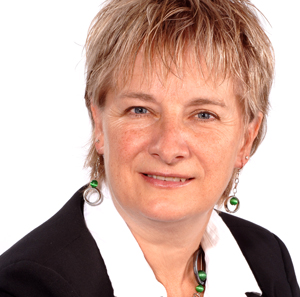
One of our “Editor’s Picks” for the current ANS issue is the article titled “Transition to Fatherhood: Modeling the Experience of Fathers of Breastfed Infants.”  The authors, Francine deMontigny, Carl LaCharite and Annie DeVault, describe a research project in which they examined a model of the relationships among father involvement, perceived parental efficacy, events related to breastfeeding, support, stress, and income with a sample of 164 fathers of breastfed infants.  The lead author, Dr. deMontigny, whose photo is featured here, describes their work that led to this study:

For over 15 years, I have been meeting with fathers, their partner, health professionals, to hear their point of view of what influences this transition. Needless to say, their spouse is an important source of support. But it stands out that nurses too can make a difference in fathers’ experience. Every time a nurse remarks positively about fathers’ abilities with their newborn, she contributes to strengthening the relationship between the father and the child. Our team has developed the Father Friendly within the Family Initiative to support health professionals in their efforts to build stronger ties with fathers and their families. We strongly believe that engaged fathers contribute to the family’s development.

This article is available for free download now!  So visit the ANS web site, and discover this and many other recent articles that can shape the future of nursing practice!

Acculturation & negative health outcomes


In one of our featured articles from the current ANS issue focusing on “Transitions,” Dr. R. Jeanne Ruiz and her colleagues present their research investigating the effects of acculturation on the health of pregnant Hispanic Women in the United States.    This research provides very important evidence for nurses and other providers who care for pregnant Hispanic women in the United States, but there are also important implications related to culture and health.  An important contribution of this study is the inclusion of physiologic measures.  Ruiz and her colleagues concluded that:

” ….  repeated or chronic physiological adaptation to stressors is an explanation for the “unhealthy assimilation” effect seen in Mexican immigrants.”  (see page E9)

As the authors of this article confirm, more research is needed to understand the health effects of cultural stress, how the dynamics of acculturation relate to health and well-being, and most important, ways in which nurses and other health care providers can promote health and well-being for immigrant women and families.

Choosing contentment in the midst of life transitions


Susan Bonis’ featured article, which describes a philosophic (hermeneutic) study,  is an example of scholarship that some assume is far removed from the practical realm of nursing practice.  But to the contrary, this thought-provoking article sheds light on one of the most vexing challenges of human practice – how do people come to a sense of enduring serenity (contentment) in the midst of the disharmony created by serious health challenges?  As Dr. Bonis states in her article: “Evidence-based practices begin with understanding the science that underpins the discipline. Nursing is a human science; therefore, it is essential to understand the basic human phenomena that underpin being human, such as contentment.” (see page 274 of her article, available for free download until 9/30/12).

Dr. Bonis examined the published memoir of Dawn Prince-Hughes, a researcher of primate identity and culture.  The memoir, titled “Songs of a Gorilla Nation: My Journey through Autism,” recounts Prince-Hughes’ experience of coming to understand her own journey living with autism.  Dr. Bonis’ hermenuetic interpretation of the memoir, cast in the perspective of the nursing human becoming philosophic framework, provides the basis for her analysis of the experience of contentment.  As a reader of this article, you may not share for yourself the human becoming philosophy, but you will find connections between this philosophy and the most fundamental of nursing concerns.  For me one of the fundamental nursing concerns that this article addresses is that of promoting high-level wellness.  Dr. Bonis describes the process of  contentment as a paradoxical living calm-turbulence in challenging situations – a process that seems to me as central to the basic nursing concept of high-level wellness.  In her conclusion, Dr. Bonis states that “As humans live rhythms of contentmentdisharmony, contentment is glimpsed in serene and pleasurable moments of feeling listened to, understood, cared for, loved, and respected, as well as in moments when they trust, unburden, and laugh while all-at-once acquiescing to arduous situations.” (See page 282). What an inspiring image for nursing practice, and for the outcomes that I believe we all seek!

Let us know your thoughts and responses to this featured article!  Leave your comments here – and we will respond!

Aging, language and health care


How we talk and think about aging is something that most often is taken for granted.  This is not the case for Connie Madden and Kristin Cloyes who have investigated the language of aging in history, theory and research.  They point out in their featured article titled “The Discourse of Aging,” the experience of aging is common to all humans, but it remains poorly understood.  Their analysis reveals how the language of aging has shaped not only our general ideas about the “common” aging experience, but the research and theories related to aging.  Their analysis shows how language has tended to dichotomize how we think about aging as an either-or — living longer or living better.  Nursing, they believe, can make a significant contribution to understanding aging by bringing a holistic view to this experience, and challenge notions that perpetuate limited and stereotyping assumptions about aging. Here are some reflections from the authors about their work on aging:

Connie Madden: My interest in the language of aging has been fueled through my experiences as a nurse educator talking with students about their experiences and perceptions.  Through PhD course work as a student in the University Of Utah Hartford Center Of Geriatric Nursing Excellence, I have been able to expand my interest through exploring the relationship between language, perception and the practice of providing nursing care for older adults.  In a particular course, The Philosophy of Inquiry ,  Dr. Kristin Cloyes helped put those  pieces together  through examination of anti-aging and healthy aging language as it intersects in the larger aging discourse.
Kristin Cloyes: It’s always inspiring when a scholar is able to take the typical structure of a required course and shape it into something they really want to say, growing a field she or he is passionate about in new directions. In this case, the structure involved a required course paper in which I ask students toexplore a central concept in their area of interest, to identify common epistemological assumptions that shape the field and to explore how these assumptions stand up when viewed from differing frameworks. Connie used the paper to embark on an incisive analysis of assumptions about aging, and how these may shape nursing education. After I suggested that her thesis should be developed for publication, I was lucky enough for Connie to invite me to help expand and refine her ideas about the discourse of gerontology as an emerging area of study.
The credit on the illustration “The Seven Ages of Man” shown above reads:  Bartolomaeus Anglicus, Le Proprietaire des Choses tres Utiles … Paris 1510

Nursing perspectives on culture and health


The article now featured in our “Editor’s Picks”by Martha Baird illustrates perfectly, to me, many of the features that characterize nursing perspectives.  The article, titled “Well-being in Refugee Women Experiencing Cultural Transition,” recounts two research studies that Dr. Baird conducted.  These studies provided evidence from which she developed a situation-specific theory of wellness among South Sudanese refugees in her community.  The concepts that stand out as specific concerns for nursing include culture, wellness, transition, family, relationships and health.  Here Dr. Baird describes the experience of this research, and the South Sudanese family who helped make her work possible:

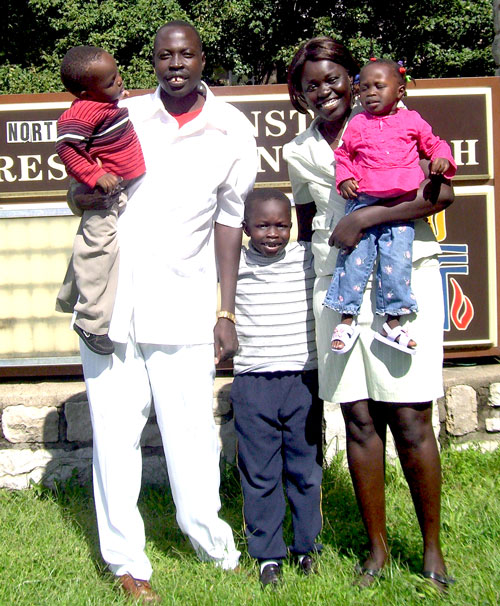
The research that led to the Theory of Well-being in Refugee Women in Cultural Transition would not have been possible without the help and guidance of Rebecca Mabior and John Akuei, my friends, translators, and interpreters. They have not only served as culture brokers between the South Sudanese community and myself, but have become part of our extended family.

John and Rebecca came to the US in 2001 as refugees. John was one of the Lost Boys of Sudan from the Kakuma Refugee Camp in Kenya. Rebecca came from Khartoum, the capital of Sudan, where she was practicing as a registered nurse. She and John met in the US, married, and have three children Atem 8 years, and Akon and Akuei, 3 year-old twins (see family picture). Their families still live in South Sudan and have never met their three children. Since South Sudan became a separate nation on July 9, 2011, they are able to visit their homeland for the first time in over 10 years. Next year, their oldest son, Atem will meet his grandparents for the very first time.

Working with the Sudanese refugee community on these two research projects has taught me the importance of long-term and sustainable relationships with the communities we are serving and hoping to effect positive health change.

Improving transition outcomes


Carol Geary and Karen Schumacher explain some of the most vexing issues in nursing care – effective transitions for patients who move from one care setting to another.  The evidence points to major issues in health care that add up to astounding costs – readmissions for Medicare patients alone add up to billions of dollars.  Geary and Schumacher address this issue theoretically by proposing an integration of transitions theory and complexity science.  Their work provides a new and expanded perspective that can improve outcomes for people who are transitioning from hospital to home.
Carol Geary shares this message about her work:
My research addresses care transitions from hospital to skilled nursing facilities among aging patients with advanced chronic disease. I am specifically interested in the multiple perspectives of patients, informal caregivers, and health care providers as described within this paper and suggested by viewing the phenomenon through a complexity lens.
Professionally, as an administratively focused nurse functioning both within and as a consultant to hospitals, the dynamic of care “across the continuum” intrigued me. When Dr. Sheila Ryan introduced me to complexity science in an informational interview for the PhD program in nursing at UNMC, my initial response was: “THIS changes everything.”  After two years of study, I remain fascinated by the challenge of viewing the world through this new lens.

From the author: Denise Drevdahl


Meet Denise Drevdahl (right in the photo), with her co-author Kathleen Shannon Dorcy (left) with one of their “buddies” on the Oregon coast!  Denise and Kathleen wrote the current featured article  “Transitions, decisions, and regret: Order in chaos after a cancer diagnosis”.  Their research explores the dilemma of entering an experimental treatment in the midst of a life-changing illness.  I was particularly inspired by the closing sentences in their article: “It is not so much the ability to remain stable and unchanged that should be the goal of care encounters, rather the goal should be flexibility and responsiveness to new paths and ways to traverse the unknown terrain and transitions together. Chaos, it seems, does give us the opportunity to see the world differently.” In reflecting on their ANS article, Denise wrote:

Kathleen and I are honored that our article was selected as an Editor’s Pick for the current issue of ANS. I have had the pleasure of teaching with Dr. Shannon Dorcy since 1996 and then working with her since 2004 on the research project that generated the data for the present manuscript. It has been a collaboration that has endured over time even though we come from different clinical backgrounds and expertise (mine in community/population health; Kathleen’s in cancer and cancer research). Despite (or perhaps because) of these differences, we share many commonalities, including an abiding interest in issues of social justice, as well as an ongoing commitment to examining concerns central to nursing through “a different lens.” A prime example is Kathleen’s inspiration to use a model of epigenetics to illustrate the transitions that occur in those participating in cancer research. This line of research has generated an interest in examining how physician/researchers, research nurses, and IRB members understand the differences between research and treatment. That, along with our continuing work on bringing social justice to nursing practice, education, and research promises to keep us working together far into the future.

From the Author: Lynn Rew


It is a pleasure to introduce Lynn Rew, lead author on one of my Edtitor’s Picks for the current issue.  I suspect that most ANS readers have had some connection to the experience of adolescence, either personally or professionally!  The current “Editor’s Pick” article by Lynn Rew and her colleagues Diane Tyler, Nina Fredland and Dana Hannah reports a research study that sheds light on changes that occur during this highly-charged experience.  Their research provides significant evidence that can guide nursing practice, research and theory development.  Their article is titled “Adolescents’ Concerns as They Transition Through High School”, and while it is featured you can download it for free from the ANS Web site!

Here is a message from Dr. Rew about her experiences of working with adolescents, and some background on the experience of conducting this study:

Not everyone shares my enthusiasm for studying adolescents. Having been an adolescent and parenting two adolescents, I am always curious about how they  change so rapidly and adapt (or not) to these changes. I want to know what adolescents are thinking and doing and why. I began with a longitudinal study of pre-adolescents (4-6thgraders) and found that, for the most part, they engaged in health and safety behaviors; however, when they made the transitions from grade school to middle school and then to high school, many of these behaviors were replaced with what I called health-risk behaviors.

Data for this article came from a longitudinal study of over 1200 adolescents who reside in rural areas in central Texas. For the analysis, I assembled a team that included two family nurse practitioners and a pediatric nurse practitioner.  We met often to determine how we would analyze the written responses of these kids to the prompt, “My main concern is . . .” This writing experience was fun and exciting, not only because we enjoyed reading and interpreting these responses, but also we began to recognize strengths and talents in each other that we hadn’t known before.

Faculty often complain that there is never enough time to write, but when you have a team of nurses who are willing to learn, not only from analyzing the data, but also from each other, writing becomes a joy! I was blessed to be part of such a team.

From the Authors: Riegel, Jaarsma & Strömberg


This message inaugurates our new blog feature – messages from the authors of our “Editor’s Picks” articles.  Here is a message from Barbara Riegel, Tiny Jaarsma, Anna Strömberg, authors of the featured article “Middle-Range Theory of self-care of chronic illness”

We are delighted to learn that our article is an Editor’s Pick of the current issue of ANS and provided for free to readers. The preparation of this article is the product of 3 years of collaboration during the time when Barbara Riegel was a Guest Professor at Linköping University in Sweden with Professors Tiny Jaarsma and Anna Strömberg. We brought to this collaboration years of individual research in the area of self-care and a growing recognition that comorbid illness complicates self-care for patients. We realized that  if patients and clinicians could be helped to see similarities in the self-care performed for various diagnoses, they might manage their self-care responsibilities  with more ease. Writing this article helped us integrate our prior research in self-care, our efforts to devise methods of measurement for self-care, and our devotion to teaching the next generation of scientists.

Currently, Anna Strömberg is leading a team primarily made up of faculty from Linköping University writing an article in which the theory is applied to a variety of chronic illnesses. As a team, we are teaching a graduate course on self-care of chronic illness at Linköping University. We have plans to develop a family of instruments that can be used to measure patients’ self-reports of self-care. These efforts should keep us busy for the years ahead.

Tiny Jaarsma, Anna Strömberg, Barbara Riegel,

Tiny Jaarsma, Anna Strömberg & Barbara Riegel

“Editor’s Picks” available now!


We have added a new feature to the ANS web site … Editor’s Picks from the current issue.  The Editor’s Picks will change every couple of weeks, and while an article is featured, it will be available for a free download!  Each week I will post information on this blog about one of the articles on the current “Editor’s Picks” list, giving some background and information about the article that I believe makes the article important for our readers.

Barbara Reigel (University of Pennsylvania), with her colleagues from Sweden Tiny Jaarsma and Anna Strömberg (Linköping University) are the authors of one of our first features, titled “A Middle-Range Theory of Self-Care of Chronic Illness.”  The theory was developed from self-care studies that the authors have conducted in several countries around the world; the article cites the studies so that you can trace the specific evidence on which the theory is based.

The authors address a central concern of nursing practice – the nature of the relationship between a nurse and a patient.  They explain the connection between that relationship and self-care of chronic illness as follows:   “When providers interact with patients their intention is that the partnership they form will motivate patients to engage in self-care that can be incorporated into their lifestyle. It is within this context of a mutually rewarding relationship that the self-care of chronic illness takes place.”

This theory was developed from sound research evidence, and in turn it provides an important resource to guide nursing practice.  It is based on deep analysis and clarification of some of the most persistent challenges that nurses face in building relationships with people living with chronic illness. This article  is an exemplar of one approach to the development of nursing theory that serves to guide nursing practice.

Check out the article now and add your ideas and thoughts about this article by replying to this post!  I look forward to hearing from you!