Skip to content

Theory-Guided Reflection during the COVID-19 Pandemic


The first featured article in the latest issue of ANS is titled “Exploring the Usefulness of
Theory-Guided Reflection During the COVID-19 Pandemic
” authored by Kathleen Sitzman, PhD, RN, CNE, ANEF, FAAN; Tristin Carpenter, MSN, RN; Kim Cherry, MSN, RN; and Ileen Craven, DNP, MSN, CNS, RN-BC. We invite you to download this article at no cost while it is featured, and share your comments and reflections for discussion here. Dr. Sitzman shared this message about this work for ANS readers:

I and my study team have been teaching theory-based content in the Caring Science, Mindful Practice Massive Open Online Course since 2015 and have been struck by fact that learners consistently express genuine gratitude for the opportunity to share and reflect upon care-giving experiences with each other in this online caring community of learners. We decided to carefully study this phenomenon in the hope of better-understanding how learners use Watson’s Human Caring Theory to better-understand and describe their feelings and experiences. We found that theoretical structure helped spark memories and careful analysis,and also provided opportunities for meaningful reflection related to the power and importance of caring work. We are hoping this paper will inspire nurse educators to consider adding additional opportunities for learners at all levels of nursing education to learn through theory-guided reflection.

Anti-Oppressive Nursing Education


Our current featured article is titled “Developing a Theory of Norm-Criticism in Nursing Education” authored by Caitlin M. Nye, MSN; Ellinor Tengelin, PhD; and Darryl Somayaji, PhD. While it is featured, it is available for free download from the ANS website! Here is a message that Caitlin Nye has shared about the background of this work:

This paper evolved out of an assignment for my advanced theory development course in my doctoral program. Its application of norm-criticism to nursing education praxis builds on the foundations of both emancipatory nursing (Kagan et al., 2014; Velasco & Reed, 2022; Walter, 2017) and anti-oppressive education (Kumashiro, 2000, 2002). The process of expanding on and crafting this paper has had a profound influence on the development of my doctoral research on the knowledge, beliefs, and experiences of undergraduate nursing faculty with teaching lesbian, gay, bisexual, transgender and queer (LGBTQ+) health. Even beyond this benefit, however, this paper is the exemplar I go to when talking to other newer nursing scholars who might be hesitant or intimidated about writing for publication.

One of my co-authors, Dr. Darryl Somayaji, was the professor for the course for which I wrote the original paper. In that class, I gave a presentation in which I first showed how norms, power, and othering function in dynamic, mutually reinforcing, and interlocking concert behind the scenes of nursing education. I emphasized how challenging—and important—it is to uncover the “clockworks” behind nursing education praxis to resist their contributions to discrimination, health and educational disparities, and real harm to both students and patients. After the course was over for the semester, Darryl told me the paper had potential as a future manuscript and that I should pursue expansion of the work and publication. I had heard the adage that “you should come out of each class you take with a paper for publication” but didn’t really think that applied to me! Nonetheless, we began talking about it, and I decided to give it a try.

The other thing I did that contributed to the process of developing this paper into a manuscript was to reach out to Dr. Ellinor Tengelin, a Swedish public health scholar whose 2019 doctoral dissertation (and associated published works) on norm-criticism and nursing education was the other key scholarly work that I used to first develop my original paper (Tengelin, Bülow, et al., 2019; Tengelin, Cliffordson, et al., 2019; Tengelin, Dahlborg, et al., 2019; Tengelin et al., 2020; Tengelin & Dahlborg-Lyckhage, 2017). Confession: I looked Ellinor up on Twitter! I reached out to her there and told her how much I admired her scholarship and about its influence on my own nascent theoretical thinking for my own research. We began talking and the next thing I knew—she had agreed to work with me and with Dr. Somayaji on this theory development paper. Scheduling writing team Zoom meetings that worked both for Eastern Standard Time and Central European Time was a bit tricky, but the lively and supportive discussions we had about the ideas and applications in our paper have been a highlight of my PhD program so far.

I will continue to develop and test the theory of norm-criticism for nursing education as I progress through my dissertation research and beyond. However, the reasons I point to this paper and the process of developing it as an exemplar for newer nursing scholars are:

  1. If your professor tells you your paper is good and should be published—believe them! (Conversely: professors, if you have a student whose work is innovative and exciting and you think it could be developed into a publishable manuscript, tell them! It was such a boost!).
  2. It was both theoretically and pragmatically useful to return to ideas that were just starting to develop to expand and deepen my approach, and I now understand that adage about finishing each class with a potential manuscript a lot better. Though my dissertation will not specifically test the theory, it will certainly be shaped by it.
  3. If there is a scholar whose work has moved you, influenced your thinking, or given you exciting ideas for your own research, it never hurts to reach out and tell them so! I have continued to build relationships this way and it has brought me together with some wonderful friends, colleagues, and collaborators.

As an educator, I am grateful to have this exemplar to share with my students and mentees to encourage them to pursue the opportunity to expand on and share their ideas through publication; as a doctoral student myself, it has boosted my confidence to pursue further opportunities for writing projects and publications (Nye et al., 2022; Nye & Dillard-Wright, 2023).

References

Kagan, P. N., Smith, M. C., & Chinn, P. L. (Eds.). (2014). Philosophies and practices of emancipatory nursing: Social justice as praxis. Routledge.

Kumashiro, K. K. (2000). Toward a Theory of Anti-Oppressive Education. Review of Educational Research, 70(1), 25–53. https://doi.org/10.3102/00346543070001025

Kumashiro, K. K. (2002). Troubling education: Queer activism and antioppressive pedagogy. RoutledgeFalmer.

Nye, C. M., Canales, M. K., & Somayaji, D. (2022). Exposing othering in nursing education praxis. Nursing Inquiry. https://doi.org/10.1111/nin.12539

Nye, C. M., & Dillard-Wright, J. (2023). Queering the classroom: Teaching nurses against oppression. Journal of Nursing Education, 62(4), 193–198. https://doi.org/10.3928/01484834-20230208-02

Tengelin, E., Bülow, P. H., Berndtsson, I., & Dahlborg Lyckhage, E. (2019). Norm-critical potential in undergraduate nursing education curricula: A document analysis. Advances in Nursing Science, 42(2), E24–E37. https://doi.org/10.1097/ANS.0000000000000228

Tengelin, E., Cliffordson, C., Dahlborg, E., & Berndtsson, I. (2019). Constructing the norm-critical awareness scale: A scale for use in educational contexts promoting awareness of prejudice, discrimination, and marginalisation. Equality, Diversity and Inclusion: An International Journal, 38(6), 652–667. https://doi.org/10.1108/EDI-10-2017-0222

Tengelin, E., Dahlborg, E., Berndtsson, I., & Bülow, P. H. (2020). From political correctness to reflexivity: A norm‐critical perspective on nursing education. Nursing Inquiry, 27(3). https://doi.org/10.1111/nin.12344

Tengelin, E., Dahlborg, E., Berndtsson, I., & Martinsson, L. (2019). Becoming aware of blind spots—Norm-critical perspectives on healthcare education. Jönköping University, School of Health and Welfare.

Tengelin, E., & Dahlborg-Lyckhage, E. (2017). Discourses with potential to disrupt traditional nursing education: Nursing teachers’ talk about norm-critical competence. Nursing Inquiry, 24(1). https://doi.org/10.1111/nin.12166

Velasco, R. A. F., & Reed, S. M. (2022). Nursing, social justice, and health inequities: A critical analysis of the theory of emancipatory nursing praxis. Advances in Nursing Science, Publish Ahead of Print. https://doi.org/10.1097/ANS.0000000000000445

Walter, R. R. (2017). Emancipatory nursing praxis: A theory of social justice in nursing. Advances in Nursing Science, 40(3), 225–243. https://doi.org/10.1097/ANS.0000000000000157

Awakening the Spiritual among Adolescents with Cancer


The current ANS featured article is titled “An Integrated Literature Review Revealing the Process of
Awakening the Spiritual Self/Identity Among Adolescents With Cancer
” authored by Nadeen Sami Alshakhshir, MSN, RN and Kathleen Montgomery, PhD, RN, PCNS-BC, CPHON. While this article is featured is available for free download here. Here is a message about this work that Nadeen Alshakhshir provided for ANS readers:

My passion for adolescent and young adult (AYA) health in the field of palliative and end of life care (PEOLC) began in 2016 when I enrolled in a palliative care and pain management professional diploma program . My academic training, coupled with my clinical experiences, has strengthened my passion for PEOLC and created a strong foundation for my emerging program of research. The overarching goal of my research is to advance positive health outcomes of PEOLC for AYAs. More specifically, I believe spirituality among AYAs in the context PEOLC of is an understudied area. Through centering my research around spirituality, I hope to advance science by describing early processes that awaken the spiritual self and, in the future, develop nurse-led interventions to help AYAs lean on their spirituality to promote their health and well-being.

My initial interest in spirituality came when I earned my master’s degree in palliative care nursing. The focus of my master thesis was on nurses’ spiritual well-being and spiritual care within PEOLC in oncology units. Additionally, I have centered my PhD coursework and research experiences around this goal, which focuses on advancing positive health outcomes of spiritual coping, as an element of PEOLC, for AYA with cancer.

The motivation to do research on the topic of spirituality was through my own experience when I unexpectedly lost my father when I was an adolescent. For a long time, I didn’t know how to overcome and work through the trauma of losing a special figure in my life. That is when I started to explore spirituality and forming my own spiritual identity, which in turn helped me cope with my father’s death. At that time, I was too young to label my spirituality as a spiritual identity. Therefore, as a Ph.D. candidate in nursing, I devoted my research program into exploring this phenomenon to be able to help other AYAs cope with the stress associated with chronic conditions . Through my Ph.D training in nursing, my research has led to uncovering the phenomenon awakening the spiritual identity.

The findings of the integrative review indicate the existence of the phenomenon of awakening the spiritual self/identity and describe this phenomenon as a process, with factors that hinder or facilitate the process and the potential for this process to foster coping with cancer among adolescents. Together, this contribution is significant to the field of PEOLC because it describes a new phenomenon in an understudied population that has the potential to enhance existing palliative and end-of-life care across the lifespan. Synthesizing evidence with a developmental lens is innovative. Considering the unique developmental stage of adolescence in the context of spiritual and cancer care challenges the current clinical and research paradigms. This publication outlines that despite the vast literature on the positive impact of spiritual care among adults with cancer, knowledge of adolescent spiritual care and the availability of spiritual care interventions for adolescents with cancer is underdeveloped. Specifically, there is a dearth of psychometrically tested spiritual measures and standard tools to guide developmentally appropriate spiritual care among adolescents with cancer. To address this critical gap and build upon the findings of this integrative review, further description of awakening the spiritual self/identity is necessary to define the construct and set the stage for measurement development. An innovative self-reported measure of awakening the spiritual self/identity has the potential to transform research and clinical care, by evaluating where adolescents are in the process and tailoring interventions to match their current state and personal goals. Therefore, my dissertation study is to qualitatively explore the phenomenon among AYAs with cancer. The study findings will be used to describe the phenomenon and inform the next study, focused on measurement development. Then, I plan to augment the Resilience in Illness Model (RIM) to include the phenomenon of awakening the spiritual identity as an antecedent to the concept of spiritual perspective in the RIM.  

I would like to acknowledge my advisor Dr. Kathleen (Kitty) Montgomery for the support through my PhD program and my previous advisor Dr. Eileen Kae Kintner for the mentoring and support during the writing of this publication.

“Visions” in ANS – A Unitary Theory of Healing Through Touch


The current issue of ANS includes the new ANS section featuring works focused on the scholarship of Rogerian Nursing Science. This section is called “Visions,” the title of the Rogerian Nursing Society journal. Visions was founded in 1993, and became a part of ANS in 2023, with the Visions article appearing as the last article is every print issue of ANS. The current Visions article is titled “A Unitary Theory of Healing Through Touch,” authored by Marlaine C. Smith, PhD, RN, AHN-BC, HWNC-BC, HS-GAHN, FAAN and Sean M. Reed, PhD, APRN, ACNS-BC, ACHPN, FCNS, SGAHN. Here is a message from Dr. Smith about this work:

Marlaine Smith

            The publication of this article has been a long time coming! It was one of those manuscripts sitting in the “To Do” pile waiting for the two of us to find enough time together to update, refine, and polish it before we felt it was ready for submission.  The practice theory that we developed was born from the findings of a qualitative study of the experiences of persons with advanced cancer receiving massage and simple touch. The qualitative study was “nested” in a RCT (Kutner, Smith, Corbin et.al., 2008) focused on studying the outcomes of both massage and simple touch (a “control condition” that the research team developed consisting of laying hands on 10 locations of the body for 3 minutes at each location). Dr. Jean Kutner and I were co-PIs on this study, and during data collection we received comments from the data collectors and those providing the touch that the participants in both groups were sharing rich, detailed accounts of their experiences. We realized we needed to capture these experiences in a qualitative study. Toward that end a subgroup of the team conducted interviews of 17 participants. Smith and Reed analyzed the data from the interviews. Both of us shared a unitary worldview, and it was clear that our theoretical perspectives were shaping how we conceptualized and languaged the findings. One’s philosophical/theoretical perspective informs all theory development but is often not made explicit. We used a constructivist, retroductive theory development process where both inductive and deductive processes informed the development of the theoretical concepts. The assumption is that theories, especially at the practice level, are developed within a larger conceptual/philosophical system of ideas, ours being Rogers’ Science of Unitary Human Beings. I still remember our collaborative theory development process…how much fun it was….the creativity…the A-Has of discovery as our analysis led to articulation and elaboration of the concepts. 

Sean Reed

            As we state in the article (Smith & Reed, 2023), healing, from the definitions of unitary scholars, is a transformative process characterized by remembering one’s integral nature, awareness of wholeness, appreciating wholeness, and/or coming into right relationship. So the concepts of sensing, reflecting, and connecting specify how touch facilitates this process of healing.  From a Rogerian perspective healing through touch is perceiving the whole, one’s bodily feelings, integrating information toward transformative perspectives, and experiencing self as integral with others and the universe.  The metaphor of “Sanctuary” was used to capture the essence of the experience of healing through touch. The theory was linked to Rogerian science through the concepts of wholeness (sensing), awareness (reflecting) and presence (connecting) (p. 8).

            There are some important “take aways” in this article.  We’ve already mentioned the first…the joy of theory development.  It is important to demystify the process of developing and linking concepts to create the meaning of phenomena important to nursology, and to do so in a way in which the ideas are: 1) aligned with a larger conceptual/theoretical system (correspondence); 2) fit together at the same level of abstraction in a clear and simple way (coherence); and 3) offer usefulness for the professional practice and advancement of the discipline (pragmatics) (Kaplan, 1964). Another important “take away” is that touch is literally at our fingertips, and we need to use it as an expression of our intentions to promote health, healing and wellbecoming.  While there are more data supporting the effects of massage for healing, the findings from both quantitative and qualitative studies suggest that even simple touch has perceived benefits. In my experiences as a patient and family member of patients in acute and long-term care, it seems that the use of touch as a caring-healing modality is rare or absent. If we value theory-guided, evidence-based practice, then this can no longer stand! We have clear evidence of the benefits and a practice-level theory explaining its linkages to healing. It’s time to intentionally integrate touch into nursing practice as a standard of care. During our research we heard from family members who were hesitant to touch their seriously-ill loved ones. Engaging family members and their loved ones in discussions about the kinds of touch that might be comforting is a good way to have family members express their care through touch and for the patient to receive the healing from this love and caring. Based on the theory and evidence it is time for forms of touch such as backrubs, foot and hand massage and expressing caring and comfort through simple touch to be included in foundational courses in nursing.  These competencies easily align with the AACN Essentials’ Domains of Knowledge for Nursing Practice and Person-Centered Care and the Concepts of Communication, Compassionate Care, Evidence-Based Practice and Clinical Judgement.

            Practice theories in the discipline of nursing can offer descriptions of how health patterning modalities like touch can make a difference in health/healing/wellbecoming and guide nursing practice.  It is our hope that this article contributes to that end. 

Kaplan, A. (1964). The Conduct of Inquiry. San Francisco: Chandler Publishing.

Kutner, J.S., Smith, M.C., Corbin, L., et al. (2008). Massage therapy vs. simple touch to improve

pain and mood in patients with advanced cancer: A randomized trial. Annals of Internal

Medicine. 149(6), 369-379.

Smith, M.C. and Reed, S. (2023). A unitary theory of healing through touch. Visions:

Scholarship of Rogerian Science in Advances in Nursing Science, 46(2),219-232. doi: 10.1097/ANS.0000000000000487.

Structural Competency: Toward Antiracism in Healthcare


Our current featured article in ANS is titled “A Concept Analysis of Structural Competency” authored by Katerina Melino, MS, PMHNP-BC; Joanne Olson, PhD, RN, FAAN; and Carla Hilario, PhD, RN. We welcome you to download this article at no cost while it is featured on the web! This message from Katerina Melino gives background about her work:

My interest in structural competency was born out of my professional experience as a registered nurse and psychiatric mental health nurse practitioner, and the tensions and gaps I grew increasingly aware of in my practice and the health care system over the course of my career. For the last 13 years, I have worked as a nurse in acute and emergent mental health care, substance use treatment, and HIV mental health care. My clinical work in each of these settings has been with people with mental health challenges who are disproportionately Indigenous, Black, and people of colour; LGBTQ+ identified; and living in poverty. Many of my clients struggled to access appropriate treatment, experienced challenges in maintaining engagement with care, and were hampered in their mental health recovery by factors that could not be addressed by the biomedical model of care in which I was working. Structural competency offered a way to conceptualize what I was seeing in practice, as well as possibility in how to move forward in addressing these gaps.

Structural competency is a nascent concept in the health professions literature and has only been published on in the discipline of nursing since 2018. It represents an evolution of cultural competency and incorporates understandings of the social determinants of health, structural violence, and critical race theory in conceptualizing how factors far outside the individual locus of control influence individual health. This concept analysis uses Rodgers’ evolutionary method to examine how disparate meanings and uses of this concept across medicine and nursing can be synthesized to broaden our multidisciplinary conceptual approach to addressing health inequity. I am excited by the promise of structural competency to transform our approach to clinical mental health care.

Many thanks to my mentors, Dr. Joanne Olson and Dr. Carla Hilario, who guided me in doing this research.

Philanthropy and the Development of the Discipline


The current issue of ANS features two articles focused on the future of nursing: “Philanthropic Foundations’ Discourse and Nursing’s Future Part I: History and Agency” authored by Shawn M. Kneipp, PhD, ANP, APHN-BC; Denise J. Drevdahl, PhD, RN; and Mary K. Canales, PhD, RN and “Philanthropic Foundations’ Discourse and Nursing’s Future Part II: A Critical Discourse Analysis of RWJF Future of Nursing Initiatives” authored by Shawn M. Kneipp, PhD, ANP, APHN-BC; Mary K. Canales, PhD, RN; and Denise J. Drevdahl, PhD, RN. Both articles are available for download while they are featured. Here is a message that Dr. Kneipp provided about their work:

Shawn Kneipp

We began our initial Future of Nursing (FON) research efforts with a 2016 presentation at the American Public Health Association (APHA) annual meeting, using critical discourse analysis to examine public health nursing’s (PHN) representation within the FON and five-year evaluation reports, Robert Wood Johnson Foundation (RWJF) nursing campaigns, and previous Institute of Medicine Reports that informed the FON. As a research methodology, discourse analysis was selected because of its usefulness in examining dominant discourses that influence nursing practice. The analysis indicated that public health was often constructed within the context of individualized care. The public/community health workforce was narrowly defined with PHN presented primarily through case studies of individualized care while population health focused on clinical population categories. This first investigation raised more questions than answers, especially regarding processes surrounding the FON’s development and the RWJF’s unique role in the effort. We were therefore well positioned to continue this work when we learned a second report was being planned.

Mary Canales

As public health nurses, our initial reactions to the planning of a second FON report that would focus on nursing’s role in addressing the social determinants of health (SDoH) was met with both a sense of validation and apprehension. On the one hand, it was validating to have nurses practicing in specialties within the profession beyond those in PHN recognize the critical role that SDoH play in perpetuating health inequities. On the other hand, we were also apprehensive about the potential for SDoH being narrowly conceptualized – and what that might mean for the scope of interventions in which nurses would be asked to engage. Specifically, nursing’s history of directing practice, education, and research endeavors at the individual level has produced a profession that overwhelmingly, and willfully, dons blinders to understanding the socially-constructed systems that differentially drive the health of the individual patients for whom care is provided, and the communities to which they belong. 

At the time the second FON process was launched, I had just stepped into the role of Chair of the APHA’s Public Health Nursing (PHN) Section. Given that populations with the worst health outcomes due to SDoH have been a long-standing focus of PHN, it seemed reasonable to expect that public health nurses as a collective, through their member organizations, would figure prominently as presenters or panel participants both within the National Academies of Science, Engineering, and Medicine (NASEM) FON committee, and at the public forums held by the FON committee. I anecdotally observed the opposite, whereby several leaders of the APHA PHN Section in collaboration with other PHN-focused organizations (the Council of Public Health Nursing Organizations, among others) regularly attempted to engage in the process, but to little avail. Ultimately, APHA PHN leaders were able to provide two minutes of testimony at the public forums. However, nurses from acute care systems were routinely given much more ‘discursive space.’ The irony of this was not lost on us, and these observations led to the systematic, critical examination of the entirety of the process and the juxtaposition of nursing as a self-regulating profession through professional organizations, the discursive space afforded nursing representation during FON processes, and what this might mean for nursing’s collective agency.  

Nightingale and Seacole: A Rivalry?


The current featured ANS article is titled “Considering the ‘Bitter Rivalry’ Within the Context of European and Colonial History of Women Healers” by Adeline Falk-Rafael, PhD, RN, FAAN. This article will be available for download at no cost while it is featured – an apt resource for the week we celebrate “Nurses’ Week”! Here is a message that Dr. Falk-Rafael provided giving some background related to this work:

I first learned about Mary Seacole from a group of Caribbean nursing students who were in my leadership course in a BScN program at York University in Ontario, Canada. They presented Seacole to the class as a nursing leader whom they admired. A number of years later, I heard Mary Seacole spoken of in disparaging terms at a nursing meeting so turned to her autobiographical account of her life and work. Her book, I believe, reveals her to have been a woman healer, providing both caring and curing services to the people she served, like women had for centuries before her.

I have also long been an admirer of Florence Nightingale. I wrote this article to honour both these 19th century nurses in the hopes of lessening what has been called a “bitter rivalry” among today’s nurses. As I reflected on the current polarized views among nurses and others, I was reminded of the historical treatment of women healers, particularly by medicine, and wondered whether a similar dynamic might be at play within nursing with regard to Mary Seacole. I draw no generalized conclusions in that regard, believing the answer is likely complex and different for each, but hope the article leads readers to consider the bitter rivalry and draw their own individual conclusions.

Mitigating Implicit Bias and Optimizing Healthcare Outcomes


Featured currently in ANS is the article titled “The State of the Science of Nurses’ Implicit Bias: A Call to Go Beyond the Face of the Other and Revisit the Ethics of Belonging and Power” by Holly Wei, PhD, RN, CPN, NEA-BC, FAAN; Zula Price, PhD, FNP-BC, RN, CNE®cl, CD(DONA); Kara Evans, MSN, RN, NPD-BC, NEA-BC; Amanda Haberstroh, PhD, MLIS, AHIP; Vicki Hines-Martin, PhD, PMHCNS, RN, FAAN; Candace C. Harrington, PhD, DNP, MSN, APRN, AGPCNP-BC, CNE, FAAN. Note that Nursing Professional Development Credits are available for this article!. The article is available to download at no cost while it is featured!

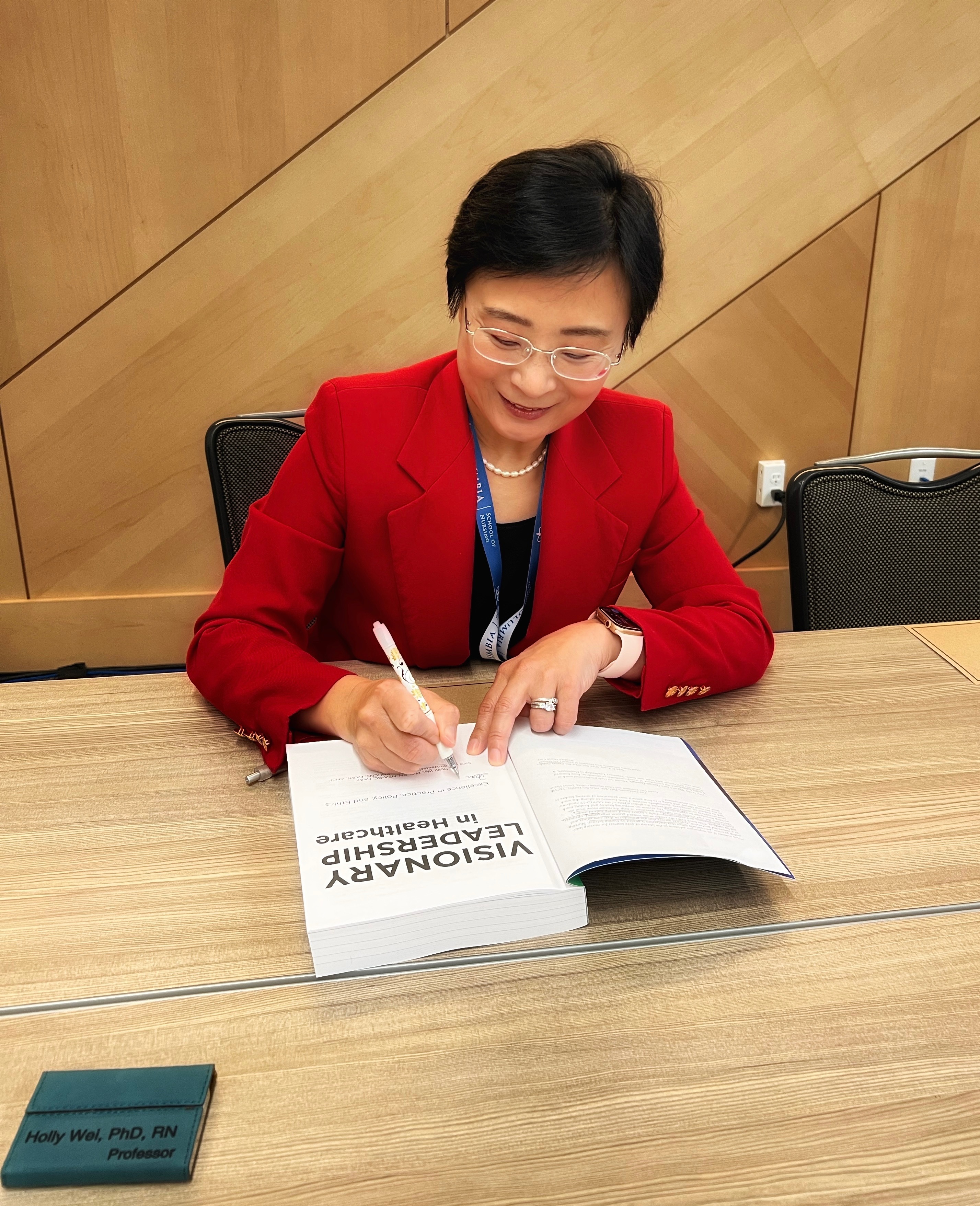
Dr. Holly Wei, Professor, Associate Dean at East Tennessee State University College of Nursing, provided this background information about the work reported here:

The current focus on health equity and racial health disparities has brought implicit bias to the forefront of healthcare delivery. As the interests in health inequity and disparity grow, we want to examine the current research on nurses’ attitudes and behaviors. The broad and pervasive impacts of implicit bias have been examined across social and cultural institutions and systems, including healthcare, education, and housing. Because nurses spend the most time with patients, they play a significant role in patients’ and families’ healthcare experiences and outcomes.

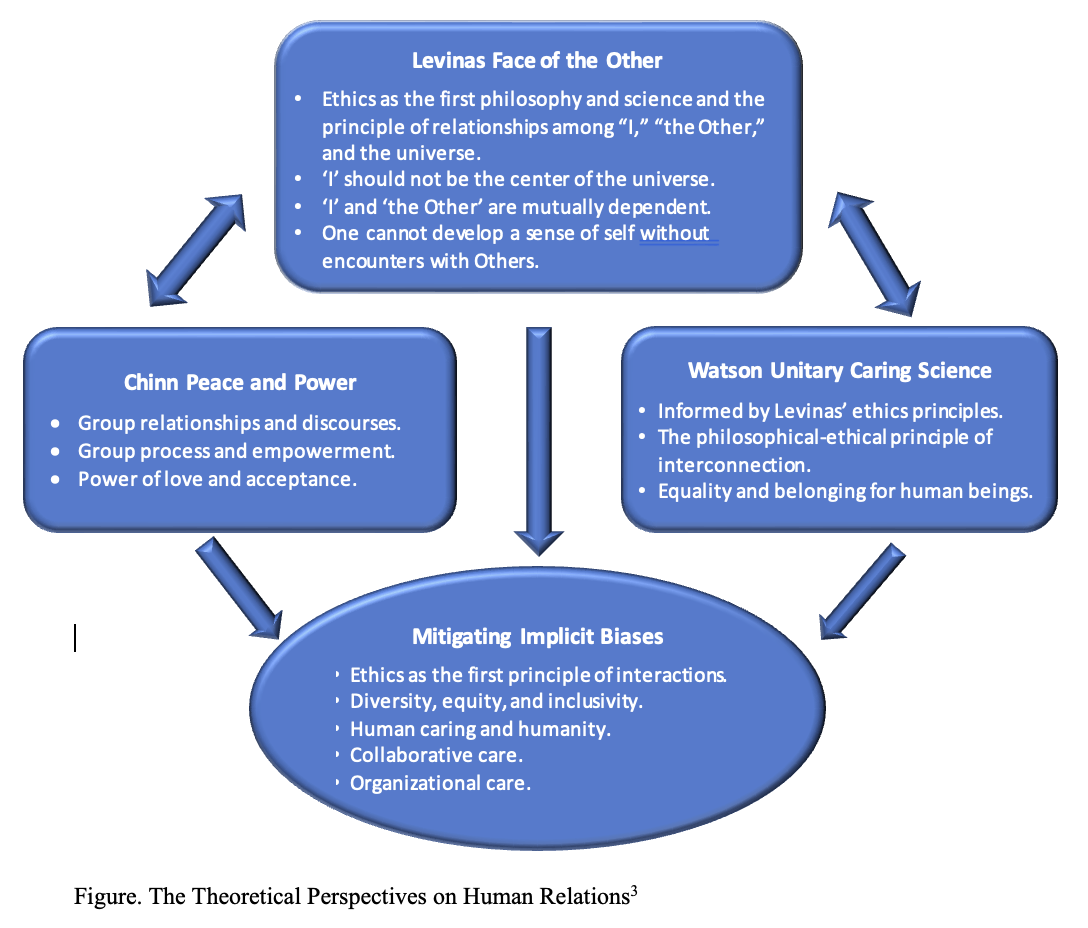
This paper presents the current state of the science of nurses’ implicit bias and the primary sources of nurses’ implicit bias – race/ethnicity, sexuality, health conditions, age, mental health status, and substance use disorders. Nurses’ implicit bias is analyzed and described using Levinas’ face of the Other and ethics of belonging, Watson’s human caring and unitary caring science, and Chinn’s peace and power theory. This paper invites nurses to go beyond ‘the face of the Other’ and revisit the ethics of belonging and power. We hope these theories can provide a guideline and call for nurses to work together with organizational leadership and other healthcare disciplines and stakeholders to mitigate implicit bias and optimize healthcare outcomes.1,2

References

  1. Wei H. The development of an evidence-informed Convergent Care Theory: Working together to achieve optimal health outcomes. International journal of nursing sciences. 2022;9:11-25. https://doi.org/10.1016/j.ijnss.2021.12.009
  2. Wei H, Horton-Deutsch S, Sigma Theta Tau International. Visionary Leadership in Healthcare: Excellence in Practice, Policy, and Ethics. Indianapolis, IN: Sigma Theta Tau International Honor Society of Nursing; 2022.
  3. Wei H, Price Z, Evans K, Haberstroh A, Hines-Martin V, Harrington CC. The State of the Science of Nurses’ Implicit Bias: A Call to Go Beyond the Face of the Other and Revisit the Ethics of Belonging and Power. Advances in nursing science. 2023. 10.1097/ANS.0000000000000470

“Informal Caregiver”


Featured currently in ANS is the article titled “‘Informal Caregiver’ in Nursing: An Evolutionary Concept Analysis”, authored by Aimee R. Castro, MSc(A), RN; Antonia Arnaert, PhD, RN; Karyn Moffatt, PhD; John Kildea, PhD; Vasiliki Bitzas, PhD, RN, and Argerie Tsimicalis, PhD, RN. Here, nurse and PhD candidate Castro reflects on how knowledge products – including this concept analysis – keep evolving, just as Rogers argues in her methodology.

Evolving the label of “informal” care towards a strengths-based connotation

Given that April 4th was National Caregiver Day in Canada, and President Biden also declared April as Care Workers Recognition Month, April seems like an appropriate time to further reflect on the spectrum, boundaries, and potential of informal and formal caregiving work.

I think it’s important for academics – professionals whose job it is to become leading experts in specific areas of knowledge – to take theoretical leaps. We should take big swings at ideas that maybe don’t always “reveal themselves in the data” but that, based on our years of rigorous study and lived experience, bubble to the surface of our minds as potential expansions of knowledge. These inspirations most often occur in collaboration with others, and they develop slowly over time.

I was privileged enough to have just such a theoretically enriching collaboration. This conversation expanded my ideas of how the concept of “informal caregiver” might evolve even further than we suggested in our original publication, which was based on data from 48 articles. Specifically, in this post, I argue that the “informal” label can and should be reclaimed as having its own strengths that complement weaknesses arising from “formal” labels and rules.

This reflection came about during a lunch and learn presentation of our concept analysis with the palliative care research network of Quebec (RQSPAL). The moderator, Psychology PhD candidate Émilie Cormier, pointed out that we had defined “informal” by what it was not – i.e., not paid, not trained, and not formally organized. But what if we had defined it by what it is – more individualized, and perhaps, creative, than formalized or standardized roles can be? She also shared how in her work with palliative care populations experiencing homelessness, she’s noticed that sometimes clients’ formal care providers (such as their social workers and nurses) become clients’ informal caregivers during end-of-life. Such formal roles may transition into more informal relationships over the years, because of these populations’ often more limited informal support networks.

We talked about the freedom and opportunities that can arise when we’re allowed to drop the boundaries and responsibilities created by our formal titles, and instead be informal creative collaborators in the life journeys of others. And we reflected on the moral distress that can also arise, when our clinician orders and institutional rules tie our hands, preventing us from truly supporting patients’ individual needs (homeless shelters that restrict certain prescriptions comes to mind; as do hospital units that don’t allow pets to be with patients at end-of-life, and standards that require waking patients up early to take their blood pressure or give insulin, but that ignore the consequences of sleep deprivation). There’s also something here to consider about how patient-centered care necessitates critical thinking and adaptations of formal rules. After all, no set of guidelines can ever fit every patient’s unique needs.

As Rogers’ methodology recognizes, no paper or concept is ever “finished”. So, having authored this initial concept analysis of “informal caregiver”, I’d like us to consider evolving it further: What if “informal” can be seen as a strength, not just less-than-or-equal-to “formal” work, but rather – offering creative opportunities to color outside the lines of formal guidelines? What if we need both, informal (freer and more creative) and formal (standards and structure) dimensions in all of our caring roles?

For further information on Aimee Castro’s research, as well as to connect, please follow her on Twitter (@AimeeRCastro) and visit: https://aimeecastro.com/irespite-services-irepit/ .

Nurses’ Health-Seeking Behaviors


The current featured article is titled “Factors Involved in Nurses’
Health-Seeking Behaviors: A Qualitative Study
” authored by Tahereh Najafi, PhD, MSc, BScN, RN; Forough Rafii, PhD, MSc, BScN, RN; and Sara Rahimi, BScN, MSN, RN. The article is available for free download while it is featured.. Sara Rahimi has provided this background information about the work reported here:

The motivation to do this research was created in my mind when I lost one of my experienced nurse friends due to metastatic pancreatic cancer shortly after a late diagnosis. He had been experiencing some clinical symptoms for a long time, but he often ignored them or sought treatment with the help of his knowledge. After this painful incident, as a nurse educator, I realized in my interactions with nurses that most of them spend all their time working at the patient’s bedside and taking care of them, and they do not care about their health as much as they should. So this question was formed in my mind, why do nurses delay seeking health even though they know the importance of early referral and timely treatment? What factors affect nurses’ health-seeking behavior (HSB)? Therefore, as a Ph.D. candidate in nursing, I decided to devote my dissertation to this topic. My review of the existing literature did not reveal much information on this topic, and I decided to explore these factors as a qualitative study by conducting unstructured interviews with nurses. Interviews with nurses allow a deep understanding of their experiences when facing health problems. By content analysis of the conducted interviews, five major concepts were developed: fear, trust/distrust, excuse, access, and support. This article sheds light on the barriers and facilitators of nurses’ HSB in a country like Iran that faces a shortage of nursing workforce and a high population of communicable and non-communicable diseases. Recognizing nurses’ HSB is important in ensuring the health of the nursing workforce and providing quality care to patients by a healthy workforce. This study helps health policymakers and managers to be aware of the barriers to nurses’ HSB and use this information to plan to improve health or change the poor health behaviors of nurses. Future research is needed on how nurses’ HSB can affect their behavior with patients and their care.

I would like to thank my dear mentors, Professor Forough Rafiei and Professor Tahereh Najafi who guided me in doing this research.