Skip to content

Posts from the ‘Editor’s Picks’ Category

Spiritual Healing for Men Traumatized by Childhood Maltreatment


This featured article titled  “Spiritual Healing in the Aftermath of Childhood Maltreatment: Translating Men’s Lived Experiences Utilizing Nursing Conceptual Models and Theory” is an exemplar that provides specific primary, secondary and tertiary nursing interventions framed within nursing theories and models, addressing the benefits of engaging spiritual faith traditions in the healing process.

The authors are Danny G. Willis, DNS, RN, PMHCNS-BC; Susan DeSanto-Madeya, PhD, RN, CNS; Richard Ross, SJ, RN, M Div, STL; Danielle Leone Sheehan, MS, RN; and Jacqueline Fawcett, PhD, RN, FAAN. Dr. Willis has shared this background about their work:

The article “Spiritual Healing in the Aftermath of Childhood Maltreatment: Translating Men’s Lived Experiences Utilizing Nursing Conceptual Models and Theory” that I wrote with my co-authors (DeSanto-

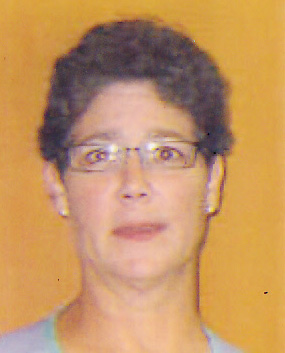
Danny G Willis

Danny G Willis

Madeya, Ross, Sheehan, & Fawcett) is an outcome of qualitative research with adult male survivors who self-identified as healing from maltreatment when they were children. Because very little is written in the nursing science literature about men’s experiences of healing and spirituality, especially in the aftermath of  childhood maltreatment, we felt it necessary to publish our research. Through the publication of our article, we aim to advance knowledge about men’s ways of healing from childhood trauma and abuse experiences. Likewise, because nursing conceptual models and theory provide guidance for nursing assessments and healing modalities/interventions, we translated our findings about spiritual healing within the context of extant models and theory. Translation of research findings within nursing conceptual models and theory can advance disciplinary substance and guide nursing practice.

Spiritual and existential issues become salient in the lives of men traumatized by childhood maltreatment as well as for other traumatized populations. Our future work will continue to explore the phenomenon of spiritual and existential healing in the aftermath of traumatic, abusive, and life-threatening experiences. Within the context of the healing science and art of nursing, healing modalities and interventions to promote spiritual and existential healing can be developed and utilized to engender survivors’ sense of well-being and promote human flourishing.

You can download the article without charge while the article is featured on the ANS web site! We welcome your comments and feedback here!

Measurement of Holistic Nursing Values


In the current ANS featured article, author Elizabeth Kinchen, PhD, RN, AHN-BC, addresses the challenges facing nursing to address the primary care needs of populations now served because of access to the U.S. Patient Protection and Affordable Care Act.  The article, titled “Development and Testing of an Instrument to Measure Holistic Nursing Values in Nurse Practitioner Care” provides evidence of the effectiveness of nurse practitioner care.  Dr. Kinchen provided this description of her work:

Elizabeth-Kinchen

Dr. Elizabeth Kinchen

With the expansion of health care accessibility in the United States, nurse practitioners (NPs) are projected to assume increased responsibility for a large portion of primary care delivery. This article derives from my dissertation research, in which I explored the patient’s perception of the nature of the nurse practitioner’s care, specifically the preservation of holistic nursing values. I think this topic has special importance in describing the unique contribution which NPs make to primary care delivery.

The impetus for this research came from my experiences in working with and being cared for by nurse practitioners in acute care, academic, and clinic settings. Many of the patients I came in contact with confided that they preferred the nurse practitioner’s care because NPs take time to listen to them and consider all aspects of their circumstances when providing care. These qualities are hallmarks of nursing care, which, I contend, is by tradition and definition holistic in nature. Furthermore, the incorporation of holistic nursing values in NP care exemplifies the value of the NP role for patients.

The majority of research into NP care has hitherto focused on satisfaction and practice style, and has been mainly qualitative in design, so this study, using a newly-developed instrument, represents a contribution to quantitative research on NPs that does not address provider-driven indices such as satisfaction, but rather patients’ perceptions of the preservation of nursing values in NP care.

My dissertation research, guided and supported by Dr. Bernadette Lange and Dr. Ruth McCaffrey, was undertaken to develop and test the Nurse Practitioner Holistic Caring Instrument (NPHCI), a new instrument designed to gauge the extent to which nurse practitioners preserve holistic nursing values in their care. Results from this study support previous research findings regarding the holistic qualities of NP care, wherein NPs report incorporating holistic nursing values in practice; namely, patient advocacy, listening, non-judgmental acceptance of patient choices, and viewing patient conditions from a comprehensive, whole-person perspective. These are attributes which define holistic nursing care, and which the IOM1 cites as defining primary care delivery.

Nurse practitioner care is posited to differ in essential ways from purely medical practice, most importantly in its attention to a relationship-centered, coordinated and comprehensive mode of care delivery. Exploring a care model which highlights the incorporation of nursing values in NP practice therefore has great significance for patients, practitioners, and educators in guiding care, improving practice, and planning academic curricula. In addition, it is hoped that studies documenting the nature and value of NP care will also inform policy creation and reform, especially in matters such as reimbursement, scope of practice, and collaborative regulation.

Therefore, as next steps in this research, I hope to explore how holistic nursing values are incorporated in nurse practitioner care in larger, more diverse patient samples, and in NP program curricula, by revising the NPHCI for use in nursing faculty populations.

1. Institute of Medicine. The future of nursing: Leading change, advancing health. http://www.iom.edu/~/media/Files/Report%20Files/2010/The-Future-of-Nursing/Future%20of%20Nursing%202010%20Report%20Brief.pdf. Published October 2010. Accessed October 18, 2014.

Download this important article now at now cost, while it is featured!  Then return here to participate in discussion of your ideas based on Dr. Kinchen’s article!

A New Model for Enacting the Scope of Nursing Practice


The current ANS featured article addresses the disconnects that prevail between the full scope of nursing practice, and the practices that actually are enacted.  The article is titled “Influences on and Outcomes of Enacted Scope of Nursing Practice: A New Model” by Johanne D´ery, PhD, RN; Danielle D’Amour, PhD, RN; R´egis Blais, PhD and Sean P. Clarke, PhD, RN, FAAN.  Dr. D’ery has shared this message about their work:

This article “Influences on and outcomes of enacted scope of nursing practice. A new Model” explains the conceptual thinking that guided my PhD thesis and is at the heart of my ongoing program of research. Scope of nursing practice, especially enacted (real) scope of practice, is the extent to which nurses use the full breadth of their knowledge and Derycompetencies in their daily work. I’m interested not only in work characteristics and nurse personal attributes that affect scope of practice, but also the outcomes from organizational and patient perspectives that may change as a result of differences in the implementation of the nursing role.

I am currently Assistant Director of Nursing (Research Development) at Hôpital Ste-Justine (Montreal, Canada), one of the largest maternal-child academic health sciences centers in the French-speaking world. I have had the good fortune to do PhD work where I tested the model described in the article under the supervision of Dr Danielle D’Amour. In the next months, I’ll begin postdoctoral training with Drs. Sean Clarke (Boston College) and Mélanie Lavoie-Tremblay (McGill University, Montreal, Canada).   I plan on continuing my work around scope of practice in some new contexts.

To me, scope of practice is not only a vital issue for the nursing profession, and relates to nurses’ experiences and public perceptions of nursing work, but it also holds promise in improving access to care, as well as quality and continuity of care and patient safety. Only when nurses are working to full scope can we expect patients to benefit fully from nurses’ presence in health care settings.

In this article, I was looking for a way to bring together some important theoretical ideas to a better understanding of characteristics on which nursing administrators should consider when developing new strategies around nurses’ use of their knowledge and skills.

I and my coauthors hope the discussion will be helpful to educators, administrators and researchers concerned with this concept, as I said before, a vital issue for our profession. It deserves continued and focused attention from various quarters in nursing.

We do welcome your comments and ideas related to the important issues discussed in this article!  You can download this article while it is featured on the ANS web site – then return here to share your comments!

Evidence guiding culturally safe nursing practice


The current ANS featured article titled “Toward Cultural Safety Nurse and Patient Perceptions of Illicit Substance Use in a Hospitalized Setting”  is based on a collaborative project that focuses on cultural safety in health care.  The authors, Bernadette (Bernie) Pauly, PhD, RN; Jane McCall, MSN, RN; Annette J. Browne, PhD, RN; J. Parker, MA and Ashley Mollison, MA shared this background about their work:

Our article describes an ethnographic research project examining the experiences of people who use illicit drugs and nurses who provide care for them in acute care settings. The idea for this research emerged from a recognition that people who are identified as using illicit drugs and facing socio-economic disadvantages often experience stigma when accessing health care services. Nurses working at Insite, Vancouver’s supervised injection site, found that cultural safety helps to mitigate stigma when working with people who use illicit drugs, so this project set out to explore what cultural safety might look like with this population in other settings. Cultural safety was developed in New Zealand to address persistent health inequities experienced by Maori people and has been a strategy to enhance care for people experiencing the negative effects of stigma, racism and other forms of discrimination, and ongoing marginalization.

In exploring the meaning of cultural safety, from the perspectives of people who use illicit drugs and nurses, participants described 3 main conceptualizations of illicit drug use, as 1) individual failings; 2) criminal activity, and 3) a disease of ‘addiction’. They discussed how these intersect to negatively impact access to care, management of pain, and access to of harm reduction supplies.

In relation to illicit drug use, cultural safety can prompt nurses and other healthcare providers about the importance of situating drug use in the history of the criminalization of drug use, and how continued legacies of that criminalization impact the care that people receive, preventing people from accessing health services now and in the future. Creating culturally safe(r) environments involves health care professionals
examining their own values and conceptualizations of drug use, and about people who use drugs, and how that might affect practices and policies in acute care settings.team

This project would not have been possible without the leadership and input from a peer advisory committee comprised of members of the Society of Living Illicit Drug Users (SOLID), an organization run by and for people who use(d) illicit drugs. The peer advisory met regularly throughout the project to provide direction on the interview questions, strategies for data collection, and input on research findings. A nurse advisory committee provided parallel leadership and direction to the research process. The advisory groups ensured that the research questions were relevant, that the process of data collection was attentive to needs of participants, and that the research findings were interpreted within an appropriate context of lived experience and practice. Together with the research team, the nurses and peers developed a practical set of recommendations for practice.

The results of the research were presented at two hospital forums where advisory committee members, nurses and managers discussed how research recommendations could be implemented through changes to hospital policy and practice. As a result of the research there have been changes to hospital harm reduction policies and practices. Today, the cultural safety bulletin is being mobilized by SOLID to offer peer-run trainings to front line health and social service providers.

This article is available for download without cost while it is featured on the ANS web site!  Download and read it now!  Then come back here and share your comments – we would be delighted to hear from you!

Moving toward LGBT Equality in Healthcare


The current ANS featured article explores the complex issues involved in overcoming homonegativity in healthcare.  The article titled “Cues-to-Action in Initiating Lesbian, Gay, Bisexual, and Transgender-Related Policies Among Magnet Hospital Chief Nursing Officers: A Demographic Assessment” is by Ralph Klotzbaugh, PhD, RN, APRN and Gale Spencer, PhD, RN. Dr. Klotzbaugh provided this background related to the article:

I started doing this research as a result of reviewing the Human Rights Campaign’s annual Healthcare Equality Index that looks at protective policies for patients and employees that identify as LGBT. The year I looked at must have been

Ralph Klotzbaugh

Ralph Klotzbaugh

around 2012. The end of the HEI puts together a list of participating medical institutions and their scores from the policy survey. I started perusing this list and began to notice two things that really surprised me. First, not all Magnet designated hospitals had responded to the survey (the survey is voluntary) and of those Magnet designated hospitals that had responded to the survey, many had few if any protective policies in place. I had assumed Magnet would require lgbt specific policies and was disappointed to find out that indeed they had not.

As I worked through the development and analysis of this study, I started thinking through some larger questions of the nursing profession and what it might mean to future nursing research. Mainly, how will nurses gain or improve administrative authority? Further, how might nurses use our insights to the social/political/economic conditions faced by the patients that we care for in influencing these administrative changes?

I believe these questions are of particular importance to nursing. Regardless of where our practice has taken us, we all started out at the bedside caring for patients. Caring for patients. It is time for our profession to recognize the value of caring, not only as it relates most importantly to the treatment of all patients as well as our colleagues, but to how this necessarily has to inform policy, politics, and administration.   I hope my research contributes toward developing a better sense of the problem and the directions that we might take as nurses. I look forward to continuing my research in my new position as Assistant Professor at University of Massachusetts, Boston. Finally, I would like to thank my coauthor Gale Spencer at Binghamton University who made the space for me to do LGBT specific work, and for others to follow.

This article is available for download at no cost while it is featured on the ANS web site, so read it now, and come back here to share your comments and responses!

Producing Environments of Care


The current featured ANS article is titled “A Practice Theory Approach to Understanding the Interdependency of Nursing Practice and the Environment: Implications for Nurse-Led Care Delivery Models” by Miriam Bender, PhD, RN and Martha S. Feldman, PhD.  The article is available for free download while it is featured on the ANS web site.  Dr. Bender has shared this story of how this work evolved, and the importance of networks in the evolution of theoretical ideas:

This article is the product of more than two years’ immersion in a multi-disciplinary practice theory reading group created by Martha S. Feldman at the University of California, Irvine (UCI). Martha is an organization theorist best known for her work on organizational routines, and routine dynamics
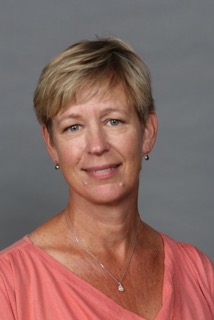
Dr. Miriam Bender

Dr. Miriam Bender

in particular.

In 2012, I was working on my doctoral research, which focused (and still does) on a care delivery model that integrates a new nursing role, the clinical nurse leader. I wanted to understand the mechanisms by which this reorganization and implementation of nursing care delivery produced documented improvements in care quality and outcomes.

I chanced upon Martha’s and Brian T. Pentland’s article Organizational Routines As A Unit Of Analysis (2005) via an exploratory Google Scholar search. Fascinated, I found and read more of her articles, which opened my eyes to a theoretical lens and body of work on organization dynamics that I felt could be leveraged to better understand and explain the complexity of multi-disciplinary healthcare delivery.

I gathered my courage to contact Martha (with a supportive push from Dr. Ann M. Mayo, one of my outstanding doctoral committee members), and she very graciously met with me and even invited me to join the practice theory reading group, which had its first meeting January 2013. The reading
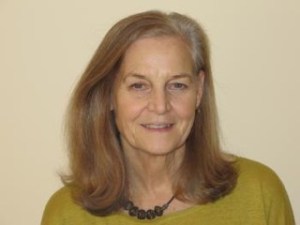
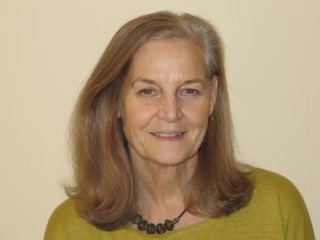
Dr. Martha Feldman

Dr. Martha Feldman

group includes nursing, social ecology, business, education, informatics, and many other interdisciplinary scholars who meet every month for a couple of hours to engage with practice theory and empirical research that uses a practice theory lens.

As I am learning, practice theory offers a new way of understanding and explaining social phenomena such as contemporary organizing, which is increasingly understood to be complex, dynamic and distributed. A philosophical premise of practice theory is that there are no boundaries separating subject and object, mind and body, or structure and action, but rather they only exist in a recursive relationship of mutual constitution. Mutual constitution means social orders (structures, institutions, routines, etc.) cannot be conceived without understanding the role of actions in producing them, and similarly, human actions should be understood as always already configured by structural conditions. This continuous co-production of action and structure in practice means neither is static or stable, but rather they are continuously refreshed, adapted or perpetuated.

The more I became immersed in this strange new world of mutual constitution, the more I began to think about nursing practice in relation to the spaces where nurses practice. Current theory and research on nurse practice environments focus on the ‘things’ necessary to create environments that nurses then populate and practice within. Bad environments make nursing practice difficult, good environments make nursing practice easy. Partial or thwarted nursing practice negatively influences patient health outcomes, while fully engaged nursing practice positively influences patient health outcomes.

I slowly began to realize that in this conceptualization, no meaning is ascribed to nursing practice contributing to the environment where all this occurs. Using a practice lens, I began to understand that nurses, along with patients and everyone else on the healthcare team, through their practices, are always meaningfully constituting their environments of care and conditions for practice. There is in fact no externally defined environment that nurses and others populate and act within, but rather the environment is embedded in their activities.

Once that became clear to me, I made another realization; there is currently no proposition explicitly linking nursing practice and the environment in the nursing metaparadigm, which I believe has led conceptually and methodologically to nursing knowledge that is also preconfigured and separate. In other words, because we have not linked nursing practice and the environment theoretically, we have not considered the ways they are linked empirically and have instead studied them in isolation from each other.

Once that became clear to me, I felt challenged to address this theoretical gap as a first step towards creating awareness of nurses’ critical role in shaping environments through their practices. Hence the published article, which argues that a refined conceptualization of the interdependency of nursing practice and environment is necessary to identify, theorize and promote nursing practices that are beneficial to the environment of care as part of an explicitly proposed domain of nursing knowledge and practice.

The significance of a focus on the mutual constitution of nursing practice and environment is that it enables the conceptualization and development of holistic models of care that better integrate the dynamics of practice and the conditions for health into the organization of healthcare delivery. Implications include healthcare practice patterns that patients, nurses and the multi-professional healthcare team consider healing and health promoting.

This has been a long, long journey that really is only just beginning. Over the last few years I have transitioned from doctoral student to assistant professor at UCI, which allows me to continue my engagement in this incredibly generative cross-disciplinary practice theory forum that Martha initiated and which continues to flourish. I am grateful to Martha and all participants of the reading group, who challenge me to further explore practice and the duality of structure and action in relation to nursing and healthcare delivery, and to better understand how healthcare practice patterns are produced, reinforced and/or adapted, and how they generate both expected and unexpected outcomes and the conditions for further practice.



Interview with Dr. Barbara Carper


 We are delighted to publish the first “ANS General Topic” article, which is an interview with Dr Barbara A. Carper by Elizabeth R. Eisenhauer, RN, BSN, MLS.  Dr. Carper is the author of one of the most important articles published in ANS – “Fundamental Patterns of Knowing in Nursing,” published in the first issue of the journal in 1978!  Still among the most frequently cited articles in nursing, Dr Carper’s insights set in motion a major shift in nursing scholarship and practice.

Ms Eisenhauer shared this description of her experience interviewing Dr. Carper, and of her own reflections on the meaning of Dr. Carper’s ideas:

I remember being so struck by the paper “Fundamental patterns of knowing in nursing” that my librarian skills immediately kicked in —What else had Barbara Carper written? Where was she? What more did she have to say? When Google provided few answers to these questions, I knew I had to seek her out. Her views about there being so much more to nursing than science are foundational; I couldn’t let it go. However, I was afraid people would think I was going off on a zany tangent, so initially, I kept the project a secret.

Eventually, I knew that I needed to discuss it on a professional level. So I confided in one of my professors, Dr. Arslanian-Engoren, at the University of Michigan. I had gotten the idea for the project while I was sitting in her advanced nursing theory development class. She was very supportive and encouraging of the project! If she had dismissed it, I am not sure I would have had the courage to pursue it so ardently. I am very grateful for her mentorship.

The “patterns of knowing” are also ways of making decisions, and this relates to my research on informed consent and decision-making among clinical research volunteers who are asked to donate biospecimens for research purposes. For example, there is a movement to collect, store, analyze, and even manipulate DNA. But DNA can alternatively be seen as more than just scientific material. It can be seen in a spiritual sense as the “essence of our individuality” [1]. Therefore, tinkering with it may have implications for some people that go beyond science and empirics. Research volunteers may not understand or consider these ethical implications, until they are explicated, weighed against volunteers’ personal values, and the consequences clearly described [2]. Helping patients or research volunteers clarify their values and make informed choices are acts of caring, fundamental to nursing [3,4]. Carper discusses the connection of veracity and transparency, during informed consent, to caring and nursing in her 1979 paper, “The ethics of caring” [3]. I fear such values are being overlooked in the modern age of blanket consent for genetic research. Again, there is so much more than science that goes into caring for and knowing a patient.

On a personal note, talking to Dr. Carper and getting to meet her was phenomenal—-a dream come true! Anyone who has had the experience of getting to meet someone they so admire will understand. I was awestruck, and she was so humble and gracious. It was an amazing, remarkable experience that I will never forget, and for which I am most grateful.

References

  1. This phrase has been used by numerous people, including Senator Pete V. Domenici in discussing the Genetic Information Nondiscrimination Act of 2005. See: Weeden, JL.      Genetic liberty, Genetic property: Protecting genetic information. Ave Maria Law Review.2006; 4(2): 611-664. (Quote p.631).
  2. Tomlinson, T, Kaplowitz, SA and Faulkner, M. Do people care what’s done with their biobanked samples? IRB: Ethics & Human Research. 2014;36(4):8-15.
  3. Carper BA. The ethics of caring. Adv Nurs Sci. 1979;1(3):11-20.
  4. Dungan, JM. Dungan model of dynamic integration. International Journal of Nursing Terminologies and Classifications. 1997;8(1);17-28.

Visit the ANS web site today to download Ms. Eisenhauer’s interview, and return here to contribute your ideas and comments to further discussion!

Health Change Trajectory Model


The discipline of nursing now has a growing and rich body of theoretical models that provide useful perspectives from which we can build practices addressing some of the most pervasive health challenges we and our patients face.  These models also facilitate the design and implementation of research projects that add to the evidence required for effective outcomes of practice.  Our current featured article is an example!  The title is “The Health Change Trajectory Model: An Integrated Model of Health Change” by Deborah Christensen, BSN, RN.  Here is a message Ms. Christensen has prepared for the ANS blog:

Health change appraisal is unique to each individual with dynamic changes across the lifespan. To promote understanding of evolution and change in health care appraisal, I developed the Health Change Trajectory Model by

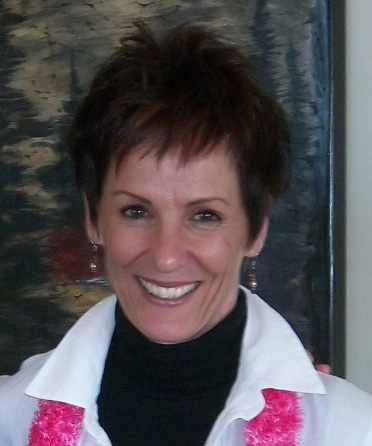
Deborah Christensen

Deborah Christensen

integrating concepts from uncertainty in illness and illness trajectory theories. The integrated model is applicable to any change in health, not just the occurrence of chronic illness.

Nurses are the key health care providers who assist others in understanding and coping with health changes. Placing the experience of health change in a trajectory framework offers a new and creative perspective for nurses as they assist patients and families with positive adaptation to changes in health throughout the life course. Conceptualizing the nurse as health change management partner emphasizes the nurse and patient/client partnership with patients clearly in charge of shaping their health management trajectory.

Studies from uncertainty in illness theory indicate that there are phases when uncertainty can be perceived as an opportunity rather than a threat. For example, in several types of cancer there are periods of remission (comeback phase) interrupted by disease progression (acute or downward phase). Through genomic research and the development of targeted and immunotherapies, patients may have several different treatment options that can be perceived as opportunities. Further, the experience of decreased energy in the absence of illness can be perceived as a threat or as an opportunity for positive changes in physical activity and nutrition. How is uncertainty perceived in these situations? How can uncertainty as opportunity be supported? I believe that in answering these questions, nursing interventions can be developed to help patients move toward adaptation and a balanced perceptual shift from threat to opportunity in uncertainty, thus, optimizing their health change trajectory. The Heath Change Trajectory Model provides the theoretical framework for exploration of all perceived health changes, not just those specific to chronic illness, as unique opportunities for a more optimistic view of health change.

This article will be featured on the ANS web site for the next couple of weeks and will be available at no charge while it is featured!  So please visit the web site to get your copy, and come back to this blog and share your feedback and ideas!  We would be delighted to hear from you!

Shifting the discourse around large bodies


Ingrid Ruud Knutsen, RN, PhD from Oslo and Akershus University College of Applied Sciences and University of Oslo, Norway is the author of our current featured article that explores the health consequences of contemporary society’s views about large bodies.  The article is titled “A Discursive Look at Large Bodies—Implications for Discursive Approaches in Nursing and Health Research.  Dr. Knutsen shared this message for ANS readers about her work:

How have we come to understand obesity as an illness that is treated by surgery and medication in contemporary healthKnutsen300 care? Through research projects, I have experienced that people in large bodies often feel stigmatized, especially by health professionals. There are reasons to question whether the general attitude towards people in large bodies represent a greater challenge than the large body itself for obese people. For what is health? – is it happy, self-confident people enjoying life and their opportunities or is it people striving towards a perfect exterior? For scientists it is important sometimes to stop and question premises for our knowledge, conditions and situations, to reflect about whether we could serve patients better by approaching them in other ways and understand their situations through alternative perspectives. A reflective and critical approach related to how to challenge understandings we take for granted represents an important angle in research. Discursive perspectives and discourse analysis are based on an epistemology welcoming other questions and new approaches to challenge traditional knowledge and understandings. Such perspectives give opportunity to enrich research in nursing and health.

We would be delighted to see your comments and responses appear here!  You can download your copy of Dr. Knutsen’s article while it is featured on the ANS web site, then come back here to leave your comments!

Social Withdrawal and Migraine Headaches


Starting on March 18th, a new article will be featured for free download from the current issue of ANS!  The article, titled “Social Withdrawal as a Self-Management Behavior for Migraine: Implications for Depression Comorbidity Among Disadvantaged Women,”  is authored by Shawn M. Kneipp, PhD, RN, ANP-BC, APHN-BC and Linda Beeber, PhD, RN, CS, FAAN.  Recognizing social withdrawal as a distinct, highly nuanced coping strategy in
symptom self-management, they explore its relevance for understanding migraine-depression symptoms within the life context of socially and/or economically disadvantaged women.  They recommend further nursing research  that draws from complexity science theory and methods to better understand these dynamics and ultimately improve care.  Dr. Kneipp  shared this message about their work for ANS readers:

I would not have expected to be writing on this topic two years ago.  As is frequently the case with scientific inquiry, however, unexpected study findings, combined with ongoing clinical work and research with women who are socioeconomically disadvantaged, led me down this path.  The unexpected findings came from a

Shawn Kneipp

Shawn Kneipp

clinical trial with women in a Welfare Transition Program (WTP), which suggested headaches may be associated with job loss in the previous year.  Given the erosion of economic safety nets in the U.S. generally, and the current limits on economic assistance receipt through the Temporary Assistance for Needy Families (TANF, or ‘welfare’) program more specifically, obtaining and maintaining employment has become an even more critical social determinant of health for women who are socioeconomically disadvantaged.

Linda-Beeber-e1380548224649

Linda Beeber

From a number of prior studies, we have also known for a while that depression is highly prevalent in this group, that depression impedes women’s ability to function in the workplace, and that depression is most often present in the context of other chronic health conditions.  Despite this, there are large gaps in the literature on headache symptoms (predominantly migraines for women) in relation to socioeconomic status and self-management, in the context of other highly prevalent disorders (i.e., depression), and the associated morbidity in terms of work-related functioning.  This recognition, informed by clinical observation of how this population was often managing their migraine-related symptoms as they struggle to perform well at work, was the driving force in wanting to begin to pull the relevant disease-trajectory and self-management theoretical pieces surrounding this issue together.

The theoretical perspectives offered in this article underlie a current pilot study we are conducting to determine the feasibility of a novel data collection approach to further examine how disadvantaged women self-manage migraine symptoms. As with the majority of my research, women from the community of interest are playing a crucial advisory role in designing, conducting, and interpreting the findings from the pilot work. Given the preliminary feasibility findings, and looking to our future work in this area, nurse researchers have a great deal to contribute in the way of both theory and intervention development and testing to better manage comorbid health conditions, improve work-related functioning, and improve their odds of achieving economic self-sufficiency.

Go to the ANS web site now to download your copy of this article – it is important both in content and method.  then come back here and share your thoughts, questions and ideas – we would be delighted to hear from you!