Skip to content

Posts from the ‘Practice’ Category

What’s the Point of the Evidence Debate?


We have just published ahead of print an article that will be published in the first issue of 2014!  The article is titled “Particularizing the General: Sustaining Theoretical Integrity in the Context of an Evidence-Based Practice Agenda” by Sally Thorne, PhD, RN, FAAN, FCAHS and Richard Sawatzky, PhD, RN.  Dr. Thorne and Dr. Sawatzky have extended their discussion of the “evidence” debate with this message for ANS blog readers:

Although we realize that “the evidence debate” may seem like a tired topic for some readers, we think it remains one of the most important avenues through which nurses can find their grounding in why the philosophy of science really matters to our discipline. Health and public policy get made on the basis of a complex and highly

Dr. Sally Thorne

Sally Thorne, PhD, RN, FAAN, FCAHS

politicized combination of ideology and science. We tend to think about ideology as if it exists in the world of “the other” and not in our own disciplinary knowledge. And yet, we must recognize that nursing has always been driven by so much more than just empirical science or philosophy, even if we sometimes struggle with how to name, conceptualize and justify those other forms of knowledge that influence our practice.

For us, the history of theoretical and philosophical knowledge-building in nursing is quite fascinating. Although it has taken a lot of twists and turns along the way (some of them sufficiently awkward as to be downright embarrassing), once you clear away the “noise” and reflect on what many of the founding nurse theorists and scholars were struggling with, you realize that they were grappling with incredible complexities. The language they used was sometimes a bit convoluted or misleading, and the competitiveness among the individual theorists and their disciples was at times unseemly. Nevertheless they were trying to work out ways of conceptualizing the rather marvelous constellation of intellectual and behavioral competencies that characterize the practice of nursing when it is done at its best, in order that we could improve our capacity to help nurses achieve that.

Of course if nursing were derived from a simple skillset, then that theorizing and philosophizing would have been

Dr. Sawatzky

Richard Sawatzky, PhD, RN

easy.  But it is not. And that’s what makes the story so fascinating. Patients are complex and adaptive, and so are we. The social and ideational worlds within which people experience health and illness are dynamic, multilayered, and fraught with uncertainties and complexities.  The thinking nurse – that nurse we refer to as “expert” within his or her population group or setting – is always skillfully navigating that great chasm between science (which represents the general past) and context (which represents the particular moment), not to mention looking forward to considerations of possible implications for the future.

In re-entering the “evidence debate” in this manner, we wanted to juxtapose ideas about how we make sense of knowledge that comes from certain kinds of formally derived scientific processes with those that have to do with nursing’s inherent interest in the individual case. We believe that the trend towards standardized practice in health care during recent decades (e.g., reliance on general clinical practice guidelines) is increasingly at odds with notions of heterogeneity and individual differences (or “anti-standardization”), such as those prompted by field of personalized medicine. Just as many forms of medical management are moving away from population-based science (i.e., reliance on population averages) toward novel targeted and individualized therapies arising from genomics, proteomics and pharmacogenomics, we believe that nurses will need systems and structures through which to focus and strengthen individualized care and patient-centered approaches. These are not simply vague abstractions, but complex and challenging dimensions of the intellectual approach that nurses must always bring to their practice.

So for us, it seems useful to really push nurses toward clarity in what does and does not constitute evidence in the conventional sense. Slippage with how we frame the basis of what we think we know will only serve to discredit our profession as a credible contributor to the larger world that is wrestling with these evolving ideas. We are concerned that the tendency to reconceptualize certain forms of knowledge as “evidence,” in an attempt to obtain credibility, will not serve the nursing well. Nursing practice and theories are unavoidably influenced by many valuable forms of nursing knowledge that do not necessarily conform to conventional notions of “evidence.” Rather than “branding” all nursing knowledge as “evidence,” nurses are challenged to articulate what these “non-evidential” forms of knowledge are and what the basis is of their justification. We want to remobilize an enthusiasm for why nurses ought to care about the nursing theory world by bringing into focus the relevance that disciplinary thought has in the larger world of contested practices and influence upon futures.

We keep returning to this idea that the dialectic between the general and the particular is really the essential element in the uniqueness of nursing knowledge, our defining characteristic, the idea best captures what we are.  As we continue to develop our collective expertise and wisdom with regard to evidence generation and interpretation – figuring out how we learn about the patients of the future through systematic and rigorous exploration of the past – it will be imperative that we not forget the “artform” of individualized holistic care, enacting relational practice, and taking an intersectional lens on the social determinants that may be shaping the health and illness experience of the patient who is before us in the moment.

Thanks for taking this journey with us, and we look forward to a lively debate!

You can download this article at no charge now on the ANS web site!  Get it, read it, and come back here to engage in this very important, and interesting debate!

Innovative support for primary care school nurses


School nurse Lori S. Anderson, PhD is the author of our current “Editor’s Pick” article titled “The Development and Implementation of eSchoolCare: A Novel Health Care Support System for School Nurses.”  In this article Dr. Anderson describes the eSchoolCare program that provides support for 97 school nurses in 67 rural school districts in South-Central Wisconsin.  The article provides background, theoretical framework, implementation and evaluation of this innovative project. Dr. Anderson shared for ANS readers her own background in school nursing, and why this project is so important for nurses who are primary care providers in schools, and for the children and families they serve:

My introduction to school nursing came early. My mother was a long-time school nurse and during my high school years I helped her out during vision and hearing screenings. I loved the independence of her work and the focus on improving the health and well being of school-age children. So following suit, my first job fresh out of nursing school was in a rural school system in southern Wisconsin.  I was responsible for 4,500 students in

Dr. Lori Anderson

Dr. Lori Anderson

six separate school buildings. I quickly learned two things, that the downside of the independent practice was a sense of isolation and that while I had hoped to make an impact on the health and wellness of students through teaching and other prevention activities, my time was largely spent caring for children with chronic health issues, some serious. The seeds for the eSchoolCare project were sown during this time. While I could pick up a phone and call my school-nurse-mother for support and expert guidance, many school nurses were and still are left looking for evidence-based resources to guide their practice and for support to decrease the sense of isolation.

Julia Lear, director of the Center for Health and Health Care in Schools at George Washington University, has used the phrase “hidden health care system” to describe the large number of professionals who provide care to children and youth in schools across the United States. Most of these professionals are nurses and the health care needs they attend to are becoming increasingly numerous and complex. The Affordable Care Act encourages community-based services, yet policy makers and those in the traditional health care arena have little knowledge about this “hidden” system of care.

Nurses are also providing care in homes, workplaces, and long-term care facilities, among others. These community settings provide challenges to nurses similar to those encountered in schools, problematic communication with traditional health services, isolation, and difficulty accessing evidence-based resources to guide care. The solution to these complex challenges will be multi-dimensional. But technology now allows us to bring resources and support to nurses in these settings in a way that we had not done before. Our eSchoolCare project uses mobile technology to bring the expertise and resources of an academic healthcare setting to the nurse in the community, decreasing their sense of isolation and providing them with evidence-based approaches to care delivery. Think of it as the online version of having a “mom” nurse expert on the other end of the phone line.

We are eager to hear your comments and ideas about this important project!  Visit the ANS web site now to download your copy of this article at no charge, and share your comments here!

Human Flourishing: A Nursing Ethic


Our current featured article in ANS is titled “An Innovative Professional Practice Model: Adaptation of Carper’s Patterns of Knowing, Patterns of Research, and Aristotle’s Intellectual Virtues.”  The author, nurse ethicist Barbara Bennett Jacobs, MPH, PhD, RN, translates an adaptation of Carper’s patterns of knowing into a nursing metalanguage of science, ethics, art, and advocacy.  Dr. Jacobs shared this commentary on her work that gave rise to this article:

Barbara-Jacobs300

Dr. Barbara Jacobs

The phrase “change is constant” is being used now by hospital administrators to partially explain the restructuring of departments and services that is often accompanied by acquisitions of smaller and/or regional hospitals into large corporations.  These changes in health care delivery systems are not limited to hospitals, as these corporations include, for example, agencies and services that provide home-care, out-patient services, emergency medical services and other community health care enterprises.  As the template changes, so does the status quo.  This ought to empower nurses to evaluate the status quo and suggest changes within the nursing profession for a number of reasons.  The one most obvious reason is, as Dr. Kagan opines in her guest editorial, – “to make things better.”  Better patient outcomes, better patient health, better prevention strategies, better human flourishing.

Without an underpinning in nursing knowledge, nurses will be ill-equipped to ask critical questions, to analyze the status quo, or through a process of praxis change those practices and structures that are unjust or inequitable in their practice environments.  The ethos of nursing is a strong one and ought to be visible, evident, and valued and unique from the institution’s ethos.  In order to accomplish this in the rapidly changing health care environments, imagination and innovation have the potential to make a difference.  Unfortunately, “change is not constant” in nursing education and practice to the degree it is in other realms of health care.   Take for example electronic charting – a wave of tsunami proportions.  As nurses now are more tethered to the i patient (a phrase coined by Dr. Abraham Verghese to describe the patient as data points) they are less available to move in the patient’s landscape with hopes of performing acts of aesthetic quality or to engage in such a way that is personal, intersubjective and meaningful to the patient.  Yet the technology prevails with support from some nurses, but others lament their loss of time to “be with” patients.  The question to ask is whether some innovation like electronic charting is in harmony with the voice of nursing, the ethos of nursing, and the philosophy of nursing or is it another institutional innovation that requires acquiescence and submission by the nursing population with minor input.

Thirty years ago Carper gave us an understanding of what nurses need to know to do what they need to do that is recognizable, valued, and defined as knowing that can be expressed as knowledge.  The professional practice model concept is fertile territory for planting these patterns of knowing along with other important concepts such as values, virtues, and research in such a way that the model enhances its applicability, adaptability, and usefulness to achieve the telos of nursing.  Professional practice models benefit the institution for sure but the real benefit, the real truth, the real reason to have them is to join in solidarity with those persons, families, and communities who call on nurses to answer the moral call to enhance their threatened human flourishing.

The model presented in this paper has been revised, revised, and revised again so as to reflect the thousands of patient narratives I have been blessed to experience.  The two patients in the paper are real, both having a profound impact on my current role as a nurse ethicist.  Both patients were not only medically complex requiring empiric knowing, both where vulnerable to threats to their self-determination requiring ethical knowing, both ached for meaningful personal encounters with their nurses requiring aesthetic knowing, and both changed (as did the nurses who cared for them) requiring personal knowing as a result of the covenantal relationship.  This model may not appeal to every nurse but the hope is that it will generate dialogue, reflection, and controversy.

Please consider entering in to dialogue here!  Download your copy of this article now while it is featured, and come back here to share your thoughts, challenges and questions!

The cognitive work of nurses


In the current Editor’s Pick article titled “Use of the Critical Decision Method in Nursing Research: An Integrative Review,”  author Priscilla K. Gazarian, PhD, RN reports on her synthesis of  7 studies that explored nurses’ cognitive processes in today’s work environment.  She describes her work as follows:

I have been curious about how nurses make decisions for some time. How  do nurses “know” what the right action is in any given situation? Intuition has not been a complete enough explanation for me.

Nursing is unique in many ways, but especially in its decision making. Nurses make decisions under extreme conditions. Often, the nurse has only an instant to decide. The stakes may be very high, maybe even life or death. The decision occurs in an environment that is marked by complexity. In addition, nursing’s commitment to holism requires that the nurse consider each situation within an individual context.

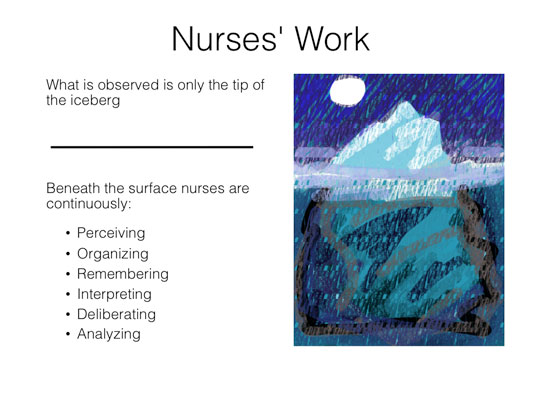
In my role as a Clinical Nurse Specialist and Nurse Educator I have observed nurses act with precision and accuracy in complex situations. I have also seen beginning nurses struggle to learn to “Think like a nurse.” When I watch an experienced nurse, the actions seem well coordinated and fluid, but I am only seeing the tip of the iceberg. Beneath the surface, nurses are continuously perceiving, organizing, interpreting, and deliberating. All the time. In fact, researchers have documented an ICU nurse makes a decision every 30 seconds (Bucknall 2000). How do they do it, and do it so well?

I was first introduced to the critical decision method as published in 1993 here in ANS. The method seemed a good fit for understanding the uniqueness of nurse decision-making. I read more about the method and digested other studies that had used the method. When I looked at the body of studies that had used CDM in nursing, I became aware that when taken together,  these studies corroborated much of what I had observed in practice about nurse decision making.

iceberg550

The Critical Decision Method is certainly useful in describing the cognitive processes of nurses. In addition, the resulting descriptions of situated decision making can provide a framework for instructional materials, to inform the design new information technologies, and to improve and advance nursing practice.

I am grateful for this opportunity to share my work in ANS and in this blog post.  I hope you find my synthesis rings true to what you know about the complexity and uniqueness of nurse decision-making, and I look forward to your comments and dialogue on how this method can be used to influence the development of nursing practice.

Go to the ANS web site now to download your copy of this informative article!

Philosophic inquiry for nursing: a crucial connection


Because nursing is a very “practical” endeavor, the crucial underpinnings of philosophy are sometimes difficult to recognize.  But in this article the authors, Pamela J. Grace, PhD, RN, FAAN and Donna J. Perry, PhD, RN, explain why this is such a critical connection.  Their article titled “Philosophical Inquiry and the Goals of Nursing: A Critical Approach for Disciplinary Knowledge Development and Action” is currently featured on the ANS  web site.  Dr. Grace and Dr. Perry provided this interesting background to their work:

From Pamela Grace: The idea for this paper had been germinating a long time and went through several iterations. It benefited from the critique and suggestions of many colleagues, doctoral students and the ANS reviewers but we are sure that there is much more that can be said and we look forward to an ongoing dialogue.

A very early version of the paper was presented as part of a 4-paper symposium sponsored by International Philosophy of Nursing Society (IPONS) members and accepted for presentation at the Royal College of Nursing (RCN) 2010 Research Conference. IPONS is a forum for philosophical dialog and has among its aims: “to promote and establish philosophy of nursing, and health care in general, as a credible and important field of philosophical and critical inquiry” and that was the intent of the symposium to highlight the role and importance of philosophical thought for disciplinary purposes.

The shape of this version emerged as a result of co-teaching a doctoral seminar at Boston College with Donna Perry in the Spring of 2012. The course was focused on understanding philosophical and socio-political influences on health policy and ways in which nursing research can be use to inform and shape health policies. I used a much rougher draft of the paper as one of the assigned readings. Donna’s insightful and helpful suggestions on the manuscript, ideas about the hierarchical structure, and addition of Lonergan’s thoughts really helped refine the paper in a way that we believe makes it broadly useful to the profession.

The original and more personal reason for the paper is that, over my many years as a practicing nurse both in critical care settings and later in primary care as an ANP, I struggled with the healthcare environment – how it often and sometimes in subtle ways undermines good practice or fails to meet the needs of individuals and their communities. This struggle led me to doctoral studies in philosophy. I was hoping to learn ways of addressing practice problems. In this environment I was free and indeed encouraged to question everything. The skills and perspective gained I took with me into nursing academia only to discover that this sort of probing inquiry, that is not afraid to question how various projects and different levels of curricula meet nursing goals, seems to be losing ground as a valued a mode of knowledge development.

FYI the International Philosophy of Nursing Society  (IPONS) annual conference is in the US this year (Atlanta) Sept 7-9th.

From Donna Perry: My interest in philosophy stemmed from my undergraduate education at Saint Anselm College. The curriculum there was centered in an innovative and engaging humanities foundation which integrated scholars and scholarship from multiple disciplines. I took several extra courses in philosophy and found that it provided a helpful lens for all my future studies. When I started doctoral work at Boston College I purposefully sought out the philosophy department where I was introduced to the work of Bernard Lonergan, S.J. who had taught at BC. His cognitional philosophy provides a rich account of interior human consciousness. My own research focuses on transformative decision making around social issues that impact health. I found that Lonergan’s philosophy provided a deep and encompassing viewpoint from which to address issues of concern to humanity and to nursing.

When Pam extended an invitation to work with her on this manuscript I eagerly accepted. Not only was the topic of interest but I felt that it was critically important to address the importance of philosophical inquiry in nursing. It is important to note that this manuscript continued to evolve after submission. Reviewers who generously shared their time and thoughtful comments were instrumental to this process. The reviewers’ comments on the initial manuscript raised questions about the broad scope we had ascribed to philosophical inquiry. As all good questions do, these caused me to think critically about our paper. The different activities we had described were all important elements of philosophical inquiry. But clearly we needed to develop a way to differentiate and organize these different components. The process of bringing some clarification to this range of philosophical activities gave me the insight into developing a taxonomy for philosophical inquiry. Our hope is that this taxonomy might be helpful for scholarly development in the profession as we seek to address the many contemporary challenges to health and further the human good.

If you have not already, visit the ANS web site and download your copy of this very interesting article at no charge!

Evidence for creating distance delivery systems


We are now featuring the article titled “Barriers to Mental Health Care: Perceived Delivery System Differences” by Patricia Lingley-Pottie,  PhD, BNRN, CCRC; Patrick J. McGrath, PhD, OC, FRSC; and Pantelis Andreou, PhD.  This article reports the results of a study designed to explore differences between distance and face-to-face delivery of care for families with children who have mental health problems.  They used tools to measure perceived treatment barriers, therapeutic processes, and outcomes.  Their results provide evidence that distance delivery is a viable mode of health care delivery and has potential to bridge gaps in delivery that exist for marginalized populations. In Dr. Lingley-Pottie’s description of her work, she explains how her program of research has evolved; we include here links to the two articles that precede this one so that you can explore more background leading to this article.

It is an honor to have our manuscript published in Advances in Nursing Science (ANS). This is the final paper of my PhD dissertation and the last in a series of three that have been published in ANS. My research focuses on exploring the distance treatment experience from the participants’ perspective. The participants received Strongest Families intervention, evidence-based, psychologically informed mental health services that are delivered from a distance using highly-trained, non-professional coaches. Strongest Families was designed to ensure that neither time nor distance are barriers to care; coaching calls are scheduled at times convenient to families.

With the emergence of new distance service delivery systems and a scarcity of research in the field of pediatric mental health via telehealth using non-professionals, we decided to plan a series of research studies involving Strongest Families intervention programs.

Our initial research showed that therapeutic alliance existed in the absence of face-to-face contact between a coach and adult or child participant. The qualitative data collected to examine the participants’ opinions about advantages and disadvantages of distance treatment versus a face-to-face treatment experience (Lingley-Pottie & McGrath, 2007) suggested enhanced therapeutic alliance, uninhibited self-disclosure and the virtual elimination of stigma, which were attributed to visual anonymity and privacy offered by the distance setting. Results suggested that the barriers that exist with traditional mental health services were absent with Strongest Families. Moreover, results indicated possible differences in therapeutic processes between systems, informing the next projects.

An extensive literature search revealed that existing theoretical frameworks are based on face to face intervention and may not sufficiently apply to distance treatment, especially if a new phenomenon such as visual anonymity has an impact on therapeutic processes. Moreover, existing scales were primarily derived from professional opinion and may not adequately capture important participant or end service user information. To further examine differences between delivery systems (Distance versus face-to-face), we developed and validated a scale (Treatment Barrier Index-TBI) that was grounded in the participants’ distance experience to ensure inclusion of concepts relevant to the distance treatment and the end users’ perspective (Lingley-Pottie & McGrath, 2011).

The TBI was then used in this current study, the featured publication, to explore differences in perceived barriers to care and therapeutic process between two delivery systems (distance versus face-to-face). The results showed significantly Dal.Psych.2013-300fewer barriers associated with distance treatment and suggests significant differences in therapeutic processes between systems. Therapeutic alliance and self-disclosure significantly influenced the TBI score, favoring distance treatment and supporting the assumption that distance systems offering visual anonymity may eliminate the negative effects of stigma that some individuals experience with face-to-face treatment.

Innovative, cost-effective delivery systems are an important key to health care reform. These interesting findings will hopefully inform and generate more research in distance system design as well as stimulate the rethinking of existing theories and their relevance or applicability to distance treatment. Continued research will be important to ensure that programs are designed to meet the users’ needs and yield strong health outcomes. Nurses are often at the forefront of innovation in service delivery. We have the potential to make a significant contribution in this exciting, developing field of research.

Visit the ANS web site today!  You can download this current article at no cost while it is featured, and also connect to the other articles published by these authors!

The Primacy of Relationships


Public health nursing has a rich history demonstrating the difference that nursing makes in the health and well-being of individuals, families and communities.  This “Editor’s Pick” article by Adeline Falk-Rafael, PhD, RN, FAAN and  Claire Betker, MN, RN, CCHN(C) titled “The Primacy of Relationships: A Study of Public Health Nursing Practice from a Critical Caring Perspective” makes a major contribution showing evidence of the potential influence of public health nursing when nurses can practice to the full scope of practice.  Their research explored the relevance of the mid-range theory of critical caring to the practice of expert public health nursing, and provides evidence that supports a critical caring approach to nursing practice.  They each speak to their experience with this research:

I (Adeline Falk-Rafael) never set out to “develop” a nursing theory, nor do I claim to have done that.  Critical Caring reflects public health nursing as I experienced it in my own practice and observed it in the practice of other public

Adeline Falk-Rafael

Adeline Falk-Rafael

health nurses (PHNs) and taught it to nursing students.  Although I had used Watson’s Caring Science to inform my own practice, as I taught public health nursing, I began to realize the influence of Nightingale as well as feminist and critical social theories on contemporary public health nursing practice. I see Critical Caring, therefore, as a descriptive mid-range theory of public health nursing that I have set into a theoretical framework.

The study described in part in this article began in 2005.  After the initial data were gathered, professional and personal circumstances made it impossible for me to continue with the work. I owe my most profound thanks to Claire Betker, a public health nurse with a breadth of public health nursing experience. Beginning her doctoral studies in 2010, Claire saw value in the theory and approached me about work we might do together.  Together we began to analyze the data that, in turn, energized us to complete the study.

I (Claire Betker) embarked on doctoral studies, as I wanted to contribute to theory to guide the practice of public health nurses so their practice could be better articulated and made visible. Early into my studies, I discovered that in 2005 Dr. Adeline Falk-Rafael had published several articles describing a middle range theory, Critical Caring, that

Claire Betker

Claire Betker

rooted public health nursing practice in an expanded nursing caring science and the social justice agenda characteristic of early public health nursing practice. Adeline describes a reciprocal relationship between theory and

public health nursing practice which she illustrated using a metaphor of a tree (practice) anchored by its roots (theory) where theory is nourished by practice and continues to evolve while supporting practice and giving it definition. This description of theory and the 7 carative health promoting process that represent the  ‘core’ of public health nursing practice resonated with what I had experienced in practice, just as they did with the participants in the research described in this article.  I  encourage those within the pubic health nursing community to consider how Critical Caring could: a) guide practice; b) assist us to articulate and give voice to our practice and its importance; and c) be a tool of resistance to those forces that prevent PHNs from working to their full scope of practice.

If you have already downloaded the new ANS iPad app, you can read this article now!  All of the articles in the current issue of ANS are available at no charge on the iPad app, and on the ANS web site.  Get your copy of this important article now!

Nurse Fatigue and Patient Harm


The current “Editor’s Pick” article focuses on the “Future of Nursing” Report’s first recommendation, that nurses practice to the full extent of their education and training.  The article, titled  “Hospital Nurse Force Theory: A Perspective of Nurse Fatigue and Patient Harm” presents an evolving theoretical framework for reaching this goal.  This is a fascinating article that reflects a coming together of hospital and academic nurses to address one of the most vexing of nursing challenges – nurse fatigue.  But the background of how this work evolved is equally fascinating!  Read the background story here, by lead author Diane Drake:

In November 2005, I received an email from Dr. Michele Luna, the Mission Hospital quality manager about an idea to study nurse fatigue and adverse events prompted by reading a publication by Ann E. Rogers and others about sleep and nurse fatigue. I had recently begun consulting at Mission Hospital as the nurse research

L to R: Dr Michele Luna, Dr Linsey Barker Steege, Dr Diane Drake

scientist after finishing a post-doc at UCSF in cancer symptom management. I knew very little about quality management and was curious why a PhD nurse was the quality manager at a community hospital. Fortunately I knew something about fatigue research, and was interested to talk with Dr. Luna about hospital nurse fatigue.

During the next few years, Dr. Luna and I read and discussed many reviews, studies, and dissertations to help clarify the complex relationships and sometimes confusing definitions of nurse fatigue and patient safety. Our initial ideas resonated with a nurse fatigue dissertation we read by Dr, Linsey Barker Steege, a human engineer, who I contacted by phone in 2010 at the University of Missouri to discuss nurse fatigue theory.

By December 2010 Dr. Luna and I agreed to formalize our discussions into a plan of research and received approval from Linda Johnson, RN, MSN, Mission Hospital Chief Nursing Officer, to convene a study team and conduct nurse fatigue investigations. Our study team members included graduate nursing research students who were also Mission Hospital nurse managers, Mary Olivas, RN, MSN, Gerri Mazza, RN, MSN and staff nurse Anne Faust, RN, MSN. Mission Hospital Clinical Director, Connie Gagliardo, RN, MN, doctoral nursing student Teri Arruda, NP and University of Missouri Human Engineer, Dr. Linsey Barker Steege also joined the study team and participated in monthly study meetings by conference call and attending annual meetings. By the first year, we completed our survey design including items and concepts that were important to our theory.

During a monthly study team meeting, we reviewed a compelling paper about the unspeakable in nursing, published in ANS, my favorite nursing journal, written by Dr. Jane Georges, a professor at University of San Diego School of Nursing where our team member Teri Arruda was a doctoral student. One Saturday in December 2011 Dr. Luna and I met for lunch near San Diego with Dr. Georges to ask her opinion about publication of our work.  Dr. Georges assured us the work was worthy to consider for ANS publication and her contributions were essential to the success of this publication. Dr. Georges also contributed to the evolution of the model during our discussions about the physics of nurse force and the importance of studying and preventing hospital nurse fatigue and patient harm.

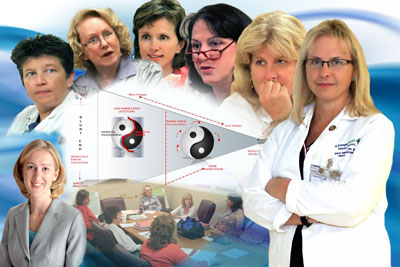
The current evolution of the Hospital Nurse Force Theory was considerably advanced when we realized the study domains of hospital, nurse, fatigue and harm were inadequate to describe and measure the essential and dynamic force and belief that hospitals exist for nursing care and essential nursing practice requires the recognition and prevention of patient harm. Optimal hospital nurse force is the combination of nurse wellness, professionalism and education in sync (yin-yang) with the hospital environment and resources.

Our theoretical discussions have guided our research strategy to apply empirical methods over three phases of research: 1) design and administration of a survey to test the prevalence of hospital nurse fatigue and test the effect of interrelated hospital and nurse variables on nurse fatigue and patient harm, 2) validate self-report measures with clinical tests of physical, mental, and emotional fatigue and wellness, and 3) design and test interventions to mitigate or prevent hospital nurse fatigue and patient harm.

In February 2012, 420 Mission Hospital RNs completing a 100-item online nurse force and fatigue survey. Summary of the findings is underway as well as a publication to validate survey domains in cooperation with Dr. Mary Wickman, nurse researcher at St. Jude Hospital in Fullerton, CA a sister hospital of Mission.

Mary Olivas, RN, MSN and I presented the Hospital Nurse Force and Fatigue (HNF&F) theory at the International Sigma Theta Tau Research conference in Brisbane, Australia in July 2012. Connie Gagliardo RN, MSN and I presented the theory to the Nebraska Nursing Association in Lincoln, NE in September 2012 and had the pleasure to meet with Dr. Ann E. Rogers, the keynote speaker whose research has been inspirational to our research.

Several new investigations have begun as a result of the study team collaborations. Nurses Olivas, Mazza and I have collaborated on a secondary and qualitative analysis with Dr. Barker Steege, revisiting her nurse fatigue

lower left to right, Dr Linsey Barker Steege, Gerri Mazza, RN, MSN, Dr Michele Luna, Dr Diane Drake, Mary Olivas, RN,MSN, Connie Gagliardo, RN, MN and Anne Faust, RN, MSN.

dissertation. Shanghayegh Parhizi a doctoral student of Dr. Barker Steege has joined the study team to use the survey data for dissertation source. Dr. Barker Steege and her colleague at the University of Missouri, Dr. Kalyan Pasupathy have joined me to conduct data mining on fatigue and wellness in night shift nurses, preliminary work to evaluate breast cancer risk and screening practice of night nurses.

The study team continues to meet monthly with plans to design and test interventions to promote hospital nurse force, test methods to mitigate nurse fatigue and prevent patient harm.  We welcome your comments and questions by email at diane.drake@stjoe.org.

This story, I hope, will be an inspiration to others who have an idea you want to pursue with a team of colleagues!  Visit the ANS web site today, and download your copy of this inspiring article!

Freedom of Choice: Nursing Perspective on Reducing Hypertension for African-Americans


The persistently high incidence of hypertension among African-American people is one of the primary factors that accounts for significant disparities in the United States.  While it is widely assumed that this is a complex issue, typical approaches to intervene in practice have remained simplistic and ineffective.  In this “Editor’s Choice” article titled “Freedom of Choice and Adherence to the Health Regimen for African Americans With Hypertension” authors Willie M. Abel, PhD, RN, ACNS-BC and Debra J. Barksdale,PhD, RN, CFNP, CANP, present an informative review of the complex factors contributing to persistent high rates of hypertension in African-American communities.They propose that the theory of psychological reactance can guide nurses in fulfilling our pivotal role in helping African-Americans become active participants in managing their hypertention.  As Dr. Abel describes it:

The background for this article stemmed from my research on medication adherence issues in African American women with hypertension. African American women have the highest rates of hypertension in the world, positioning them at an increased risk for heart attack, heart failure, stroke, and kidney disease. Understanding why some African American women choose not to adhere to treatment approaches to HTN is essential, especially when antihypertensive treatment regimens such as medications have proven efficacy in lowering blood pressure and preventing the devastating consequences of HTN. Thus, it is inconceivable why an individual with HTN may choose not to adhere to the treatment regimen. However, one potential answer to this perplexing problem is related to the one factor that distinguishes African Americans from all racial ethnic groups in the United States, their history of slavery. Because health care demands may disrupt personal routines and restrict valued personal freedoms, many African Americans may feel motivated to preserve their freedom if it is threatened or restricted. Thus, the theory of psychological reactance offers a framework for understanding poor adherence to the health treatment regimen for African Americans with HTN.

This article appears in the October-December 2012 issue of ANS, released today (November 6)!  Visit the ANS web site today to get this article at no charge while it is featured!

(Picture is Royalty Free –http://www.inmagine.com/license.php?brand=submissionrf )


Transitions to Independent Living for Developmentally Impaired Young Adults


Dr. Geraldine Pearson,PhD, PMH-CNS, FAAN, in her featured article titled “The Transition Experience of Developmentally Impaired Young Adults Living in a Structured Apartment Setting,” reports the findings of a study conducted with young adults with a history of pervasive developmental disorders.  The young adults were all no longer eligible for child services in their area, and were transitioning to independent living.  It is rare that researchers turn directly to people who experience such extensive physical and psychologic challenges as participants.  Dr. Pearson’s work with her participants yielded impotant insights into their experience, as well as very important  explanations of methodologic adjustments that needed to be taken into consideration in the conduct of this research. She shared this description of her work in this message for the ANS blog:

Peggy asked me to begin this blog about my my paper published on the July-September 2012 online issue of ANS. titled “The Transition Experience of Developmentally Impaired Young Adults Living in a Structured Apartment Setting”. It detailed my dissertation research with a population of chronically disturbed young adults. I learned so much from these young adults trying to grow up with chronic psychiatric and developmental impairments and very little family support. The research is fairly clear in defining the need for parental figures to guide and assist as these individuals pass into adulthood. I think of these young people as I read the recent statistics about so many college graduates moving back home with their parents. While economics are cited as the predominant reason for this, I also wonder how many of them feel the need for family support as they face an unfriendly economic environment where living is expensive. My research participants were attempting to grow up using limited public resources for housing and expenses. Most appeared to live at the poverty line and they clearly struggled.

There were also some unique moments as I conducted the interviews in participant living environments. One young man proudly spoke of the “crickets” that were darting up his kitchen wall. He seemed oblivious to the fact that he was actually infested with roaches!

Participants were polite, eager to talk about their lives, longing for someone to talk with them. At the conclusion of the research interviews I was left to ponder the plight of this population, their quality of life, and what we, as mental health professionals, might be doing to improve their living. I didn’t come away with clear answers. In the end, the research cemented my passion about caring for these individuals, whether children, adolescents, or young adults. It is such an honor to have this paper published in ANS!

I believe you will find this featured article to hold valuable insights for all nurse scholars, not just because of the substance of the article, but as an exemplar of approaches to nursing research with those who are most vulnerable, and whose experience remains essentially unknown.  Visit the ANS web site now to download your free copy!