Understanding and developing nursing practice has been my focus for teaching and area of research since the beginning of my career in education of nurses in 1980’s. The theory-practice gap in mental health nursing has been especially intriguing to me. I began questioning the students’ lack of reflection concerning dominating nursing practices, and wondering about how tacit knowledge seemed to oversteer therapeutic ideals in nursing actions such as building trusting relationships with patients.
An example of the theory-practice gap can be found in my master project that described the contradictions between having user cooperation as an ideal for practice and limit-setting actions directed towards controlling patients’ deviant behavior. My PhD-project explored the relationship between tacit and theoretical ideals further through an Action science design, based on a field study with observations, interviews, and reflection-groups, which searched for nurses’ rationality in limit-setting actions. The main finding was that nurses’ rationality was emotionally based and connected to a variation of unpleasant feelings in situations with patients whose behavior was experienced as unforeseen, deviant and sometimes dangerous. The patients experienced limit-setting as tortuous, which in turn could escalate their unforeseen behavior and hinder the nurses reaching their goal of controlling the patients’ behavior.
The possibility that both patients and nurses could be regarded as vulnerable struck me, and I became curious about shedding a new light on my data to try to understand nurses’ vulnerability in their relationships to severely mentally ill patients more deeply. This article suggests that such nurse-patient relationships could be viewed as vulnerable in themselves.
We are currently featuring the article byWhitney Thurman, MSN, RN and Megan Pfitzinger-Lippe, PhD, RN titled “Returning to the Profession’s Roots: Social Justice in Nursing Education for the 21st Century.” In this article, the authors build a strong case for redesigning nursing education to incorporate social justice concepts throughout the entire curriculum. The article is available at no cost while it is featured on the ANS website! Here is a message from the authors describing the evolution of their article:
We are honored to have our article selected as an Editor’s Pick. This article is a great example of how doctoral students can collaborate to transform in-class assignments into scholarly publications.
Whitney Thurman RN, MSN is a PhD candidate at the University of Texas at Austin School of Nursing (UTSoN) and a Robert Wood Johnson Foundation Future of Nursing Scholar. Megan Lippe PhD, MSN, RN received her doctorate from
Whitney Thurman
UTSoN in 2016 and is a 2014-2016 Jonas Scholar. During the first semester of the rigorous doctoral program at UTSoN, students complete a philosophy course taught by Dr. Lorraine Walker, a renowned and inspirational researcher and educator. As part of the class curriculum, students write a short paper about social justice in nursing. When Megan took the course, she explored the issue of social justice content integration within nursing programs. She subsequently presented a poster on this topic at a local nursing conference and hung the poster in the hallway of the nursing building to highlight her work. Several semesters later
Megan Pfitzinger-Lippe
Whitney began the doctoral program. Having been intrigued by the poster as she walked past it countless times, Whitney approached Megan to ask about her findings. Through a series of conversations, they discovered their similar passions and interests regarding the importance of social justice in nursing education. Instead of starting from scratch for her assignment, Whitney received permission from Dr. Walker to build on Megan’s original idea in order to expand and refine it into a manuscript for publication. Whitney took the original paper and added both a historical perspective and a public health lens to the work. After receiving a grade for the assignment from Dr.
Walker, Whitney and Megan continued to collaborate on revisions until it was ready for submission to ANS. This collaboration was an excellent learning experience and reinforced the idea that careful planning can result in class assignments that are readily transformed into manuscripts suitable for publication.
It is wonderful to have an article published in ANS and for the article to be featured in the Editor’s Picks. This is the first article to be published from the data. I am forever grateful to the nurses who participated in the study and shared their experiences. I am also grateful to the nurses and organizational leaders who were willing to share the study
Mary Kate Falkenstrom
invitation with others. Their support of nursing scholarship provided access to a diverse sample of registered nurses from Connecticut, Massachusetts, and Rhode Island. I have the utmost respect for nurses in all practice settings but especially for nurses who practice autonomously outside the walls of traditional healthcare facilities.
As an advanced practice nurse and administrator, I had the privilege to work with highly competent, compassionate, and dedicated home healthcare clinicians for over 17 years. Their level of professionalism was validated by patients and caregivers in letters, patient satisfaction surveys, and comments shared during phone and face-to-face encounters. But, incidents did occur where patients and caregivers would communicate dissatisfaction with a clinician. These encounters were described to me by the clinicians as being associated with intense anger, excessive expectations, and lack of understanding of limitations in the home healthcare setting. Strategies that were effective in defusing anger or negativity in other encounters were reported as not effective in these types of encounters. My concern for clinician safety in the field and the potential that an unwitnessed encounter could have serious performance implications for a nurse-employee led to a focus of research on patient encounters. As more and more volatile encounters are spotlighted in the media, healthcare as well as other industries will need to explore the human-to-human encounter and propose research-derived strategies that individuals can use to manage non-constructive and destructive encounters.
Thank you for taking the time to read the article. I hope the content is of value to your practice—Mary Kate Falkenstrom
Our currnet featured article is title “Exploring Preterm Mothers’ Personal Narratives: Influences and Meanings” by Cherie S. Adkins, PhD, RN and Kim K. Doheny, PhD, NNP-BC. This is an exemplary project focusing on caring in the human health experience, encompassing nursing’s dedication to a wholistic view of that experience. Visit the ANS website while this article is featured to download the article at no cost! Here is a message hat Dr. Adkins provided for ANS blog readers!
Cherie Adkins
On behalf of my co-author, Dr. Kim Doheny, and myself it is a true honor to have our article featured in the “Editor’s Picks” section on the Advances in Nursing Science website. This article is based on my dissertation research completed as a PhD student in nursing at Penn State University. While a doctoral student I had the privilege of working with Dr. Doheny (a neonatal nurse practitioner and biobehavioral scientist) as her graduate research assistant. Even though my previous nursing experience included obstetrics, it was while working with Dr. Doheny that I came to more deeply understand preterm infants’ physiologic vulnerabilities and the care provided for them in the NICU. As I grew increasingly familiar with the preterm world and the associated scientific literature, I began to wonder about the influence of a preterm birth on those most likely to care for these infants into early childhood and beyond, namely their mothers. At the time there
Kim Doheny
was a dearth of research designed from the perspective of preterm mothers themselves; this gap inspired me to conduct the narrative inquiry study reported in this article. I trust the lingering effect on those who read this article is that each mother of a former preterm infant has a unique, meaning-filled narrative about her mothering experience that needs to be heard and understood.
Advances in Nursing Science, along with a host of other scholarly journals world-wide, standing for the crucial activities of science that establish what we can rely on as fact, and based on that assurance, shape wise action. But there is a now a political and cultural wave of mis-information that serves to discredit science, and to sow seeds of doubt that undermines the value of scientific credibility. In my Editorial that appears in the current issue of ANS, I address this challenge and implore all ANS readers to engage in actions to do what is needed to stand for science in all aspects of your professional and personal life.
There are two levels that I address in this editorial – the first is the substantive practices of ANS that assure readers of the credibility and authenticity of the content we publish in the journal. In particular, we provide clear descriptions of all of our editorial practices in the “Information for Authors,” we hold membership in COPE (Committee on Publication Ethics), and we adhere to these standards and practices.
The second issue concerns what each individual, particularly those of us who engage in scholarly activities, must do to stand for the credibility of both the products and the processes of science:
Be aware of the best editorial practices of nursing journals that ensure the integrity of their content.
Learn and practice “journal due diligence” when you are seeking a journal for publication of your work.
Be aware of the dangers of predatory publishers. (See articles published in Nurse and Editor)
Ensure that your practices as a scholar are well founded and maintain a record of your practices to ensure that your work is not compromised.
Educate others (your patients, students, and colleagues) about your own practices to ensure the integrity of your own work and why these practices are important.
Network with other scholars in your area of interest to ensure that you have a community of those who share your intent to maintain the integrity of the scholarship in your field, and who can speak with confidence about the foundation on which your work is based.
This editorial is available on the ANS website at no cost while this issue is the current issue! Visit the website now to download your copy. Cut and paste or post the list of things to do where you can be reminded every day of how crucial our actions are in this time of challenge!
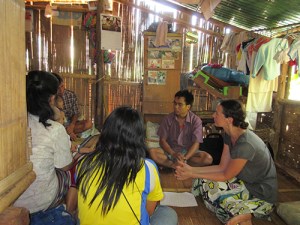
The year that I conducted this research, more individuals were living forcibly displaced around the world than at any other point in recorded history. Research describing the vulnerabilities, human rights violations, and challenges individuals, families, and communities encounter across the spectrum of migration is readily accessible. Less available are studies that document the strengths-focused response strategies women refugees engage to navigate systems and experiences associated with displacement. This manuscript, developed to answer questions residing in this gap, is a part of a series of ethnographic case studies documenting perspectives of resilience, identity construction, and mothering as they were described within the narratives of Karen refugee women from Burma. I am currently working on an ethical commentary relevant to this research titled, Reflections on Position, Interpretation, and Meaning in Ethnographic Nursing Research.
I joined University of Minnesota in the fall of 2016 as an Assistant Professor following my completion of the UMN School of Nursing PhD program. As a doctoral student I was a Human Rights minor and an Interdisciplinary Doctoral Fellow with the Human Rights Program and the Institute for Global Studies. Prior to this, I received my BSN, MSN, and MPH at Johns Hopkins University. These opportunities as well as cultural experiences as a Peace Corps Volunteer in Africa, as a human rights intern in Colombia, and through my work with migrant communities in the Twin Cities and refugee camps along the Thai-Burma border, have advanced a personal critical analysis of the influence of power on human health. My research focus includes forced migration, human rights, gender based violence, intergenerational trauma, and the experiences of women migrants.
We are delighted to announce the first featured article for the new issue of ANS – Volume 40 Issue 1 – officially published today on the ANS website! The article is timely given the current affairs worldwide placing many people at risk based on their Muslim religion. The article is titled “A Bicultural Researcher’s Reflections on Ethical Research Practices With Muslim Immigrant Women Merging Boundaries and Challenging Binaries,” authored by Jordana Salma, MN; Linda Ogilvie, PhD; Norah Keating, PhD and Kathleen F. Hunter, PhD. The lead author, Jordana Salma, provided this message about this work:
Jordana Salma
There are manuscripts that I have written because I have to. This manuscript I wrote because I needed to. I am, to put it in the simplest terms possible, a bilingual bicultural Muslim Lebanese Canadian woman. The convoluted nature of trying to capture in writing this aspect of my identity was amplified ten-fold in living this identity while doing research. It took me a year of writing and re-writing, with the support and input of my co-authors, to complete the finished version you see in ANS. I began writing to make sense of my experiences of completing a dissertation research project. My co-authors frequently reminded me to move beyond personal reflection towards thinking about the implications of my experiences for the broader community of researchers engaged in research activities with Arab and Muslim women. I could not have completed the final version without their mentorship and perspectives. I see this article as highlighting three points:
Bicultural researchers can uncover ethical tensions because they live between worlds and, subsequently, are witness to different world views, normative practices, and ethical systems.
Muslim women, both as researchers and as research participants, can and should be actively engaged in shaping ethical research practices.
Feminist and Islamic perspectives can be utilized together to reconcile perceived ethical tensions when doing research.
Readers will interpret and draw on different aspects of this article based on their personal needs and insights. I do hope that the article supports in some small way the ongoing discussions around inclusion, equity, and diversity in our research spaces. I am excited to continue this conversation with communities of researchers actively working to promote and advocate for ethical research practices.
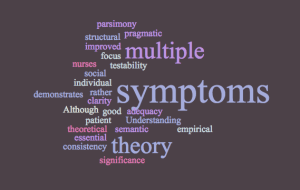
In our current featured article titled “An Analysis and Evaluation of the Theory of Unpleasant Symptoms,” authors Seung Eun Lee, MSN, RN; Catherine Vincent, PhD, RN and Lorna Finnegan, PhD, RN report the results of their analysis of the Theory of Unpleasant Symptoms, first published in ANS in 1995 (see Lenz et al., 1995 and 1997). This is among the early, and now frequently cited middle-range theories in nursing! In the abstract, Lee and her colleagues described the outcome of their analysis:
Although its semantic clarity, semantic and structural consistency, and parsimony could be improved, the theory demonstrates good social and theoretical significance, testability, and empirical and pragmatic adequacy. Understanding multiple patient symptoms is essential, and the theory demonstrates that nurses should focus on multiplerather than individual symptoms.
Visit the ANS website now to download a copy of the article at no charge! Then return here to share your comments and responses to this work!
Lenz, E. R., Suppe, F., Gift, A. G., Pugh, L. C., & Milligan, R. A. (1995). Collaborative development of middle-range nursing theories: toward a theory of unpleasant symptoms. ANS. Advances in Nursing Science, 17, 1–13.
Lenz, E. R., Pugh, L. C., Milligan, R. A., Gift, A., & Suppe, F. (1997). The middle-range theory of unpleasant symptoms: an update. ANS. Advances in Nursing Science, 19(3), 14–27.
We are currently featuring the article titled “Advancing Nursing Research in the Visual Era: Reenvisioning the Photovoice Process Across Phenomenological, Grounded Theory, and Critical Theory Methodologies” by Robin A. Evans-Agnew, PhD, RN; Doris M. Boutain, PhD, RN and Marie-Anne S. Rosemberg, PhD, RN. This article has important insights not only for the use of photovoice as a method, but also insights for the universal challenge of congruence of method and methodology. The article is available for no-cost download at the ANS site while it is featured! They have prepared a short video about their work, followed by Dr. Evans-Agnew’s message for ANS blog readers giving interesting background on their work:
Photovoice methods are powerful, low-cost, and versatile. The cornerstone activities within these methods are participant-driven photography and elicitaion. Photovoice researchers employ photovoice methods for engaging participants in exploration of public health issues. For example action research designs of photovoice often employ a critical theoretical orientation with emancipatory goals of community assessment, empowerment, and policy change. This manuscript has come about as a culmination of our work as nursing scholars interested in social justice, method-methodology fit, and visual methods.
With the advent of digital cameras, photovoice has grown considerably in popularity in health science research. Caroline Wang, Mary Ann Burris, originally coined the term in the 1990’s after experiences working with rural Chinese women in Yunnan Province, China. We point out in this retrospective article that two nurse researchers writing for this journal also were pioneering techniques in the 1990’s in participant photography: Jennine Nelson with patients recovering from cancer and Mary Hagedorn with parents of children with disabilities. ANS would not publish another study using photovoice until 2008 with Jan Sitvast and colleagues, who reported on almost a decade of participant photography with mental health patients. What these researchers shared in common with Wang was their focus on grounding their work inside a theoretical framework.
In this retrospective article we update the photovoice process by proposing three specific questioning strategies for phenomenology, grounded theory, and critical theory. Our own research is grounded in critical theory: Dr. Rosemburg (Sanon) explores the perspectives of Haitian hotel workers using the theoretical frameworks of transnationalism and critical ethnography, Dr. Evans-Agnew explores the discourses of asthma management disparities in African American youth and Latinx mothers of children with asthma.
In the process of conducting our research we became aware that the literature critiquing participatory visual methods in nursing and health research was under-developed in terms of design, social justice outcomes, and emancipatory intent. We observed that participants in photovoice studies were inconsistently involved in the selection or display of photos or titles or texts in the research manuscript. In some cases the ways researchers publish participant photographs and texts appeared to increase their vulnerability. For example in one published article we noticed that the participant’s caption, “that vacant business property with bullet holes…” under a photo they had taken of the building was subtlety altered by the authors to, “bullet holes that riddle a local building.” We concluded that photovoice designs, unless carefully guided, might continue to gaze more closely at the disadvantaged than the advantaged.
What we have argued for in this manuscript is for researchers to make careful decisions on how photovoice process might differ between methodologies. These decisions include those made pertaining to research objective, participant selection, participant elicitation, analysis and dissemination of photos and phototexts. We approached this problem by reviewing the state of the science of photovoice methodologies in phenomenological, grounded theory, and critical theoretical designs. We found that more researchers had considered how to apply photovoice in phenomenological designs (including Nelson and Hagedorn the nurse researchers who published in ANS in the 1990’s) than grounded theory; and that aside from our own work in critical theoretical approaches for Photovoice, few ostensibly critical participatory photovoice studies were grounded in theory.
This manuscript provides a roadmap for helping researchers navigate different designs throughout the various stages of the photovoice process. We offer questioning prompts that specifically fit data collection to the methodology for three key moments in the photovoice process: stimulating the collection of photos, discussing/participatory analysis of the photos, and evaluating audience response at photovoice gallery events. We consider this latter set of questions to re-invigorate the original transformational intent of advancing participant voice in photovoice (Figure 1). By better understanding how audiences react to the presentation of photos and photo-texts, research teams (including participant researchers) can develop a deeper understanding of the persuasive power or relevance of some photographs over others, thereby advancing rigor.
In writing this Blog, I had a chance to connect with two of the the three researchers who have published photovoice work in this journal: Jeanine Nelson and Jan Sitvast. Both researchers book-end almost a quarter of a century of nurse-researcher involvement with participant photography, from Jeanine’s work in Colorado in the 1990’s with Photographic hermeneutics to Jan’s work on photo-stories with psychiatric ward patients in 2008-2016. Dr. Jeanine Nelson recalled a confluence of experiences that motivated her to hand cameras to her participants in order to “see as best you can the view from those who have the experience.” She worked as a research assistant with Joan Magilvy using researcher-driven photography to elicit “emic experience and dialogue” on homecare and aging in rural Colorado (Magilvy, Congdon, Nelson, & Craig, 1992). She also credits Marilyn Ray (also published extensively in ANS) with suggesting that she ask the participants to take their own photographs. Her research occurred before disposable cameras and she recalled the technical difficulties she had in developing slide film and using a slide viewer for each of her participant interviews. Jeanine suggested trimming questions from our suggested questioning strategy for phenomenological designs, eliminating the question, ”What is really happening” in order to more sufficiently bracket the researcher and instead probe with short questions such as “tell me a little more.” Dr. Jan Sitvast is continuing his work with patients recovering from psychological events, he says, “Right now I am engaged in a study where we stimulate vitality in people who are otherwise too much thinking of their situation in negative catastrophic terms. The photo assignments make people aware of what is beautiful or fine.” Jan’s work provides new opportunities for using participant-photography as a therapeutic tool for nursing practice.
This retrospective article provides new groundwork for advancing participant photography in nursing research. We review the process, especially in the contexts of theory, and suggest new questioning strategies. Our hope is that nurse researchers continue to advance not only the methods of participant photography, but also deepen their scholarship in the theoretical grounding of these methods for advancing knowledge and discovery.
Robin Evans-Agnew
Magilvy, J. K., Congdon, J. G., Nelson, J. P., & Craig, C. (1992). Visions of rural aging: use of photographic method in gerontological research. Gerontologist, 32(2), 253-257.
Our current featured article will be of great interest to ANS readers, in that the concept of “nursing’s patterns of knowing” is among the top search terms for the journal! The article is titled “Expert Nurses’ Perceptions of the Relevance of Carper’s Patterns of Knowing to Junior Nurses” authored by Louise Terry, PhD, SFHEA, LLB(Hons), FIBMS; Graham Carr, MSc, RNT, RN and Joan Curzio, PhD, RN. The authors have provided this description of their work, and also included the video at the conclusion!
As the nursing profession ages, many are concerned at how to capture the wisdom and expert knowledge of those
Louise Terry
who are retiring. This provided the impetus for our study and underpinned the decision to provide funding by the General Nursing Council for England and Wales which was the regulatory body for nurses in England and Wales for over 60 years. Their mission now is to promote the development of the science and art of nursing for the benefit of society.
Through studying how expert nurses foster and develop nursing wisdom in new and junior nurses we have been encouraged and inspired by the vision, dedication and quality of the nurses who participated. This countered the media rhetoric at the time in the UK which suggested that nursing was a profession that had lost its ability to care and care well. We worked with expert nurses in a variety of ways as explained in our article to draw out and develop their insights. As part of exploring ethical knowing, we had a simple activity where participants placed colored
Graham Carr
glass tiles according to how they felt they weighted ethical values during their daily practice (see the photo on this blog). This visual metaphor formed the basis of some of the discussion around how ethical knowing is shaped, influenced and, at times, challenged by issues such as limited resources or poor nurse-patient ratios.
In our paper, we mention that one of our participants brought in her hand-drawn version of a Picasso painting (see the photo on this blog) and as she discussed its depth, angles, hidden aspects, she explained how it exemplified nursing to her. She spoke of how it had taken her hours to complete the drawing but the physical activity of drawing was essential to her reflections on nursing. Perhaps this is typical of nurses as reflective practitioners – through doing they reflect and through reflection they develop their doing [practice].
The study design allowed for co-construction of ideas relating to the development of nursing wisdom. Our article shows the finished concept map. This blog shows for the first time, a photograph taken of the preliminary concept map as developed by participants at the end of the second cycle in
Joan Curzio
phase 1 of the study. As explained, based on our study, we have proposed that a new pattern of knowing, Organizational knowing, should be recognized.
Post-qualifying, nurses gain experience but do not necessarily learn from it. Good nurses were identified through our research as sharing certain qualities and knowledge which were consistent with Organizational, Socio-political and Emancipatory knowing. We all know good or wise nurses who are able to influence and improve patient care (praxis) as expert, fluid practitioners. In order to facilitate the transition from new nurse to expert to wise nurse attention, we believe that foundations for this need laying in the undergraduate, pre-registration nursing stage. Nursing curricula need to ensure that students develop the qualities and knowledge identified in Carper’s four fundamental patterns of knowing: Personal, Empirical, Aesthetic and Ethical and the importance of fundamental care needs to be reaffirmed. Students should be introduced to the concept of Organizational knowing and taught how to help themselves to ensure they gain this knowledge effectively in any organization in which they work or move to as junior nurses. As someone who teaches over 500 nursing students a year, I encourage each of them to keep an eye out in clinical practice for the wonderful nurse that they want to be like. Sadly, many of them tell me that they have yet to see that nurse even though they are half-way through their training. I tell them that when they do find that nurse, to ensure they work with them as often as they can and to absorb as much as they can from them.
In addition, employing organizations have a role to play in ensuring that newly qualified or newly appointed nurses are supported to develop fully the qualities identified within the Organizational pattern of knowing. As Graham and I discuss in our short film, this is now beginning to happen as practice educators are incorporating the essential aspects for developing organizational knowing into their preceptorship and induction programs for newly qualified or newly appointed junior staff. Also, role modeling of good nursing should be recognized and valued by employers. We would also like to see universities/nursing schools do more to develop socio-political and emancipatory patterns of knowing, particularly in qualified nurses. Through this, nurses will benefit society.
Finally, we hope that others will be excited by our ideas and further develop our concept of organization knowing. It would be wonderful if suggestions could be shared for developing organizational knowing and moving nurses through the hegemonic barriers that prevent the development of praxis and wisdom.
The essential purposes of ANS are to advance the development of nursing knowledge and to promote the integration of nursing philosophies, theories and research with practice. We expect high scholarly merit and encourage innovative, cutting edge ideas that challenge prior assumptions and that present new, intellectually challenging perspectives. We seek works that speak to global sustainability and that take an intersectional approach, recognizing class, color, sexual and gender identity, and other dimensions of human experience related to health.
This journal is a member of, and subscribes to the principles of, the Committee on Publication Ethics (COPE) www.publicationethics.org
The ANS Blog provides a forum for discussion of issues raised in the articles published in Advances in Nursing Science. We welcome all authors and readers to post your comments and ideas on the blog! If you would like to be an author on this blog, let us know!
The journal Editor is Peggy L. Chinn, RN, PhD, FAAN. Dr Chinn founded the journal in 1978.























 ANS: Advances in Nursing Science Blog