Skip to content

ANS Classics Collection Updated for our 40th year!


The coming year, 2017, marks the 40th anniversary year for Advances in Nursing Science!  To celebrate, we will be updating he various Collections that are posted on the ANS website. The Collections are composed of notable articles coverpublished in the journal that have enduring significance for the discipline of nursing.  The first Collection that we are featuring is titled “ANS Classics” – articles that are frequently cited and have provided a basis for a significant body of scholarly works that followed their publication.

In recent years, there has been an emphasis on the most recent literature- an emphasis that has become stronger in the context of the very rapid growth of scientific and technological advances.  But classic literature in any discipline provides the foundation from which the discipline develops, and much of what appears in the classic literature remains timely and current, retaining significance despite advances in the field.

I invite you to browse the ANS Classics Collection!  If you find that your favorite “classic” is missing from this collection, contact me!  I welcome your suggestions!


End of Life Care: An Emerging Praxis


The latest ANS featured article from the current issue focused on Palliative Care is titled: “What End-of-Life Care Needs Now: An Emerging Praxis of the Sacred and Subtle” by William Rosa, MS, RN, LMT, AHN-BC, AGPCNP-BC, CCRN-CMC and Tarron Estes, BA.  We invite you to download the article at no charge while it is featured, and return here to offer our responses for discussion.  Here is a message from the author about the work behind the article:

billy-rosa

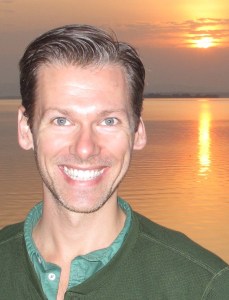
William Rosa

As the tsunami of aging population grows, and medical technical care alone misses the heart of caring, so does the cry to “Occupy Death”, to create care and healing at end of life and “Restore Death to its Sacred Place in the Beauty, Mystery, and Celebration of Life”. It is no longer enough to expect death with dignity; we must strive toward evolving human-centered care. It is not sufficient to ‘do no harm’; we must deliberately create healing environments guided by the spiritual autonomy of the dying one.

tarron-estes2

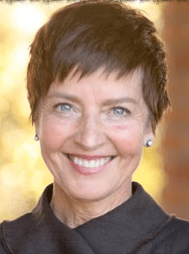
Tarron Estes

The wonderful news is this: As this cry grows to restore sacred, comforting care to our loved ones during their final months, weeks, and days of life, there is an equivalent groundswell of desire to serve, and a growing numbers of end of life doulas rising to meet the needs of those nearing death. This is the premise and guiding force behind our work.

New Published Ahead-of-Print Articles!


The following 7 items were Published Ahead-of-Print (PAP) on 12/6/2016.

Evans-Agnew, Robin A.; Boutain, Doris M.; Rosemberg, Marie-Anne S.
Original Article: PDF Only
Butterfield, Patricia G.
Original Article: PDF Only
Padgett, Stephen M.
Original Article: PDF Only
Liehr, Patricia; Smith, Mary Jane
Original Article: PDF Only
Stone, Teresa Elizabeth; Maguire, Jane; Kang, Sook Jung; Cha, Chiyoung
Original Article: PDF Only
Gonzalez-Guarda, Rosa M.; Jones, Emily J.; Cohn, Elizabeth; Gillespie, Gordon L.; Bowen, Felesia
Original Article: PDF Only
Sawatzky, Richard; Porterfield, Pat; Roberts, Della; Lee, Joyce; Liang, Leah; Reimer-Kirkham, Sheryl; Pesut, Barb; Schalkwyk, Tilly; Stajduhar, Kelli; Tayler, Carolyn; Baumbusch, Jennifer; Thorne, Sally
Original Article: PDF Only


Decision Making at the End of Life


Our latest featured article is “Decision Making Among Older Adults at the End of Life: A Theoretical Perspective” by Rafael D. Romo, PhD, RN, PHN; Carol S. Dawson-Rose, PhD, RN, FAAN; Ann M. Mayo, DNSc, RN, FAAN; and Margaret I. Wallhagen, PhD, GNP-BC, FGSA, AGSF, FAAN. The article is available for no-cost download while it is featured, so I encourage you to visit the website, read the article, and return here to add your comments about this work!  Dr. Romo shared this background information about his work for ANS readers:

We are honored to have our manuscript has been selected as an Editor’s Pick. This work has special meaning for me (the first author) as it is the culmination of a long journey, one that began with my mother’s death in 2000, led to my career as a nurse, and on to a PhD. Through her death (and my father’s death that occurred while I was working on my

Rafael Romo

Rafael Romo

dissertation), I saw first-hand how the process in which decisions are made is at least, if not more, important as the choices themselves. As clinicians, however, we often find ourselves perplexed by patients’ decision making.

Anticipating and predicting patient decision making would help clinicians who are responsible for supporting and guiding patients through the process, which at times may feel like gazing into a proverbial crystal ball. In my PhD program I began to look at different frameworks that exist to explain, if not predict, decision outcomes among older adults, particularly at the end of life. Prospect theory1 is one important theory that attempts to explain decision making, though in the area of economics. Not only is the original paper one of the most frequently cited papers ever published,2 but the theory has been rigorously tested through numerous studies in a wide variety of fields.

I became interested in prospect theory because it has emerged as a potential framework in healthcare decisions and shows great promise. However, I was struck by one aspect to the existing healthcare research: how the commodity is determined. This commodity is a continuum on which a choice can be measured as a gain or a loss. In economics, the commodity has generally been a purely monetary measure. This is easily measured and constructed as everyone has a sense of what $100 is, even if it is more or less important based on one’s financial situation. In healthcare, the commodity has been measured not so much from patients’ perspectives but from an objective clinical criterion of health. In this study we found that participants’ subjective perceptions of health were markedly different than those determine by traditional clinical measures. While clinicians may use disability or comorbidity as a commodity on which to value choices that is indeed objective, participants were determining their health differently. Not only that, they were trying to value choices on two competing criteria: their desire to live as long as possible and their hope to maintain a high quality of life.

By using prospect theory as an a priori framework in this analysis, we bring important innovations to our understanding of the theory as it is used in healthcare. First, we chose to look at commodities of health status and prognosis as the participants defined them. Thus, rather than using their clinical status and prognosis – which was poor for all the participants – we relied on their personal perceptions as this is the point of reference from which they make decisions. Second, we examined how these two commodities were being utilized together, as it became apparent our participants were valuing choices on both. Even those who felt they were in the best of health didn’t make choices solely on that criterion; rather, they still considered how long they felt they had to live. Likewise, those who felt they had a very short prognosis still “wanted a chance,” as one participant put it. What we discovered is that participants were trying to achieve a delicate balance between the two and that using multiple criteria appears to become more and more important as ones health declined. As they approach the end of life, they are not willing to sacrifice quality of life completely to live as long as possible. Instead, they want a happy medium. This desire to use two commodities seems unique to end-of-life decisions and was not fully addressed by prospect theory.

Is theory needed to understand decision making at this specific time of life? We argue yes. Theory is important both to clinical practice and research. Because clinicians are called upon to resolve the discordant views patients may have of both their health and prognosis, they greatly benefit from understanding this important balancing act. Clinics need to help patients navigate through the complex choices around end-of-life care. While “correcting” patients’ subjective self-assessments may seem like taking away hope, patients cannot make the value-based decisions they say are important without fully understanding the true nature of their situations. Our participants understood this and looked to providers to guide them – and in many cases, to simply make decisions for them.

Besides its value for clinicians and patients, theory plays an important role from the research perspective, as it helps us identify what needs to be studied, and by extension, what interventions may be helpful. Theory also helps us determine where interventions can be applied. Despite all the research that has been done in end-of-life decision making, older adults frequently continue to receive care that is \inconsistent with long-held views, so we continue to have a weak understanding of how older adults are making these choices. In this paper we propose an extended view of prospect theory that can be used to better frame decision making at this unique and challenging time of life. We do not propose this extension as the definitive statement on theory related to end-of-life decision making. We cannot yet offer ways to test and validate our perspective. Rather, we seek to start a dialog that will lead to new and innovative thinking in end-of-life decision making, particularly when the decisions transition from choices about what one would want in an abstract future to what one does want in a concrete reality of today. There are, and will be, detractors of our perspective of prospect theory. We welcome this and hope our manuscript initiates a long, vibrant conversation that will indeed push the envelope and prompt further research that enables us to ensure older adults at the end of life receive high-quality care that is consistent with their own values and goals at the end of life.

  1. Kahneman D, Tversky A. Prospect theory: an analysis of decision under risk. 1979;47(2):263-292.
  2. Wu G, Zhang J, Gonzalez R. Decision under risk. In: Koehler DJ, Harvey N, eds. Blackwell Handbook of Judgment and Decision Making. Malden, MA: Blackwell Publishing; 2004: 399-423.
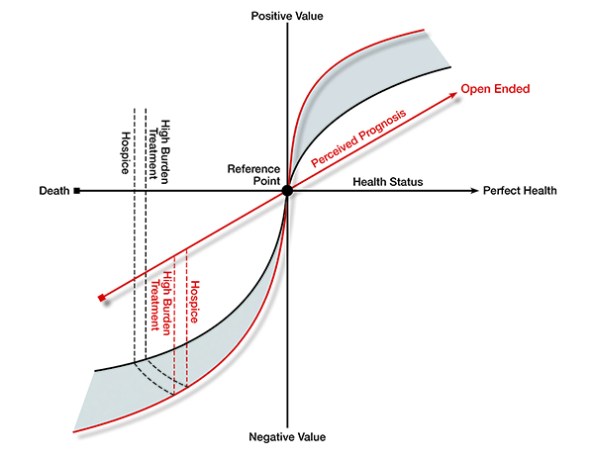
figure-2


Death Is a Social Justice Issue


Our first featured article from the latest ANS issue is titled “Death Is a Social Justice Issue: Perspectives on Equity-Informed Palliative Care” by Sheryl Reimer-Kirkham, PhD, RN; Kelli Stajduhar, PhD, RN; Bernie Pauly, PhD, RN; Melissa Giesbrecht, PhD; Ashley Mollison, MA; Ryan McNeil, PhD; and Bruce Wallace, PhD.  While this article is featured it is available for download at no cost! Please read it, then return here to join a discussion around these important ideas!  Here is a message from Dr. Reimer-Kirham about their work:

In this paper, we lay the theoretical groundwork and make the case for equity-informed palliative care.  We draw on the Equitable Access to Care (EAC) study to explore the end-of-life experiences of people who are ‘doubly

Sheryl Reimer-Kirkham

vulnerable’ – those who are dying and experiencing hardships due to social determinants of health such as poverty, homelessness, racialization and criminalization. Our research emerged out of the distress of health and social service workers who witnessed their clients dying prematurely because they were diagnosed with life-limiting conditions too late, when treatment options were either not available or less effective.

The EAC study seeks to understand barriers to quality end-of-life care and to create recommendations for policies and practices to improve equitable access and enhanced quality of care.  To conduct our research, we observe and interview people experiencing structural vulnerability at the end-of-life, their ‘chosen’ family and service providers, and key decision makers from various service backgrounds. Our study also looks at promising models and practices of end-of-life (EOL) care for homeless people that can be applied in the local context.

Our team is a community-academic partnership which includes the University of Victoria (Institute on Aging &

Kelli Stajduhar
Kelli Stajduhar

Lifelong Health, School of Nursing, and Centre for Addictions Research of BC), Trinity Western University (School of Nursing), BC Centre for Excellence in HIV/AIDS, Palliative Education and Care for the Homeless (PEACH), and the Palliative Outreach Resource Team (PORT). PEACH is a palliative consult/support service for homeless people in Toronto, ON. PORT is a group of service providers who work to improve quality and access to palliative and bereavement services for dying homeless people in Victoria, BC. Our study began in 2014 and we plan to release results by fall 2017.

As a community-academic partnership, it is important to us that we collaborate with our networks to foster

Bernie Pauly
Bernie Pauly

dialogue, raise awareness, and create practical recommendations to bring about social change.  Highlighted in this paper, last year we brought together specialized palliative care services with community health and social service workers to host A PORT in the Storm: A day of education and discussion about equitable access in palliative care. Outcomes from this event included networking, awareness, and greater understanding of services available, and the organizational barriers to providing quality care at EOL.

In this paper, we explore how a social justice lens in palliative care can illuminate how social and structural inequities profoundly shape health, illness, and dying experiences for people who are made particularly vulnerable by a constellation of socio-political, economic, cultural and historical forces.  By offering three exemplars – Leslie, George, and Cliff – we illustrate why an equity-informed approach to palliative care is desperately needed for a nuanced understanding regarding who current palliative care programs are failing.

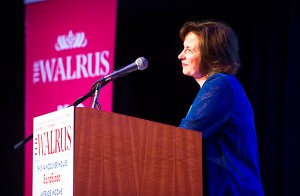
Recently, our study team wrote an op-ed called Homeless Deserve End-of-Life Care but aren’t getting it to direct attention to the story of a homeless, Indigenous man in our community who was discharged from hospital after surgery with no place to go. Our study and the experience of homeless people at EOL garnered international attention when the Canadian Broadcasting Corporation (CBC)  picked up this story. Dr. Kelli Stajduhar recently spoke to The Walrus Talks Quality of Life audience about the value of palliative care and its lack of availability in Canada.  (see also Acknowledgements noted on manuscript).

Our hope is that our article and this blog increases awareness about the need for equity-informed approaches to palliative care, including prompting discussion around the following questions: What are the experiences of health and social service workers in providing EOL care (both ‘informal’ and specialized) to people experiencing structural vulnerability? What policies and practices have supported quality end-of-life care for this population?


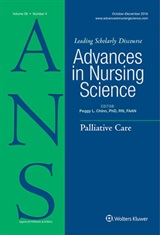
ANS 39:4 just published! Palliative Care


ans-39-4Nurses are at the center in providing palliative care, and at the center of the larger enterprise of exploring and finding effective ways of responding to the physical, emotional and spiritual suffering of patients and their loved ones.  The articles in this issue of ANS Make important contributions to the theoretical, philosophic and empirical approaches that inform practices that shape effective palliative care.  Follow this blog for information as each article is featured, and take advantage of the opportunity to download the articles at no cost while they are featured!

Four new articles Published Ahead-of-Print


The following 4 items were added to PAP on 10/28/2016.
Walter, Robin R.
Original Article: PDF Only
Rew, Lynn; Thurman, Whitney; McDonald, Kari
Original Article: PDF Only
Bender, Miriam; Elias, Dina
Original Article: PDF Only
Falkenstrom, Mary Kate
Original Article: PDF Only

Published Ahead-of-Print!


The following item was added to PAP on 10/25/2016.
Pickett, Stephanie; Peters, Rosalind M.; Templin, Thomas
Original Article: PDF Only


Nursing Influence


The latest featured article in the current issue of ANS is titled “Understanding Influence within the Context of Nursing: Development of the Adams Influence Model Using Practice, Research, and Theory” authored by Jeffrey M. Adams, PhD, RN, NEA-BC, FAAN and Sudha Natarajan, PhD, MSN, RN.  While it is featured it is available for download at no cost, so I invite you to read the article and return here to share in discussion of these important ideas!  Here is a message from Dr. Adams about this work:

The Adams Influence Model (AIM) can be used as a framework for anyone seeking to understand more about the factors, attributes, and process of influence.  However, the concept of influence is an especially important one for

Jeffrey Adams

Jeffrey Adams

nurses.  The basis of exploration of influence highlighted in this article started well over ten years ago and drew from years of experiences as a consultant working in the clinical information systems (CIS) space.  At that time, I found that CISs were largely selected by CFOs, CIOs, CMOs and I felt that while nurses were “involved” in the selection process, often times product chosen did not benefit nursing care or capture nursing data.  This was despite nurses overwhelmingly being the largest users of the CIS.  I wanted to simply understand why or how this happened?

Around that same time RWJF and Gallup released a report identifying that respondents did not perceive nursing as influential in reshaping health policy (what is now the ACA) when compared to nearly every other group.  And several other smaller studies also identified that executive nurses self reported as having less influence than their non-nurse executive counterparts on a host of issues.  So we thought, how could this be?  At 1% of the entire US population nurses are by far the largest percentage of the healthcare workforce, nurses are overwhelmingly the most trusted profession, and nurses are well documented addressing each component of the quadruple aim.  Of course nurses SHOULD be influential… and because we aren’t, how do we get there?  We decided to start at the beginning and asked the question “what does influence look like?” The AIM, as represented in this article, is the result of our efforts to answer that question.

While the origins and development of the AIM are chronicled in this manuscript, the AIM has been widely used since 2009 to frame health policy and strategy, to describe leadership practices, and serve as a guiding framework for research and instrument development.

Current projects using the AIM include development of:

  • understanding nursing leadership’s influence over professional practice environments and the relationship to workforce and patient outcomes (with Maja Djukic, Ashley-Kay Basile and Matt Gregas)
  • a guiding framework for baccalaureate health policy curriculum (with Ashley Waddell and Jaqueline Fawcett).
  • the influence of nurse leaders on the professional practice environment and nurse engagement (with Maria Ducharme, Jeannie Bernstein, and Cynthia Padula)
  • Leadership Influence Self Assessment (LISA©) instrument (with RWJF Executive Nurse Fellows colleagues Debbie Chatman Bryant, Joy Deupree, Suzanne Miyamoto, Casey Shillam and Matt Gregas).

It would be wonderful to see everyone take inventory and articulate how we anticipate each of our projects, papers, presentations, courses and other efforts will INFLUENCE practice, research, education, theory and/or policy.  This “influence” framing provides us opportunity to be purposeful and forward thinking toward an end that doesn’t leave assimilation of our contributions and value to chance.