Skip to content

Death Is a Social Justice Issue


Our first featured article from the latest ANS issue is titled “Death Is a Social Justice Issue: Perspectives on Equity-Informed Palliative Care” by Sheryl Reimer-Kirkham, PhD, RN; Kelli Stajduhar, PhD, RN; Bernie Pauly, PhD, RN; Melissa Giesbrecht, PhD; Ashley Mollison, MA; Ryan McNeil, PhD; and Bruce Wallace, PhD.  While this article is featured it is available for download at no cost! Please read it, then return here to join a discussion around these important ideas!  Here is a message from Dr. Reimer-Kirham about their work:

In this paper, we lay the theoretical groundwork and make the case for equity-informed palliative care.  We draw on the Equitable Access to Care (EAC) study to explore the end-of-life experiences of people who are ‘doubly

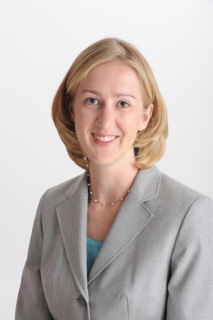
Sheryl Reimer-Kirkham

vulnerable’ – those who are dying and experiencing hardships due to social determinants of health such as poverty, homelessness, racialization and criminalization. Our research emerged out of the distress of health and social service workers who witnessed their clients dying prematurely because they were diagnosed with life-limiting conditions too late, when treatment options were either not available or less effective.

The EAC study seeks to understand barriers to quality end-of-life care and to create recommendations for policies and practices to improve equitable access and enhanced quality of care.  To conduct our research, we observe and interview people experiencing structural vulnerability at the end-of-life, their ‘chosen’ family and service providers, and key decision makers from various service backgrounds. Our study also looks at promising models and practices of end-of-life (EOL) care for homeless people that can be applied in the local context.

Our team is a community-academic partnership which includes the University of Victoria (Institute on Aging &

Kelli Stajduhar
Kelli Stajduhar

Lifelong Health, School of Nursing, and Centre for Addictions Research of BC), Trinity Western University (School of Nursing), BC Centre for Excellence in HIV/AIDS, Palliative Education and Care for the Homeless (PEACH), and the Palliative Outreach Resource Team (PORT). PEACH is a palliative consult/support service for homeless people in Toronto, ON. PORT is a group of service providers who work to improve quality and access to palliative and bereavement services for dying homeless people in Victoria, BC. Our study began in 2014 and we plan to release results by fall 2017.

As a community-academic partnership, it is important to us that we collaborate with our networks to foster

Bernie Pauly
Bernie Pauly

dialogue, raise awareness, and create practical recommendations to bring about social change.  Highlighted in this paper, last year we brought together specialized palliative care services with community health and social service workers to host A PORT in the Storm: A day of education and discussion about equitable access in palliative care. Outcomes from this event included networking, awareness, and greater understanding of services available, and the organizational barriers to providing quality care at EOL.

In this paper, we explore how a social justice lens in palliative care can illuminate how social and structural inequities profoundly shape health, illness, and dying experiences for people who are made particularly vulnerable by a constellation of socio-political, economic, cultural and historical forces.  By offering three exemplars – Leslie, George, and Cliff – we illustrate why an equity-informed approach to palliative care is desperately needed for a nuanced understanding regarding who current palliative care programs are failing.

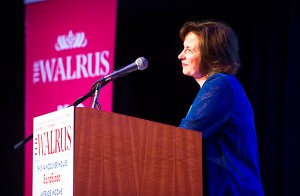
Recently, our study team wrote an op-ed called Homeless Deserve End-of-Life Care but aren’t getting it to direct attention to the story of a homeless, Indigenous man in our community who was discharged from hospital after surgery with no place to go. Our study and the experience of homeless people at EOL garnered international attention when the Canadian Broadcasting Corporation (CBC)  picked up this story. Dr. Kelli Stajduhar recently spoke to The Walrus Talks Quality of Life audience about the value of palliative care and its lack of availability in Canada.  (see also Acknowledgements noted on manuscript).

Our hope is that our article and this blog increases awareness about the need for equity-informed approaches to palliative care, including prompting discussion around the following questions: What are the experiences of health and social service workers in providing EOL care (both ‘informal’ and specialized) to people experiencing structural vulnerability? What policies and practices have supported quality end-of-life care for this population?


ANS 39:4 just published! Palliative Care


ans-39-4Nurses are at the center in providing palliative care, and at the center of the larger enterprise of exploring and finding effective ways of responding to the physical, emotional and spiritual suffering of patients and their loved ones.  The articles in this issue of ANS Make important contributions to the theoretical, philosophic and empirical approaches that inform practices that shape effective palliative care.  Follow this blog for information as each article is featured, and take advantage of the opportunity to download the articles at no cost while they are featured!

Four new articles Published Ahead-of-Print


The following 4 items were added to PAP on 10/28/2016.
Walter, Robin R.
Original Article: PDF Only
Rew, Lynn; Thurman, Whitney; McDonald, Kari
Original Article: PDF Only
Bender, Miriam; Elias, Dina
Original Article: PDF Only
Falkenstrom, Mary Kate
Original Article: PDF Only

Published Ahead-of-Print!


The following item was added to PAP on 10/25/2016.
Pickett, Stephanie; Peters, Rosalind M.; Templin, Thomas
Original Article: PDF Only


Nursing Influence


The latest featured article in the current issue of ANS is titled “Understanding Influence within the Context of Nursing: Development of the Adams Influence Model Using Practice, Research, and Theory” authored by Jeffrey M. Adams, PhD, RN, NEA-BC, FAAN and Sudha Natarajan, PhD, MSN, RN.  While it is featured it is available for download at no cost, so I invite you to read the article and return here to share in discussion of these important ideas!  Here is a message from Dr. Adams about this work:

The Adams Influence Model (AIM) can be used as a framework for anyone seeking to understand more about the factors, attributes, and process of influence.  However, the concept of influence is an especially important one for

Jeffrey Adams

Jeffrey Adams

nurses.  The basis of exploration of influence highlighted in this article started well over ten years ago and drew from years of experiences as a consultant working in the clinical information systems (CIS) space.  At that time, I found that CISs were largely selected by CFOs, CIOs, CMOs and I felt that while nurses were “involved” in the selection process, often times product chosen did not benefit nursing care or capture nursing data.  This was despite nurses overwhelmingly being the largest users of the CIS.  I wanted to simply understand why or how this happened?

Around that same time RWJF and Gallup released a report identifying that respondents did not perceive nursing as influential in reshaping health policy (what is now the ACA) when compared to nearly every other group.  And several other smaller studies also identified that executive nurses self reported as having less influence than their non-nurse executive counterparts on a host of issues.  So we thought, how could this be?  At 1% of the entire US population nurses are by far the largest percentage of the healthcare workforce, nurses are overwhelmingly the most trusted profession, and nurses are well documented addressing each component of the quadruple aim.  Of course nurses SHOULD be influential… and because we aren’t, how do we get there?  We decided to start at the beginning and asked the question “what does influence look like?” The AIM, as represented in this article, is the result of our efforts to answer that question.

While the origins and development of the AIM are chronicled in this manuscript, the AIM has been widely used since 2009 to frame health policy and strategy, to describe leadership practices, and serve as a guiding framework for research and instrument development.

Current projects using the AIM include development of:

  • understanding nursing leadership’s influence over professional practice environments and the relationship to workforce and patient outcomes (with Maja Djukic, Ashley-Kay Basile and Matt Gregas)
  • a guiding framework for baccalaureate health policy curriculum (with Ashley Waddell and Jaqueline Fawcett).
  • the influence of nurse leaders on the professional practice environment and nurse engagement (with Maria Ducharme, Jeannie Bernstein, and Cynthia Padula)
  • Leadership Influence Self Assessment (LISA©) instrument (with RWJF Executive Nurse Fellows colleagues Debbie Chatman Bryant, Joy Deupree, Suzanne Miyamoto, Casey Shillam and Matt Gregas).

It would be wonderful to see everyone take inventory and articulate how we anticipate each of our projects, papers, presentations, courses and other efforts will INFLUENCE practice, research, education, theory and/or policy.  This “influence” framing provides us opportunity to be purposeful and forward thinking toward an end that doesn’t leave assimilation of our contributions and value to chance.


Learner-Centered Clinical Growth


In the current ANS featured article, author Jessica Barkimer, MSN, RN, CNE illustrates the value of evolutionary concept analysis to understand a dynamic, changing phenomena – clinical growth.  The article, titled “Clinical Growth: An Evolutionary Concept Analysis” is available at no charge while it is featured on the ANS website!  Here is Ms. Barkimer’s description of her work that led to this article:

As an educator who teaches nursing students in various clinical learning environments, I embrace the student-centered approach.  Each student brings forth unique previous experiences that contribute to his or her own construction of knowledge.  Years ago, while working on my degree, Masters of Science in Nursing Education, I encountered students who were functioning at various levels in the same cohort of students.  Learning objectives

Jessica Barkimer

Jessica Barkimer

often guide educators, however, in an attempt to facilitate the learning of each student, I often wondered, “how can an educator determine if a student demonstrates an appropriate amount of growth to progress to the next level?”  This multifaceted topic requires examination to benefit nurse educators, students, and patients.  Currently, I am working towards my PhD in nursing and have had the opportunity to work with faculty at Marquette University who have helped guide me in this process of knowledge discovery.

This article presents the findings of the conceptual analysis of clinical growth, using Rodger’s evolutionary method.  These findings represent a holistic approach, focusing on cognitive, affective, and psychomotor domains of each learner, requiring growth in all three areas.  This concept analysis and model lay the foundational groundwork for examining relationships among the antecedents, attributes, and consequences, which are essential for a nurse educator to understand and implement in practice, moving nursing education forward.  This examination of the literature also allowed me to consider various instruments designed to capture the aspects of clinical growth.  I look forward to continuing my research in this area.

Internet Recruitment of Racial/Ethnic Minority Research Participants


The currently featured article in ANS presents an examination of six practical issues the authors encountered in recruiting Asian-American breast cancer survivors as participants in an intervention study conducted on the internet.  The article is titled “Internet Recruitment of Asian American Breast Cancer Survivors,” authored by Eun-Ok Im, PhD, MPH, RN, CNS, FAAN; Yaelim Lee, PhD, RN; Xiaopeng Ji, MSN, RN; Jingwen Zhang, PhD; Sangmi Kim, MSN, RN; Eunice Chee, BSE; Wonshik Chee, PhD; Hsiu-Min Tsai, PhD, FAAN; Masakazu Nishigaki, PhD, RN, PHN, CGC; Seon Ae Yeo, PhD, FAAN; Marilyn M. Shapira, MD, MPH; Jun James Mao, MD, MSCE.  This informative article is availabe at no charge while it is featured; we invite you to read the article and contribute your responses to the article here!

Published Ahead-of-Print!


The following 2 items were added to PAP on 9/26/2016.
David, Laura
Letter to the Editor: PDF Only
Rahemi, Zahra; Williams, Christine Lisa
Original Article: PDF Only

Nurse Fatigue in the Hospital


The latest featured article from the current issue of ANS  is titled “Interpretation of Hospital Nurse Fatigue Using Latent Profile Analysis” by Diane Ash Drake, PhD, RN and Linsey M. Barker Steege, PhD. You can access this article here at no charge now while it is featured. Dr. Drake and Dr. Steege have each provided a message about their background and the work that has led to this article!  Leave your comments here to join a conversation about their work.

From Diane Drake –

diane-drake

Diane Ash Drake

I have had the privilege to consult as the Nurse Research Scientist at Mission Hospital, Mission Viejo, CA since 2003. Nurse fatigue quickly became a focused research interest supported by a small team of hospital nurse leaders who understood the potential adverse effects of long work shifts, and wanted to better understand hospital nurse fatigue and investigate fatigue risk management strategies. During the initial literature search we reviewed several nurse fatigue dissertations and contacted one investigator, a human factors engineer, who fortunately joined our study team. I want to thank Dr. Linsey Steege who shares the authorship of this paper with me for her perseverant collaboration and brilliant research intellect. Ultimately, my investigation of hospital nurse fatigue is about supporting the important work of hospital nurses with the purpose of making fatigue risk management a reality.

From Linsey Steege –

barker_linsey

Linsey M. Barker Steege

As an industrial and systems engineer, my overall research goal is to design work systems to improve health, safety and performance of health professionals, and by doing so, to benefit society by improving healthcare quality and patient outcomes. Human factors engineering is a focus area within industrial and systems engineering, which examines the interactions between humans, tools and technologies, the physical environment, and the organization of work in an effort to optimize human performance and well-being. In recent years, multiple agencies including the Institute of Medicine, the President’s Council of Advisors on Science and Technology, the National Academy of Engineering, and the Agency for Healthcare Research and Quality have pointed to the importance of partnership and collaboration between systems engineering, including human factors engineering, and healthcare. I feel privileged to be able to collaborate with Dr. Drake and the Mission Hospital nurse fatigue study team to better understand nurse fatigue in the context of the hospital nurse work system and work toward improved fatigue monitoring and risk management systems.  The findings from this paper offer a new approach for measuring nurse fatigue and may be useful in developing more efficient fatigue monitoring systems and for evaluating the effect of fatigue risk management strategies.


Trauma Informed Nursing Practice with Teen Mothers


The current ANS featured article is authored by Sarah Bekaert, MSc and Lee SmithBattle, PhD, and is titled “Teen Mothers’ Experience of Intimate Partner Violence: A Metasynthesis.”  We invite you to download this article from the ANS website and return here to add you comments to a discussion of this very important issue.  Sarah Bekaert shared this background about this article:

This paper arose from the two authors’ mutual interest in the lived experience of teen mothers.  Sarah Bekaert is currently lecturing at City University, London, UK, and practicing clinically in Sexual Health and Contraception with Oxford University Hospitals Trust.  A Children’s nurse by background, she has a special interest in teen health,

Sarah Bekaert

Sarah Bekaert

pregnancy and parenthood.  Her current PhD study explores the tension between public expectations for avoiding teen mothering and the private desire of some teens who have had a previous abortion to become a mother whilst still a teen.

Professor Lee SmithBattle of St Louis University, U.S., is a nurse who is currently on the seventh round of interviews with former teen mothers and their families.  Spanning 30 years, this qualitative longitudinal study challenges the pejorative assumptions of teen mothers by contextualizing their experiences and long-term outcomes.

With the explosion of qualitative research on teen mothering, Professor SmithBattle drew together a team to organize, summarize and review this research.  This first metasynthesis project focuses on intimate partner violence (IPV) in teen mother’s relationships.

Lee SmithBattle

Lee SmithBattle

We have organized our findings by the metaphor of a spider’s web to illustrate the trajectory of IPV in the young mother’s lives and attempts to extricate themselves from violent relationships.  The metaphor was inspired by a verse from the poem ‘Integrity’ by Adrienne Rich1, American poet, essayist and radical feminist of the 20th and early 21st century.*

Bekaert Fig1

Findings highlight pervasive violence in teen mothers’ childhoods and impoverished circumstances that make it difficult to leave an abusive relationship. We observe a constriction of the web as domestic violence emerges or worsens with pregnancy. As a consequence, young mothers become isolated, and live with the physical and psychological consequences of IPV. Research suggests that trauma informed nursing practice is needed to support teen mothers in violent intimate relationships to spin a new web.a

  • Rich, A. A Wild Patience Has Taken Me This Far, poems 1978-1981. WW. Norton and Company; 1981.