Skip to content

Upstream Courage, Upstream Action


In the next few days, the first issue of the 40th volume of ANS will be published.  This issue will feature articles submitted in response to the issue topic “ANS Retrospective.” The first article we are featuring is authored by Patricia G. Butterfield, PhD, RN, FAAN, titled “Thinking Upstream: A 25-Year Retrospective and Conceptual Model Aimed at Reducing Health Inequities.”  Dr. Butterfield’s message for this blog affirms the commitment established from the founding of the journal – to publish cutting-edge scholarship that challenges the status quo and brings to the forefront issues that call forth critical examination and discussion. The timing of this 40th anniversary volume, remarkably, occurs concurrently with a new political climate in the U.S. that has prompted large-scale citizen action based on fundamental values. I am deeply grateful to Dr. Butterfield, and to a host of other ANS authors, who have contributed to shaping the very nature of this journal, and continue to do so as we embark on another decade!  Her article is currently available “Published Ahead-of-Print;” once the forthcoming issue is published the article will be featured. Watch for the announcement of the release of this issue, and return to the ANS website where the article will be available for download at no cost. Here is Dr. Butterfield’s message:

ANS was quite influential in my professional formation as a scholar and thinker.  As a doctoral student, I would go to the library, sneak my coffee into my book bag, seek out the newest issue of ANS, and find just the right hiding place (typically a carrel in the old stacks) to read.  What a treat it was.  Even the colors of the ANS jacket (green/blue) seemed right to me.  It wasn’t until many years later that I understood what drew me so much to the journal.  It wasn’t always the topics that drew me in; rather it was the journal’s sense of courage.  The fierceness of the articles.  The way ANS

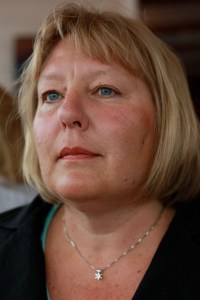
Patricia Butterfield

Patricia Butterfield

authors dissected the subtext of a health problem, striking clearly and powerfully at the essence of an issue.  Poverty, marginalization, and social justice were (and are) key themes in ANS.  That’s why, many years ago, when it came time to submit my Thinking Upstream manuscript for publication consideration, ANS was my only real choice.  Since 1990 (when Upstream was published) the world…and the journal…has changed.  Health reforms (of lack thereof) have come and gone, but through the years and decades, ANS has retained its voice…and its sense of courage.

I’m reminded of how ANS made me feel as well as how it made me think because of the courage I have witnessed in recent days.  Courage, in the form of peaceful assembly, social commentary, and religious- and secular-based grassroots organizing, is a hallmark of our national identity. Whether it was the Women’s March on Washington, the spontaneous assembly of citizens in response to the president’s Executive Order addressing immigration, or scientists’ push back in response to attempts to remove climate change materials from the EPA website, I have seen courage. Many of the voices are coming from our new generations, bringing forth a level of candor and courage that our nation has not seen for many years.

This coming issue of ANS will feature a new paper I wrote…a 25-year retrospective on Thinking Upstream.  The key tenets of the new paper are the same as the original manuscript….that no matter how much money and talent we invest, our nation will not become healthy until we act upstream to address the roots of health.  We have surpassed the limits of what healthcare alone can do; saving lives requires our willingness to dig into the real issues that tap human potential.  This is a time for upstream courage and upstream action.  And from what I have seen the past few weeks, there is plenty of it to go around.
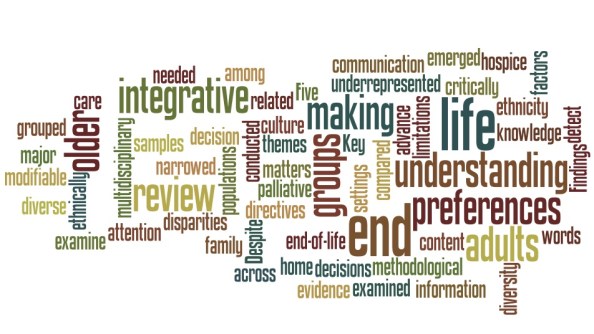
End-of-Life Preferences in Underrepresented Populations


The article titled “Older Adults of Underrepresented Populations and Their End-of-Life Preferences: An Integrative Review” by Zahra Rahemi, MSN and Christine Lisa Williams, DNSc, RN, PMHCNS is the current ANS featured article.  It is available for no-cost download while it is featured on our website. This article emphasizes the importance of culturally congruent care in end-of-life situations. Here is a brief message from the authors about their work:

Nurses are in the frontline of care, especially end-of-life care wherein medical treatments are often no longer effective. As the U.S. society progressively becomes ethnically diverse and aged, addressing diversities of end-of-life preferences among older adults of different communities is paramount to ensure equity of care at the end of life. In the article, “Older Adults of Underrepresented Populations and Their End-of-Life Preferences: An Integrative Review,” we performed a broad literature review to explore diversities of ethnically diverse older adults’ end-of-life preferences based on a repertoire of current and rigorous studies. This study can contribute to advancement of nursing knowledge regarding culturally competent care at end of life. In this article, we argue that health preferences and decisions vary due to ethnicity and race. We propose healthcare providers and researchers reflect on different choices and possibilities to provide the context for culturally congruent care and reducing disparities.

wordle_-_create

Family Relationships in the Context of Palliative Care


The current ANS featured article explores the challenges that families face when one of their loved ones is receiving palliative care.  The article, titled “A Valuable but Demanding Time: Family Life During Advanced Cancer in an Elderly Family Member” by Marianne Fjose, MScN, RN; Grethe Eilertsen, PhD; Marit Kirkevold, EdD; and Ellen Karine Grov, PhD is available at no charge while it is featured on the ANS website! Marianne Fjose shared this message for ANS readers about her work:

My mentors Dr Ellen Karine Grov, Dr Marit Kirkevold, Dr Grethe Eilertsen and I are pleased to share this article

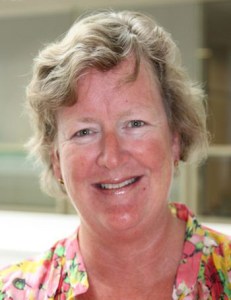
Marianne Fjose

Marianne Fjose

with ANS readers. The article is part of my PhD project aimed to explore how elderly patients with advanced cancer in the palliative phase and their nearest family members experiences their relationships.

As a nurse and nurse educator, I have always been interested in palliative care. My masters degree therefore focused on how patients with cancer in the palliative phase experienced their close relationships. In this project, I discovered that little knowledge existed about family relationships within palliative care. We do know that cancer in a palliative phase not only affect the patient, but also his or her family members and the entire life of the family. Knowledge about how family relationships, interactions, and communication patterns are affected are sparse. Therefore, this became the focus for my PhD project.

 “A valuable but demanding time” is the first article in this project. Additionally two articles are in process. They will report findings about different family caregiver groups (e.g. spouses and

Grethe Eilertsen

Grethe Eilertsen

children/children-in-law) perspectives on caregiver burden and social support, and patients and family

members’ experiences with the health care system. Family group interviews is the main data collection method. In addition, quantitative data are collected by means of two standardized measures: CRA: The Caregiver Reaction Assessment and SPS: Social Provisions Scale.

The experience to sit down, communicate, and listen to families experiencing such a hard time in life has been challenging, but foremost educational. I think of the families with gratitude and respect for sharing with me their thoughts and experiences.

We think that the family group interviews have been an advantage in this study, bringing the perspectives of different family members to the research topic. In addition, this has given us the opportunity to collect data about family interactions and communication, data that are hard to achieve through individual interviews. Many of the

Marit Kirkevold

Marit Kirkevold

findings in our study regarding what was important and difficult in relationships were not revealed through the manifest content of the text. Instead, these results were uncovered from the latent content in the conversations, that is, through the way patients and family members talked, and acted. However, further methodological research is needed to evaluate the strengths and limitations of this method in different contexts.

Ellen Karine Grov

Ellen Karine Grov

ANS “Concepts” Collection updated


One of the consistent features of ANS has been the publication of article focusing on the analysis and development of concepts. This is one of the fundamental processes required for sound scholarship, and nurses have used a wide range of approaches to do so.  Over the years, these methods have grown increasingly sophisticated and productive, and the new sequence of articles in this collection demonstrate.
The ANS collections are being updated to extend through the year 2006.  The collections are no all-inclusive of articles published in the journal; they are selected initially because of my editorial judgement of their lasting influence, and their importance as a foundation for contemporary nursing scholarship.  I welcome your response to these collections as they are updated in the weeks ahead!

Advances in Nursing Science
Created: 11/17/2009
Contains: 43
The following 24 items were added to this collection on 1/8/2017
Gast, Hertha L.; Denyes, Mary J.; Campbell, Jacquelyn C.; Hartweg, Donna L.; Schott-Baer, Darlene; Isenberg, Marjorie
Reed, Pamela G.; Leonard, Vernone E.
Madden, Barbara P.
Morse, Janice M.; Solberg, Shirley M.; Neander, Wendy L.; Bottorff, Joan L.; Johnson, Joy L.
Marck, Patricia
Kulbok, Pamela A.; Baldwin, Joan H.
Kolcaba, Katharine Y.
Davis, Gail C.
Müller, Mary E.; Dzurec, Laura Cox
Morse, Janice M.
Ellis-Stoll, Cynthia C.; Popkess-Vawter, Sue
Hall, Joanne M.
Shearer, Jennifer E.
Georges, Jane M.
Newlin, Kelley; Knafl, Kathleen; Melkus, Gail D’Eramo
Phillips, Debby A.; Drevdahl, Denise J.
Hall, Beverly A.
Dzurec, Laura Cox
Bekemeier, Betty; Butterfield, Patricia
Vasas, Elyssa B.
Harper, Mary G.
Kring, Daria L.
Cowling, W. Richard III; Shattell, Mona M.; Todd, Marti
Hall, Beverly A.

Perinatal Palliative Care


The featured article from the current ANS issue is titled “Quality Indicators and Parental Satisfaction With Perinatal Palliative Care in the Intrapartum Setting After Diagnosis of a Life-Limiting Fetal Condition” by Charlotte Wool, PhD, RN; Beth Perry Black, PhD, RN; and Anne B. (Nancy) Woods, PhD, RN.  The article is available for download at no cost on the ANS website while it is featured!  Dr. Wool provided this background about her work:

Dr. Wool began her doctoral studies in 2009 with a program of research in perinatal palliative care (PPC), an interdisciplinary approach to services for parents who opt to continue a pregnancy after learning of life-limiting fetal condition (LLFC). Her early work was a  multiphase study to devise and test an instrument that filled a gap in understanding clinician attitudes and practice barriers to providing perinatal palliative care (PPC). The Perinatal Palliative Care Perception and Barriers Scale is a clinician-level instrument in use or in translation worldwide.

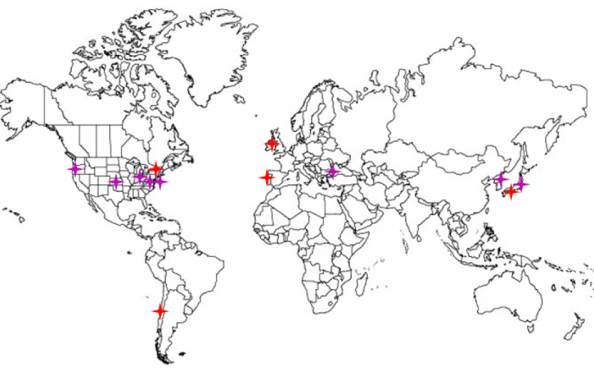
More recently, Dr. Wool developed a parent-level instrument in order to create the foundation for future work in quality metrics. The palliative care sector is dedicated to ensuring the highest quality of care is given to all dying patients. The aim of this quality initiative is to eventually enable benchmarking in the field. The development of the instrument Parental Satisfaction and Quality Indicators Scale included 405 participants.  This instrument has generated a great deal of interest and is currently in translation in Chili, Japan, and Portugal and in use at Harvard Medical School.

ANS recently published the results from parents’ reports of care during their labor and birth experience, known as the intrapartum period. Parents who have their medical needs addressed have higher odds of being satisfied with their care. Psychosocially, parents also yearn for the health care providers to treat their baby with respect and dignity, in spite of their life-limiting condition. Families who experience such tragic loss need clinicians who come alongside them and help shoulder the burden and provide resources for healing.

Dissemination of Instruments

wool-figure

Purple stars: Perinatal Palliative Care Perception and Barriers Scale

Red stars: Parental Satisfaction and Quality Indicators Instrument

ANS Classics Collection Updated for our 40th year!


The coming year, 2017, marks the 40th anniversary year for Advances in Nursing Science!  To celebrate, we will be updating he various Collections that are posted on the ANS website. The Collections are composed of notable articles coverpublished in the journal that have enduring significance for the discipline of nursing.  The first Collection that we are featuring is titled “ANS Classics” – articles that are frequently cited and have provided a basis for a significant body of scholarly works that followed their publication.

In recent years, there has been an emphasis on the most recent literature- an emphasis that has become stronger in the context of the very rapid growth of scientific and technological advances.  But classic literature in any discipline provides the foundation from which the discipline develops, and much of what appears in the classic literature remains timely and current, retaining significance despite advances in the field.

I invite you to browse the ANS Classics Collection!  If you find that your favorite “classic” is missing from this collection, contact me!  I welcome your suggestions!


End of Life Care: An Emerging Praxis


The latest ANS featured article from the current issue focused on Palliative Care is titled: “What End-of-Life Care Needs Now: An Emerging Praxis of the Sacred and Subtle” by William Rosa, MS, RN, LMT, AHN-BC, AGPCNP-BC, CCRN-CMC and Tarron Estes, BA.  We invite you to download the article at no charge while it is featured, and return here to offer our responses for discussion.  Here is a message from the author about the work behind the article:

billy-rosa

William Rosa

As the tsunami of aging population grows, and medical technical care alone misses the heart of caring, so does the cry to “Occupy Death”, to create care and healing at end of life and “Restore Death to its Sacred Place in the Beauty, Mystery, and Celebration of Life”. It is no longer enough to expect death with dignity; we must strive toward evolving human-centered care. It is not sufficient to ‘do no harm’; we must deliberately create healing environments guided by the spiritual autonomy of the dying one.

tarron-estes2

Tarron Estes

The wonderful news is this: As this cry grows to restore sacred, comforting care to our loved ones during their final months, weeks, and days of life, there is an equivalent groundswell of desire to serve, and a growing numbers of end of life doulas rising to meet the needs of those nearing death. This is the premise and guiding force behind our work.

New Published Ahead-of-Print Articles!


The following 7 items were Published Ahead-of-Print (PAP) on 12/6/2016.

Evans-Agnew, Robin A.; Boutain, Doris M.; Rosemberg, Marie-Anne S.
Original Article: PDF Only
Butterfield, Patricia G.
Original Article: PDF Only
Padgett, Stephen M.
Original Article: PDF Only
Liehr, Patricia; Smith, Mary Jane
Original Article: PDF Only
Stone, Teresa Elizabeth; Maguire, Jane; Kang, Sook Jung; Cha, Chiyoung
Original Article: PDF Only
Gonzalez-Guarda, Rosa M.; Jones, Emily J.; Cohn, Elizabeth; Gillespie, Gordon L.; Bowen, Felesia
Original Article: PDF Only
Sawatzky, Richard; Porterfield, Pat; Roberts, Della; Lee, Joyce; Liang, Leah; Reimer-Kirkham, Sheryl; Pesut, Barb; Schalkwyk, Tilly; Stajduhar, Kelli; Tayler, Carolyn; Baumbusch, Jennifer; Thorne, Sally
Original Article: PDF Only


Decision Making at the End of Life


Our latest featured article is “Decision Making Among Older Adults at the End of Life: A Theoretical Perspective” by Rafael D. Romo, PhD, RN, PHN; Carol S. Dawson-Rose, PhD, RN, FAAN; Ann M. Mayo, DNSc, RN, FAAN; and Margaret I. Wallhagen, PhD, GNP-BC, FGSA, AGSF, FAAN. The article is available for no-cost download while it is featured, so I encourage you to visit the website, read the article, and return here to add your comments about this work!  Dr. Romo shared this background information about his work for ANS readers:

We are honored to have our manuscript has been selected as an Editor’s Pick. This work has special meaning for me (the first author) as it is the culmination of a long journey, one that began with my mother’s death in 2000, led to my career as a nurse, and on to a PhD. Through her death (and my father’s death that occurred while I was working on my

Rafael Romo

Rafael Romo

dissertation), I saw first-hand how the process in which decisions are made is at least, if not more, important as the choices themselves. As clinicians, however, we often find ourselves perplexed by patients’ decision making.

Anticipating and predicting patient decision making would help clinicians who are responsible for supporting and guiding patients through the process, which at times may feel like gazing into a proverbial crystal ball. In my PhD program I began to look at different frameworks that exist to explain, if not predict, decision outcomes among older adults, particularly at the end of life. Prospect theory1 is one important theory that attempts to explain decision making, though in the area of economics. Not only is the original paper one of the most frequently cited papers ever published,2 but the theory has been rigorously tested through numerous studies in a wide variety of fields.

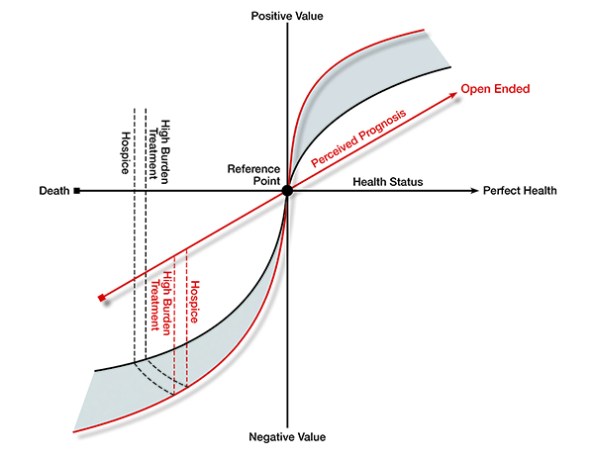
I became interested in prospect theory because it has emerged as a potential framework in healthcare decisions and shows great promise. However, I was struck by one aspect to the existing healthcare research: how the commodity is determined. This commodity is a continuum on which a choice can be measured as a gain or a loss. In economics, the commodity has generally been a purely monetary measure. This is easily measured and constructed as everyone has a sense of what $100 is, even if it is more or less important based on one’s financial situation. In healthcare, the commodity has been measured not so much from patients’ perspectives but from an objective clinical criterion of health. In this study we found that participants’ subjective perceptions of health were markedly different than those determine by traditional clinical measures. While clinicians may use disability or comorbidity as a commodity on which to value choices that is indeed objective, participants were determining their health differently. Not only that, they were trying to value choices on two competing criteria: their desire to live as long as possible and their hope to maintain a high quality of life.

By using prospect theory as an a priori framework in this analysis, we bring important innovations to our understanding of the theory as it is used in healthcare. First, we chose to look at commodities of health status and prognosis as the participants defined them. Thus, rather than using their clinical status and prognosis – which was poor for all the participants – we relied on their personal perceptions as this is the point of reference from which they make decisions. Second, we examined how these two commodities were being utilized together, as it became apparent our participants were valuing choices on both. Even those who felt they were in the best of health didn’t make choices solely on that criterion; rather, they still considered how long they felt they had to live. Likewise, those who felt they had a very short prognosis still “wanted a chance,” as one participant put it. What we discovered is that participants were trying to achieve a delicate balance between the two and that using multiple criteria appears to become more and more important as ones health declined. As they approach the end of life, they are not willing to sacrifice quality of life completely to live as long as possible. Instead, they want a happy medium. This desire to use two commodities seems unique to end-of-life decisions and was not fully addressed by prospect theory.

Is theory needed to understand decision making at this specific time of life? We argue yes. Theory is important both to clinical practice and research. Because clinicians are called upon to resolve the discordant views patients may have of both their health and prognosis, they greatly benefit from understanding this important balancing act. Clinics need to help patients navigate through the complex choices around end-of-life care. While “correcting” patients’ subjective self-assessments may seem like taking away hope, patients cannot make the value-based decisions they say are important without fully understanding the true nature of their situations. Our participants understood this and looked to providers to guide them – and in many cases, to simply make decisions for them.

Besides its value for clinicians and patients, theory plays an important role from the research perspective, as it helps us identify what needs to be studied, and by extension, what interventions may be helpful. Theory also helps us determine where interventions can be applied. Despite all the research that has been done in end-of-life decision making, older adults frequently continue to receive care that is \inconsistent with long-held views, so we continue to have a weak understanding of how older adults are making these choices. In this paper we propose an extended view of prospect theory that can be used to better frame decision making at this unique and challenging time of life. We do not propose this extension as the definitive statement on theory related to end-of-life decision making. We cannot yet offer ways to test and validate our perspective. Rather, we seek to start a dialog that will lead to new and innovative thinking in end-of-life decision making, particularly when the decisions transition from choices about what one would want in an abstract future to what one does want in a concrete reality of today. There are, and will be, detractors of our perspective of prospect theory. We welcome this and hope our manuscript initiates a long, vibrant conversation that will indeed push the envelope and prompt further research that enables us to ensure older adults at the end of life receive high-quality care that is consistent with their own values and goals at the end of life.

  1. Kahneman D, Tversky A. Prospect theory: an analysis of decision under risk. 1979;47(2):263-292.
  2. Wu G, Zhang J, Gonzalez R. Decision under risk. In: Koehler DJ, Harvey N, eds. Blackwell Handbook of Judgment and Decision Making. Malden, MA: Blackwell Publishing; 2004: 399-423.

figure-2