Skip to content

Lisa Karhe


Our featured article starting January 27th is titled “Patient Experiences of Loneliness: An Evolutionary Concept Analysis,” authored by Liisa Karhe, RN, MNSc and Marja Kaunonen, RN, MNSc, PhD.  Their analysis provides useful insights about patient loneliness in relationships with healthcare professionals. Visit the ANS website to download this article at no cost while it is featured!   Ms. Karhe provided this background about her work that resulted in this article:

Loneliness is an old and much used concept but its content is often not understood. My interest in the phenomenon of loneliness began during my master studies years ago. I made a concept analysis of the concept of presence in a nursing relationship context and I found loneliness as the opposite concept of loneliness. I had recognized the phenomenon of presence and loneliness in my patients in Liisa-Karheintensive care units. There was a clear difference in how the nurse was present at a patient bedside. My professors recommended that I read the philosophy of Martin Buber. I found theoretical confirmation that this philosophy is applicable to the context of a nursing relationship between a patient and a professional nurse. I decided to explore this phenomenon in my dissertation. I was surprised that this topic was not found in other studies. Many nursing studies included loneliness without explanation, or the authors described loneliness using classical loneliness theories. I thought that the different dimensions of loneliness had quite different meanings in nursing context. So I had no other option than to pursue an evolutionary concept analysis and to find out the uses of the concept of loneliness in the nursing and health care context. As well, from a nursing point of view, it is very significant to understand  dimensions of loneliness in the context of nursing relationships. This evolutionary analysis served as the basis for my qualitative and quantitative research, which I have continued together with my dissertation supervisor Marja.

I hope you will read this interesting article, then return here to share your comments!


Re-designing patient education for immigrant women


Our current ANS featured article addresses the challenges of individualizing care for people whose social context differs from the white middle-class context on which much of nursing health care is based.  The article is titled “Promoting Immigrant Women’s Cardiovascular Health: Redesigning Patient Education Interventions,” authored by Suzanne Fredericks, PhD, RN and Sepali Guruge, PhD, RN.  Their work uses the social determinants of health framework to identify specific strategies for the needs of different populations.  You can download the article at no cost while it is featured on the ANS web site!  Then return here to engage in discussion with the authors!

Here is an abstract of the article:

Cardiovascular disease is the most common cause of death among women from low- to middle-income countries. A frequent cardiovascular nursing intervention is that of patient education. However, the applicability of this intervention is questionable, as these educational initiatives are typically designed and evaluated using samples of “white” homogeneous males. Using the social determinants of health framework, the discursive article titled: Promoting Immigrant Women’s Cardiovascular Health: Redesigning Patient Education Interventions identifies specific strategies for redesigning existing cardiovascular education interventions to enhance their applicability to immigrant women. 

Dr. Fredericks has provided this video that gives an overview of her research program:

Health Implications of Religiosity and Spirituality


Starting on January 11, 2016 we are featuring the article titled “The Influence of Religiosity and Spirituality on Rural Parents’ Health Decision Making and Human Papillomavirus Vaccine Choices” by Tami Thomas, PhD; Amy Blumling, BSN; Augustina Delaney, BSN. Their analysis reveals possibilities for nursing interventions that are based on understanding of the relationship between people’s faith beliefs and their health. While this article is featured you can download it at no cost on the ANS website, then return here and share your responses.

Dr. Thomas shared this background about their work:

In the kinds of places most of us are fortunate enough to live in, we don’t have to worry about the safety of our own health or that of our loved ones (not counting those who would rather listen to Jenny McCarthy than their licensed nurses and physicians). But there are still plenty of places in the United States that still do not have access health promotion knowledge, such the advantages of a preventative HPV vaccine, that could likely one day save the lives of their children. So how are we supposed to respectfully andpeds-clinic-300 effectively approach and inform these rural communities so they too can have this beneficial health information?
While we know that HPV types 6, 11, 16 and 18 are responsible for approximately 99% of cervical cancers and 90% of genital warts.1-3 And as HPV vaccination protects against HPV related cancers, the CDC’s Advisory Committee on Immunization Practices (ACIP) voted unanimously to recommend that both girls and boys as young as 9 to 10 years old receive the HPV vaccine to prevent HPV-related cancers, including cervical cancer and related morbidities4. Given in a series of three injections over a six-month period, the HPV vaccine can be administered to children as young as 9 and adults up to 26 years old.5 Simple, right? But once again, how are we, as nurses, expected to efficiently and efficaciously relay these facts to underserved populations? Answer – find a trusted and shared experience that fosters acceptance, love, and the exchange of positive information.

Researchers have consistently implied that spirituality and religiosity are positively associated with physical and mental health in minority communities.6-8 These associations have been consistently found among rural populations, where influence of these constructs appear to be linked to attitudes about health, the health decision making processes, and perceptions of health-related outcomes.9-14 Drawing upon Hill & Pargament’s research, religiosity, which was defined as participation in religious social structures, was a recurring and important theme when discussing HPV vaccination. Although religiosity related comments were not always directly related to HPV or HPV SAM_300vaccination, it did emerge as an important influence discussing how they approach health management issues. Subjective commitment to spiritual or religious beliefs, or spirituality, was found to influence the ways in which parents perceived their control over their children and coping with health issues potentially related to HPV vaccination. Together, religiosity and spirituality were found to play integral roles in these parents’ lives and influenced their attitudes towards HPV vaccination uptake for their children.

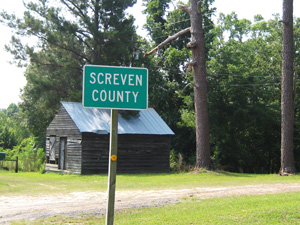
So in 2010, with this basic idea in hand, I started ferrying myself and a small group of student assistants on a 4 hour drive from my then famously lovely home in Atlanta to the much lesser well-known and often ignored East Georgia county of Screven, population 14,593. To so many, it looks like the kind of place that looks like every other area far removed from urban life, covered in wildflowers and cotton fields, the kind of place one passes through to get somewhere else – when we first made the 5:30 AM drive, I was sleepily asked “where are we, Dr. Thomas?” by my young passengers. In a situation like that, with red clay caking up the wheel-wells of your car, missing the familiarity of brand name restaurants and shops, it can be intimidating. But what we found was not only a need, but also warmth and willingness from the church community we had come to speak with and gather opinions from.

Screven county, as well as the other rural communities included in this study, had no local pediatrician, and parents often had to drive more than 60 minutes to receive primary healthcare for their children. While local health departments in these rural areas provided healthcare for children and had the HPV vaccine, the hours of operation and availability of the HPV vaccine, secondary to dispensing costs, were often limiting RWJ-Thomas-300for parents who were working fulltime. In short, overcoming barriers to HPV vaccination would require collaborative efforts among rural parents. Concordantly, our findings suggested that in the context of faith-based initiatives the inclusion of parents would be essential to increase HPV vaccination in these kinds of areas. We found that through the use of community churches and faith-based approaches, HPV prevention and vaccine uptake activities could be improved in this population and in other such communities that are imbued with religious and spiritual values.
Across the 2 years spent on this study, so many important things were learned. For instance, we now understand that the church community in a perfect conduit for educating caregivers on HPV issues and how imperative it is that we use the input of this community, which is of great cultural importance, to fashion more effective methods of various health interventions in rural areas. But we also now know that unfamiliar isn’t synonymous with scary, but that it actually can mean the pleasant surprise of a kind act like opening a restaurant ahead of schedule so a bunch of city people can get their morning coffee before they head off to collect their scientific data. We know that understanding individual culture goes well beyond foreign country colloquialisms and strange food, but that it includes their spiritual beliefs or even lack thereof.

As nurses, it is out sacred duty to carry the responsibility of spreading messages of health promotion, like the merits of HPV vaccination, with trust and kindness. Having this kind of knowledge will hopefully allow nurses in the future to convey such information in the appropriate context to foster great understanding and therefore better-informed caregiver decision-making and healthier people.

References

1. Dunne EF, Nielson CM, Stone KM, Markowitz LE, Giuliano AR. Prevalence of HPV infection among men: A systematic review of the literature. J Infect Dis. Oct 15 2006;194(8):1044-1057.

2. Hu D, Goldie S. The economic burden of noncervical human papillomavirus disease in the United States. American journal of obstetrics and gynecology. May 2008;198(5):500.e501-507.

3. Joseph DA, Miller JW, Wu X, et al. Understanding the burden of human papillomavirus-associated anal cancers in the US. Cancer. Nov 15 2008;113(10 Suppl):2892-2900.

4. Centers for Disease Control and Prevention. ACIP recommends all 11-12 year-old males get vaccinated against HPV. 2011.

5. National and state vaccination coverage among adolescents aged 13 through 17 years–United States, 2010. MMWR. Morbidity and mortality weekly report. Aug 26 2011;60(33):1117-1123.

6. Ano GG, Vasconcelles EB. Religious coping and psychological adjustment to stress: a meta-analysis. Journal of clinical psychology. Apr 2005;61(4):461-480.

7. Koenig HG, McCullough, M.E., Larson, D.B.;. Handbook of religion and health. Oxford, England: Oxford University Press; 2001.

8. Seybold KSH, P.C. The Role of Religion and Spirituality in Mental and Physical Health. Current Directions in Psychological Science. 2001;10(1):21-24.

9. Cates JR, Brewer NT, Fazekas KI, Mitchell CE, Smith JS. Racial differences in HPV knowledge, HPV vaccine acceptability, and related beliefs among rural, southern women. J Rural Health. Winter 2009;25(1):93-97.

10. Holt CL, Clark EM, Roth D, et al. Development and Validation of Instruments to Assess Potential Religion-Health Mechanisms in an African American Population. J Black Psychol. May 1 2009;35(2):271-288.

11. Holt CL, McClure SM. Perceptions of the religion-health connection among African American church members. Qual Health Res. Feb 2006;16(2):268-281.

12. Pargament KI, Magyar-Russell, G., Murray-Swank, N.A. The sacred and the search for significance: Religion as a unique process. Journal of Social Issues. 2005;61(4):665-687.

13. Thomas T, Strickland O, DiClemente R, Higgins M. An Opportunity for Cancer Prevention During Preadolescence and Adolescence: Stopping HPV Related Cancer through HPV Vaccination. Special Supplement to the Journal of Adolescent Health, 2013;52 (2013) S60-S68, DOI: 10.1016/j.jadohealth.2012.08.011

14. Thomas T; Strickland O, DiClemente R; Haber M, Higgins M. Rural African American Parents’ Knowledge and Decisions about HPV Vaccination. The Journal of Nursing Scholarship, 2013; 44:4, 358–367. DOI: 10.1111/j.1547-5069.2012.01479.x Epub 2012 Nov. 5

A Tribute to Nursing Leadership: Dr. Joyce Clifford


As we start the new year, ANS features an article honoring one of our historically significant leaders who paved the way for the future of nursing – Dr. Joyce Clifford (pictured above).  The article is authored by Terry Fulmer, PhD, RN, FAAN and M. Patricia Gibbons, DNSc, RN, and is titled “Joyce Clifford the Scholar In Her Own Words.” Dr. Fulmer shared the message below about their experience in preparing this article, and pays tribute to Dr. Gibbons, who died on January 15, 2015.  Following the narrative is a slide presentation by Dr. Fulmer that provides an overview of the significance of Dr. Clifford’s work in shaping the future of nursing.

Writing about Joyce Clifford is bittersweet. The sweet part is remembering her extraordinary leadership capability in her effusive belief in the profession and the ways that she advanced practice. Of course the bitter part of bittersweet is missing her and no longer

Dr. Terry Fulmer

Dr. Terry Fulmer

having her voice with us. But maybe we still do have her voice through her incredible writing! In our paper, Trish and I tried to capture the way Joyce thought, the way she led, and the way she evolved as a leader. She was inspirational in all of us knew that she was a force and that she would use her force for good. We followed her, knowing she would be there for us in the difficult times. As young primary nurses, especially in a Harvard teaching hospital, we were in a system that expected the highest intellect, the highest motivation, and the best outcomes. Joyce reminded us that this made us all better. Better nurses, better leaders, better negotiators.

I remember one Saturday morning when a very unhappy patient signed out AMA because he felt he was not getting the attention he needed. The gentleman had chickenpox and was in isolation. We knew he was safe, we feared transmitting the chickenpox to others, and in fact he was right. He was not getting the attention he might have otherwise. Nonetheless, we felt distraught and as if we had failed Joyce by having this gentleman signout. As it turns out, Joyce was in her office on the first floor, came to our floor and comforted us as well as help this process. How would we improve next time? What might we have done differently? She was way ahead of the quality and safety movement and let us know she understood the trade-offs in day-to-day practice.

Dr. Trish Gibbons is no longer with us as she died last spring after several years of cancer. All the more bittersweet to see this narrative and to hear Trish’s voice as she reflected on Joyce. Anyone who knew Trish knew her impish sense of humor, that Boston accent, and the twinkle in her eye always accompanied by a smile. We loved Trish and loved the way she supported Joyce as they created a national movement that defined nursing practice for that era. Trish inspired us in entirely different ways and always complementary to the vision Joyce held for all of us. How I miss them. It’s a daunting responsibility to keep their voices alive as we move into the era of the Affordable Care Act and help initiate accountable care organizations. Joyce would expect us to be knowledgeable, to lead, and to be brave.


Nursing Practice Inspires Theory for Diabetes Self-management Theory


The current ANS featured article is titled, “A middle range theory for diabetes self-management mastery.”  It is authored by Jennifer A. Fearon-Lynch, MSN, RN, doctoral student at the University of Massachusetts Dartmouth and Caitlin M. Stover, PhD, RN, Assistant Professor, Chairperson of Community Nursing Department, University of Massachusetts Dartmouth.

Ms. Fearon-Lynch shared this background of her work, which originated from her clinical practice with people who are living with diabetes:

Fearon-Lynch

Jennifer A. Fearon-Lynch

The middle range theory being featured in our article evolved from a theory class assignment during year one of doctoral studies. As a clinical nurse, I have concentrated much of her practice in the area of medical surgical nursing and currently works at an acute care facility in southeastern Massachusetts. The high prevalence of diabetes within this geographic location and varied patients’ responses to self-management captured my attention and interest.

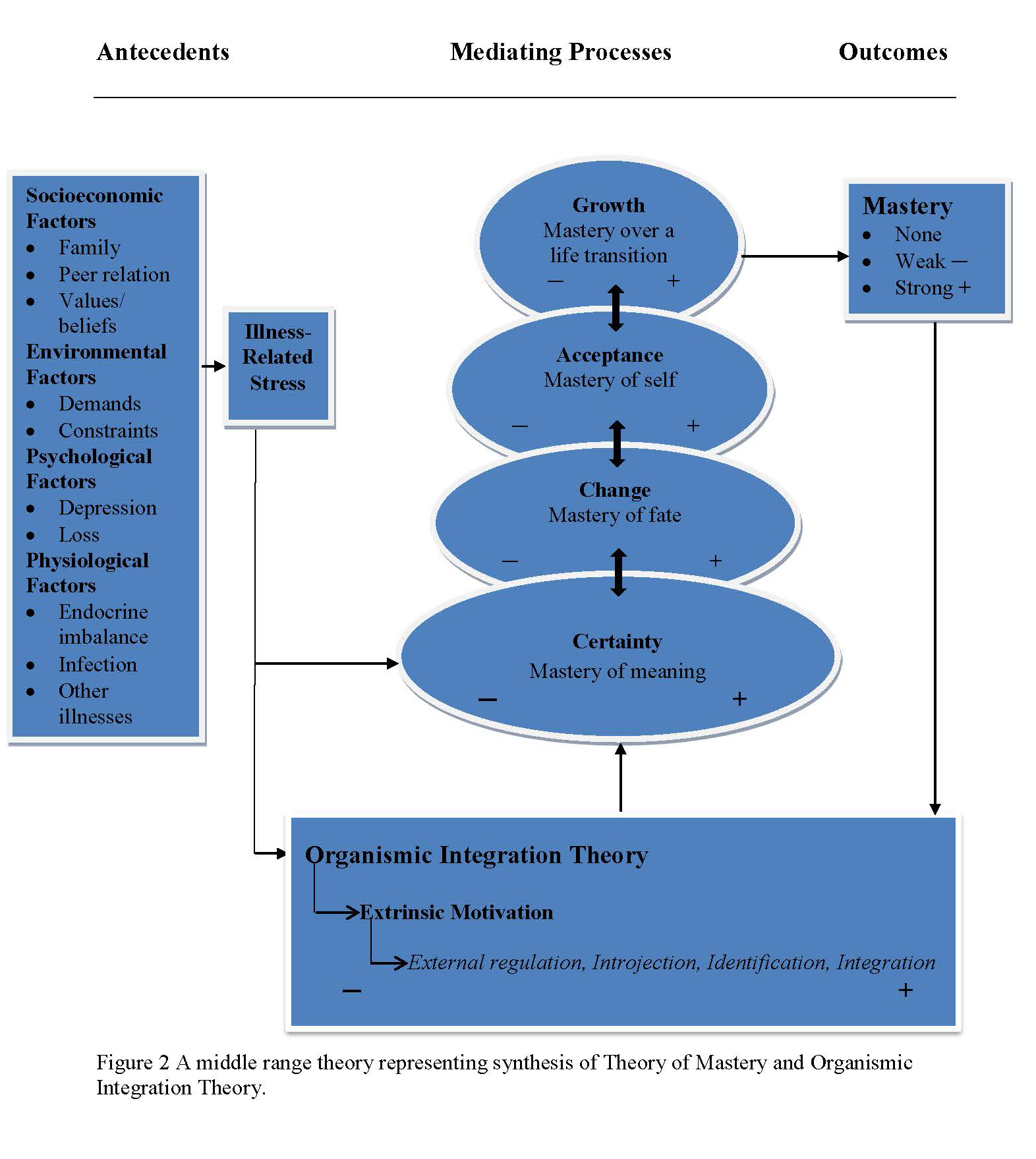
Observation during nurse-patient encounters revealed that the complexity of diabetes self-management often produced stressful experiences such as chaos, distress, and disturbances in routine. Despite diabetes-related stresses, some patients gained mastery over stress, accepted their chronic illness, and engaged in health protective behaviors while others demonstrated little or no motivation to self-manage and were frequently admitted to the hospital with abnormally high blood glucose levels and diabetes associated health problems. An attempt to understand why people choose not to engage in positive lifestyle practices associated with desirable diabetes management outcomes generated several questions that became the genesis of the theoretical inquiry. These are, “Why do some people with diabetes gain mastery over the illness-related stress and emerge with positive attitudes and fortitude and some do not?” Furthermore, “Why do some people exhibit motivation to engage in health care behaviors associated with desirable outcomes and others express little or no desire to participate?” How can people be assisted to handle the experience of stress accompanying diabetes related events that have important effects on their life?

As interest in the phenomenon grew stronger, literature from nursing and psychology were reviewed on mastery and motivation. Despite application of theories to bolster human’s response to effectively self-manage, no single theory adequately addressed the issue. Two theories appeared to best describe the phenomenon of interest: The theory of Mastery (TM) from nursing and Organismic Integration Theory (OIT) (extrinsic motivation) from psychology. However, examination of the theoretical properties of TM showed it did not completely fit the problem at hand since it did not explain the role of motives as a stimulus to moderate the direction and strength of the theory’s variables: certainty, change, acceptance, and growth. In addition, it lacked clarity in relation to how the theoretical variables are strengthened and supported. Lastly, distal factors triggering TM proximal variables were not explicit. As a result, TM was modified by integrating concepts from OIT to act as distal factors impacting the TM fundamental variables to produce mastery over stress and consequently more energy to effectively self-manage diabetes. The integrated theory better explains the phenomenon and is not only applicable to people with diabetes, but any chronic illness condition that is impacted by stressful experiences.

The middle range theory has the potential to masterfully influence individuals’ response to diabetes-related stress, thus resulting in better diabetes self-management behaviors. Nursing science could benefit from the feasible translation of the theory in diverse clinical settings to generate health-promoting behavioral interventions for individuals with diabetes and other chronic health conditions. The theory has not yet been tested. However, since components of the theory were synthesized using constructs from extant, reputable theories it is likely to have a robust impact on the chronic illness population. The authors welcome anyone who wishes to apply the theory in research and practice to do so and disseminate the result through scholarly dialogue.

Download this article at no charge now, while it is featured!  We would be delighted to hear from you – read the article and come back to share your ideas in the comments on this blog!

Fig2-sm

Knowledge for Nonviolent Social Change


Our featured article for the coming 2 weeks is titled “Transcendent Pluralism: A Middle-Range Theory of Nonviolent Social Transformation Through Human and Ecological Dignity” by Donna J. Perry, PhD, RN.  Dr. Perry identifies transcendent pluralism as a framework for advancing human dignity.  She further explains:

The social problems impacting health cannot adequately be addressed within the health care encounter or within traditional health care settings. Problems such as racism, social injustice and violence are rooted in the social structure and underlying culture. They must also be addressed at these levels. Nursing as a discipline has a critical role to play in the transformation of society. But to move in this direction we need to advance knowledge in domains such as peace building, social justice, human rights and environmental sustainability. Recently the United Nations released an important document, “Transforming our World: The 2030 Agenda for Sustainable Development. This document includes 17 goals for sustainable development on our plant including health, peace and equality. Nursing has a critical role to play in this transformation. But to do so we must expand the horizons of disciplinary knowledge development. The article in this journal on transcendent pluralism provides one approach toward using knowledge for social change.

This article is available for free download on the ANS website while it is featured.  I invite you to read the article and return here to share your comments.

Competencies for Nursing Care of Veterans


In our current featured article titled “Veteran Competencies for Undergraduate Nursing Education,” authors Jacqueline A. Moss, PhD, RN, FAAN; Randy L. Moore, DNP, RN and Cynthia S. Selleck, PhD, RN, FAAN present the results of their project to address veteran health concerns that arise from their military service .  The competencies they identified are: Military and Veteran Culture, Post Traumatic Stress Disorder, Amputation and Assistive Devices, Environmental/Chemical Exposures, Substance Use Disorder, Military Sexual Trauma, Traumatic Brain Injury, Suicide, Homelessness, and Serious Illness Especially at the End of Life.  The article is available for free download while it is featured on the ANS web site!

Dr. Moss has provided a narrated slide show that explains the background of their project:

Helping Veterans with PTSD


The current ANS featured article is titled “Screening for Obstructive Sleep Apnea in Veterans Seeking Treatment of Posttraumatic Stress Disorder,” authored by Lauren Forbus, BSN, RN and Ursula A. Kelly, PhD, ANP-BC, PMHNP-BC. Their article is available for free download while it is featured on the ANS website. Ms. Forbus shared this information about their work with veterans:

Our team began to take a look at obstructive sleep apnea (OSA) among veterans with posttraumatic stress disorder as a result of some unexpected findings in another project, Project Stress Less. Project stress less was developed to establish the feasibility of conducting a trauma-sensitive yoga intervention for women

Forbus

Lauren Forbus

veterans with posttraumatic stress disorder (PTSD) who experienced Military Sexual Trauma (MST). Because sleep was a primary outcome of this study, OSA was initially an exclusion criterion. We assessed for presence of OSA through medical chart review and self-report during phone screening; and we assessed for risk for OSA using a questionnaire in our phone screening process. The unexpected finding in the screening process for this study was that 14.6% of those screened had been diagnosed with OSA and 63.2% were at high risk for OSA – both numbers that are greater than in the general population.

As we moved forward with Project Stress Less, we simultaneously began to think about implementing a larger OSA risk screening study into an outpatient VA PTSD clinic to get a bigger snapshot of what this risk for OSA looks like in the Veteran population. The idea was eventually implemented as the study described in our published article. What we found was consistent with our initial findings in Project Stress Less – a great majority of veterans were screening at high risk for OSA, however, only a small portion of them had documentation of a formal evaluation for OSA in their medical records.

These findings were significant enough that our research team proposed and is in the process of implementing a clinical practice improvement in collaboration with our VA colleagues in the PTSD clinic. The common goal is to develop screening, referral and follow up processes for Veterans who screen at high risk for OSA. Because of this supportive relationship with our VA colleagues, we have had the unique opportunity to quickly turn our research findings into meaningful practice change. So far we have inserted an OSA screening tool into the clinic’s intake packet, which is currently used for clinical purposes at intake as well as for program evaluation. We are also working on developing a follow up plan for those who screen at high risk. As we move forward with this practice change in the short term, we are keeping our eye on the long-term goal of conducting further research. Our hope is that we can gain new insights to help alleviate some of the sleep complaints that often times plague our Veterans with PTSD. 

Share your comments here to engage in discussion about these important issues!

Military Family Connections


In our current ANS featured article, author Susan W. Durham, PhD reports her qualitative study of communication challenges experienced by service members in staying connected with their families.  Dr Durham shared this background information about her work for ANS readers:

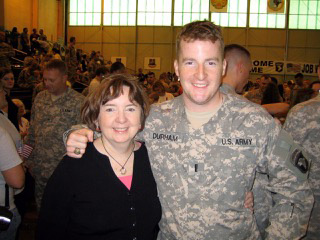
Coming from an early career in the US Army Nurse Corps and as a parent of an Infantry officer who was deployed to both Iraq aDurham.jpgnd Afghanistan four times over the course of seven years, I was inspired to study the experiences of deployed service members in their attempt to stay connected to their families and loved ones while deployed in a combat environment. Doing these interviews and listening to the stories has been one of the greatest privileges of my life. Most of the
qualitative studies that looked at communication issues and deployment studied the experiences of family members and the service members’ voices were not being heard.

The benefit of content analysis, a form of qualitative research, doesn’t generally result in hard data or a bar graph. Some scholars even have difficulty understanding the value of this type of research and may ask, “Where do interviews and observations like these get us?” The short answer is that qualitative data provides context and meaning.

These interviews not only tell unique stories about individual service members’ experiences but also offer a collective understanding of common communication challenges for deployed individuals. Hearing and analyzing their stories and combining the results into a combined narrative provided multiple perspectives that no single participant could have related in totality. The interviews also accomplished what survey questions could not because every participant was able to express his or her personal, detailed experiences and observations of the phenomenon being studied. The description of the participants’ experiences enables the reader to understand the service members’ perspectives, perceptions, and reactions known only to them. Also, the results offered a collective viewpoint that ultimately will provide quantitative researchers with variables, issues, and hypotheses for future inquiry about communication issues experienced during deployment to a combat environment.

You can download a copy of this article at no cost while it is featured on the ANS web site  – I urge you to do so now, and then return here to join me in expressing appreciation for the insights that Dr. Durham’s study provides.

Updated and Revised ANS Author’s Guide


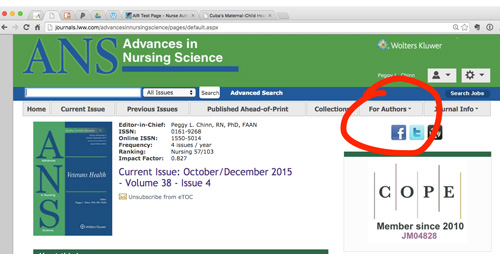
We have recently made significant changes to the ANS Author’s Guide, adding material related to authorship, social media, and open access publishing in ANS – and much more!  ANS follows widely accepted standards for publishing, so you might find this resource helpful regardless of how, when or where you plan to submit your work for publication.  You can access this information on the ANS web site – right from the main “For Authors” menu.  Below is the Index so you can see all the topics covered, and you can even click on a topic to go directly to that section in the Guide!

For-authors.jpg