Skip to content

Transnational Perspectives to Improve Immigrant Health


We are delighted to feature a very timely article that focuses on nursing perspectives in promoting the health of immigrant populations through nursing research. It is available for download at no cost while it is featured!   The article is titled “Transnationalism: A Framework for Advancing Nursing Research with Contemporary Immigrants,”  authored by Marie-Anne S. Rosemberg, PhD, RN; Doris M. Boutain, PhD, RN; and Selina A. Mohammed, PhD, MPH, RN.  Here is a message from Dr. Rosemberg about her work:

In this article we initiate an in-depth conversation about Transnationalism and how this framework can benefit nursing science in exploring and understanding immigrant health. This framework provides an innovative approach for nursing research, encompassing all aspects of the research process: research design, method, ANS_Blog___ANS1048R1_doc__Compatibility_Mode_analysis, and dissemination strategies. Nursing research about immigrant health continues to be dominated by concepts such as assimilation and acculturation despite a shift in how approaches to everyday life communications have changed with the advent of social media and smart-phones. Given rapid technological advancements and globalization, nursing research among contemporary immigrants needs to reflect the current trends of trans-border communication and resource sharing and how these trends affect health outcomes among contemporary immigrants.

As stated in the article “Nurse researchers can use transnationalism as an approach to explore and interpret the complex health and social experiences of contemporary immigrant among study participants. Such level of exploration will reflect health equity research design and will promote change at the core of health disparities specific to contemporary immigrant populations. As we continue this conversation the goal is to move beyond the application of transnationalism in nursing research and explore how it translates to nursing praxis in promoting immigrant health.

I became interested in this framework while investigating how Haitian immigrants defined and managed their hypertension. While searching, reading and writing about the historical and political aspects of this immigrant group, I started to see something that was very interesting and that I had not seen in other nursing research projects about immigrants. I realized that in order to fully have a holistic view of this particular population and their health I needed to consider their country of birth in addition to their current place of residence (US). I found that Transnationalism was the ideal framework to explicate this phenomenon.

Co-authors Dr. Boutain and Dr. Mohammed were instrumental in helping me hone in on this phenomenon throughout the research process. During my interviews with participants, I found they had indeed created transnational identities. Participants reported using resources from their home country (country of birth) and host country (country of residence) to manage their disease. Their transnational identity influenced every aspects of their lives not only from a health promotion and disease management (e.g. receiving cultural medicines from home country) standpoint but also from economic (e.g. using their meager wage in the host country to send remittance to their home country) and political (e.g. supporting a presidential candidate in home country) standpoints. Participants were neither interested in assimilating, nor acculturating into the “melting pot” of contemporary US culture. They took pride in who they were, their culture and their heritage and had no intentions of forgoing their culture while making a life here in the US. Instead, they found a way to live within the geographic borders of the two countries.

I found that the delineation of the concepts of assimilation and acculturation may not ring true for all immigrant groups; especially for contemporary immigrants who maintain strong ties with their home country. Persisting in using the terms assimilation or acculturation among contemporary immigrants may prevent nursing researchers from fully grasping the immigrants’ experiences that increasingly transcend geographical and political borders and thus may result in inaccurate or incomplete data. Transnationalism shows promise for advancing nursing science as it allows for holistic approach in nursing research and praxis among contemporary immigrants.

Advancing Nursing Informatics


Our current featured article, available at no cost while it is featured, addresses a theoretical model that advances the independent development of nursing informatics.  The article is titled “The Evolution of Data-Information-Knowledge-Wisdom in Nursing Informatics.” by Charlene Ronquillo, MSN, RN; Leanne M. Currie, PhD, RN; and Paddy Rodney, PhD, RN. Here is their message about this important work  for ANS readers:

Setting out to question one of the foundational theories in nursing informatics was a task we approached with much caution, care and respect, in the paper we have contributed to this journal. The theoretical framework we are

Charlene Ronquillo

Charlene Ronquillo

referring to is the data-information-knowledge-wisdom framework, often referred to as DIKW. Exploration of DIKW brought us on a very interesting journey: We delved into the literature from the early years when nursing informatics was first beginning to be established as a field of inquiry and we ended up exploring fields that included management information science, library sciences, and geographical sciences. DIKW is arguably one of the first concepts described as a unique feature of nursing informatics by Graves and Corcoran in their seminal paper, The Study of Nursing Informatics, published in 1989. DIKW might have faded into the past had it not been for the work that Nelson, and then Nelson and Staggers

Leanne M. Currie

Leanne M. Currie

added to the exploration and articulation of the framework. We feel privileged to be able to be able to build on the insights put forth by Graves and Corcoran almost thirty years ago, and advanced by Nelson and Staggers.

What began as a curiosity-driven exploration of the DIKW as part of a doctoral philosophy course in 2013 turned into a full investigation of this theoretical framework. Our investigation was spurred by the finding that beyond nursing informatics, many other fields of study mentioned, used, and critiqued DIKW. In the figure below, for instance, we provide a visual depiction of DIKW in the fields of nursing informatics (as a series of overlapping circles) and DIKW in computer science, management information systems, and library

Paddy Rodney

Paddy Rodney

sciences (as a pyramid). We found the opportunity to contribute to the ongoing evolution of DIKW by incorporating these ‘non-nursing’ perspectives to be a possible way forward.

Picture1

This drawing presents a side-by-side comparison of the DIKW models as depicted in nursing informatics (left) and computer science, management information systems, and library sciences (right) illustrate the common attributes of DIKW visualizations: consolidation of power, linear and positive growth, and an implicit assignment of value to concepts (i.e., “building” toward to the pinnacle of wisdom, which is the most important).

An important first step in our inquiry was gaining an understanding around what purpose DIKW served and the intention(s) around its introduction as a central aspect of nursing informatics. As is reflected in our paper, we continue to emphasize the crucial role and contributions of DIKW towards one of the key goals of nursing informatics–namely, to continue nursing’s historical efforts to make nursing work visible and “counted” in health systems by leveraging the opportunities presented by information technologies and the increasingly digitised world. The challenge, of course, as it has always been, is to develop methods that capture aspects of the complexity of nursing that cannot be easily measured or quantified.

We consider, in this paper, the various iterations and evolutionary developments of DIKW in nursing informatics as attempts at better understanding and operationalizing ways in which nursing work might be made more visible in health systems. In the process of developing this paper and attempting to gain clarity around how DIKW has been conceptualised, understood, and used, we stepped back and asked two key guiding questions: (1) Does DIKW serve clinical information systems, nurses, or both? And (2) What level of theory does DIKW occupy? It is by asking these questions that we offer a discussion about the assumptions implicit in the DIKW model and the subsequent implications of these assumptions. Finally, we explored the approaches taken by various authors in operationalizing DIKW in nursing, providing what we hope are fruitful insights into potential ways forward for this theoretical framework.

As Norma Lang claims, “If we cannot name it, we cannot control it, practice it, teach it, finance it, or put it into public policy” (Clark & Lang, 1992, p. 109). Indeed, Professor Lang has continued to be a pioneer in advocating for standard terminologies to advance nursing knowledge.  Here is a video in which Dr. Lang provides the context of this very famous quote.

It is with this guiding principle that we approached the critical examination of the evolution of DIKW. That is, we argue that each iteration, application, and attempt at further refining the DIKW model over the decades should be viewed as an important step forward towards the goal of making nursing work visible. It is our hope that our paper makes a contribution toward this end and supports other colleagues undertaking similar explorations.

Nursing Partnership with Parents of Technology-Dependent Children


It is our pleasure to feature an article by Michele A. Mendes, PhD, RN, CPN, titled “Partnership With Parents of Technology-Dependent Children: Clarification of the Concept.” As with many of the articles in this issue of ANS, Dr. Mendes focuses on ways in which technology influences the caring relationship that is central to nursing. You can download this article at no charge while it featured by visiting the ANS website! Here is a message in which Dr. Mendes describes more about her work in this area of practice:

mendesm

Michele A. Mendes, PhD, RN, CPN

It is a pleasure to be able to share my work and my passion for children dependent on technology, their parents and their nurses.  This manuscript is the third describing my program of research that aims to explore nursing practice with children dependent on technology and the broader group of children with special health care needs. The first focused on understanding the delivery of home nursing care to these children from the perspective of the people responsible for their care, their parents and home care nurses.  Initially, I examined home nursing care practice from the perspective of the parents.  Next, in a follow-up study, I examined home nursing care practice from the perspective of home care nurses.  These two studies told two separate parts of the story of home care nursing, but did little to explain how parents and nurses work together in partnership to provide the care the children need to survive and thrive.

As I discovered when reviewing the literature on partnerships between nurses and parents of child patients, the term partnership is used loosely and is poorly defined.  A concept analysis of partnership would certainly have provided increased understanding of the concept, but would lack the richness of data from the perspective of the partners involved.  A secondary analysis of the data from the previous two studies would have provided rich data describing how parents and nurses work together to provide home care, but would have lacked the depth of understanding that came with an analysis of the concept.  An adaptation of the Hybrid Model of Concept Development1 Allowed me to combine strategies of concept analysis and a secondary analysis of the data from the two previous studies to bring the richness of first-person accounts and the depth of concept analysis to the clarification of the concept of partnerships between parents of children dependent on technology and home care nurses.

  1. Schwartz-Barcott D, Kim HS. An expansion and elaboration of the hybrid model of concept development. In: Rodgers BL, Knafl KA, eds. Concept development in nursing: Foundations, techniques, and applications. 2nd ed. Philadelphia, PA: Saunders; 2000:129-159.


Reflections on Digital Technology and Empathy


In our current featured ANS article, author Pamela Bjorklund, PhD, APRN, CNS-BC, PMHNP-BC draws on personal experience and scientific literature to develop a commentary on nursing’s relational core in the context of growing digital technologies.  The article, titled “Gossamer Threads: Commentary on the Impact of Digital Technology on the Developing Brain and the Capacity for Empathy” will be available for free download on the ANS web site while it is featured!  We encourage you to take advantage of the opportunity to read this interesting article, and then return here to share you comments!


This article attempts to find points of nexus between seemingly disparate bodies of knowledge from diverse areas including technology, metaethics, moral responsibility, the art and science of empathy, relational theory, technology, and nursing. While the scope is intentionally broad and the essence of the paper is intentionally interdisciplinary, it has important implications for nursing—with its relational core, its unique as well as shared bodies of moral and scientific knowledge, and its interprofessional health care goals to maximize human growth and well-being across the lifespan in both health and illness.

In reviewing the research for this paper, the threads that connected these disparate bodies of knowledge initially seemed tenuous, fragile, gossamer-like. I envisioned the spider webs on grass and shrubbery that are only seen when certain conditions—the morning light and the dew—render them visible.

Although the scope is broad, the focal point of the paper is more narrow: namely, that science shows mixed effects of technology on brain development and on the development of empathy and other meaning-making human skills—and that a more intentional use of technology may better serve human development in the long-run. This does not impugn the undeniable value of technology to human endeavor. My position is already a both/and, not an either/or position. Technology is indispensable; it isn’t going to go away, and who would want it to, given its overwhelming benefits? However, human beings have some capacity to be intentional about the use of technology and to regulate its impact on their lives, which is what I suggest in this paper.

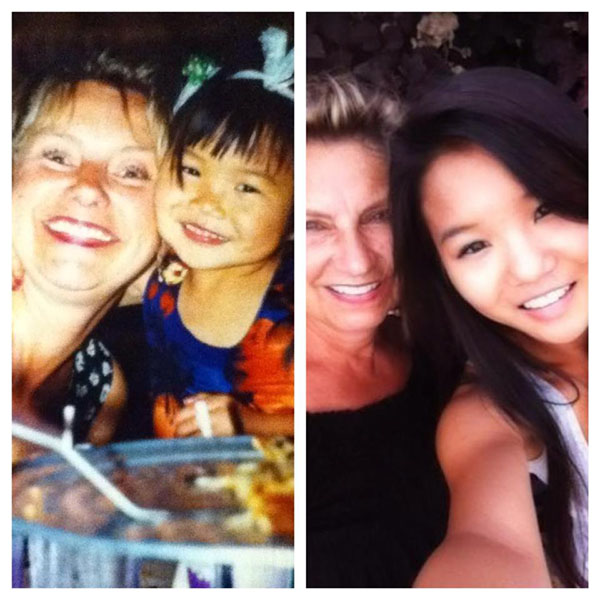
Part of what makes this article unusual in its integrations is that it intentionally blends research evidence with personal experience in ways that are unusual for some academic journals. The work has a relational as well as scientific context. The relationship with my daughter, shown in the picture on her 4th birthday and again as a teenager, informs my understanding of the roots of empathy and its role in moral response. The reality is that all research, even the “hardest,” cannot escape point of view. This paper clearly has a point of view, but I have tried to be completely transparent with it. Happy reading, and best wishes to all.

HannahPam


Cyberbullying in Adolescence


Currently we are featuring an article that addresses the very timely and significant issue of bulling in the context of online communications among teenagers.  The article is titled “Cyberbullying in Adolescence: A Concept Analysis” by Elizabeth Hutson, MS, RN, PMHNP-BC.  Featured article are available for free download while they are featured, so please visit the ANS web site to download and read this important article, and return here to share your comments!

Ms. Hutson shared this background about her work for ANS readers:

As a Child and Adolescent Psychiatric Nursing Practitioner I work in a mood and anxiety program where we see adolescents with primary diagnosis of depression, anxiety, and concurrent suicidal ideation. From my experience I noted that a major risk factor for these mental health concerns was bullying behaviors. Bullying in schools, unfortunately, occurs frequently and causes school avoidance, depression, and at its worst suicidal ideation and suicide attempts. There is an exorbitant amount of research into childhood bullying and one of the most commonly used definitions for bullying is given to us by Dr. Dan Olweus, who has over 40 years of expertise on childhood bullying.

Bullying Definition:

“A person is bullied when he or she is exposed, repeatedly and over time, to negative actions on the part of one or more other persons, and he or she has difficulty defending himself or herself”.

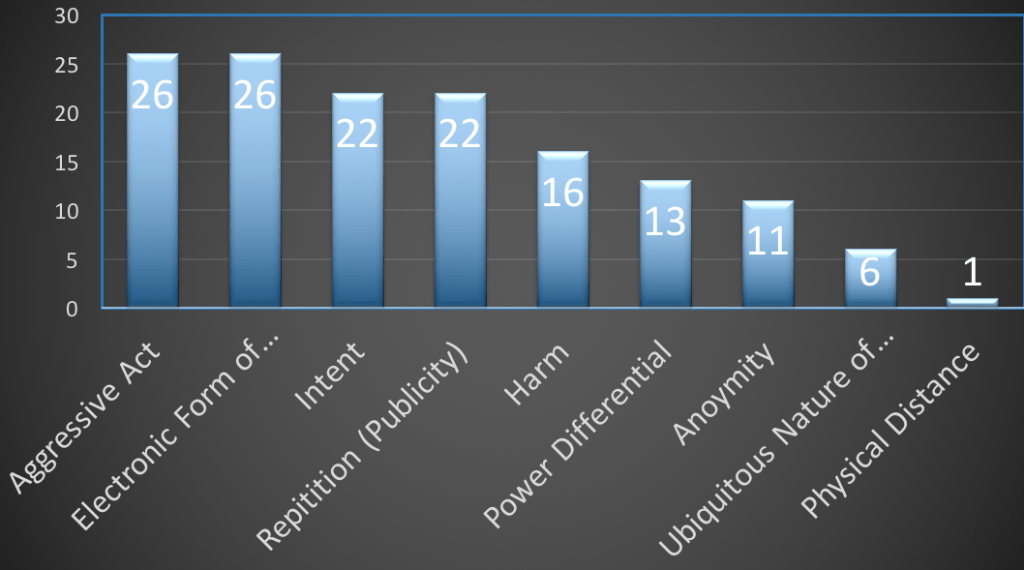
As though bullying was not bad enough a new phenomenon that has begun to cause problems in adolescence is cyberbullying. As adolescents, schools and parents began to see the devastating effects of cyberbullying researchers quickly leap into action trying to describe and explain this new phenomenon. Initially, they took the definition of bullying and added “electronic forms of contact” and went about with their research. Unfortunately, this new definition did not seem to convey what cyberbullying truly was. For this reason I chose to address the topic of cyberbullying in a concept analysis. I looked through the research and found 25 articles and one dictionary definition of cyberbullying and from these came up with a new defintition.

Definitions of Bullying

Ontology of Virtual Nursing Presence


The article currently featured on the ANS website is titled “On Virtual Presence ,” authored by Valarie S. Grumme, MSN, RN, CCRN; Charlotte D. Barry, PhD, RN, NCSN, FAAN; Shirley C. Gordon, PhD, RN, NCSN; and Marilyn A. Ray, PhD, RN, CTN-A, FAAN.  In this article the authors address the realities of maintaining a nurse-patient relationship in the context of online distant environments.  While this article is featured, it is available for download at no cost, so we invite you to read the article and return here to share your comments and ideas on this timely topic!

Ms. Grumme shared this information about this work, based on her dissertation research:

Grumme

Valarie Grumme

My interest in virtual nursing presence evolved as an outcome of my dissertation research on the use of social media groups by persons in the transplant community.  As a caring modality, nursing presence has been linked to traditional concepts of person with place, space, and time. However, advances in health care and communication technology have expanded nursing practice to nontraditional environments that preclude the physical presence of the nurse for a caring encounter. An increasing number of nurses are creating and maintaining nurse-patient relationships and practicing in a diverse range of specialties in virtual/distance environments.  The question arose; can nursing presence be “real” in virtual/distance environments? To answer the question, I explored theoretical and philosophical constructs of presence from multiple disciplines, including nursing, engineering, cognitive and behavioral science, and communications.

To understand the phenomenon, I found that I first had to delve into the deep existential roots of what it means to be truly present with another. Marcel’s mystery of presence, “even if I cannot see you, if I cannot touch you, I feel that you are with me . . . ” resonated with me.  In the existential writings of Buber, Marcel, Heidegger, and Levinas, the ontology of presence is interpersonal and relational; it includes interconnectivity, mutuality, intentionality, and love.  Existential thought is reflected in the writings of many nurse theorists, including many attributes of presence: “being with”, “being there”, bearing witness, commitment, and love.

The next reflective question was, how can the shared intimate and interpersonal relationship of presence be manifested in a virtual environment? Virtual environments of care are supported by a technological medium, a form of interface that enables the relationship between the nurse and nursed.  This concept is known as mediation.  Multidisciplinary studies of virtual presence consistently describe successful perceptions of virtual presence as a sense of being immersed in the experience as if the technological medium was not there (non-mediation).  Sandelowski alluded to this concept as well, describing a successful telepresence intervention where the shared experience of the caring conversation seeming dissolved the technological barrier between nurse and client.

The pandimensional nature of the internet extends the healing power of nurse caring to virtual environments, allowing persons to give and gain support for their unique expressions of health patterning without the constraints of place, space, and time.  The nurse artfully and intentionally utilizes the ability to recognize pattern, problem-solve, and employ both moral and emotional intelligence to provide a therapeutic and caring encounter through the technological medium supporting the nurse-patient relationship. I offer a new ontology of virtual nursing presence:

Virtual nursing presence is the unbounded and loving gift of self, manifested in the intimate, mutual, and intentional relationship of the nurse and the nursed. It is a presence that transcends place, space, and time, cocreated within the technological medium that supports the caring encounter, and can have lasting and lingering effect.

Writing this article with my esteemed colleagues was a personal journey of exploration, discovery, and appreciation of the human capacity for caring, wherever that need might be.  I thank you Dr. Chinn for the opportunity to share this knowledge with others.  I see advances in technology that support nurse caring as an opportunity, not a burden.  Care environments continue to evolve and challenge our ability to practice effectively. Extending our capacity to care into virtual environments adds another dimension to caring practice that will only continue to grow as we explore new frontiers and futures for humanity.

Barrett EAM. Virtual reality: a health patterning modality for nursing in space. Visions (Pensacola, FL). 1993;1:10-21.

Doona ME, Chase SK, Haggerty LA. Nursing presence: as real as a milky way bar. J Holist Nurs. 1999;17(1):54-70. doi:10.1177/089801019901700105.

Grumme, VS., Barry, CD., Gordon, SC. & Ray, MA. On virtual presence. ANS Adv Nurs Sci. 2016;39(1):48-59. doi:10.1097/ANS.0000000000000103

Kurzweil R. The Singularity is Near: When Humans Transcend Biology. New York, NY: Viking; 2005.

Lombard M, Ditton T. At the heart of it all: the concept of presence. J Comput Mediat Commun.1997;3(2). doi:10.1111/j.1083-6101.1997.tb00072.x.

Marcel G. The Philosophy of Existentialism. Secaucus, NJ: Citadel Press; 1956.

Oudshoorn N. How places matter: Telecare technologies and the changing spatial dimensions of healthcare. Soc Stud Sci. 2012;42(1):121-142. doi:10.1177/0306312711431817

Paterson J, Zderad L. Humanistic Nursing. New York, NY: Wiley; 1976.

Rogers M. Nursing science and the space age. Nurs Sci Q. 1992;5(1):27-34. doi:10.1177/089431849200500108

Sandelowski M. Visible humans, vanishing bodies, and virtual nursing: complications of life, presence, place, and identity. ANS Adv Nurs Sci. 2002;24(3):58-70. doi:10.1097/00012272-200203000-00007.

Mindful Communication for Caring Online


The current ANS featured article by Kathleen Sitzman, PhD, RN, CNE, ANEF, addresses a challenge that is central for all who participate in virtual interactions.  The article, titled “Mindful Communication for  Caring Online,” reports her analysis of  communication patterns among students and faculty in online classes.  While this article is featured on the ANS web site you can download it at no cost!  Then return here and share your comments and feedback.  Here is a message from Dr. Sitzman sharing background about her work, and current opportunities to learn more about her perspectives on virtual interactions:

  I have been developing, revising, and teaching online nursing courses for about 15 years. Many people I have worked with have expressed the belief that it is not possible to convey, model, and sustain caring in online classroom settings, but I disagreed. Caring and love transcend physical proximity, space, and time and I had

Kathleen Sitzman

Kathleen Sitzman

seen evidence of this phenomenon in my many years of teaching online. I had experienced connection with students at the heart level in online classrooms, and I had observed and participated in the conditions under which caring and un-caring occurred in online settings. At the time, there was no research to validate my observations so I went back to school and earned my PhD so I could complete research related to the process of conveying and sustaining caring online. I earned my PhD in 2007. My dissertation was on the topic of conveying and sustaining caring in online baccalaureate nursing classrooms. To date, I have completed and published 6 research studies about caring online, listed below.

I continue to teach, model, and convey caring online through traditional online nursing education, free and open professional trainings that anyone with access to a computer can complete, and an ongoing international massive open online course (MOOC) entitled “Caring Science, Mindful Practice.” Teaching and doing research related to Watson’s Human Caring Science has fueled and defined my professional and personal life for 30 years and it will continue to do so into the future. If my work helps even one person to better understand and subsequently incorporate Watson’s work into their own daily existence, then my efforts will have been successful.

See the links below to download flyers for the upcoming Caring Science, Mindful Practice MOOC and the two free trainings through East Carolina University’s Office of Faculty Excellence. I love teaching these courses and sharing Caring Science with anyone anywhere for FREE. Please join me!

Free Training- Learn More about Virtual Caring Science (PDF Flyer)

Caring Science, MIndful Pracice MOOC (PDF Flyer)

Sitzman, K. (2016). What student cues prompt online instructors to offer caring interventions? Nursing Education Perspectives, 37(2), in press.

Sitzman, K. (2010). Student-preferred caring behaviors for online nursing education. Nursing Education Perspectives, 31(3), 171-178.

 Sitzman, K. (2015). Sense, connect, facilitate: Nurse educator experiences of caring online through Watson’s lens. International Journal for Human Caring, 19(3), 25-29.

Sitzman, K. (2016). Mindful communication for caring online. Advances in Nursing Science,  39(1), 38-47.

Sitzman, K., & Leners, D. (2006). Student perceptions of caring in online baccalaureate education. Nursing Education Perspectives, 27(5), 254-259.

Leners, D., & Sitzman, K. (2006). Graduate student perceptions: Feeling the passion of caring online. Nursing Education Perspectives, 27(6), 315-319.

Technology, Informatics & Health Care: A New Model


The latest featured article in the current issue of ANS presents a new dynamic model of health informatics.  It is titled “Empowered Consumers and the Health Care Team: A Dynamic Model of Health Informatics,” authored by Peggy J. Mancuso, PhD, RN, CNM and Sahiti Myneni, PhD. The article is available for free download while it is featured!  One of the peer reviewers of this article made this comment about the manuscript: “This is one of the best presentations of the ‘big picture’ of health informatics that I have seen and, if published, is likely to be extremely valuable to students and providers as they work with consumers to make meaning out of their health data.”  Here is a message from Dr. Mancuso (pictured above) about this work:

We humans use models to help us understand complexity.  This model is based upon the philosophical assumption that the consumer/patient/community is both the conscious contributor and recipient of healthcare services and science.  Technological progression based upon computer science, the Internet, and ways of measurement has changed the context within which we practice.  The model illustrates “technology” as an ever-changing wave.  We may predict (to a certain extent) the direction of the wave, but the specific changes are experienced more than predicted – somewhat like our ability to predict the weather or other complex systems.

Informatics serves as a translation vehicle to help with the technology/human interface.  Biological informatics can be structured through the methods of exploration.  There are the “omics” – within and without – based upon atomic-molecular-chemical methods.  There is the science associated with imagery (translation into “pixels”), ranging from microscopic processes to geospatial imagery.  Trackers are those devices we wear that can give us a picture of our physiology/psychology 24 hours a day, 7 days a week.  Our relationship with these devices changes how we behave.

Informatics or the science of relationship of the human to technology/computers is the “poster child” for interprofessional practice, although how health professions use technology may be discipline specific.  “Interoperability” among software systems, particularly electronic health records, is a major concern for informatics.  Nevertheless, the “interoperability” among health care professionals – or the team-science of informatics is fundamental.  This wave of technology changes how we work together.  I remain optimistic that through technological change, science, and “wisdom” in application, humankind will be healthier in every sense of the word.

Dr. Mancuso explains the model in this 8-minute video!


Addressing Parent Uncertainty Using Technology


Our current featured article is titled “Designing Technology to Address Parent Uncertainty in Childhood Cancer,” authored by Caroline F. Morrison, MSN, RN; Lauren Szulczewski, PsyD; Laura F. Strahlendorf, BS; J. Blake Lane, BFA; Larry L. Mullins, PhD and Ahna L.H. Pai, PhD.  Ms. Morrison provided this background about this work for ANS readers:

I have been thinking a lot about the use of technology both in my daily life and in my practice.  In some ways, I think technology can be a hindrance to forming deep interpersonal relationships and developing verbal communication skills.  In other ways, technology can lead to new opportunities and growth.  When we Morrisoninterviewed families these two aspects of technology really came across- the ability to access information from trusted sources vetted by their healthcare team but also that technology cannot replace the trusted relationships they had formed with their providers.

Everyone faces uncertainty at some point in their lives, but for families of children with a new cancer diagnosis it’s really pronounced and often overwhelming.  In this study we designed the mobile application to accompany a randomized control trial of an intervention that aims to help parents address and manage uncertainty.  It was really important to us that families had a chance to form a relationship with the interventionist while having the convenience of the mobile application to consolidate information. Each intervention session has opportunities to interact with the application as we discuss uncertainty and how to manage it.  The application also contains information that we hope will be valuable and useful for families during their cancer journey.  So far we have had positive feedback and are looking forward to gaining more insight on family’s needs, application usage, and more in-depth field testing with the eventual goal of disseminating to a larger more diverse population of families.

Thank you for the opportunity to share our work with you! We hope you enjoy the article and welcome any feedback or comments.

You can download this article at no cost while it is featured on the ANS website!  We would be delighted to hear from you!


Electronic Documentation and Care-giving


Our first featured article for the new ANS issue focuses on the most frequently used technologies of the digital age – electronic documentation. The article, by Cynthia A. Gaudet, PhD, RN, CNE, is titled “Electronic Documentation and Nurse-Patient Interaction.”  Dr. Gaudet reports the outcome of her micro-ethnographic study to examine the culture that has emerged with the use of electronic documentation.  She shared this background about her work for ANS readers:

My interest in electronic documentation grew from my teaching in the clinical setting.  I have observed nurses who I have worked with for many years, who share their attention between their patient and the electronic documentation system.  I am interested in exploring the impact that electronic documentation at the bedside has Cynthia Gaudeton the communication between the nurse and the patient.  Has nursing lost something along the way? Will a task list with a time schedule drive nurses to become more focused on completing tasks and diminish communication with the patient?

I chose to contextually explore nurse-patient interaction associated with electronic documentation in an in-patient setting. I employed the methodological strategy of micro-ethnography, and while this approach for a dissertation was a bit daunting, I was well supported by my professors at the University of Massachusetts, Worcester, and my chairperson, Dr. Robin Klar.

The use of bedside electronic documentation has impacted caregiving. I believe that understanding this phenomenon will help all stakeholders to develop systems that will mesh with the nurses’ workflow and encourage patients to be actively involved in their care.

You can download this article at no cost while it is featured on the website!  Visit the ANS website to see the article, then return here to share your comments!