Skip to content

Towards Justice in Health


Our current featured article is by one of nursing’s prominent scholars advocating for social justice in nursing and health care – Adeline Falk-Rafael, PhD, RN, FAAN.  For this article, she and her colleague Patricia A Bradley, PhD, MEd,RN report a critical contextual analysis of 6 issues of a magazine published by “Nurses for Social Responsibility” between 1992 and 1995.  In the article, titled “Towards Justice in Health.”An Exemplar of Speaking Truth to Power, Drs. Falk-Rafael and Bradley bear witness to a voice that has been largely absent in the nursing literature, as well as providing evidence of a significant grassroots effort to seek social justice in nursing and health care.  Visit the ANS web site today to download your no-cost copy of this article, and return here to add your comments, questions and responses to their article!

Dr. Falk-Rafael and Dr. Bradley have shared their perspectives on this work, and have also invited two of the nurses responsible for the magazine to also speak here to ANS readers! 

From Adeline Falk-Rafael:

I had become aware of a group of nurses calling themselves the Nurses for Social Responsibility (NSR) in Toronto, Ontario in the mid-1990s while working on my doctoral dissertation. I had known some of the nurses both professionally and by reputation as their

Adeline Falk=Rafael

Adeline Falk=Rafael

advocacy activities for homeless persons often were reported in the media. Both Cathy Crowe

and Kathy Hardill have been guest speakers in my community health nursing course at York University and on one occasion several years ago, Cathy shared the 6 issues of the magazine this group had produced in the early 1990s, Toward Justice in Health (TJH). Her hope and mine was that they would serve as the focus for a textual or content analysis as a graduate student project. Although I was never able to interest a graduate student in this research, the opportunity finally presented itself for me to begin such an analysis. As I began the process, I realized that I needed a colleague with expertise first in selecting the most appropriate methodology for such a textual analysis and secondly in conducting the analysis. I am so grateful that Pat Bradley agreed to work on this project with me.

From the initial reading of the magazines, through the analysis and writing of the findings, I never cease to be amazed at the foresight and courage that a small group of nurses with a passion for social justice of which Florence Nightingale, Lillian Wald, Lavinia Dock, and other early nursing leaders would be proud. My hope is that this effort to make visible their efforts will inspire others similarly to advocate for transformative societal changes and reverse social injustices that result from public policies and social norms that privilege a few and disenfranchise so many.
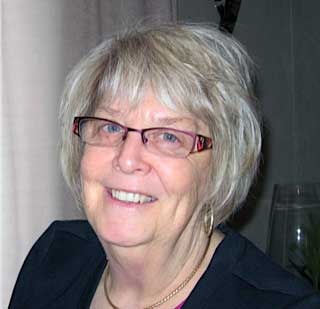
From Patricia Bradley

I was not living in Ontario during the mid-1990s and was not aware of the Nurses for Social Responsibility (NSR). I was introduced to their history when Adeline Falk-Rafael graciously

Patricia Bradley

Patricia Bradley

invited me to be part of the analysis of the magazines. Through the process, and meaningful dialogue with Adeline, there was an opportunity to uncover the power and strength that resided in these nurses and to reveal the subsequent realm of possibilities when nurses gather together for a cause. The journey towards change is not always easy or easy to maintain. I wonder how many other silent nursing histories exist and what they can teach us about change and the momentum of change for social justice. These invisible nursing histories need to be brought into the light so we can all learn and be inspired.
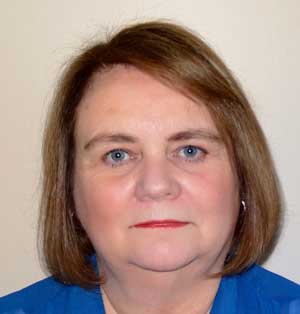
 

We’ve invited 2 of the original founders of TJH –Cathy Crowe and Kathy Hardill – to reflect on their experiences more than 20 years ago and add their recollections of the challenges and successes of producing TJH:

From Cathy Crowe  

I’m so proud that a period of Canadian nursing feminism and activism is now recorded for

Cathy Crowe

Cathy Crowe

future generations to learn from. At the time, It seemed incongruous to have ‘peace, shelter, social justice, etc. as prerequisites for health’ drilled into us in nursing school (Ottawa Charter for Health Promotion, the Alma-Ata Declaration), while at the same time the same schools neglected to teach even a basic Economics 101 or Politics 101 to teach about the role globalization or militarization play in diverting resources away from healthy public policies such as daycare, affordable housing or decent welfare rates. I can only call it intentional neglect. So at NSR we taught ourselves, the whole while sharing our learnings with the public and other nurses in some of the most creative means I have ever seen.

"Justice In Health" (white cover)

“Justice In Health” (white cover)

This is a picture I took of our magazine on display with other prominent feminist publications in the window of the  ‘This Ain’t the Rosedale Library’ bookstore in Toronto.
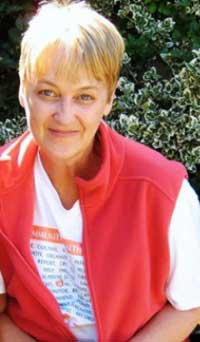
From Kathy Hardill

Reading the analysis of “Towards Justice in Health” brought me back to a time that was “heady” with promise and potential for nurse activism. It was a tumultuous time on the planet

Kathy Hardill

Kathy Hardill

and, looking back, so much has changed. I find myself having to explain the nuclear arms race to younger people, not to mention the Cold War and the Berlin wall. I was recently reminded of a meeting I and others attended with representatives from the Registered Nurses Association of Ontario (RNAO) in about 1990 where we argued that organized nursing ought to speak out about homelessness. The nurses across the table from us blinked a few times and said “But what has homelessness got to do with nursing?”

For sure, times have changed! RNAO understands homelessness and many other upstream issues and has become outspoken on these issues within the parameters of its role. Although the language of TJH may at times have been “provocative, strident, and outrageous,” when I listen for the voices of progressive, radical nurses now, I strain to hear anything at all. The most progressive anti-poverty health care voices in Ontario at the moment are from medicine. Progressive nursing needs a radical rebirth in the 21st century!

The Imperative to Confront Inequitable Access to Health Care


In the current Editor’s Pick article, author Deanna Bickford, MN, RN challenges nurses to take a leadership role in confronting inequitable access to health care.  She believes that doing so is achievable to the extent that nurses draw on the diversity reflected in nursing’s fundamental patterns of knowing.  In her article, “Postcolonial Theory, Nursing Knowledge, and the Development of Emancipatory Knowing” she addresses ways to uncover social injustice and disrupt the status quo in order to move closer to social justice in health care.  She has provided this message about the origin of her work in this area, inviting us as readers to comments and reply to her ideas:

I began exploring issues of health inequities as a BScN student and was shocked to learn about the inequities that exist for the Aboriginal peoples in Canada. Most Canadians enjoy one of the highest life expectancy rates in the world. Yet, there are certain groups that exist within Canada, which due to a broad range of social, economic, personal, and environmental factors that go

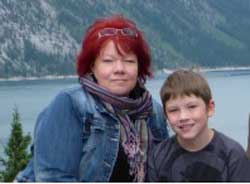
Deanna Bickford with her grandson!

Deanna Bickford with her grandson!

beyond any individual choices they make, continue to experience health inequities. The Aboriginal peoples of Canada are one of these groups: they have a higher infant mortality rate, lower life expectancy at birth, higher rates of diseases of the circulatory system, digestive system, respiratory system, genital urinary system, nervous system, endocrine, nutritional and metabolic disease, infectious and parasitic diseases, dental and behavioral disorders, and neoplasms.

I have continued to follow this path of exploration throughout my studies and I am currently a PhD(c) at the University of Saskatchewan, College of Nursing. My research focuses on exploring health from the perspective of First Nations youth and seeks to understand First Nations ways of knowing and sharing knowledge for health. Guided by postcolonial theory this research aims to contribute to better understandings of the social, political, and colonial conditions that have lead to health inequities, to highlight the voices and strengths of those affected by these inequities, and ultimately contribute to the knowledge of the discipline. This article represents one part of my journey of discovery. Thank you for featuring this article and I look forward to the feedback.

Visit the ANS web site today to download your free copy of this article!  I join Ms. Bickford in welcoming your comments and feedback!

ANS 37:3 – “Health Equities” just released!


The new current issue of ANS is now available online!  This issue, focusing on “Health Equities,” affirms the conviction upon which many nurses historically have built their practice – a conviction that social inequities have profound health consequences. The articles in this issue 37-3 coveradd to a growing body of literature that provides depth and breadth to expand nursing’s disciplinary perspective on social justice as central to our mission. Each article will be featured on the ANS blog over the next several weeks, so watch this blog to learn more about each author’s important work.

Watch for the “Editor’s Pick” on the ANS web site over the next several weeks – each of the articles in this issue will be featured for a couple of weeks.  While each article is featured it will be available for free download!  These articles are all very thought-provoking, and we welcome your responses and comments here on this blog!

Caring across cultural groups


Our current featured article is an exemplar of research that provides evidence of cultural meanings of health and illness.  The article is titled  “Family Adjustment Across Cultural Groups in Autistic Spectrum Disorders” is by Sandra L. Lobar, PhD,

Dr. Sandra Lobar

Dr. Sandra Lobar

APRN, PPCNP-BC.  Dr. Lobar provides a summary of  literature related to ways in which signs and symptoms are interpreted differently in various cultures, and reports the findings of her research study – an ethnomethodological study examined perceptions of parents/caregivers of children diagnosed with autistic spectrum disorders concerning actions, norms, understandings, and assumptions related to adjustment to this chronic illness. The overall purpose of the study was to determine norms, understandings, and assumptions that reflect a person’s cultural milieu.  Her findings are informative and interesting, but as she indicates in her conclusion, more research is needed with multicultural subgroups in order to understand perceptions that are different for different groups, and from the assumptions of those who are providing care.  Understanding across cultural groups ultimately will contribute to better plans of care, particularly  for those who are disadvantaged and disenfranchised from the mainstream of health care.

While Dr. Lobar’s article is featured, you can download it at no cost from the ANS web site!  We welcome your discussion of this article and the issues it addresses here!

Informed Advocacy: An Emancipatory Nursing Perspective


The current ANS featured article is titled “Informed Advocacy: Rural, Remote, and Northern Nursing Praxis.”  In this article, the authors, Karen MacKinnon, PhD, RN; Pertice Moffitt, PhD, RN present present a synthesis of their combined research about nursing practices in Western and Northern Canada. They compared the stories of rural Canadian public health nurses with feminist and critical theoreticalnurse-advocate3_300 perspectives in order to discern evidence of informed advocacy as emancipatory nursing practice. In their conclusion they describe the elements of informed advocacy:

 . . . we learned that the informed advocacy work of rural, remote, and northern nurses includes the following dimensions: (1) ensuring that people’s concerns are heard  (by listening with intention and responding with action), (2) contextualizing practices  (by making visible or using information about the contexts of people’s lives to inform health care decision making), (3) safeguarding  (by ensuring that people remained safe), and (4) addressing systematic health inequities  (by mobilizing local resources and by providing leadership at the health system or health policy level).

We welcome your ideas and responses!  While this article is featured, it is available for free download, so visit the ANS web site now, read the article, and come back here to share your comments!

Nursing as Body Work


The current “Editor’s Pick ” article from the current ANS issue is titled “Critical Perspectives on Nursing as Bodywork,” authored by Karen Anne Wolf, PhD, APRN-BC, DFNAP. In this thought-provoking article, Dr. Wolf  calls for nurses to reject the objectification of the body and instead reclaim body work as integral to a holistic perspective.

Dr. Wolf shared this message about her work for ANS readers:

Nursing as work is the focus of my scholarship. In past work, I have explored the larger structural issues in the collective history of nursing. In this paper I explore the paradoxical nature of nursing as bodywork. Scratching beneath the surface of the issues of status and power opens a window on the variety of factors that shape the work of nurses in relation to their patients. The nurse-body relationship is so fundamental to nursing work that we are blind to its social impact. This results in contradictory images and experiences. For example, nurses are revered as “most trusted” and angelic in many countries yet Wolf300exposed to persistent degradation within the media and in public discourse.

Nursing work continues to be viewed as low status despite professionalization efforts. The social discomfort with the human body contributes to the paradoxes in nursing as bodywork. The relational boundaries between nurses and patients blur ordinarily taboo spaces. The intimacy of providing physical care carries the stigma of nursing as dirty work. Yet this same intimacy throughout the sacred rituals of birth, death, and vulnerability contributes to the entrusted relationship. De-stigmatizing nursing as bodywork begins with accepting our bodywork relationship. Without such an acceptance, there is a tendency to distance nursing from the body through the increasing use of ancillary nursing workers or technology. Recognizing the paradox of nursing as bodywork is a critical to the future of the profession. I would suggest that we consciously claim and embrace the relational care for the body rather than reject it. Nurses must be mindful and respect the power inherent in their privileged and intimate relationship with patients.

Download your copy of Dr. Wolf’s article at no cost while it is featured on the ANS web site! We welcome your thoughts and comments in response!

Caring as Emancipatory Nursing Praxis


The new featured article in the current ANS issue challenges readers to examine values and believes that form a foundation for nursing as caring within complex technical and economically driven systems. The article, titled “Caring as Emancipatory Nursing Praxis: The Theory of Relational Caring Complexity,” is authored by Marilyn A. Ray, PhD, RN, CTN-A, FAAN and Marian C. Turkel, PhD, RN, NEA-BC, FAAN.  They have each provided interesting background about their work, and insight in to how their ideas have emerged:

From Dr. Ray:

My journey focusing on the study of human caring in complex hospital cultures began in 1969 as an MSN student in nursing and anthropology where I conducted an ethnography of a hospital. My interest in the study of nursing as a “small” culture and health care/hospital organizations as “small” cultures led to seeking a Master of Arts in Cultural Anthropology, and a PhD in

Dr. Marilyn Ray

Dr. Marilyn Ray

Transcultural Nursing where, within my dissertation, grounded theories of nursing as transcultural caring were discovered. The substantive theory of Differential Caring unfolded showing how the dominant environmental context of different hospital units influenced the meaning of caring, such as, the interrelationship between technology and caring in an Intensive Care Unit, economics and caring in Administration, and spiritual-ethical caring in the Oncology Unit. Analysis and insight led to the discovery of the formal theory of Bureaucratic Caring (rendering the paradox of human caring in complex organizations which continues today). Subsequent research on the technology and economics of caring, exposure to Rogerian unitary science and the emerging field of complexity science/s through teaching philosophical inquiry, caring science, qualitative research methods, and conducting research with the late Dr. Alice Davidson continued to open my mind to the significance of human-environment integrality. Over the past 20 years accomplishing funded research with Dr. Marian Turkel on economic caring within many public, military, and private complex healthcare systems exposed more of how the contextual dimensions of economics, political, legal and technological phenomena enlightened our understanding of contemporary practice, and how the research illuminated the discovery of the Theory of Relational Caring Complexity. This theory deepened our commitment to seeking understanding of human rights, social justice and social caring ethics as emancipatory praxis in complex systems and prompted us to share this content.

As a doctoral student of Dr. Madeleine Leininger, my classmates and I received the gift of exploring “caring as the essence of nursing.” As a former faculty member of the University of Colorado College of Nursing (and now as a Professor Emeritus at Florida Atlantic University), I have had the opportunity of sharing ideas of and learning about, and researching caring science, ethics, unitary science, complexity sciences, and the feminist ideal of peace power with Drs. Jean Watson, Sally Gadow, Marlaine Smith, Peggy Chinn, the late Alice Davidson, and many other professionals. This knowledge has directed and continues to direct the discipline of nursing. At the same time, as an officer in the United States Air Force Reserve, Nurse Corps, I was aware of how these ideals needed to be embedded in local and global cultures, including not only the military, but also, the Transcultural Nursing Society, World Health Organization and United Nations. I am a charter member of the International Association for Human Caring and have been committed to co-creating awareness of caring science and art, respect for human dignity, cooperation, and reasoned dialogue to lay the foundation for a sustained commitment to human rights and social justice. These actions hopefully will lead to peaceful coexistence among all people and a world without war. Nurses have the obligation to be examples of human caring–to seek ethical caring knowledge, promote moral mindfulness, give voice to the voiceless, cultivate humanity, understand transcultural nursing and social/cultural contexts, and exercise ethical judgment and evaluation to facilitate the creation of peaceful communities of caring worldwide.

From Dr. Turkel:

Like my co-author and colleague, I am committed to the advancement of the scholarship of caring science and complexity science. My professional career trajectory is grounded in the philosophical tenets of caring being essential to the disciplinary foundation of nursing and the theoretical concepts of caring and complexity serving as a framework for professional nursing

Dr. Marian Turkel

Dr. Marian Turkel

practice. My journey into caring as a substantive area of study within the discipline unfolded when I entered graduate school at Florida Atlantic University (FAU) in 1989. It was a wonderful time to be at the university as our Dean, Dr. Anne Boykin was integrating caring into the curriculum and Dr. Leininger and Dr. Watson came to university sponsored conferences. I became very involved with the International Association for Human Caring (IAHC) and met Dr. Ray who was our eminent scholar. My favorite story is that I knew she was important, not sure what an eminent scholar was, and did not know if I was allowed to talk with her. She taught nursing leadership and we formed an instant personal and professional relationship as we had shared values related to caring in complex systems. As a nurse leader, I was always challenged by the paradox between caring and economics within complex systems and the social injustice that registered nurses often face in the real world of hospital nursing practice. My master’s thesis was A Journey into Caring as Experienced by Nurse Managers. Managers shared their frustration of trying to care when economics ruled decision making. My doctoral dissertation, Struggling to Find a Balance examined the paradox between caring and economics from the perspective of patients, nurses, and administrators.I was on faculty at Florida Atlantic University and the sentinel qualitative and quantitative research that Dr. Ray and I completed validated that caring was explicitly linked to improved patient and nurse outcomes and hospital system economic outcomes.

My life journey took a turn and my husband and I relocated to Chicago and then Philadelphia. I made an intentional decision to return to practice and began my journey into “praxis” (informed practice). I went back into the hospital setting but with a new lens, using research, evidence-based practice and caring theory to inform and transform practice. I continued my involvement with the IAHC, re-connected with Dr. Watson and became involved with the Watson Caring Science Institute (WCSI). As faculty within WCSI, I work with hospitals to create caring healing environments for employees, patients, and families by integrating caring theory into the practice setting. My scholarship is now focusing on leadership framed in caring science where intention setting, caring , love, peace, and values ground the practice of leadership. I just ended my IAHC Presidency May 2014 with a conference in Kyoto, Japan sponsored by IAHC and Kobe University. The conference theme was the Universality of Caring with over 781 Registered nurses from 20 countries and regions in attendance. On a personal note, I am moving back to Florida in July and returning to Holy Cross Hospital where I used to work and met my husband. My vision is to co- create a very innovative Service-Academic Partnership with Florida Atlantic University College of Nursing. In caring and peace, Marian

Visit the ANS web site to see this wonderful article – you can download it at no cost while it is featured!  Then return here to share your comments and ideas!

Double-duty care-giving: Nurses’ Unpaid Family Work


The authors of the current ANS featured article examine the phenomenon of nurses’ unpaid family work – a growing trend in the face of inadequate health care resources.  In other professions, unpaid professional services are considered “pro bono”  professional service to the community.  But for nurses, their unpaid work in families is invisible and unrecognized, and as the authors indicate, this unpaid work has implications for nurses’ paid work as well.   The article, titled “Professionalizing Familial Care: Examining Nurses’ Unpaid Family Care Work” by Oona St-Amant, MScN, RN; Catherine Ward-Griffin, PhD, RN; Judith Belle Brown, PhD; Anne Martin-Matthews, PhD; Nisha Sutherland, MScN, RN; Janice Keefe, PhD; and Michael S. Kerr, PhD is a report of a grounded theory study based on interviews with 32 nurses over a 6 to 12 month period.  The lead author, Oona St-Amant shared this background about their work:

As co-authors, we are delighted that our work has been selected to be featured in this current issue of ANS. Our article entitled “Professionalizing Familial Care: Examining Nurses’ Unpaid Family Care Work” builds on a body of work which st-amant250investigates the experience of double duty caregiving (DDC), that is, the provision of care to an older relative by a health care professional. At the helm of this work is Dr. Catherine Ward-Griffin who has built a program of research on the negotiation of care boundaries between and among health care providers, older adults and family caregivers. Several of the co-authors such as Drs. Brown, Keefe, Martin-Matthews and Kerr have been actively involved in several studies in developing this work.

As lead author, I have been extremely fortunate to complete my doctoral studies under the supervision of Dr. Ward-Griffin and commence a program of research centered on various forms of unpaid care work, including family caregiving, double duty caregiving and international volunteer health work in a variety of contexts. In this article, we shed light on nurses’ unpaid family care work. Unlike when other professionals employ their paid skills and employment resources in an unpaid fashion, nursing unpaid care work is not characteristically valued as “pro bono” (for public good), even when the transfer of skills is similar. Instead, akin to other forms of unpaid family care work, double duty caregiving tends to be invisible work. And yet, approximately 35-40% of nurses over 35 years of age engage in this work, and this figure is expected to increase with an aging population.

In this article, we examine the specific strategies that contribute to the professionalization of care work in familial domain. Additionally, we explore some of the implications of professionalizing family care. In response to this evolving body of work, the research team in collaboration with multiple project collaborators developed a policy brief with explicit recommendations for action. Specifically, the policy brief sets out five recommendations at various levels of policy including 1) employers/health care agencies; 2) health care administrators, human resource managers, researchers, policy makers; 3) employers/health care administrators; 4) national, provincial and territorial professional health associations; and 5) governmental officials, employers, and union representatives.  You can download the DDC Policy Brief here.

We welcome your responses and comments on this article!  Visit the ANS web site to download a copy of this article at no charge, then return here to share your ideas!

Issue scheduled on “Technologies, Nursing & Health”


We have just scheduled the issue topic for ANS Volume 39:1 – Technologies, Nursing & Health!  Manuscripts for this issue will be due no later than July 15, 2015, but we accept manuscripts for review before the due date if you want to have some extra time for revisions after the manuscript review process.  Here is the description of what we seek for this issue:

Vol 39:1 – Technologies, Nursing & Health Nursing, of necessity, has adapted over the past half century to the burgeoning presence of technology that has been developed for the diagnosis and treatment of sickness and disease. For this issue of ANS we seek scholarly works that extend the critical analysis of technologies from a nursing perspective, and works that provide evidence upon which to build nursing practice in ways that balance the use of appropriate technologies with the person-to-person relationship and caring that is central to nursing practice. We welcome articles that present empirical research, philosophic analyses, and development of theoretical models that inform the appropriate use of technology. Date manuscripts are due: July 15, 2015

As a reminder, here is the lineup of all of our future topics with manuscript due dates:

Patterns of health behavior
Vol 38:1 –   March 2015
Manuscript Due Date: July 15, 2014

For this issue of ANS we seek manuscripts that focus on nursing perspectives related to specific health behavior patterns (for example fear, hope, despair, uncertainty, inner strength). Manuscripts can be based on empiric evidence related to these patterns as factors in health and illness, conceptual and theoretic developments, or philosophic perspectives grounded in nursing. We particularly welcome articles that provide direction for the development of nursing practice.

Models of Care for the Future
Vol 38:1 –   June 2015
Manuscript Due Date: October 15, 2014

As nations worldwide seek to establish models of care that provide quality and efficiency, nurse leaders are emerging to play a significant role in the development of these models. For this issue of ANS we are seeking manuscripts that provide theoretical underpinnings of creative models of care, as well as evidence that supports their implementation. Manuscripts should be clearly grounded in a nursing perspective; the content can include philosophic, theoretic, empirical or ethical aspects related to the model.

Translational Scholarship
Vol 38:3 –   September 2015
Manuscript Due Date: January 15, 2015

For this issue of ANS we are seeking manuscripts that provide methodologic innovations that bring nursing theory, research and practice together, including translational research, emancipatory and participative approaches. Nursing research reports of studies using these methodologies are welcome, as are manuscripts that provide philosophic, theoretical or methodologic explanations of these approaches to scholarship. Manuscripts should include a strong emphasis on the development of nursing as a discipline.

Veterans Health
Vol 38:4 –   December 2015
Manuscript Due Date: April 15, 2015

Given recent history of international conflict and violence, the health and well-being of those who have served the military of any country world-wide has become a major challenge that influences the well-being of families, communities and nations. For this issue of ANS we seek manuscripts that address nursing perspectives on health care for veterans, their families and communities. We welcome research reports that provide evidence for nursing practice, theoretical and philosophic perspectives, or methodologic issues related to investigating health issues and nursing concerns for this population.

Technologies, Nursing & Health
Vol 39:1 –   March 2016
Manuscript Due Date: July 15, 2015

Nursing, of necessity, has adapted over the past half century to the burgeoning presence of technology that has been developed for the diagnosis and treatment of sickness and disease. For this issue of ANS we seek scholarly works that extend the critical analysis of technologies from a nursing perspective, and works that provide evidence upon which to build nursing practice in ways that balance the use of appropriate technologies with the person-to-person relationship and caring that is central to nursing practice. We welcome articles that present empirical research, philosophic analyses, and development of theoretical models that inform the appropriate use of technology.

Be sure to visit the ANS web site to see our planned issue topics, information for authors, and access to all articles published in ANS since the very first issue in 1978!

The Other Mother


The article that is featured now on the ANS web site is titled  “The Other Mother: A Narrative Analysis of the Postpartum Experiences of Nonbirth Lesbian Mothers” by Michele M. McKelvey, PhD, RN.  As LGBTQ rights have emerged as a social movement, research related to the experience of LGBTQ people and families has begun to appear in scholarly literature across all disciplines.  Dr. McKelvey’s study addresses a human experience that is shared by many women world-wide, but in the context of a lesbian family, the experience of motherhood involves unique challenges.  Dr. McKelvey shared this background about her study :

My interest in lesbian mothers grew out of my personal and professional experiences. As an obstetrical nurse for more than 20 years, I noticed an increase in the number of gay and lesbian couples becoming parents. Although these parents have a great deal in common with most new parents, they also have unique needs and experiences. For these women, becoming mothers was an intentional, thoughtful journey. Many became pregnant after years of infertility treatment, miscarriages, and other physical and emotional losses. All mothers certainly love their children but I believe that there is something special

Michelle McKelvey

Michelle McKelvey

about these mothers. My nurse colleagues and I wanted to provide sensitive, culturally appropriate care to lesbian mothers. As I searched the literature, I realized that studies about any aspect of lesbian motherhood were rare. Lesbian mothers were virtually absent in the literature.

I was extremely inspired by the work of Eliason, Dibble and DeJoseph (2010) publicizing nursing’s silence on LGBT Issues in ANS. While physicians and our interdisciplinary colleagues have endorsed LGBT issues, we, as nurse, have remained silent. It is my hope that publications like mine will help to break that silence, embrace LGBT health and end disparities in this community.

I was so fortunate to be a doctoral student of Dr. Cheryl Beck at the University of Connecticut. Dr. Beck, my beloved mentor and major advisor, ignited my passion for qualitative research. As a beginning doctoral student, I conducted my first pilot study, a descriptive phenomenological study of the childbearing experiences of lesbian mothers. I followed up this study with a metasynthesis on the same topic. My doctoral student colleagues and faculty mentors encouraged and celebrated my research.  With their support and nurturing, I was able to find my voice and ultimately recognize nonbirth lesbian mothers. During my doctoral studies, I also became a mother. My wife Jill and I welcomed our precious daughter, Molly, into our family on January 5, 2010. She continues to be our greatest blessing.

My ANS article is based upon my doctoral dissertation: The Other Mother: A Narrative Analysis of the Postpartum

Molly's family

Molly’s family

Experiences of Nonbirth Lesbian Mothers. As I listened to the stories of nonbirth lesbian mothers’ first year of motherhood, I realized that marriage equality is a significant health issue. Marriage equality provided these mothers with validation as legal parents as well as the legal protection that their children could not be taken away from them. Without this legal parentage, these mothers were essentially legal strangers to their own children. The results of my study validated my steadfast belief that indeed, the personal is political (Hanisch, 1969).

I have always believed that “timing is everything”. Although I probably could have completed my PhD years ago I “trust the process” that it was completed at exactly the right time. Marriage equality for same sex couples continues to evolve throughout our country. Social acceptance of LGBT people has grown exponentially.  The Institute of Medicine (2011) and The Joint Commission (2011) published significant documents calling for health care professionals to provide family-centered, respectful care to LGBT individuals and their families. These monumental documents validated the crucial need for my research.

I look forward to continuing my program of research on lesbian mothers. The results of my study suggest several possible research opportunities. It is my honor to share my research with the readers of ANS. I am sincerely grateful to the editors and reviewers. ANS has always been a leader in nursing scholarship and innovation. I am grateful for the journal’s willingness to embrace cultural diversity and particularly issues related to LGBT health.

While this article is featured on the web site, it available for free download – so visit the web site today!  Then share your comments with us here – we are eager to hear from you!