Skip to content

Why concept analysis?


Concept analysis continues to be a cornerstone of many doctoral programs, but as important as this activity is, very few reach a level of development that is suitable for publication. The current featured article, titled “Concept Analysis: Method to Enhance Interdisciplinary Conceptual Understanding” explains an approach to concept analysis that can enhance the quality and worth of this very important activity.  The author of this article,  Susan Bonis, has one of the best explanations about “why” this is so important, and has provided this interesting background about her work:

It is an honor to have this article published in ANS. This method of concept analysis is a critical component of work related to understanding, defining and describing the foundation of nursing knowledge: What is nursing? What is the unique contribution of nursing to the health care arena? What is nursing research? What is nursing knowledge? Although these are not new questions, they are questions that arise almost daily. How do we respond?

This method of concept analysis is one means to provide clarification to these questions. A previous article, Knowing in Nursing: A Concept Analysis (Bonis, 2009, JAN, 65(6)) provided interesting insight to nursing knowledge, as well as to the knowledge base of other disciplines. According to the Sue-Bonis-300findings of that concept analysis, the essence of nursing is personal knowing, or the individual experience of health and illness, of medicine is technical/procedural knowing, and of behavioral health is knowing as a cognitive process. As you can see from the findings of this study, the knowledge base of each discipline is unique; therefore, the contribution of each discipline to the health care arena is unique.

Understanding how concepts are used within disciplines is critically important for nurse researchers, who tend to ‘borrow’ research instruments from other disciplines. How a concept is understood and used in nursing is not necessarily the same as how that concept is understood and used in other disciplines.  For example, the Empathy Quotient was developed by Simon Baron-Cohen (psychologist) as a diagnostic tool to differentiate between the cognitive processes related to empathy in normal-functioning adults and those with Asperger’s syndrome. Although it is a beautiful tool and very useful for diagnostic purposes, it would not be appropriate for a nurse researcher interested in understanding more about empathy as a personal experience for nursing student to use the Empathy Quotient. To do so would be a contribution to the foundation of knowledge for behavioral science, not to the foundation of nursing knowledge.

I experienced a similar situation in seeking to understand more about contentment as a quality of life for parents of children on the autism spectrum. Four research instruments focused on contentment have been developed in the behavioral sciences; each one is a diagnostic tool to measure the cognitive processes that describe depression. It would be inappropriate for me to use any one of those instruments, even though they clearly are used to measure contentment. The conceptual understanding of contentment varies greatly between nursing and behavioral science. Behavioral science uses contentment as a short term cognitive response to events in the moment. In nursing, contentment is used to describe a way of being that evolves over time; a phenomenon at a much higher level of abstraction (but then again, that brings us to another discussion related to phenomenological issues in nursing research. We’ll save that for future discussion!).

What are your thoughts on concept analysis prior to instrument selection? Are we contributing to the knowledge base of another discipline when we borrow research instruments? What about interdisciplinary collaboration? What are the challenges?

Thank you for reading the article! I hope to dialogue on this critical matter in nursing research.

Philosophic inquiry for nursing: a crucial connection


Because nursing is a very “practical” endeavor, the crucial underpinnings of philosophy are sometimes difficult to recognize.  But in this article the authors, Pamela J. Grace, PhD, RN, FAAN and Donna J. Perry, PhD, RN, explain why this is such a critical connection.  Their article titled “Philosophical Inquiry and the Goals of Nursing: A Critical Approach for Disciplinary Knowledge Development and Action” is currently featured on the ANS  web site.  Dr. Grace and Dr. Perry provided this interesting background to their work:

From Pamela Grace: The idea for this paper had been germinating a long time and went through several iterations. It benefited from the critique and suggestions of many colleagues, doctoral students and the ANS reviewers but we are sure that there is much more that can be said and we look forward to an ongoing dialogue.

A very early version of the paper was presented as part of a 4-paper symposium sponsored by International Philosophy of Nursing Society (IPONS) members and accepted for presentation at the Royal College of Nursing (RCN) 2010 Research Conference. IPONS is a forum for philosophical dialog and has among its aims: “to promote and establish philosophy of nursing, and health care in general, as a credible and important field of philosophical and critical inquiry” and that was the intent of the symposium to highlight the role and importance of philosophical thought for disciplinary purposes.

The shape of this version emerged as a result of co-teaching a doctoral seminar at Boston College with Donna Perry in the Spring of 2012. The course was focused on understanding philosophical and socio-political influences on health policy and ways in which nursing research can be use to inform and shape health policies. I used a much rougher draft of the paper as one of the assigned readings. Donna’s insightful and helpful suggestions on the manuscript, ideas about the hierarchical structure, and addition of Lonergan’s thoughts really helped refine the paper in a way that we believe makes it broadly useful to the profession.

The original and more personal reason for the paper is that, over my many years as a practicing nurse both in critical care settings and later in primary care as an ANP, I struggled with the healthcare environment – how it often and sometimes in subtle ways undermines good practice or fails to meet the needs of individuals and their communities. This struggle led me to doctoral studies in philosophy. I was hoping to learn ways of addressing practice problems. In this environment I was free and indeed encouraged to question everything. The skills and perspective gained I took with me into nursing academia only to discover that this sort of probing inquiry, that is not afraid to question how various projects and different levels of curricula meet nursing goals, seems to be losing ground as a valued a mode of knowledge development.

FYI the International Philosophy of Nursing Society  (IPONS) annual conference is in the US this year (Atlanta) Sept 7-9th.

From Donna Perry: My interest in philosophy stemmed from my undergraduate education at Saint Anselm College. The curriculum there was centered in an innovative and engaging humanities foundation which integrated scholars and scholarship from multiple disciplines. I took several extra courses in philosophy and found that it provided a helpful lens for all my future studies. When I started doctoral work at Boston College I purposefully sought out the philosophy department where I was introduced to the work of Bernard Lonergan, S.J. who had taught at BC. His cognitional philosophy provides a rich account of interior human consciousness. My own research focuses on transformative decision making around social issues that impact health. I found that Lonergan’s philosophy provided a deep and encompassing viewpoint from which to address issues of concern to humanity and to nursing.

When Pam extended an invitation to work with her on this manuscript I eagerly accepted. Not only was the topic of interest but I felt that it was critically important to address the importance of philosophical inquiry in nursing. It is important to note that this manuscript continued to evolve after submission. Reviewers who generously shared their time and thoughtful comments were instrumental to this process. The reviewers’ comments on the initial manuscript raised questions about the broad scope we had ascribed to philosophical inquiry. As all good questions do, these caused me to think critically about our paper. The different activities we had described were all important elements of philosophical inquiry. But clearly we needed to develop a way to differentiate and organize these different components. The process of bringing some clarification to this range of philosophical activities gave me the insight into developing a taxonomy for philosophical inquiry. Our hope is that this taxonomy might be helpful for scholarly development in the profession as we seek to address the many contemporary challenges to health and further the human good.

If you have not already, visit the ANS web site and download your copy of this very interesting article at no charge!

Evidence for creating distance delivery systems


We are now featuring the article titled “Barriers to Mental Health Care: Perceived Delivery System Differences” by Patricia Lingley-Pottie,  PhD, BNRN, CCRC; Patrick J. McGrath, PhD, OC, FRSC; and Pantelis Andreou, PhD.  This article reports the results of a study designed to explore differences between distance and face-to-face delivery of care for families with children who have mental health problems.  They used tools to measure perceived treatment barriers, therapeutic processes, and outcomes.  Their results provide evidence that distance delivery is a viable mode of health care delivery and has potential to bridge gaps in delivery that exist for marginalized populations. In Dr. Lingley-Pottie’s description of her work, she explains how her program of research has evolved; we include here links to the two articles that precede this one so that you can explore more background leading to this article.

It is an honor to have our manuscript published in Advances in Nursing Science (ANS). This is the final paper of my PhD dissertation and the last in a series of three that have been published in ANS. My research focuses on exploring the distance treatment experience from the participants’ perspective. The participants received Strongest Families intervention, evidence-based, psychologically informed mental health services that are delivered from a distance using highly-trained, non-professional coaches. Strongest Families was designed to ensure that neither time nor distance are barriers to care; coaching calls are scheduled at times convenient to families.

With the emergence of new distance service delivery systems and a scarcity of research in the field of pediatric mental health via telehealth using non-professionals, we decided to plan a series of research studies involving Strongest Families intervention programs.

Our initial research showed that therapeutic alliance existed in the absence of face-to-face contact between a coach and adult or child participant. The qualitative data collected to examine the participants’ opinions about advantages and disadvantages of distance treatment versus a face-to-face treatment experience (Lingley-Pottie & McGrath, 2007) suggested enhanced therapeutic alliance, uninhibited self-disclosure and the virtual elimination of stigma, which were attributed to visual anonymity and privacy offered by the distance setting. Results suggested that the barriers that exist with traditional mental health services were absent with Strongest Families. Moreover, results indicated possible differences in therapeutic processes between systems, informing the next projects.

An extensive literature search revealed that existing theoretical frameworks are based on face to face intervention and may not sufficiently apply to distance treatment, especially if a new phenomenon such as visual anonymity has an impact on therapeutic processes. Moreover, existing scales were primarily derived from professional opinion and may not adequately capture important participant or end service user information. To further examine differences between delivery systems (Distance versus face-to-face), we developed and validated a scale (Treatment Barrier Index-TBI) that was grounded in the participants’ distance experience to ensure inclusion of concepts relevant to the distance treatment and the end users’ perspective (Lingley-Pottie & McGrath, 2011).

The TBI was then used in this current study, the featured publication, to explore differences in perceived barriers to care and therapeutic process between two delivery systems (distance versus face-to-face). The results showed significantly Dal.Psych.2013-300fewer barriers associated with distance treatment and suggests significant differences in therapeutic processes between systems. Therapeutic alliance and self-disclosure significantly influenced the TBI score, favoring distance treatment and supporting the assumption that distance systems offering visual anonymity may eliminate the negative effects of stigma that some individuals experience with face-to-face treatment.

Innovative, cost-effective delivery systems are an important key to health care reform. These interesting findings will hopefully inform and generate more research in distance system design as well as stimulate the rethinking of existing theories and their relevance or applicability to distance treatment. Continued research will be important to ensure that programs are designed to meet the users’ needs and yield strong health outcomes. Nurses are often at the forefront of innovation in service delivery. We have the potential to make a significant contribution in this exciting, developing field of research.

Visit the ANS web site today!  You can download this current article at no cost while it is featured, and also connect to the other articles published by these authors!

Manuscript due date extended for “Innovations in Health Care”


Spread the word!  we have extended the manuscript due date for “innovations in Health Care” to April 25, 2013!  Given the challenges of the current system changes, and nursing’s unique role in creating these changes, this issue topic is extremely important.  We want a strong nursing “voice” to come through in this ANS issue!  Here is a description of the topic:

Innovations in Health Care Delivery
Vol 36:4 –  December 2013
anspic2004.jpgManuscript Due Date: Extended to April 25, 2013
Health care systems worldwide have undergone dramatic changes since the beginning of the 21st century, and for this issue of ANS we are calling for manuscripts that provide evidence of approaches to health care that address pressing issues that gave rise to the changes. In particular, we seek manuscripts that describe nursing models that have influenced health care delivery, and evidence related to outcomes based on these models. We also welcome manuscripts that present theoretical and philosophical perspectives that contribute to understanding and shaping health care delivery policy and decisions.


Shifting the focus to public policy


The current Editor’s Pick article is an excellent example of scholarly dialogue that offers a new perspective on a problem, shifting the focus from an individual approach to a broad public policy approach.  The article is titled “Redefining Gender-Based Power to Move Beyond Interpersonal Approaches to HIV Prevention”.  The authors, Kate Louise Horton and Shari L Dworkin, recognize the value and importance of interpersonal approaches to problems of gender inequity, but examine the need to also shift to the realm of public policy in addressing a widespread problem.  Kate Horton shared this reflection on how their work evolved:

Redefining gender based power evolved from a paper originally written for Ruth Malone’s “Theories of the Policy Process” teensclass at the University of California San Francisco School of Nursing. An inspirational and empowering class for a neophyte Health Policy doctoral student, it provided the inspiration to look beyond the traditional scope of nursing practice, to examine the broader context of gender-related health inequalities and the lack of policy engagement with the issue.

The article is intended to move the conversation forward, so that much needed policy attention can be garnered, to address some of the massive social and structural inequalities faced by women (and particularly women of color) that affect their health. As interdisciplinary scholars (a Nursing and Health Policy doctoral student, and a Sociology professor) the authors hope that the article challenges both policy discourses surrounding gender, power, and inequality, as well as the scope of nursing practice.

We would like to thank Ruth Malone for her inspirational teaching, and Anne Teitelman and colleagues for providing an empirical platform upon which to develop these theoretical ideas.

In the current environment of nursing and health care the prevailing focus is on individuals, and individual responsibility for health and well-being.  This article provides an excellent analysis that documents the value of shifting the focus to the public realm, the realm of public policy.  Visit the ANS web site now to download this article at no charge while it is featured!

Hoping: An exemplar of scholarly dialogue


The current “Editor’s Pick” article is an inspiration reflected in the title – “’Hoping to See the Future I Prefer’ An Element of Life-World for Older Women Living Alone” by Eileen J. Porter, PhD, RN, FGSA; Tolu O. Oyesanya, MS, RN and Kathy A. Johnson, MSN, RN.  In this article, the authors discuss their secondary analysis of  the findings of four completed phenomenologic studies that focused on the concept of “hope.”  Prior work has established a tradition in nursing of focusing on hope per se and on hope in suffering and despair.  Porter, Oyesanya and Johnson shifted their focus to the experience of day-to-day life, and discuss at length this important conceptual shift.  They conclude:porter3

Hoping emerges from one’s past, through one’s present and toward a horizon that has various degrees of clarity. We view hoping as an anticipatory stance, rather than a purposeful aim.

Their discussion reflects one of the important dimensions of scholarship – that of interaction and dialogue.  This article exemplifies an “interaction” with prior conceptualizations that pushes the discourse forward.  It acknowledges the importance and value of prior work, but also exposes the importance of a shift in focus that begins at the conceptual level.  This shift has far-reaching implications for nursing scholarship related to that which constitutes the essence of nursing – the experience of health and illness.  Visit the ANS web site now to see this inspiring article – you can download it for free while it is featured!

Making time for dialogue


In contemporary academic cultures, time for dialogue has become almost extinct. Productivity has succumbed to the tendency to seek measurable outcomes of concrete products, which in turn neglects the vital conceptual, theoretic and philosophic underpinnings that make reliable and valid concrete outcomes possible.  When dialogue is neglected, scholars are deprived of the important processes of challenge and critique, processes that serve to refine and develop ideas in the context of community values.  The authors of the current Editor’s Pick article share their process of scholarly dialogue that  extends the debate on the topic of militarization of nursing. The article, titled “Making Time for Reflexive Dialogue in Philosophical Group Discussion: Extending the Debate on the Militarization of Nursing” is authored by  Rusla Anne Springer, PhD; Arlene Kent-Wilkinson, PhD; Carol Ewashen, PhD; and Ruth Ali, MN. In the article they call for more dialogue among nurse scholars as an avenue to examine nuances in language and discourse that sustain inequity, injustice, and cultural practices that

Rusla Anne Springer

Rusla Anne Springer

diminish human health and well-being.  The authors provide this background about their process:

The formation of the Inter-University Philosophical Discussion Group, from which this collaborative paper arose, stemmed from a shared desire on the part of Springer and Ewashen to re-ignite past associations and shared nursing philosophies and interests. The origins of the present collaboration date back to 2003, when Springer was a graduate student at the University of Calgary.  At that time Dr. Ewashen, along with other members of the nursing faculty, initiated a philosophical discussion group that offered graduate students the opportunity to engage with faculty in the safety of informal monthly gatherings

Arlene Kent-Wilkinson

Arlene Kent-Wilkinson

to explore and solidify the philosophical underpinnings of their graduate thesis and dissertation research. Those informal engagements with faculty proved invaluable for Springer and remain a highlight of her graduate experience. Based on a keen desire to re-ignite past associations, and recognizing the value of philosophical discussion, reflection and debate for graduate students and for faculty, in the fall of 2012 this new cross-university collaboration was born!  Of note is that all four authors are alumni (Springer & Kent-Wilkinson), faculty (Ewashen), or a present doctoral student (Ali) of the Faculty of Nursing at the University of Calgary.  For Ali, the opportunity to contribute to this collaborative article was “a great experience”, one in which she has “learned so

Carol Ewashen

Carol Ewashen

much”!  Enriching the graduate student experience by providing the opportunity to engage with faculty to confront, inquire, disrupt, challenge, debate and share perspectives in the safety of an open, inviting, respectful, and truly collegial space is the purpose of this newly formed cross-university collaboration.

This article is available for free download while it is featured on the ANS web site!  Perhaps the experience of these authors will inspire you to also make the time for dialogue of a kind that inspires, challenges and informs!

Ruth Ali

Ruth Ali

Engaging with Nursing Theory


The current featured article by Marjorie McIntyre, PhD, RN and Carol McDonald, PhD, RN offers a significant perspective on the importance of understanding nursing theory and its philosophic underpinnings in practice. Their article is titled: Contemplating the Fit and Utility of Nursing Theory and Nursing Scholarship Informed by the Social Sciences and Humanities. They draw on their own experiences in nursing education and practice to present a framework to guide philosophic explorations that strengthen nursing practice and nursing education. Dr. McIntyre gives some background related to their work:

mcintyre-mcdonald

Marjorie McIntyre and Carol McDonald – photographer Robbyn Lanning

We were particularly thrilled to have this article published in the ANS as it is a reflection of three decades of curriculum work in nursing education and follows on and extends an earlier article published in the ANS in 1995. This article presents a philosophical framework as one possibility for organizing and interrogating knowledge, bringing together ontological assumptions of nursing with other vital epistemologies. While Carol and I have both been deeply influenced by the process of theorizing in our nursing practice, in more recent years we have come to see more clearly the place of philosophical thought in nursing. Indeed, the movement “beneath” theory, to philosophical underpinnings provides a way to more fully take up, to make meaningful the theoretical connections that are nursing practice. This opening from the extant nursing theories to broader philosophical underpinnings has created space to hold the meaning of theories from within and beyond the discipline, without relinquishing our disciplinary groundings. As nurses who have worked in highly interprofessional practice settings and have at times felt overshadowed by medicine or psychology, this work to express our theoretical situatedness, in a disciplinary sense has been closely connected to our experiences as nurses in practice and as nurse-educators.

While this article is featured, you can download and read the article!  Visit the ANS web site now and explore this and other articles in this issue!

Development of a theory of compassion


The current issue of ANS focuses on the topic “Critique and Replication.”  Dr. Jane Georges’ article in this issue illustrates a “long view” account of how ideas evolve over time.  Her various publications over the years may have seemed unrelated to one another  – articles on suffering, biopower, Nazi Germany nurses – but in fact each aspect of her work has contributed to an evolving theoretical development.  She reports the evolution of this theory in the currently featured article that appears in this issue of ANS. Dr. Georges has shared for this blog the experience of her work, and pays tribute to the students and colleagues who have contributed to the development of her ideas:

The relational nature of nursing is what is most precious to me and informs my work most deeply. Wherever we practice- as clinicians, educators, or administrators- the bonds we share with our fellow nurses are strong and indissoluble. I call it the nurse-nurse bond. The compassion we show for each other can and does carry us through the most unimaginable experiences everyday, everywhere. When asked about the source from which my work in compassion emerges, I always respond that it is the love and caring of my nurse colleagues. I have been so very blessed to have compassionate helpers in my journey. From the outstanding faculty at the University of California San Francisco School of Nursing in the 1970’s to the superb researchers in my PhD program at the University of Washington School of Nursing, I have been shown the difference that compassion makes. Looking back at my scholarly work during the past decade, I owe so very much to my students at the Hahn School of Nursing and Health Science at the University of San Diego. I couldn’t have done this work without your wisdom, encouragement, and vision. You have taught me what compassion really looks like. It looks like nurses who work for 12 long hours in unimaginable environments, then come to class eager to learn about strategies to improve health care. It looks like nurses from diverse backgrounds that work hard to forge bonds of community in a classroom. It looks like nurses who read Advances in Nursing Science deeply and discuss it passionately. In short, compassion looks like YOU.

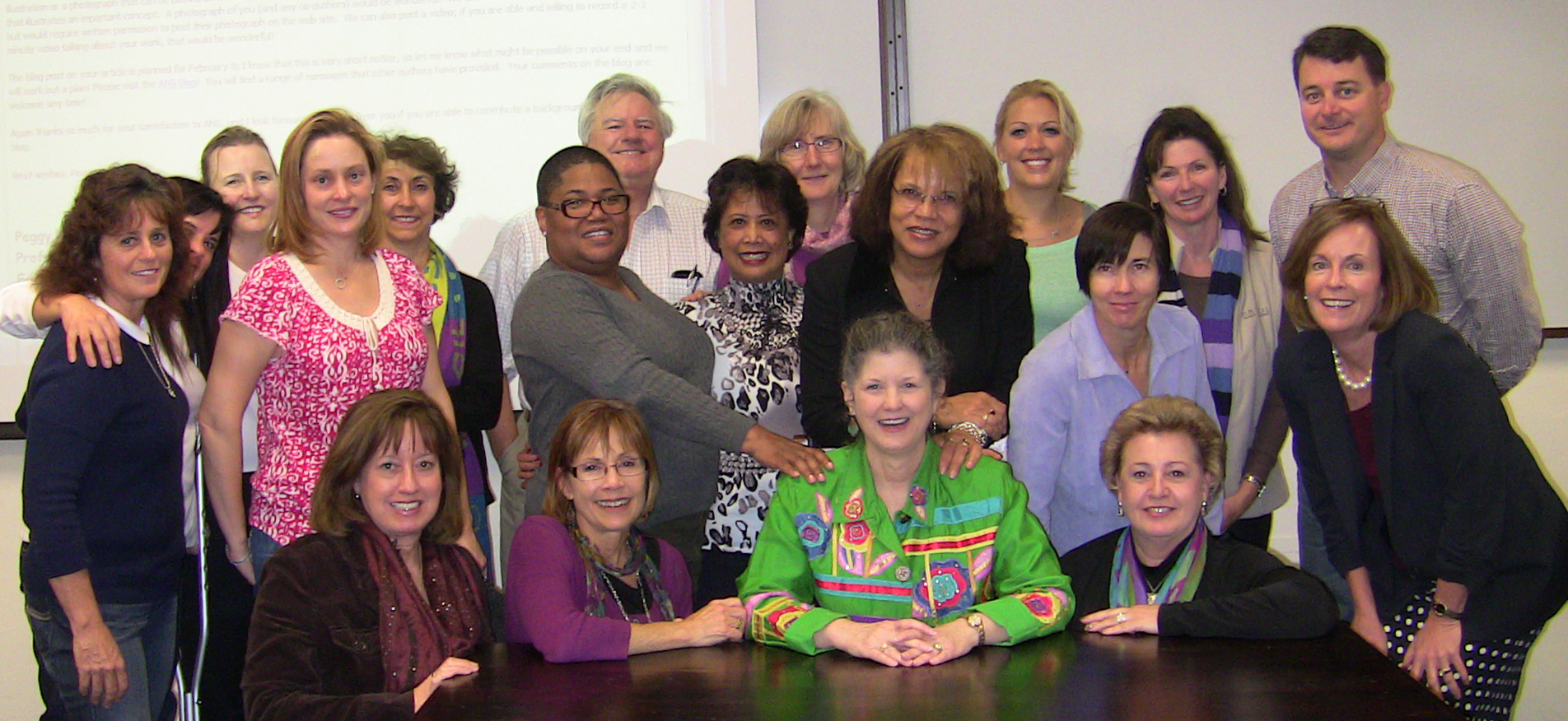
Dr. Georges (green jacket) with a group of students

Dr. Georges (green jacket) with a group of students

The networks of that we develop in our communities are significant, and influence the ongoing development of nursing knowledge.  This blog provides an avenue for all ANS readers to participate in this community.  W welcome your comments, questions and perspectives!

Common roadblocks to publishing, and how to overcome them


Over the years I have had occasions to answer many questions related to success in publishing scholarly manuscripts.  There are occasional unique issues that prospective authors face, but mostly people experience very similar challenges.  Take heart — most of these challenges can be overcome!  Here is a summary of  common roadblocks, and how to overcome them!

  • Failing to follow the journal guidelines.  Success in publishing in any journal depends to a large extent on your preparation related to that journal.  Read the “Information for Authors” that all journals provide, and follow it as closely as possible.  The ANS guidelines are readily accessible on the ANS home page. Pay particular attention to the purpose of the journal, and make sure that your manuscript is in line with that purpose. If you have questions about the guidelines, do not hesitate to contact the journal editor!
  • Lack of familiarity with the journal.  Become familiar with the past 2 to 3 years of the journal content to know the kinds of articles they are publishing, and to identify possible gaps that your manuscript might fill. Notice the style of writing in the published articles, typical article length, and the typical “profile” of article style and format. Identify the audience that the journal reaches, and if that is the audience for which your manuscript is intended. Notice if the journal has published articles on your topic in the past several months, and if so, consider how your work can add to what has already appeared in the journal.  The author’s guidelines probably address some of the style and format issues, but you will get a greater familiarity with the “personality” of the journal if you do this bit of homework!
  • Knowing when to get editorial assistance.  If you have difficulty with composition, challenges with the English language, or specific writing challenges (for example, improving the logical flow of ideas or making a long manuscript shorter), do not hesitate to seek help.  Consider teaming up with a colleague to exchange feedback on your writing, and to get suggestions for improving your writing.  There are a number of excellent  professional resources that you can explore; we list a few in the ANS guidelines in the “Preparation of Manuscript” section.
  • Becoming discouraged. Often the accomplishment of preparing a manuscript and getting it submitted is a major undertaking, and to get back a rejection letter after all that hard work is truly discouraging.  However, you can prepare publishingWoman250yourself for this disappointment by taking steps to be ready for any outcome.  Have a second and third journal option in the wings from the outset, so that if you need to submit your manuscript to a different journal you are ready to do so from the beginning.  Also, be ready to make revisions based on reviewer comments.  I recommend that authors immediately develop a table containing all of the reviewer comments in one column, and a second column with notes about what to do to address the comments.  Be prepared to tackle revisions the day after you receive the editor’s decision letter!  Do not put it aside and wait … be persistent, and get right back into the task of moving the manuscript forward!

There are factors beyond your control that could lead to rejection of your manuscript. But you can take some steps to minimize the possibility that these factors will interfere with your being published. These include:

  • Space constraints that limit the inclusion of all worthy manuscripts. All journals have some space constraints, so the more you keep your manuscript within reasonable length requirements, the greater your chances of success.
  • Editorial priorities that do not include the topic that your manuscript addresses. Sometimes you can determine these priorities in advance.  Seek publication in a journal that you know includes a priority for your topic, or contact the Editor to determine if they have an interest in your topic.
  • Editorial perspectives and practices related to controversial or sensitive issues. If your topic involves a controversial or sensitive issue, you may seek to determine the journal’s stance related to your topic in advance by becoming familiar with recent journal content, or direct contact with the Editor.

If you heed these hints for overcoming obstacles, you will almost certainly get your work published!  If you have questions or other suggestions to add to mine here, post them as a comment and let us discuss them!