Skip to content

Posts by Peggy L Chinn

Carper’s Patterns of Knowing: Fostering Nursing Wisdom


Our current featured article will be of great interest to ANS readers, in that the concept of “nursing’s patterns of knowing” is among the top search terms for the journal!  The article  is titled “Expert Nurses’ Perceptions of the Relevance of Carper’s Patterns of Knowing to Junior Nurses” authored by Louise Terry, PhD, SFHEA, LLB(Hons), FIBMS; Graham Carr, MSc, RNT, RN and Joan Curzio, PhD, RN.  The authors have provided this description of their work, and also included the video at the conclusion!


As the nursing profession ages, many are concerned at how to capture the wisdom and expert knowledge of those

Louise Terry

who are retiring. This provided the impetus for our study and underpinned the decision to provide funding by the General Nursing Council for England and Wales which was the regulatory body for nurses in England and Wales for over 60 years. Their mission now is to promote the development of the science and art of nursing for the benefit of society.

Through studying how expert nurses foster and develop nursing wisdom in new and junior nurses we have been encouraged and inspired by the vision, dedication and quality of the nurses who participated. This countered the media rhetoric at the time in the UK which suggested that nursing was a profession that had lost its ability to care and care well. We worked with expert nurses in a variety of ways as explained in our article to draw out and develop their insights. As part of exploring ethical knowing, we had a simple activity where participants placed colored

Graham Carr

glass tiles according to how they felt they weighted ethical values during their daily practice (see the photo on this blog). This visual metaphor formed the basis of some of the discussion around how ethical knowing is shaped, influenced and, at times, challenged by issues such as limited resources or poor nurse-patient ratios.

In our paper, we mention that one of our participants brought in her hand-drawn version of a Picasso painting (see the photo on this blog) and as she discussed its depth, angles, hidden aspects, she explained how it exemplified nursing to her. She spoke of how it had taken her hours to complete the drawing but the physical activity of drawing was essential to her reflections on nursing. Perhaps this is typical of nurses as reflective practitioners – through doing they reflect and through reflection they develop their doing [practice].

The study design allowed for co-construction of ideas relating to the development of nursing wisdom. Our article shows the finished concept map. This blog shows for the first time, a photograph taken of the preliminary concept map as developed by participants at the end of the second cycle in

Joan Curzio

phase 1 of the study. As explained, based on our study, we have proposed that a new pattern of knowing, Organizational knowing, should be recognized.

Post-qualifying, nurses gain experience but do not necessarily learn from it. Good nurses were identified through our research as sharing certain qualities and knowledge which were consistent with Organizational, Socio-political and Emancipatory knowing.  We all know good or wise nurses who are able to influence and improve patient care (praxis) as expert, fluid practitioners. In order to facilitate the transition from new nurse to expert to wise nurse attention, we believe that foundations for this need laying in the undergraduate, pre-registration nursing stage. Nursing curricula need to ensure that students develop the qualities and knowledge identified in Carper’s four fundamental patterns of knowing: Personal, Empirical, Aesthetic and Ethical and the importance of fundamental care needs to be reaffirmed. Students should be introduced to the concept of Organizational knowing and taught how to help themselves to ensure they gain this knowledge effectively in any organization in which they work or move to as junior nurses. As someone who teaches over 500 nursing students a year, I encourage each of them to keep an eye out in clinical practice for the wonderful nurse that they want to be like. Sadly, many of them tell me that they have yet to see that nurse even though they are half-way through their training. I tell them that when they do find that nurse, to ensure they work with them as often as they can and to absorb as much as they can from them.

In addition, employing organizations have a role to play in ensuring that newly qualified or newly appointed nurses are supported to develop fully the qualities identified within the Organizational pattern of knowing. As Graham and I discuss in our short film, this is now beginning to happen as practice educators are incorporating the essential aspects for developing organizational knowing into their preceptorship and induction programs for newly qualified or newly appointed junior staff. Also, role modeling of good nursing should be recognized and valued by employers. We would also like to see universities/nursing schools do more to develop socio-political and emancipatory patterns of knowing, particularly in qualified nurses. Through this, nurses will benefit society.

Finally, we hope that others will be excited by our ideas and further develop our concept of organization knowing. It would be wonderful if suggestions could be shared for developing organizational knowing and moving nurses through the hegemonic barriers that prevent the development of praxis and wisdom.

Sexual Health and Sexual Rights


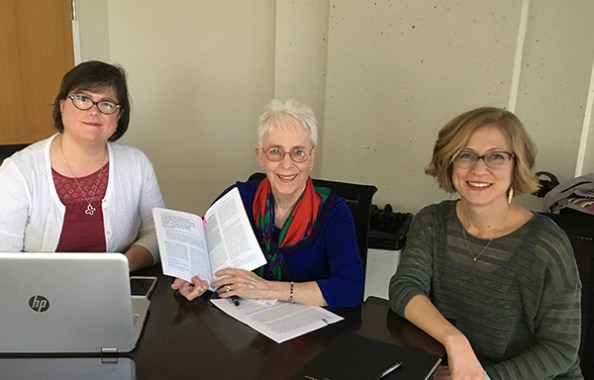
The latest article featured from the current issue of ANS is titled “A Review and Critique of Advances in Nursing Science Articles That Focus on Sexual Health and Sexual Rights: A Call to Leadership and Policy Development” by Lynn Rew, EdD; Whitney Thurman, MSN and Kari McDonald, MSN.  The article is available at no cost while it is featured, so we invite you to get your copy, read it, and return here to add your ideas to a discussion of this important issue!  Here is a message the authors prepared for ANS blog readers:

This paper was developed out of a course that Kari and Whitney were taking. It was their first research practicum course in the PhD program at The University of Texas at Austin. They were both fulfilling lab hours on Dr. Rew’s project. Dr. Rew regularly reads Advances in Nursing Science (ANS) and was aware that it was nearly time for their next “critique and replication” issue.  An upcoming issue was going to be on replication and critique of articles that had previously been published in ANS. So what we wanted to do was to look through the entire history of this particular journal to see what had been written about sexual health and sexual rights. That was our starting point.

 So, we decided that we would do a modified systematic review of the literature and the modification was that we were going to use just ANS to search for articles on these topics. It took a lot of revisions and hard work but it was a fun process to go through and refine the search terms. We discovered various ways that sexuality had been addressed among our sample of articles, but not necessarily sexual health or sexual rights. We also discovered the impact of policy as well as theoretical perspectives and frameworks that were used or not used. One of our surprising findings was that nursing theory wasn’t addressed very much at all. This surprised us because we thought that out of all nursing journals, Advances in Nursing Science would have something about nursing theory and sexuality. So, when we wrote in the paper that we wanted to encourage other authors to write about these topics, we really meant it. Our discovery and recommendation were based on actual data. Although the finding surprised us, it was also somewhat exciting to discover that there is a larger realm of work that still needs to be done to address the gap on this topic, especially for new nurse researchers.

This is an example of one way that PhD students can gain experience in publishing their ideas and aid in building their Curriculum Vitae. We were fortunate that all three of us were interested in the topic and in the “expected” outcome. We hope to encourage many other investigators, students and faculty alike, to explore the phenomena of sexual health and sexual rights. In the pictures, from left to right, are Kari, Lynn, and Whitney.

Middle range theory in the making: You gotta’ stay with it and you gotta’ pass it on


Our latest featured article from the current ANS issue is titled “Middle Range Theory: A Perspective on Development and Use” by Patricia Liehr, PhD, RN and Mary Jane Smith, PhD, RN, FAAN. Both authors are long-time contributors to ANS and in this article they examine the journey of developing middle range theory that is solidly situated within nursing’s disciplinary persepective and ultimately bringing it to the interdisciplinary table. This article is available for download at no cost on the ANS website while it is featured.  Here is a message that the authors provided for ANS blog readers, followed by a short video that Dr. Liehr and her doctoral students created, talking about the nature of middle-range theory:

We are going to tell you our story as it relates to this paper. Often when we use a story path that focuses on the present…the past….and the future.

At PRESENT, we invite you to read and share your thoughts about “Middle range theory: A perspective on development

Mary Jane Smith (L) & Patricia Liehr (R)

Mary Jane Smith (L) and Patricia Liehr (R)

and use” in the current issue of ANS. We are honored to be in this retrospective issue.

Moving to PAST, we first met and engaged with each other in 1979-1980 as teacher (Smith) – student (Liehr) while Liehr was in her Masters program at Duquesne University in Pittsburgh, Pennsylvania.

During a period of about 20 years, as we began to learn more about middle range theory as a guide for practice and research, we saw the need for a state of the science manuscript. This was the impetus for the 1999 paper published in ANS “Middle range theory: Spinning research and practice to create knowledge for the new millennium.”

The 1999 paper in ANS was the impetus for our textbook, Middle Range Theory for Nursing, first published in 2003. The book was written to create a resource for scholars wishing to use middle range theory in practice and research.

The 1999 paper was also the impetus for this 2017 paper, allowing us to consider middle range theory through the lens set forth nearly 20 years ago.

And now, the FUTURE….the 4th edition of Middle Range Theory for Nursing is in the works and we continue to teach students about the usefulness of middle range theory. We are offering a short video recording of current PhD students at Florida Atlantic University, Christine E. Lynn College of Nursing who are considering the relevance of middle range theory as they immerse in developing ideas to guide their research.

The foremost recommendation in “Middle range theory: A perspective on development and use” is to “stay with the theory”. We believe that persistence and scholarly engagement over time has the potential to effectively shape disciplinary knowledge. Our story highlights and brings to life this belief. Thank you for sharing blog-time with us.

Patricia Liehr and Mary Jane Smith


Practical Discourse: Hermeneutics and the work of Janice Thompson


In our current featured article, author  Stephen M. Padgett, PhD, RN examines three papers by Janice Thompson (two of which were published in ANS) as a way to examine the importance of hermeneutic philosophy, and the importance of this line of inquiry for our discipline.  The article, titled “Practical Discourse Revisited: Hermeneutics at the Intersection of Philosophy and Nursing” and it is available at no cost while it is featured on the ANS website!  We welcome your ideas and comments, so once you read the article, come back here to let share  Dr Padgett shared this message about his work:

I would echo what Patricia Butterfield wrote in her posting about the powerful influence of ANS in my professional and intellectual formation, and my memories of it as a tangible blue and green object of veneration.  When I saw the announcement about the “retrospective” issue, I thought immediately of doing something on Jan Thompson’s work. It seemed a good opportunity to discuss the work of someone who has been incredibly important to me in my own

Stephen Padgett

scholarly journey, and (I think) under-appreciated in nursing philosophy.

I first came across her paper on “Practical Discourse” when I was in my BSN program, and I remember being just knocked over by it.  I literally carried around a photocopy of that paper for years, heavily annotated, underlined in multiple colors.  That paper both confirmed my thinking on some points, and profoundly extended it on others – I discovered a whole world of new resources (I had a similar experience a few years later when I read June Lowenberg’s paper, also  in ANS, on “Broadening the Dialogue” – both “yes, yes!” and “Huh!”).

When I was in a master’s program, and exploring in more depth the philosophical resources in the nursing literature, I found a lot of small, scattered pieces that I liked, especially in the areas of feminism, critical theory, and Continental philosophers – but also a lot of conservative, deeply entrenched, and frankly not very interesting ideas about philosophy of science.

One day I worked up the nerve to call Jan Thompson on the telephone (this was before email), and by some miracle she was actually in her office at that moment.  After I gushed and babbled for a few minutes, she said, “Well, we’re having a conference here in the fall, and there will be a lot of people I think you’d like to meet.” So she sent me a brochure, and I came out to Portland, Maine that October, and that was my first Feminist and Critical Perspectives in Nursing conference. I did in fact meet a lot of people there, and at subsequent conferences, who became incredibly important friends, teachers, and colleagues.

Re-reading these early papers of hers was an effort both to go back to some (to me) foundational texts, and to re-imagine the context in which they were written, and then also to pull those ideas forward, and to think about their significance in the context of today.  That is (not coincidentally) the central project of hermeneutics: to make a bridge between there and here, authors and readers.

Thompson is a very deliberate, very organized writer, so it was a deep pleasure to re-trace her steps, to work through her arguments again, and to reconsider them in light of later experiences and readings.  One piece of her work in particular seems of great salience today, which has to do with the duality of interpretation, what Ricouer calls faith and suspicion. A great deal of qualitative research in nursing has been hampered (to my mind) by too narrow a view of interpretation and experience. Despite the work of Lowenberg, Sandelowski, and others, we have been constrained at times by a perceived obligation to focus only on what participants say about their own experiences. This has too often resulted in work that is unfortunately shallow and bland, neither as messy nor as interesting as actual people.

A deeper understanding of the hermeneutic tradition, such as Thompson provides, gives us a way to be respectful of what people say, mindful of the dangers in disregarding that, and also open to the complexity, contradictions, and ambivalences.  As I read her, she urges us to listen carefully, and also to listen critically – to hear what people don’t say, as well as what they do. If we are to consider the taken-for-granted assumptions of others, however, we must also consider our own – to locate ourselves in the world, and to notice (as best we can) the ways those locations influence our pre-understandings – so that we can try to be more fully present with and to understand other people.

It is perhaps that sense of philosophy as a way of being in the world with other people that is most central to what I gain from Jan Thompson’s work. Philosophy in this view is fundamentally about how we live, about being in a world that is both messy and amazing, personal and political, profoundly puzzling and worth thinking about.  It is a great pleasure to take part in, and to extend to others, the continuing conversation that is nursing philosophy.


Issue Topic Planned on Emancipatory Nursing


We are delighted to announce the addition of a new issue topic for ANS Volume 41 Number 4!  Manuscripts are due April 15, 2018, so there is ample time to wrap up your project and plan for this issue!  Here are the details:

Emancipatory approaches to nursing research and practice have escalated in the context of major political and cultural upheavals worldwide. For this issue we seek scholarship that informs emancipatory nursing practice and research. We welcome research reports that use emancipatory methodologies, emancipatory philosophic analyses, critical and feminist critiques of existing discourses and practices, description of and evidence supporting emancipatory nursing practices.  Date manuscripts are due: April 15, 2018.

Understanding Esthetic Knowing


The new featured article from the current ANS issue is titled “Reorienting Esthetic Knowing as an Appropriate “Object” of Scientific Inquiry to Advance Understanding of a Critical Pattern of Nursing Knowledge in Practice” by Miriam Bender, PhD, RN and Dina Elias, MSN, RN, CCSN.  Download your copy of this article at no charge while it is featured, and share your responses here!  Both authors have provided messages for ANS readers about their work:

Dina Elias: The act of providing nursing care, or the act of nursing, depends heavily on the nurse knowing the right action to take. Knowing, in and of itself, can manifest itself in many different ways depending on the context in which it is needed. In my first year of my PhD studies I took a Philosophy of Science class and it was in that class that I realized I had known so

Dina Elias

Dina Elias

little about what it means to really ‘know’. Foreign words like ‘epistemology’ and ‘ontology’ began to take on a whole new life of their own in my mind. I began asking and wondering about the ontology of nursing, and the type of knowledge that is necessary to make nursing the science that it is. But then to my dismay, I realized that nursing and its ways of knowing were not always ‘scientific’ enough for the positivistic worldview of healthcare science in which it belongs to. Yes, it is true that there are empirical and ethical ways of knowing that nursing draws from, but it was the aesthetic way of knowing that fascinated me the most. My naivety led me to believe that others would understand that the world cannot be possibly explained empirically; that the positivistic view of the world would not suffice. Einstein once said “Not everything that counts can be counted, and not everything that can be counted counts”, yet here I was being told that aesthetic knowing, since it cannot be counted and measured, must not count. I struggled with my inability to explain and objectify aesthetic knowing…that intuition that is so close and near to a clinician’s heart. It is in aesthetic knowing that a critical way of knowing emerges and manifests itself. But how do we objectify something that cannot be objectified or observed in the first place? Do I just relinquish the fight and submit to the idea that aesthetic knowing is nothing more than a ‘gut’ feeling that has no merit? I could not be convinced of that. It was here that the debates and discourse be,tween my professor and mentor began…how do we reorient aesthetic knowing so that it reveals itself as an object of scientific inquiry? When we can do that, we can begin giving aesthetic knowing the rightful scientific place it deserves. When we understand how aesthetic knowing is acquired and expressed, we can begin articulating it in an objective manner that can be translated into practice.

Miriam Bender: This article was born in a Philosophy of Science course that all University of California Irvine (UCI) nursing doctoral students must take in year one, as part of their core curriculum. I started as junior faculty at UCI in November 2014, and was slated to teach the course starting Fall quarter 2015. To ensure I was adequately prepared, I began a scholarly journey that I am still passionately engaged with. I created a syllabus based on 10 months of reading and

Miriam Bender

Miriam Bender

reaching out to esteemed faculty across the world. I am especially indebted to Janice Morse and Sally Thorne, to whom I reached out asking for guidance, and who gave me great feedback and insights. In this course the students read Susan Gortner, Mark Risjord, Jacqueline Fawcett, Thomas Kuhn, Larry Laudan, Donna Haraway, Paul Thagard, Sally Thorne, Janice Morse, and Patricia Benner, to name just a very small sample. We discussed the history of nursing science; the evolution of philosophy of science; prediction, explanation and the appropriate claims of science; and what it all means for nursing science and practice. Luckily for me, the students were as passionate as I was about the readings. Dina had a series of insights throughout the course that inspired this paper. She was truly engaged in identifying a philosophical orientation that “allowed” for what she began calling “prediction in practice.” As the weeks went by, Dina was able to synthesize the readings into a nascent argument for a philosophy of science that entailed systematic inquiry into the phenomenon of esthetic knowing. We took her final paper for the course and shaped it into the paper that is published. Dina took the lead in writing a thorough treatise on esthetic knowing, and allowed me to strengthen the philosophical section and develop the section outlining an esthetic knowing program of research. Dina set the bar in terms of the level of engagement and scholarship I now expect in the course, and I am excited to see what other articles will come from future students as they synthesize their learning into insights that influence the ongoing philosophy of nursing science discourse.


The Caring Concept as a Focus for Nursing


Our next featured article for the current issue of ANS is titled  “Finding a Focus for Nursing: The Caring Concept” by Laura Beth Cook, RN, BSN, PCCN; Ann Peden, PhD, APRN, BC.  The authors explore the wide range of literature since the 1991 publication of the ANS classic article by Margaret Newman, Marilyn Sime and Sheila Corcoran Perry titled “The Focus of the Discipline of Nursing.” Cook and Peden’s aim was to determine the degree of consensus in the literature around the claim made by Newman, Sime and Corcoran-Perry the focus of nursing is the “study of caring in the human health experience.”  While this article is featured, you can download it at no cost, and read their interesting and thought-provoking conclusions!  Here is a message about this work that Ms. Cook has provided for ANS blog readers:

portrait

I wrote this paper in my first semester of graduate school, while I was taking a course on nursing theory. As we began to dive into the literature, I was shocked to learn that there is debate about whether caring can be considered a central concept of nursing. In my own practice, and in observing the practice of others, I had come to believe that a nurse’s ability to care is what creates the difference between another strange face at the bedside and the caring individual who helps a patient through one of the hardest, scariest parts of their life.

As I investigated more, I found arguments that caring was a gendered, devalued concept that would degrade the professional nature nursing was striving to give itself. That many professions also lay claim to caring, so it was illogical to think that nursing could make caring its central focus.  That caring explained the art of nursing, but what about the science of nursing? These points seemed valid at first, but as I read more and thoughtfully considered my practice, I was still sure that caring is a trait that all humans have to some degree, but it is professionalized in nursing.

So then I had to answer the tough questions. If caring is so central to nursing, why can’t we agree on a single definition for the concept? How can other professions also profess to be caring? Does embracing the complexity and emotional nature of caring mean devaluing the scientific practice also essential to nursing?

In a healthcare environment where human science is increasing in importance, I think I can answer all of these questions in a positive light. The reason there is no single, simple definition for caring is because nursing is not a simple profession. Other professions can claim to be caring, but just as we draw on medical knowledge, other professions can draw on our knowledge of caring. Lastly, being a caring nurse does not mean being an unscientific one. In fact, I would argue that without a strong understanding of the disease process of your patient, you can’t be a truly caring nurse.

I hope that this article inspires others to consider what role caring plays in their own nursing practice. I hope the discussion and debate continues. Lastly, I hope that after a stressful day, this article can help remind nurses why we have chosen a worthy, meaningful profession.

Now that I have begun PhD study, I have furthered my investigation of the concept of caring by looking at what caring means in the context of the technological environment of the ICU. Can a nurse deeply involved in the technical care of a patient still be caring? That’s the next question for me to consider!

New Published Ahead-of-Print!


Plamondon, Katrina; Caxaj, Susana
Original Articles: PDF Only

Upstream Courage, Upstream Action


In the next few days, the first issue of the 40th volume of ANS will be published.  This issue will feature articles submitted in response to the issue topic “ANS Retrospective.” The first article we are featuring is authored by Patricia G. Butterfield, PhD, RN, FAAN, titled “Thinking Upstream: A 25-Year Retrospective and Conceptual Model Aimed at Reducing Health Inequities.”  Dr. Butterfield’s message for this blog affirms the commitment established from the founding of the journal – to publish cutting-edge scholarship that challenges the status quo and brings to the forefront issues that call forth critical examination and discussion. The timing of this 40th anniversary volume, remarkably, occurs concurrently with a new political climate in the U.S. that has prompted large-scale citizen action based on fundamental values. I am deeply grateful to Dr. Butterfield, and to a host of other ANS authors, who have contributed to shaping the very nature of this journal, and continue to do so as we embark on another decade!  Her article is currently available “Published Ahead-of-Print;” once the forthcoming issue is published the article will be featured. Watch for the announcement of the release of this issue, and return to the ANS website where the article will be available for download at no cost. Here is Dr. Butterfield’s message:

ANS was quite influential in my professional formation as a scholar and thinker.  As a doctoral student, I would go to the library, sneak my coffee into my book bag, seek out the newest issue of ANS, and find just the right hiding place (typically a carrel in the old stacks) to read.  What a treat it was.  Even the colors of the ANS jacket (green/blue) seemed right to me.  It wasn’t until many years later that I understood what drew me so much to the journal.  It wasn’t always the topics that drew me in; rather it was the journal’s sense of courage.  The fierceness of the articles.  The way ANS

Patricia Butterfield

Patricia Butterfield

authors dissected the subtext of a health problem, striking clearly and powerfully at the essence of an issue.  Poverty, marginalization, and social justice were (and are) key themes in ANS.  That’s why, many years ago, when it came time to submit my Thinking Upstream manuscript for publication consideration, ANS was my only real choice.  Since 1990 (when Upstream was published) the world…and the journal…has changed.  Health reforms (of lack thereof) have come and gone, but through the years and decades, ANS has retained its voice…and its sense of courage.

I’m reminded of how ANS made me feel as well as how it made me think because of the courage I have witnessed in recent days.  Courage, in the form of peaceful assembly, social commentary, and religious- and secular-based grassroots organizing, is a hallmark of our national identity. Whether it was the Women’s March on Washington, the spontaneous assembly of citizens in response to the president’s Executive Order addressing immigration, or scientists’ push back in response to attempts to remove climate change materials from the EPA website, I have seen courage. Many of the voices are coming from our new generations, bringing forth a level of candor and courage that our nation has not seen for many years.

This coming issue of ANS will feature a new paper I wrote…a 25-year retrospective on Thinking Upstream.  The key tenets of the new paper are the same as the original manuscript….that no matter how much money and talent we invest, our nation will not become healthy until we act upstream to address the roots of health.  We have surpassed the limits of what healthcare alone can do; saving lives requires our willingness to dig into the real issues that tap human potential.  This is a time for upstream courage and upstream action.  And from what I have seen the past few weeks, there is plenty of it to go around.

End-of-Life Preferences in Underrepresented Populations


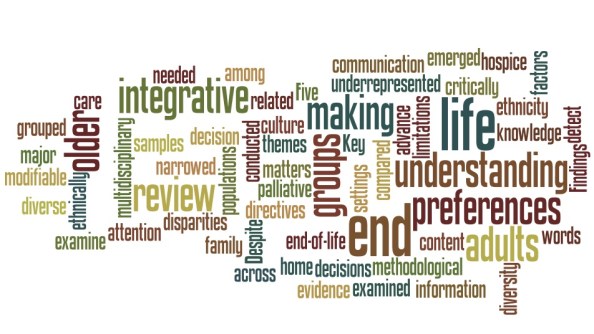
The article titled “Older Adults of Underrepresented Populations and Their End-of-Life Preferences: An Integrative Review” by Zahra Rahemi, MSN and Christine Lisa Williams, DNSc, RN, PMHCNS is the current ANS featured article.  It is available for no-cost download while it is featured on our website. This article emphasizes the importance of culturally congruent care in end-of-life situations. Here is a brief message from the authors about their work:

Nurses are in the frontline of care, especially end-of-life care wherein medical treatments are often no longer effective. As the U.S. society progressively becomes ethnically diverse and aged, addressing diversities of end-of-life preferences among older adults of different communities is paramount to ensure equity of care at the end of life. In the article, “Older Adults of Underrepresented Populations and Their End-of-Life Preferences: An Integrative Review,” we performed a broad literature review to explore diversities of ethnically diverse older adults’ end-of-life preferences based on a repertoire of current and rigorous studies. This study can contribute to advancement of nursing knowledge regarding culturally competent care at end of life. In this article, we argue that health preferences and decisions vary due to ethnicity and race. We propose healthcare providers and researchers reflect on different choices and possibilities to provide the context for culturally congruent care and reducing disparities.

wordle_-_create