Skip to content

Posts from the ‘Editor’s Picks’ Category

Weight beliefs among African American Women


Our featured article for the next couple of weeks is titled “Development and Validation of the Beliefs About Personal Weight Survey Among African American Women” by Stephanie Pickett, PhD, RN; Rosalind M. Peters, PhD, RN, FAAN and Thomas Templin, PhD. This article reports the development of an empirical measure that integrates culturally related beliefs. The article is available for download at no cost while it is featured.  Here is a message that Dr. Pickett shared about her work:

My program of research focuses on reduction of hypertension-related risk factors among African Americans, with a specific interest in psychosocial factors that influence weight management among African American women such as weight beliefs, perceived stress,

emotions and eating behavior patterns. My initial research examined beliefs about hypertension and self-care behaviors among African

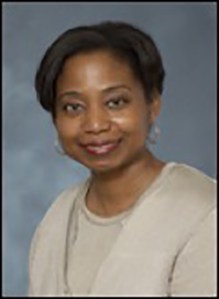
Stephanie Pickett

Americans and found that a significant relationship existed between hypertension beliefs and behaviors that affect blood pressure control. I then became interested in examining weight beliefs and weight management behaviors given that obesity is a risk factor for hypertension. I focused on African American women due to the high proportion of overweight and obese women in this group.

As I examined the weight belief literature, I discovered that most of the research about weight beliefs among African American women were qualitative studies that methodologically could not examine relationships between beliefs and behaviors. I also discovered that there were numerous instruments that measured weight beliefs that mainly focused on beliefs about obesity. These instruments gathered important information, but none measured beliefs about personal weight across the weight spectrum and none were developed and normed with African American women. My dissertation work filled this gap in the literature with the development and initial testing of the Beliefs about Personal Weight Survey (BPWS) with young African American women. This survey shows promising results with adequate reliability and validity.

My next step is to revise the BPWS to make it a useful tool for clinicians and researchers   to examine weight beliefs as a component of weight management interventions among African American women.

Help for Veterans with PTSD


Our current featured article addresses one of the most pressing health problems for those who have served in military combat – post-traumatic stress disorder.  The article, titled “Efficacy of the Mantram Repetition Program for Insomnia in Veterans With Posttraumatic Stress Disorder: A Naturalistic Study” is authored by Danielle Beck, MPH, CCRC; Lindsay Cosco Holt, PhD, RN; Joseph Burkard, DNSc, CRNA; Taylor Andrews, BA; Lin Liu, PhD; Pia Heppner, PhD and Jill E. Bormann, PhD, RN, FAAN.  The article is available at no cost while it is featured!  The program described in this paper was recently designated as an “Edgerunner” by the American Academy of Nursing.

Dr. Borman shared this message about the article for ANS readers:

As nurses, we embrace a holistic perspective to patient care. In this study, we tested a mind-body-spiritual intervention, repeating a mantram (sacred word), to help manage symptoms of post-traumatic stress disorder (PTSD) in Veterans. A “mantram” has been described as a “spiritual formula for transformation;” a self-selected, spiritually based word or phrase (sometimes called a Holy Name) that reflects all the major spiritual traditions of the world. For a more detailed description, see: The Power of the Mantram or learn about its origins from the Blue Mountain Center of Meditation.  Veterans found that this intervention promoted the relaxation response and reduced symptoms of PTSD and insomnia.

Authors of this paper collectively brought expertise from nursing, psychology, public health, and psychiatry. We wanted to capture the “real-world” experience of Veterans seeking care for their symptoms. Here is a brief video with examples and stories from veterans about their experiences:


Danielle Beck

Pia Heppner

Joe Burkard

Jill Bormann

Enhancing Person-Centered Care


Kristin Thórarinsdóttir

For the next couple of weeks, the ANS featured article will be “Development of Hermes, a New Person-Centered Assessment Tool in Nursing Rehabilitation, Through Action Research” by Kristin Thórarinsdóttir, RN, BScN, MScN; Kristing Björnsdóttir,EdP, RN; Kristján Kristjánsson, PhD. In the article they describe the clinical application of a tool based on existentialist and hermeneutical phenomenology, a philosophy that they believe is meant to be a philosophy for real life.  I join the authors in inviting you to read their article (available at no cost while it is featured), and share your comments here!  Here is Kristin Thórarinsdóttir’s description of this work:

On behalf of my co-authors, Dr. Kristín Björnsdóttir and Dr. Kristján Kristjánsson, and myself, I would like to say that it is an honour to have our article featured in the “Editor’s Picks”. This article is a part of my PhD project at the Faculty of Nursing, University of Iceland.  My co-authors, who both are my supervisors, have guided me through the challenging but fruitful journey involved in my doctoral studies. To them I am deeply

grateful, as well as to the nurses who participated with genuine effort in developing Hermes. I am also thankful for the organizational leaders who supported the study.

The motivation for the development of the person-centered assessment tool Hermes, outlined in the article, arose in a

Kristing Björnsdóttir

project in which I was engaged, aimed at implementing standardized nursing systems at two rehabilitation wards. As the project progressed, it became apparent that the perspectives of the patients did not reveal themselves satisfactory in the existing nursing assessment at the wards. These practices raised concern for the nurses at the ward, as needing improvement, because they contradicted the person-centered approach that was independently emerging as a central aim at the wards. This recognition provided the platform for the action research through which Hermes was developed in collaboration with the nurses at the respective wards. The tool was meant to facilitate a person-centered approach to the participation of patients in nursing assessment and care planning. In this research project, I had the role of a consultant who provided for solutions in the form of the theoretical and phenomenological background of Hermes, its structure and potential use. In addition to reviewing the structure and use of Hermes, the nurses had the important role of testing out and evaluating Hermes in practice. Evaluations plans were designed through reflection in focus groups for revising and retesting the tool in practice. In spite of many challenges faced during the project, Hermes was adopted in practice at the respective wards where its use has been sustained.  The study showed that, as aimed for, person-centered assessment practices were enhanced through the use of Hermes. Moreover, several aspects of its phenomenological grounding were supported.

Since this study was conducted, an ethnographical study has been embarked upon in which the ways Hermes is used in

Kristján Kristjánsson

nursing assessment of patients with chronic pain are explored. Further studies are needed to explore the use of Hermes in practice for establishing an evidence base for its use.

The fact that Hermes has been implemented at two other rehabilitation settings, in addition to the wards where it was developed, is a positive indication of its practical applicability, but again its effectiveness stands in need of further research.


Mothering: The Invisible Work of War


Our current featured article is titled “What About the Next Generation That’s Coming?” The Recontextualization of Mothering Post–Refugee Resettlement by Sarah J. Hoffman, PhD, MPH, MSN, RN and Cheryl L. Robertson, PhD, MPH, RN, FAAN; and Jessica Dockter Tierney, PhD. Visit the ANS website to download your copy of this article at no cost while it is featured.  Here is a message about this work provided by lead author Sarah Hoffman:

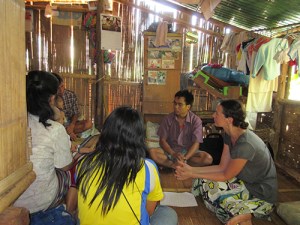
The year that I conducted this research, more individuals were living forcibly displaced around the world than at any other point in recorded history. Research describing the vulnerabilities, human rights violations, and challenges individuals, families, and communities encounter across the spectrum of migration is readily accessible. Less available are studies that document the strengths-focused response strategies women refugees engage to navigate systems and experiences associated with displacement. This manuscript, developed to answer questions residing in this gap, is a part of a series of ethnographic case studies documenting perspectives of resilience, identity construction, and mothering as they were described within the narratives of Karen refugee women from Burma. I am currently working on an ethical commentary relevant to this research titled, Reflections on Position, Interpretation, and Meaning in Ethnographic Nursing Research.

I joined University of Minnesota in the fall of 2016 as an Assistant Professor following my completion of the UMN School of Nursing PhD program. As a doctoral student I was a Human Rights minor and an Interdisciplinary Doctoral Fellow with the Human Rights Program and the Institute for Global Studies. Prior to this, I received my BSN, MSN, and MPH at Johns Hopkins University. These opportunities as well as cultural experiences as a Peace Corps Volunteer in Africa, as a human rights intern in Colombia, and through my work with migrant communities in the Twin Cities and refugee camps along the Thai-Burma border, have advanced a personal critical analysis of the influence of power on human health. My research focus includes forced migration, human rights, gender based violence, intergenerational trauma, and the experiences of women migrants.


The Ethics of Research with Muslim Immigrant Women


We are delighted to announce the first featured article for the new issue of ANS – Volume 40 Issue 1 – officially published today on the ANS website! The article is timely given the current affairs worldwide placing many people at risk based on their Muslim religion.  The article is titled “A Bicultural Researcher’s Reflections on Ethical Research Practices With Muslim Immigrant Women Merging Boundaries and Challenging Binaries,” authored by Jordana Salma, MN; Linda Ogilvie, PhD; Norah Keating, PhD and Kathleen F. Hunter, PhD.  The lead author, Jordana Salma, provided this message about this work:

Jordana Salma

There are manuscripts that I have written because I have to. This manuscript I wrote because I needed to. I am, to put it in the simplest terms possible, a bilingual bicultural Muslim Lebanese Canadian woman. The convoluted nature of trying to capture in writing this aspect of my identity was amplified ten-fold in living this identity while doing research.  It took me a year of writing and re-writing, with the support and input of my co-authors, to complete the finished version you see in ANS. I began writing to make sense of my experiences of completing a dissertation research project. My co-authors frequently reminded me to move beyond personal reflection towards thinking about the implications of my experiences for the broader community of researchers engaged in research activities with Arab and Muslim women. I could not have completed the final version without their mentorship and perspectives. I see this article as highlighting three points:

  • Bicultural researchers can uncover ethical tensions because they live between worlds and, subsequently, are witness to different world views, normative practices, and ethical systems.
  • Muslim women, both as researchers and as research participants, can and should be actively engaged in shaping ethical research practices.
  • Feminist and Islamic perspectives can be utilized together to reconcile perceived ethical tensions when doing research.

Readers will interpret and draw on different aspects of this article based on their personal needs and insights. I do hope that the article supports in some small way the ongoing discussions around inclusion, equity, and diversity in our research spaces. I am excited to continue this conversation with communities of researchers actively working to promote and advocate for ethical research practices.

Theory of Unpleasant Symptoms


In our current featured article titled “An Analysis and Evaluation of the Theory of Unpleasant Symptoms,” authors Seung Eun Lee, MSN, RN; Catherine Vincent, PhD, RN and Lorna Finnegan, PhD, RN report the results of their analysis of the Theory of Unpleasant Symptoms, first published in ANS in 1995 (see Lenz et al., 1995 and 1997).  This is among the early, and now frequently cited middle-range theories in nursing! In the abstract, Lee and her colleagues described the outcome of their analysis:

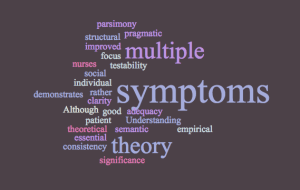
Although its semantic clarity, semantic and structural consistency, and parsimony could be improved, the theory demonstrates good social and theoretical significance, testability, and empirical and pragmatic adequacy. Understanding multiple patient symptoms is essential, and the theory demonstrates that nurses should focus on multiplerather than individual symptoms.

Visit the ANS website now to download a copy of the article at no charge!  Then return here to share your comments and responses to this work!

Lenz, E. R., Suppe, F., Gift, A. G., Pugh, L. C., & Milligan, R. A. (1995). Collaborative development of middle-range nursing theories: toward a theory of unpleasant symptoms. ANS. Advances in Nursing Science, 17, 1–13.

Lenz, E. R., Pugh, L. C., Milligan, R. A., Gift, A., & Suppe, F. (1997). The middle-range theory of unpleasant symptoms: an update. ANS. Advances in Nursing Science, 19(3), 14–27.

Carper’s Patterns of Knowing: Fostering Nursing Wisdom


Our current featured article will be of great interest to ANS readers, in that the concept of “nursing’s patterns of knowing” is among the top search terms for the journal!  The article  is titled “Expert Nurses’ Perceptions of the Relevance of Carper’s Patterns of Knowing to Junior Nurses” authored by Louise Terry, PhD, SFHEA, LLB(Hons), FIBMS; Graham Carr, MSc, RNT, RN and Joan Curzio, PhD, RN.  The authors have provided this description of their work, and also included the video at the conclusion!


As the nursing profession ages, many are concerned at how to capture the wisdom and expert knowledge of those

Louise Terry

who are retiring. This provided the impetus for our study and underpinned the decision to provide funding by the General Nursing Council for England and Wales which was the regulatory body for nurses in England and Wales for over 60 years. Their mission now is to promote the development of the science and art of nursing for the benefit of society.

Through studying how expert nurses foster and develop nursing wisdom in new and junior nurses we have been encouraged and inspired by the vision, dedication and quality of the nurses who participated. This countered the media rhetoric at the time in the UK which suggested that nursing was a profession that had lost its ability to care and care well. We worked with expert nurses in a variety of ways as explained in our article to draw out and develop their insights. As part of exploring ethical knowing, we had a simple activity where participants placed colored

Graham Carr

glass tiles according to how they felt they weighted ethical values during their daily practice (see the photo on this blog). This visual metaphor formed the basis of some of the discussion around how ethical knowing is shaped, influenced and, at times, challenged by issues such as limited resources or poor nurse-patient ratios.

In our paper, we mention that one of our participants brought in her hand-drawn version of a Picasso painting (see the photo on this blog) and as she discussed its depth, angles, hidden aspects, she explained how it exemplified nursing to her. She spoke of how it had taken her hours to complete the drawing but the physical activity of drawing was essential to her reflections on nursing. Perhaps this is typical of nurses as reflective practitioners – through doing they reflect and through reflection they develop their doing [practice].

The study design allowed for co-construction of ideas relating to the development of nursing wisdom. Our article shows the finished concept map. This blog shows for the first time, a photograph taken of the preliminary concept map as developed by participants at the end of the second cycle in

Joan Curzio

phase 1 of the study. As explained, based on our study, we have proposed that a new pattern of knowing, Organizational knowing, should be recognized.

Post-qualifying, nurses gain experience but do not necessarily learn from it. Good nurses were identified through our research as sharing certain qualities and knowledge which were consistent with Organizational, Socio-political and Emancipatory knowing.  We all know good or wise nurses who are able to influence and improve patient care (praxis) as expert, fluid practitioners. In order to facilitate the transition from new nurse to expert to wise nurse attention, we believe that foundations for this need laying in the undergraduate, pre-registration nursing stage. Nursing curricula need to ensure that students develop the qualities and knowledge identified in Carper’s four fundamental patterns of knowing: Personal, Empirical, Aesthetic and Ethical and the importance of fundamental care needs to be reaffirmed. Students should be introduced to the concept of Organizational knowing and taught how to help themselves to ensure they gain this knowledge effectively in any organization in which they work or move to as junior nurses. As someone who teaches over 500 nursing students a year, I encourage each of them to keep an eye out in clinical practice for the wonderful nurse that they want to be like. Sadly, many of them tell me that they have yet to see that nurse even though they are half-way through their training. I tell them that when they do find that nurse, to ensure they work with them as often as they can and to absorb as much as they can from them.

In addition, employing organizations have a role to play in ensuring that newly qualified or newly appointed nurses are supported to develop fully the qualities identified within the Organizational pattern of knowing. As Graham and I discuss in our short film, this is now beginning to happen as practice educators are incorporating the essential aspects for developing organizational knowing into their preceptorship and induction programs for newly qualified or newly appointed junior staff. Also, role modeling of good nursing should be recognized and valued by employers. We would also like to see universities/nursing schools do more to develop socio-political and emancipatory patterns of knowing, particularly in qualified nurses. Through this, nurses will benefit society.

Finally, we hope that others will be excited by our ideas and further develop our concept of organization knowing. It would be wonderful if suggestions could be shared for developing organizational knowing and moving nurses through the hegemonic barriers that prevent the development of praxis and wisdom.

Sexual Health and Sexual Rights


The latest article featured from the current issue of ANS is titled “A Review and Critique of Advances in Nursing Science Articles That Focus on Sexual Health and Sexual Rights: A Call to Leadership and Policy Development” by Lynn Rew, EdD; Whitney Thurman, MSN and Kari McDonald, MSN.  The article is available at no cost while it is featured, so we invite you to get your copy, read it, and return here to add your ideas to a discussion of this important issue!  Here is a message the authors prepared for ANS blog readers:

This paper was developed out of a course that Kari and Whitney were taking. It was their first research practicum course in the PhD program at The University of Texas at Austin. They were both fulfilling lab hours on Dr. Rew’s project. Dr. Rew regularly reads Advances in Nursing Science (ANS) and was aware that it was nearly time for their next “critique and replication” issue.  An upcoming issue was going to be on replication and critique of articles that had previously been published in ANS. So what we wanted to do was to look through the entire history of this particular journal to see what had been written about sexual health and sexual rights. That was our starting point.

 So, we decided that we would do a modified systematic review of the literature and the modification was that we were going to use just ANS to search for articles on these topics. It took a lot of revisions and hard work but it was a fun process to go through and refine the search terms. We discovered various ways that sexuality had been addressed among our sample of articles, but not necessarily sexual health or sexual rights. We also discovered the impact of policy as well as theoretical perspectives and frameworks that were used or not used. One of our surprising findings was that nursing theory wasn’t addressed very much at all. This surprised us because we thought that out of all nursing journals, Advances in Nursing Science would have something about nursing theory and sexuality. So, when we wrote in the paper that we wanted to encourage other authors to write about these topics, we really meant it. Our discovery and recommendation were based on actual data. Although the finding surprised us, it was also somewhat exciting to discover that there is a larger realm of work that still needs to be done to address the gap on this topic, especially for new nurse researchers.

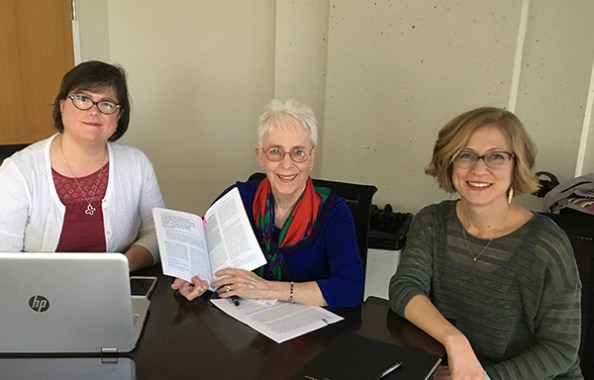
This is an example of one way that PhD students can gain experience in publishing their ideas and aid in building their Curriculum Vitae. We were fortunate that all three of us were interested in the topic and in the “expected” outcome. We hope to encourage many other investigators, students and faculty alike, to explore the phenomena of sexual health and sexual rights. In the pictures, from left to right, are Kari, Lynn, and Whitney.

Middle range theory in the making: You gotta’ stay with it and you gotta’ pass it on


Our latest featured article from the current ANS issue is titled “Middle Range Theory: A Perspective on Development and Use” by Patricia Liehr, PhD, RN and Mary Jane Smith, PhD, RN, FAAN. Both authors are long-time contributors to ANS and in this article they examine the journey of developing middle range theory that is solidly situated within nursing’s disciplinary persepective and ultimately bringing it to the interdisciplinary table. This article is available for download at no cost on the ANS website while it is featured.  Here is a message that the authors provided for ANS blog readers, followed by a short video that Dr. Liehr and her doctoral students created, talking about the nature of middle-range theory:

We are going to tell you our story as it relates to this paper. Often when we use a story path that focuses on the present…the past….and the future.

At PRESENT, we invite you to read and share your thoughts about “Middle range theory: A perspective on development

Mary Jane Smith (L) & Patricia Liehr (R)

Mary Jane Smith (L) and Patricia Liehr (R)

and use” in the current issue of ANS. We are honored to be in this retrospective issue.

Moving to PAST, we first met and engaged with each other in 1979-1980 as teacher (Smith) – student (Liehr) while Liehr was in her Masters program at Duquesne University in Pittsburgh, Pennsylvania.

During a period of about 20 years, as we began to learn more about middle range theory as a guide for practice and research, we saw the need for a state of the science manuscript. This was the impetus for the 1999 paper published in ANS “Middle range theory: Spinning research and practice to create knowledge for the new millennium.”

The 1999 paper in ANS was the impetus for our textbook, Middle Range Theory for Nursing, first published in 2003. The book was written to create a resource for scholars wishing to use middle range theory in practice and research.

The 1999 paper was also the impetus for this 2017 paper, allowing us to consider middle range theory through the lens set forth nearly 20 years ago.

And now, the FUTURE….the 4th edition of Middle Range Theory for Nursing is in the works and we continue to teach students about the usefulness of middle range theory. We are offering a short video recording of current PhD students at Florida Atlantic University, Christine E. Lynn College of Nursing who are considering the relevance of middle range theory as they immerse in developing ideas to guide their research.

The foremost recommendation in “Middle range theory: A perspective on development and use” is to “stay with the theory”. We believe that persistence and scholarly engagement over time has the potential to effectively shape disciplinary knowledge. Our story highlights and brings to life this belief. Thank you for sharing blog-time with us.

Patricia Liehr and Mary Jane Smith


Practical Discourse: Hermeneutics and the work of Janice Thompson


In our current featured article, author  Stephen M. Padgett, PhD, RN examines three papers by Janice Thompson (two of which were published in ANS) as a way to examine the importance of hermeneutic philosophy, and the importance of this line of inquiry for our discipline.  The article, titled “Practical Discourse Revisited: Hermeneutics at the Intersection of Philosophy and Nursing” and it is available at no cost while it is featured on the ANS website!  We welcome your ideas and comments, so once you read the article, come back here to let share  Dr Padgett shared this message about his work:

I would echo what Patricia Butterfield wrote in her posting about the powerful influence of ANS in my professional and intellectual formation, and my memories of it as a tangible blue and green object of veneration.  When I saw the announcement about the “retrospective” issue, I thought immediately of doing something on Jan Thompson’s work. It seemed a good opportunity to discuss the work of someone who has been incredibly important to me in my own

Stephen Padgett

scholarly journey, and (I think) under-appreciated in nursing philosophy.
I first came across her paper on “Practical Discourse” when I was in my BSN program, and I remember being just knocked over by it.  I literally carried around a photocopy of that paper for years, heavily annotated, underlined in multiple colors.  That paper both confirmed my thinking on some points, and profoundly extended it on others – I discovered a whole world of new resources (I had a similar experience a few years later when I read June Lowenberg’s paper, also  in ANS, on “Broadening the Dialogue” – both “yes, yes!” and “Huh!”).

When I was in a master’s program, and exploring in more depth the philosophical resources in the nursing literature, I found a lot of small, scattered pieces that I liked, especially in the areas of feminism, critical theory, and Continental philosophers – but also a lot of conservative, deeply entrenched, and frankly not very interesting ideas about philosophy of science.

One day I worked up the nerve to call Jan Thompson on the telephone (this was before email), and by some miracle she was actually in her office at that moment.  After I gushed and babbled for a few minutes, she said, “Well, we’re having a conference here in the fall, and there will be a lot of people I think you’d like to meet.” So she sent me a brochure, and I came out to Portland, Maine that October, and that was my first Feminist and Critical Perspectives in Nursing conference. I did in fact meet a lot of people there, and at subsequent conferences, who became incredibly important friends, teachers, and colleagues.

Re-reading these early papers of hers was an effort both to go back to some (to me) foundational texts, and to re-imagine the context in which they were written, and then also to pull those ideas forward, and to think about their significance in the context of today.  That is (not coincidentally) the central project of hermeneutics: to make a bridge between there and here, authors and readers.

Thompson is a very deliberate, very organized writer, so it was a deep pleasure to re-trace her steps, to work through her arguments again, and to reconsider them in light of later experiences and readings.  One piece of her work in particular seems of great salience today, which has to do with the duality of interpretation, what Ricouer calls faith and suspicion. A great deal of qualitative research in nursing has been hampered (to my mind) by too narrow a view of interpretation and experience. Despite the work of Lowenberg, Sandelowski, and others, we have been constrained at times by a perceived obligation to focus only on what participants say about their own experiences. This has too often resulted in work that is unfortunately shallow and bland, neither as messy nor as interesting as actual people.

A deeper understanding of the hermeneutic tradition, such as Thompson provides, gives us a way to be respectful of what people say, mindful of the dangers in disregarding that, and also open to the complexity, contradictions, and ambivalences.  As I read her, she urges us to listen carefully, and also to listen critically – to hear what people don’t say, as well as what they do. If we are to consider the taken-for-granted assumptions of others, however, we must also consider our own – to locate ourselves in the world, and to notice (as best we can) the ways those locations influence our pre-understandings – so that we can try to be more fully present with and to understand other people.

It is perhaps that sense of philosophy as a way of being in the world with other people that is most central to what I gain from Jan Thompson’s work. Philosophy in this view is fundamentally about how we live, about being in a world that is both messy and amazing, personal and political, profoundly puzzling and worth thinking about.  It is a great pleasure to take part in, and to extend to others, the continuing conversation that is nursing philosophy.