Skip to content

Posts from the ‘Journal Information’ Category

Knowledge for Nonviolent Social Change


Our featured article for the coming 2 weeks is titled “Transcendent Pluralism: A Middle-Range Theory of Nonviolent Social Transformation Through Human and Ecological Dignity” by Donna J. Perry, PhD, RN.  Dr. Perry identifies transcendent pluralism as a framework for advancing human dignity.  She further explains:

The social problems impacting health cannot adequately be addressed within the health care encounter or within traditional health care settings. Problems such as racism, social injustice and violence are rooted in the social structure and underlying culture. They must also be addressed at these levels. Nursing as a discipline has a critical role to play in the transformation of society. But to move in this direction we need to advance knowledge in domains such as peace building, social justice, human rights and environmental sustainability. Recently the United Nations released an important document, “Transforming our World: The 2030 Agenda for Sustainable Development. This document includes 17 goals for sustainable development on our plant including health, peace and equality. Nursing has a critical role to play in this transformation. But to do so we must expand the horizons of disciplinary knowledge development. The article in this journal on transcendent pluralism provides one approach toward using knowledge for social change.

This article is available for free download on the ANS website while it is featured.  I invite you to read the article and return here to share your comments.

Competencies for Nursing Care of Veterans


In our current featured article titled “Veteran Competencies for Undergraduate Nursing Education,” authors Jacqueline A. Moss, PhD, RN, FAAN; Randy L. Moore, DNP, RN and Cynthia S. Selleck, PhD, RN, FAAN present the results of their project to address veteran health concerns that arise from their military service .  The competencies they identified are: Military and Veteran Culture, Post Traumatic Stress Disorder, Amputation and Assistive Devices, Environmental/Chemical Exposures, Substance Use Disorder, Military Sexual Trauma, Traumatic Brain Injury, Suicide, Homelessness, and Serious Illness Especially at the End of Life.  The article is available for free download while it is featured on the ANS web site!

Dr. Moss has provided a narrated slide show that explains the background of their project:

Helping Veterans with PTSD


The current ANS featured article is titled “Screening for Obstructive Sleep Apnea in Veterans Seeking Treatment of Posttraumatic Stress Disorder,” authored by Lauren Forbus, BSN, RN and Ursula A. Kelly, PhD, ANP-BC, PMHNP-BC. Their article is available for free download while it is featured on the ANS website. Ms. Forbus shared this information about their work with veterans:

Our team began to take a look at obstructive sleep apnea (OSA) among veterans with posttraumatic stress disorder as a result of some unexpected findings in another project, Project Stress Less. Project stress less was developed to establish the feasibility of conducting a trauma-sensitive yoga intervention for women

Forbus

Lauren Forbus

veterans with posttraumatic stress disorder (PTSD) who experienced Military Sexual Trauma (MST). Because sleep was a primary outcome of this study, OSA was initially an exclusion criterion. We assessed for presence of OSA through medical chart review and self-report during phone screening; and we assessed for risk for OSA using a questionnaire in our phone screening process. The unexpected finding in the screening process for this study was that 14.6% of those screened had been diagnosed with OSA and 63.2% were at high risk for OSA – both numbers that are greater than in the general population.

As we moved forward with Project Stress Less, we simultaneously began to think about implementing a larger OSA risk screening study into an outpatient VA PTSD clinic to get a bigger snapshot of what this risk for OSA looks like in the Veteran population. The idea was eventually implemented as the study described in our published article. What we found was consistent with our initial findings in Project Stress Less – a great majority of veterans were screening at high risk for OSA, however, only a small portion of them had documentation of a formal evaluation for OSA in their medical records.

These findings were significant enough that our research team proposed and is in the process of implementing a clinical practice improvement in collaboration with our VA colleagues in the PTSD clinic. The common goal is to develop screening, referral and follow up processes for Veterans who screen at high risk for OSA. Because of this supportive relationship with our VA colleagues, we have had the unique opportunity to quickly turn our research findings into meaningful practice change. So far we have inserted an OSA screening tool into the clinic’s intake packet, which is currently used for clinical purposes at intake as well as for program evaluation. We are also working on developing a follow up plan for those who screen at high risk. As we move forward with this practice change in the short term, we are keeping our eye on the long-term goal of conducting further research. Our hope is that we can gain new insights to help alleviate some of the sleep complaints that often times plague our Veterans with PTSD. 

Share your comments here to engage in discussion about these important issues!

Military Family Connections


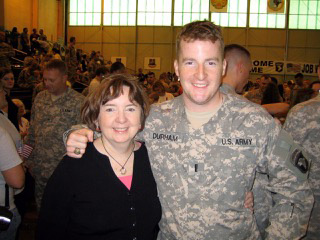
In our current ANS featured article, author Susan W. Durham, PhD reports her qualitative study of communication challenges experienced by service members in staying connected with their families.  Dr Durham shared this background information about her work for ANS readers:

Coming from an early career in the US Army Nurse Corps and as a parent of an Infantry officer who was deployed to both Iraq aDurham.jpgnd Afghanistan four times over the course of seven years, I was inspired to study the experiences of deployed service members in their attempt to stay connected to their families and loved ones while deployed in a combat environment. Doing these interviews and listening to the stories has been one of the greatest privileges of my life. Most of the
qualitative studies that looked at communication issues and deployment studied the experiences of family members and the service members’ voices were not being heard.

The benefit of content analysis, a form of qualitative research, doesn’t generally result in hard data or a bar graph. Some scholars even have difficulty understanding the value of this type of research and may ask, “Where do interviews and observations like these get us?” The short answer is that qualitative data provides context and meaning.

These interviews not only tell unique stories about individual service members’ experiences but also offer a collective understanding of common communication challenges for deployed individuals. Hearing and analyzing their stories and combining the results into a combined narrative provided multiple perspectives that no single participant could have related in totality. The interviews also accomplished what survey questions could not because every participant was able to express his or her personal, detailed experiences and observations of the phenomenon being studied. The description of the participants’ experiences enables the reader to understand the service members’ perspectives, perceptions, and reactions known only to them. Also, the results offered a collective viewpoint that ultimately will provide quantitative researchers with variables, issues, and hypotheses for future inquiry about communication issues experienced during deployment to a combat environment.

You can download a copy of this article at no cost while it is featured on the ANS web site  – I urge you to do so now, and then return here to join me in expressing appreciation for the insights that Dr. Durham’s study provides.

Updated and Revised ANS Author’s Guide


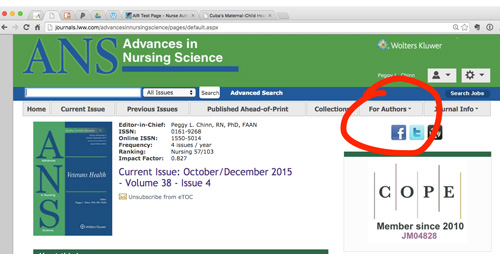
We have recently made significant changes to the ANS Author’s Guide, adding material related to authorship, social media, and open access publishing in ANS – and much more!  ANS follows widely accepted standards for publishing, so you might find this resource helpful regardless of how, when or where you plan to submit your work for publication.  You can access this information on the ANS web site – right from the main “For Authors” menu.  Below is the Index so you can see all the topics covered, and you can even click on a topic to go directly to that section in the Guide!

For-authors.jpg

Authorship


Unless you are preparing a manuscript all alone with absolutely no other person involved in any way, you are likely faced with the challenges involved in deciding who actually qualifies as an author, and once that decision is made, deciding whose name should be first, second, third and beyond.  The first and vitally important guideline for this process is this: early discussion and open negotiation among all parties involved.  This discussion can be initiated by any individual involved in a project – and hopefully that person is already familiar with the resources presented here as guidelines for the discussion.

This is no simple challenge.  In fact, matters of authorship are the most common cases presented for discussion by COPE (Committee on Publication Ethics).  Their excellent discussion paper on Authorship should be at the top of your reading, and re-reading list every time you embark on a new project!  When you initiate an early discussion with your collaborators who might also become authors, if you start with a review of the widely accepted guidelines for authorship described here, you by-pass, or at least lessen the temptation to get involved in arguments and disagreements based purely on personal preferences and motivations.

For ANS, we subscribe to the guidelines for authorship provided by ICMJE (International Committee of Medical Journal Editors), which require that anyone who is included as an author on a manuscript must meet four essential criteria:

  1. Substantial contributions to the conception or design of the work; or the acquisition, analysis, or interpretation of data for the work; AND
  2. Drafting the work or revising it critically for important intellectual content; AND
  3. Final approval of the version to be published; AND
  4. Agreement to be accountable for all aspects of the work in ensuring that questions related to the accuracy or integrity of any part of the work are appropriately investigated and resolved.

During the submission process for ANS, all authors must confirm that they meet these four criteria, and soon, you will also be required to include a statement for each author that describes the specific contributions that they have made to the work (criteria #1).  The fact remains that there are typically people who have made a contribution of some type to the conception or design of the work, but have not participated in all of criteria 2, 3 or 4; thus they do not qualify as an author, but they should be acknowledged as non-author contributors in the “acknowledgements” that are published with the article.

The matter of the order in which authors’ names appear is even more difficult to determine. The earlier you can settle this matter, the better for all concerned.  Further, whatever the decision, you will have a much more comfortable working relationship throughout the entire process if everyone involved is fully “on board” with the order in which authors’ names appear.  You can base this decision on the relative contributions of each person, or, if all contributions are roughly equal, you can use an alphabetical or reverse-alphabetical order.

There is a specific situation that many ANS authors face – that of the role of the dissertation or thesis committee members who have worked with a student who ultimately is expected to produce publishable manuscripts based on the scholarly project required for the degree.  The ANS editorial and publishing team concur with the recommendations that have emerged from ICMJE and COPE – faculty advisors do not qualify for authorship based on their advisory role alone. Even though it is typically the case that faculty advisors make significant contributions to the development of the dissertation project, and in turn the content that emerges in a publishable article, faculty advisors rarely meet all of the criteria 2, 3 and 4 above.  Therefore they should be acknowledged for their contribution as an advisor to the project required for the degree, but not as authors.  Of course, in the event that faculty advisors do actively participate and meet all four criteria, they should be authors. However, in my opinion, the student (or former student), as the sole author of the dissertation or thesis, would typically be named as the first author based on their relative investment in the project.

I welcome your comments and responses related to this important issue!  Leave your ideas below – I will respond!

Future Issue Topics


You may have noticed a shift that is gradually emerging in ANS – the “mix” of articles, some of which focus on an issue topic, and some of which represent a wide range of nursing scholarship that have been submitted as “ANS General Topic” articles.  The ultimate “profile” for each issue depends on the response that our planned issue topics elicits!  Our issue topics have been an important ANS feature, calling forth creative and important works that have influenced the emergence of nursing’s disciplinary focus.  Even though it is time to shift to a new model, we will continue to invite articles that focus on a specific topic.  Here are the topics we have planned for the forthcoming issues:

Women & Girls
Vol 39:2 –   June 2016
Manuscript Due Date: October 15, 2015

In 2011, the United Nations declared October 11th an annual “International Day of the Girl Child.” We are dedicating the mid-year 2016 issue of ANS in anticipation of the October 2016 international observance focusing on girls. We seek manuscripts that address nursing perspectives on health care for girls and women, their families and communities. We welcome research reports that provide evidence for nursing practice, theoretical and philosophic perspectives, or methodologic issues related to investigating health issues and nursing concerns for women and girls. We particularly welcome manuscripts with an international focus.

Palliative Care
Vol 39:3 –   September 2016
Manuscript Due Date: January 15, 2016

All health care providers encounter situations that call for palliative care, but nurses are at the center of care when palliative care is the approach that is agreed to be the best choice. This issue will focus on all aspects of nursing knowledge that influence the decisions and the approaches that shape palliative care. We welcome manuscripts containing research reports that provide evidence for practice, theoretical and philosophic perspectives, or methodologies that are well suited to this area of inquiry.

Toxic Stress
Vol 39:4 – December 2016
Manuscript Due Date: April 15, 2016

Toxic stress, unlike positive or tolerable stress, can result in life-long health challenges. For this issue of ANS we seek manuscripts that focus on the contributions that nurses are making to understanding the dynamics of toxic stress, and nursing approaches that demonstrate effective outcomes for children and adults suffering the effects of toxic stress. Articles that provide research outcomes, theoretic and philosophic constructions, practice models, or educational programs related to toxic stress are welcome. Implications for the development of nursing knowledge must be emphasized.

ANS Retrospective
Vol 40:1 – March 2017
Manuscript Due Date: July 15, 2016

This issue of ANS marks the beginning of the 40th year since ANS first appeared in print! Throughout the journal’s history, we have featured issue topics that focus on “Critique and Replication” – calling for informative and cutting-edge scholarship that builds on previously published work in ANS. For this issue of ANS we invite the submission of manuscripts that follow our “Critique and Replication” tradition. Manuscripts can take any form of scholarship, such as critical reviews of past ANS publications, data-based research based on prior reports found in ANS, or qualitative explorations that extend ideas addressed in past ANS articles. We especially welcome manuscripts that challenge prior assumptions and that open new perspectives that contribute to the development of nursing knowledge.

Family & Community Health
Vol 40:2 – June 2017
Manuscript Due Date: October 15, 2016

For this issue of ANS we seek articles that embrace the integral nature of family and community health, particularly in the context of changing family compositions and geographic location patterns. We are interested in exploring, for example, factors such as urbanization, adoption, surrogacy, socio-economic and/or racial segregation, and ideologic polarization. Articles must reflect scholarly merit and a clear focus on nursing knowledge development. We welcome all forms of scholarship, including qualitative or quantitative research, philosophic or theoretic constructions, critical integrative reviews, and models developed to guide practice.

ANS General Topic
Manuscripts considered any time

Manuscripts submitted as “ANS General Topic” are expected to address the purposes of ANS, which are to contribute to the development of nursing science and to promote the application of emerging theories and research findings to practice. We expect high scholarly merit, and encourage manuscripts that challenge prior assumptions and that open new perspectives that contribute to the development of nursing knowledge.


Future Issue Topics Update!


One of the hallmarks of ANS has always been our future issue topics, calling forth a collection of current scholarly articles that address a particular theme or topic.  While the topics form a focus, they also embrace a wide range of scholarship, so in each issue you are likely to find something that introduces a new idea or challenges “old” ideas!  Recently we added a feature we are calling “ANS General Topic” to accommodate cutting-edge scholarship that is not quite fitting for our issue topics.  Still, there is a strong interest in our topics, so we are continuing to encourage scholars to watch for topics that are well suited to their work!  Here are the topics that are currently on the schedule, with links to the descriptions on the ANS web site:

ANS General Topic
Submissions any time

39:1 – Technologies, Nursing & Health – March 2016
Manuscript Due Date – July 15, 2015

39:2 – Women & Girls – June 2016
Manuscript Due Date – October 15, 2015

39:3 – Palliative Care – September 2016
Manuscript Due Date – January 15, 2016

39:4 – Toxic Stress – December 2016
Manuscript Due Date – April 15, 2016

Nursing Models for the Future: Acknowledging the Political Nature of Nursing


Adeline Falk-Rafael, PhD, RN, FAAN in her guest editorial for the current issue of ANS makes a strong case for nursing models that ground practice in our own disciplinary knowledge, and makes nursing work visible and credible.  Dr. Falk-Rafael serves as a member of the ANS Advisory Board, and is a renowned nurse author/scholar whose work focuses on critical caring and social justice. She has shared these reflections on the message conveyed in her guest editorial (available here):

Version 2

Adeline Falk-Rafael

I first learned to be a nurse in a hospital “training” program in the early 1960s. During that time, I learned what nursing was in relation to medicine – what nursing care was in the context of specific medical diagnoses and treatments. Likewise, the relatively minimal attention to health promotion focused almost entirely on disease prevention. A substantial amount of the content of many of the program’s courses was delivered in the form of a physician’s lecture. Ethics was medical ethics and taught by the hospital’s priest. The nursing scope of practice was defined by employers as largely an ancillary medical service that also had some usefulness as a supplementary housekeeping service (cleaning linen and utility rooms and carbolizing the beds of discharged patients were required duties) as well as providing cheap labor in the guise of an educational experience through rotations that including several weeks of making and sterilizing infant formulas and filling individual dietary requests through short-order cooking. Little wonder that as a Registered Nurse, I had difficulty articulating what nursing was, let alone what nurses knew!

While much has changed, thankfully, in the education of nurses, I do not find that nurses practicing at point of service are much more proficient today in clearly articulating the valuable and often unique contribution they make to the health and healing of patients and populations. Because most nurses continue to be employees in bureaucratic organizations and/or large corporate structures, their scope of practice typically remains heavily influenced by prevailing medical and business models.

Nurses are still, in the words of Susan Reverby1, “ordered to care in a society that refuses to value caring.” For this reason, I am a strong apologist for nursing models. I believe they have a strong potential to strengthen nurses’ sense of identity as professionals who make a complimentary but unique contribution to health and health care. As such, nursing models can be tools of empowerment by grounding nurses solidly in disciplinary knowledge and naming aspects of nursing work, thus giving nurses language and credibility to make their work more visible. Grand theories help shape our values and belief systems about what caring for human beings means. Mid-range and micro theories provide more focused approaches to the provision of care that can and must be tested through research and linked to patient/health outcomes. To be useful, nursing models must be seen to be relevant and useful to nurses at point-of-practice, for example, as “apps” that can provide a quick resource when needed. But nursing models of the future must also have a critical perspective. They must serve as tools of resistance by assisting nurses to examine and challenge the larger societal and political forces that advantage a few while disadvantaging many others, whether those others are patients or nurses.

1Reverby S. Ordered to Care: The Dilemma of American Nursing, 1850-1945. New York, NY: Cambridge University Press: 1987.

What Would Florence Nightingale Do (WWFND)?: Nightingale and 21st Century Health Care Reform


From the Bates Center Blog:

What Would Florence Nightingale Do (WWFND)?: Nightingale and 21st Century Health Care Reform