Skip to content

Posts from the ‘Journal Information’ Category

Transgender Patient Care


Our current featured article is by Rebecca M. Carabez, PhD, RN ;Michele J. Eliason, PhD and Marty Martinson, DrPH title “Nurses’ Knowledge About Transgender Patient Care: A Qualitative Study.” This article is available for download at no cost while it is featured on the ANS website!  Dr. Eliason sent this message about her personal experiences embarking on a career focused on LGBTQ health:

In 1988, I started my first study of LGBTQ issues in nursing, and I was NERVOUS! I had escaped a homophobic healthcare clinic setting for the supposedly academic freedom environment of the university the year before, but they had hired me as a developmental psych person. Nothing on my vita indicated an interest in LGBTQ issues at that

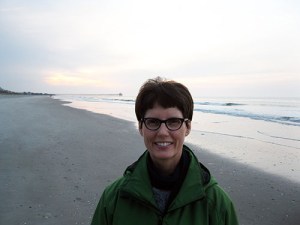
Mickey Eliason

Mickey Eliason

point, nor had these issues every been discussed in my formal education, except for an off-handed comment about homosexuality being a mental disorder in one psychiatric nursing course I took.

I talked to my research mentor at the time, who told me, “It’s all well and good that you do this type of research, but just make sure that you get 2 or 3 publications in legitimate areas for every one you do on this topic.” I did that, but even then, had some challenges when I came up for tenure.  I am glad to report that things have shifted in nursing since then, and articles on LGBTQ issues are becoming much more widespread. Now people are able to say LGBTQ and now what it means.  Even Donald Trump, halting and awkward as it was, uttered the initials at the Republican National Convention and called for equal rights (it might be the only sensible thing he has ever said on the campaign trail). We have made progress on LGB issues, but the growing edge of our movement in the past few years has been related to transgender issues.

In regards to this particular study, on nurses’ knowledge of transgender health care needs, our findings demonstrated that nurses’ willingness to work with diverse patients is laudable, but their lack of knowledge and fund of misinformation is quite alarming. This study was conducted in the San Francisco Bay Area, where presumably, nurses have much more exposure to LGBTQ issues than in many other places, but even here, we encountered negative attitudes and nurses saying that they never learned anything about this population in their educational programs or in continuing education.

This study was part of a much larger project on LGBTQ issues more broadly initiated by Rebecca Carabez, and a team

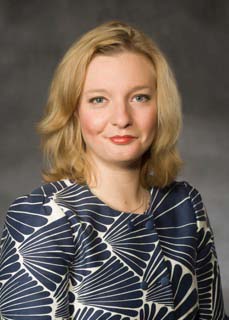
Rebecca Carabez

Rebecca Carabez

of nursing students worked on the project.  One identified as transgender, and we watched as they struggled with finding employment when the student’s appearance did not match their gender on legal documents, and who became more depressed as time wore on without meaningful employment. Transphobia has material consequences on individual’s daily lives—without adequate employment, transgender people are likely to live in poverty and suffer all the negative consequences of that poverty, from lack of any regular source of healthcare (leading to getting needed hormones and other treatments on the street), to “illegitimate” employment in the drug or sex trades, homelessness, and other serious issues.  We found in our study that many nurses laughed when talking about transgender issues—that nervous kind of laugh that means, “I’m really uncomfortable with this question.” They often gave long, rambling, circuitous answers to the questions that indicated that they really had no idea how to answer. Few were overtly negative about transgender patients, but imagine what it would be like for a transgender patient to try to communicate with a nurse who was that uncomfortable.

Marty Martinson

Marty Martinson

My co-authors and I had long discussions about gender.  We all identify as sexual minority women, but none of us as transgender or genderqueer. We tried to imagine ways to break down the gender binary that has been in operation in our own lives but like most others, we are somewhat entrenched in that system and it is hard to imagine life without the breaking down of people into two genders. It requires a radical transformation in thinking and in language itself. We firmly believe that this transformation is necessary, not just to improve services for transgender patients, but for all patient care, because the gender binary and gender stereotypes have hurt us all.

We hoped that our article might start some conversations among nurses about how to treat their transgender clients/patients more respectfully, but even more, about how to have hard conversations about the nature of gender and sexuality and ultimately, how we treat each other.  I am gratified that today, unlike the late 1980s when I started writing about LGBTQ issues in nursing, that there is now a willingness to publish articles on these topics and to discuss how to integrate them into  nursing education. Talking and writing about LGBTQ issues is a first step, but I challenge you to read the article and ask yourself, “What can I do personally to effect change for transgender patients in my nursing setting?”


Parents as Partners in the NICU


The latest featured article in the current issue of ANS is by Amy L. D’Agata, PhD, MS, RN and Jacqueline M. McGrath, PhD, RN, FNAP, FAAN, titled “A Framework of Complex Adaptive Systems Parents As Partners in the Neonatal Intensive Care Unit.”  The article is available for download at no cost while it is featured.  Dr. D’Agata sent this message for ANS readers, portraying the important interplay of her clinical experience and academic science to create new insights and new practices to improve care:

Amy pic

Amy D’Agata

I am honored to have my paper A Framework of Complex Adaptive Systems: Parents as Partners in the Neonatal Intensive Care Unit featured as an editor pick in Advances in Nursing Science.  This paper highlights complexities within the NICU, particularly around relationships and environments of care that may contribute to infant neurodevelopmental outcomes.  It is hoped that by acknowledging challenging factors of interpersonal communication, individual differences in practice and acute care environments, we may begin to redesign the current NICU model of care into a model that better promotes neurodevelopment.  Importantly, reframing how we think about parents and their participation in the care of their infant.

As a novice neonatal intensive care nurse, I loved the excitement the NICU provided, both from a technical and interpersonal perspective.  Through advances in technology and medicine, precious newborn lives were saved and family dreams were realized.  Supporting families as they went through a sea of emotions, learned who their baby was as a person and became a strong advocate for their baby.  I always loved working with families and helping them through this process, all while I was caring for their baby.  This is how we practice in the NICU, right?  By and large, nurses and physicians care for patients while families stand by and watch, right?  This is what has to happen in order to save lives, right?  We know best, right?  This is basically how we have always been trained, but now I wonder if there isn’t a different and better way.

McGrath pic

Jacqueline McGrath

After 14 years of professional nursing practice, I entered doctoral studies.  Early in the program I felt as though I was floundering because my research interests were all over the map.  I knew my population of interest would be NICU infants, but I wanted to fix lots of different issues.  Most of which were medical issues.  When potential ideas around developmental care were suggested by my advisor (and co-author) I quickly pooh-poohed them.  Developmental care was a fundamental component of NICU care, but not in my wheelhouse to study.

One day my doctoral advisor shared an article she had co-authored, Epigenetics and Family-Centered Developmental Care for the Preterm Infant. At the time I knew nothing about epigenetics so I was immediately curious.  After reading this paper I literally experienced a professional paradigm shift.  Swiftly brought into focus was the idea that all of our daily experiences impact us.  While this may not seem like a game-changing statement, the fact that seemingly insignificant experiences may trigger molecular changes was something I never considered.  This certainly wasn’t something I considered for our patients.

I have always passionately believed that the work we do in the NICU is important to an infant’s future, but as a nurse, I had practiced with the thought of meeting the necessary medical needs so that infants may one day leave the NICU with their family.  I didn’t intentionally practice with the idea that everything I did in the NICU, every single day, may leave a permanent molecular mark or imprint that may shape who that person becomes.  If I had understood the potential magnitude of my influence, I would have most certainly practiced differently early in my career.

Back to doctoral studies, following lots and lots of reading, my research program began to take shape.  I read volumes about early life experience, epigenetics, genetics, molecular experiences that ‘get under our skin’ and neurodevelopment.  During my academic studies I also continued practicing as a staff nurse in the NICU.  This was a time in which I felt a lot of turmoil as a caregiver, because of what I was learning academically and what I was observing and taking part in clinically, sometimes I felt such internal conflict.  To get through I need to reconcile that what I was learning from basic science was ahead of where we were clinically.

As a conceptual model and framework of the NICU infant experience, Infant Medical Trauma in the NICU, broadly reflects the adverse exposures that occur within the NICU doors and how they may contribute to long-term outcomes (see figure below).  Designing this model was the foundational to my dissertation work for exploring the relationships between NICU stress, genotype of stress associated gene FKBP5 and neurodevelopmental outcomes.  The goal of my dissertation study was to understand if some infants may be genetically more vulnerable to stress experiences in the NICU.

Understanding that some infants may be predisposed to stress sensitivity, and the dynamics of the NICU, parents may be ideally positioned for the role of co-caregiver.  Given the typical parent’s desire to learn anything that helps their infant, their sensitivity to their infant’s needs and awareness of the role they must fulfill once they leave the NICU, why do we place parents on the sideline while we care for their infant?   Are parents incapable of learning how to assess their infant or perform caregiving tasks beyond diaper changes, temperature measurement and feeding?  We expect them to be fully capable once we indicate discharge is eminent, why not earlier in the process?

If we are to improve neurodevelopmental outcomes in the NICU, we may need to critically assess how we practice and consider alternative models.  As care providers, our goal is to save lives and promote health.  While not intentionally inflicted, there are adverse experiences that result from that goal.  Parents are the constants in their infant’s life and the people who will care for their infant beyond the NICU.  In light of this we must begin to see parents as partners in every step of the NICU, including in the provision of care.

Infant Medical Trauma_final rev2 copy


  1. Samra, H., McGrath, J. M., Wehbe, M., & Clapper, J. (2012). Epigenetics and family centered developmental care of the preterm infant. Advances in Neonatal Care, 12(5s), s2-s9

Are You Subscribed to ANS Published-Ahead-of-Print Alerts?


If not, visit the ANS Published-Ahead-of-Print page and sign up!  We are now posting articles online as they are available, providing ANS readers the very latest content leading scholarly discourse in nursing!  These papers can be cited using the date of access and the unique DOI number. Any final changes in manuscripts will be made at the time of print publication and will be reflected in the final electronic version of the issue. Here is the line-up just posted today!

The “As-If” World of Nursing Practice: Nurses, Marketing, and Decision Making.
Grundy, Quinn; Malone, Ruth E.

Returning to the Profession’s Roots: Social Justice in Nursing Education for the 21st Century.
Thurman, Whitney; Pfitzinger-Lippe, Megan

Development of Hermes, a New Person-Centered Assessment Tool in Nursing Rehabilitation, Through Action Research.
Thórarinsdóttir, Kristín; Björnsdóttir, Kristín; Kristjánsson, Kristján

Expert Nurses’ Perceptions of the Relevance of Carper’s Patterns of Knowing to Junior Nurses.
Terry, Louise; Carr, Graham; Curzio, Joan

Efficacy of the Mantram Repetition Program for Insomnia in Veterans With Posttraumatic Stress Disorder: A Naturalistic Study.
Beck, Danielle; Cosco Holt, Lindsay; Burkard, Joseph; Andrews, Taylor; Liu, Lin; Heppner, Pia; Bormann, Jill E.

Decision Making Among Older Adults at the End of Life: A Theoretical Perspective.
Romo, Rafael D.; Dawson-Rose, Carol S.; Mayo, Ann M.; Wallhagen, Margaret I.

What End-of-Life Care Needs Now: An Emerging Praxis of the Sacred and Subtle.
Rosa, William; Estes, Tarron

Facing Death: A Critical Analysis of Advance Care Planning in the United States.
Sullivan, Suzanne S.; Dickerson, Suzanne S.

An Analysis and Evaluation of the Theory of Unpleasant Symptoms.
Lee, Seung Eun; Vincent, Catherine; Finnegan, Lorna

Preview of upcoming issue – ANS 39:3


In a couple of weeks, the Fall issue of ANS, Vol 39 No 3 will be released!  This is our first issue that features articles on a wide range of topics, while maintaining the ANS tradition of articles that lead cutting-edge discourses on issues of critical importance for nursing and healthcare.  Here is a preview of the Table of Contents!

Marginalization: A revisitation with integration of scholarship on globalization, intersectionality, privilege, microaggressions and implicit biases
– Joanne M. Hall, PhD, RN, FAAN; Kelly Carlson, PhD, APRN-BC

Social Justice As a Lens for Understanding Workplace Mistreatment
– Christine Marie Moffa, MS; Joy Longo, PhD

Mixed Methods Research in the Discipline of Nursing
– Cheryl Tatano Beck, DNSc,CNM,FAAN; Lisa Harrison, MSN, PMHNP

Using Theory Integration to Explore Complex Health Problems
– Brenna Leda Quinn, PhD, RN, NCSN

A Framework of Complex Adaptive Systems: Parents As Partners in the NICU
– Amy L. D’Agata, PhD, MS, RN; Jacqueline McGrath, PhD, RN, FNAP, FAAN

Nurses’ knowledge about transgender patient care: A qualitative study
– Rebecca M Carabez, PhD, RN; Michele J. Eliason, Ph.D.; Marty Martinson, PhD

Teen Mothers’ experience of Intimate Partner Violence; a metasynthesis.
– Sarah Bekaert, MSc; Lee SmithBattle, PhD

Interpretation of Hospital Nurse Fatigue using Latent Profile Analysis
– Diane Ash Drake, Ph.D., R.N.; Linsey M. Barker Steege, PhD

Internet Recruitment of Asian American Breast Cancer Survivors
– Eun-Ok Im, PhD, MPH, RN, CNS, FAAN; Yaelim Lee, PhD; Xiaopeng Ji, MSN; Jingwen Zhang, MS; Sangmi Kim, MPH; Eunice Chee, BSE; Wonshik Chee, PhD; Hsiu-Min Tsai, PhD, FAAN; Masakazu Nishigaki, PhD; Seon Ae Yeo; Marilyn Shapira; Jun Mao, MD, MSCE

Development of Hermes, a new person-centered assessment tool in nursing rehabilitation, through action research
– Kristin Thorarinsdottir, RN, BScN, MScN; Kristen Bjornsdattir, RN, PhD; Kristjin Kristjinsson, PhD

Clinical Growth: An Evolutionary Concept Analysis
– Jessica Barkimer, MSN

Understanding Nursing Influence: Development of the Adams Influence Model using practice, research, and theory
– Jeffrey M Adams, PhD, RN, NEA-BC; Sudha Natarajan, PhD, RN

Health Needs of Young Women


The Health Needs of Young Women: Applying a Feminist Philosophical Lens to Nursing Science and Practice” by Candace W. Burton, PhD, RN, AFN-BC, AGN-BC, FNAP is now featured on the ANS website. In this article, Dr. Burton calls for philoophic underpinnings that strenghthen nursing’s unique identity and contributions to the care of adolescent and young women.  The article will be available at not cost while it is featured, and we encourage you to contribute your responses and participate in discussion of these ideas!

Dr. Burton shared these reflections about her work for ANS readers:

It is a great pleasure to have the ANS blog feature this work on the philosophical underpinnings of research in young women’s health. The analysis reported here represents the very foundation of my own program of research into the dating abuse

BurtonPhoto3

Candace Burton

experiences of adolescent and young adult women. It is also a companion piece to my work on the theoretical foundations of this work “Relationships and betrayal among young women: theoretical perspectives on adolescent dating abuse” (Burton, Halpern-Felsher, Rankin, Rehm, & Humphreys, 2011).

I am especially pleased to have this article featured, because it helps to address some of the issues I have encountered as an instructor at the doctoral level in nursing. There is a great deal to learn in the process of becoming a nurse scientist and scholar in the 21st century, and the plethora of methodological and foundational information can be overwhelming to doctoral students. As a result, there is often little time or attention given to developing the self-concept of the scientist. Placing one’s area of interest and scholarly focus in the context of the philosophy of science and the theoretical lexicon is critical to both understanding the state of the science and to developing a scientific identity. For those scholars who aspire to a career in nursing science, this is fundamental to recognizing oneself as a part of the scientific community and to developing standing as a independent researcher.

The application of philosophical analysis within nursing science represents one of the most important functions nurses perform: the act of translation. At the bedside, it is often nurses who are called to translate care orders, lab results, and prescriptions into the best possible restoration of health and function to a patient. In our science, we also translate what we do clinically into the generation of evidence. Integrating philosophical contextualization of that science into our work as scholars creates a translational bridge between what we do and why we do it. I believe that this is often what we miss in educating ourselves as researchers; we may be inclined to gloss over the historical roots of research and focus instead on its application because that is what we gravitate toward as clinicians.

Nursing science is unique and therefore deserving of a unique place in the scientific repository. Our science, perhaps more than any other, combines multiple means of data gathering with direct experience and measurement.

Identifying the philosophical roots of our endeavors helps to cement the distinctive contributions of nursing science into the continuum of discovery. In developing this paper, I intended to both demonstrate the act of performing such an analysis and to illustrate the value of recognizing the many ways in which nursing science is a part of the larger scientific world. My area of interest is sparsely peopled, and I understand the challenges of feeling as though one is wandering without guidance through the literature! I hope that the publication of this work will make it a bit easier for those who are also interested in the health of young women and in the philosophy of science to discover where we have been and where we are headed.

References

Burton, C. W., Halpern-Felsher, B., Rankin, S. H., Rehm, R. S., & Humphreys, J. C. (2011). Relationships and betrayal among young women: theoretical perspectives on adolescent dating abuse. Journal of Advanced Nursing, 67(6), 1393-1405. doi: 10.1111/j.1365-2648.2010.05565.x

ANS Celebrates Nurses Week with Latest Issue!


The latest issue of Advances in Nursing Science has just been released, and to celebrate National Nurses Week all articles will be available at no cost!  This issue contains nine thought-provoking articles that address the needs of women39-2 Cover and girls internationally, plus three “General Topic” articles that have a bearing on women’s experience world-wide. Over the next 12 weeks, we will feature each of the articles on this blog, including messages from the authors and the opportunity to engage in online discussion about their work.  Follow this blog to get real-time notifications of each article’s feature delivered to your email! Here is the Table of Contents!

Women & Girls

Scheer, Victoria L.; Stevens, Patricia E.; Mkandawire-Valhmu, Lucy
Burton, Candace W.
Cleveland, Lisa M.; Bonugli, Rebecca J.; McGlothen, Kelly S.

Chulach, Teresa; Gagnon, Marilou; Holmes, Dave

Werunga, Jane; Reimer-Kirkham, Sheryl; Ewashen, Carol
Garcia, Daisy S.
Whitty-Rogers, Joanne; Caine, Vera; Cameron, Brenda
Dole, Debora M.; Shambley-Ebron, Donna
Wright, Michelle L.; Starkweather, Angela R.; York, Timothy P.

General Topic Articles

Halstead, Valerie; De Santis, Joseph; Williams, Jessica
Spies, Lori A.
Lee, Youngjin; Seomun, GyeongAe

Constructivist Grounded Theory Method


Our current featured article provides a useful and interesting explanation of grounded theory methods directed to the needs of novice investigators, but can also be a useful resource for further discussion and development of these methods!  The artilce is authored by Tracey M. Giles, PhD, MNg, MACN, GradCertHDN, RN; Sheryl de Lacey, PhD, MA, BAppSc, RN; and Eimear Muir-Cochrane, PhD, FACMHN, MNS, BSc (Hons) RN, Grad Dip Adult Ed, and is titled Coding, Constant Comparisons, and Core Categories: A Worked Example for Novice Constructivist Grounded Theorists.  I encourage ANS readers to download the article while it is available at no charge, and return here to add your comments and perspectives on this very important topic!  Here is a message from the authors about their work:

It is a pleasure to have our article featured as the editor’s featured article on the Advances in Nursing Science blog. This is the second of two methodological articles I have written under the guidance of my PhD supervisors.

Dr. Tracey Giles

Dr. Tracey Giles

The first article, also published in ANS, examined the timing of the literature review in grounded theory research (Giles, King & De Lacey 2013). This second article “Coding, Constant Comparisons, and Core Categories, A Worked Example for Novice Constructivist Grounded Theorists” further contributes to the literature around grounded theory methods.

Grounded Theory Method is one of the most widely used qualitative research methodologies across a variety of disciplines, particularly nursing. Yet many researchers who claim to be using Grounded Theory Method fail to apply the core tenets of this methodology/methods package, possibly due to an inadequate understanding of the approach.

When I began my PhD research, I had not used grounded theory previously and as such I was eager to find practical

Professor Sheryl de Lacey

Professor Sheryl de Lacey

examples of its key methods and processes to guide me. However, I soon noted that while Grounded Theory Method has been described extensively in the literature, there are very few worked examples that track the development of initial and focused codes, through to the construction of tentative and major categories, and emergence of the core category.

Many experts believe grounded theory methods are difficult to explain in writing because of the multitude of different methods used and because the analytical activity required is a primarily cerebral process. Much of the advice I gained from the multitude of texts and articles I accessed was that the best way to learn grounded theory is to do it. And from personal experience this is certainly true. However, learning can be enhanced through the use of practical, worked examples.

I wrote this paper to help elucidate analysis, category development and to offer novice grounded theory researchers a

Professor Eimear Muir-Cochrane

Professor Eimear Muir-Cochrane

step-by-step example of how a grounded theory develops and is systematically constructed. Novice grounded theorist who are interested in a more detailed example of grounded theory can access my PhD thesis from Flinders University here.

Thank you for the opportunity to share our ideas about GTM research. We look forward to your thoughts about this worked example.

Advancing Nursing Informatics


Our current featured article, available at no cost while it is featured, addresses a theoretical model that advances the independent development of nursing informatics.  The article is titled “The Evolution of Data-Information-Knowledge-Wisdom in Nursing Informatics.” by Charlene Ronquillo, MSN, RN; Leanne M. Currie, PhD, RN; and Paddy Rodney, PhD, RN. Here is their message about this important work  for ANS readers:

Setting out to question one of the foundational theories in nursing informatics was a task we approached with much caution, care and respect, in the paper we have contributed to this journal. The theoretical framework we are

Charlene Ronquillo

Charlene Ronquillo

referring to is the data-information-knowledge-wisdom framework, often referred to as DIKW. Exploration of DIKW brought us on a very interesting journey: We delved into the literature from the early years when nursing informatics was first beginning to be established as a field of inquiry and we ended up exploring fields that included management information science, library sciences, and geographical sciences. DIKW is arguably one of the first concepts described as a unique feature of nursing informatics by Graves and Corcoran in their seminal paper, The Study of Nursing Informatics, published in 1989. DIKW might have faded into the past had it not been for the work that Nelson, and then Nelson and Staggers

Leanne M. Currie

Leanne M. Currie

added to the exploration and articulation of the framework. We feel privileged to be able to be able to build on the insights put forth by Graves and Corcoran almost thirty years ago, and advanced by Nelson and Staggers.

What began as a curiosity-driven exploration of the DIKW as part of a doctoral philosophy course in 2013 turned into a full investigation of this theoretical framework. Our investigation was spurred by the finding that beyond nursing informatics, many other fields of study mentioned, used, and critiqued DIKW. In the figure below, for instance, we provide a visual depiction of DIKW in the fields of nursing informatics (as a series of overlapping circles) and DIKW in computer science, management information systems, and library

Paddy Rodney

Paddy Rodney

sciences (as a pyramid). We found the opportunity to contribute to the ongoing evolution of DIKW by incorporating these ‘non-nursing’ perspectives to be a possible way forward.

Picture1

This drawing presents a side-by-side comparison of the DIKW models as depicted in nursing informatics (left) and computer science, management information systems, and library sciences (right) illustrate the common attributes of DIKW visualizations: consolidation of power, linear and positive growth, and an implicit assignment of value to concepts (i.e., “building” toward to the pinnacle of wisdom, which is the most important).

An important first step in our inquiry was gaining an understanding around what purpose DIKW served and the intention(s) around its introduction as a central aspect of nursing informatics. As is reflected in our paper, we continue to emphasize the crucial role and contributions of DIKW towards one of the key goals of nursing informatics–namely, to continue nursing’s historical efforts to make nursing work visible and “counted” in health systems by leveraging the opportunities presented by information technologies and the increasingly digitised world. The challenge, of course, as it has always been, is to develop methods that capture aspects of the complexity of nursing that cannot be easily measured or quantified.

We consider, in this paper, the various iterations and evolutionary developments of DIKW in nursing informatics as attempts at better understanding and operationalizing ways in which nursing work might be made more visible in health systems. In the process of developing this paper and attempting to gain clarity around how DIKW has been conceptualised, understood, and used, we stepped back and asked two key guiding questions: (1) Does DIKW serve clinical information systems, nurses, or both? And (2) What level of theory does DIKW occupy? It is by asking these questions that we offer a discussion about the assumptions implicit in the DIKW model and the subsequent implications of these assumptions. Finally, we explored the approaches taken by various authors in operationalizing DIKW in nursing, providing what we hope are fruitful insights into potential ways forward for this theoretical framework.

As Norma Lang claims, “If we cannot name it, we cannot control it, practice it, teach it, finance it, or put it into public policy” (Clark & Lang, 1992, p. 109). Indeed, Professor Lang has continued to be a pioneer in advocating for standard terminologies to advance nursing knowledge.  Here is a video in which Dr. Lang provides the context of this very famous quote.

It is with this guiding principle that we approached the critical examination of the evolution of DIKW. That is, we argue that each iteration, application, and attempt at further refining the DIKW model over the decades should be viewed as an important step forward towards the goal of making nursing work visible. It is our hope that our paper makes a contribution toward this end and supports other colleagues undertaking similar explorations.

Mindful Communication for Caring Online


The current ANS featured article by Kathleen Sitzman, PhD, RN, CNE, ANEF, addresses a challenge that is central for all who participate in virtual interactions.  The article, titled “Mindful Communication for  Caring Online,” reports her analysis of  communication patterns among students and faculty in online classes.  While this article is featured on the ANS web site you can download it at no cost!  Then return here and share your comments and feedback.  Here is a message from Dr. Sitzman sharing background about her work, and current opportunities to learn more about her perspectives on virtual interactions:

  I have been developing, revising, and teaching online nursing courses for about 15 years. Many people I have worked with have expressed the belief that it is not possible to convey, model, and sustain caring in online classroom settings, but I disagreed. Caring and love transcend physical proximity, space, and time and I had

Kathleen Sitzman

Kathleen Sitzman

seen evidence of this phenomenon in my many years of teaching online. I had experienced connection with students at the heart level in online classrooms, and I had observed and participated in the conditions under which caring and un-caring occurred in online settings. At the time, there was no research to validate my observations so I went back to school and earned my PhD so I could complete research related to the process of conveying and sustaining caring online. I earned my PhD in 2007. My dissertation was on the topic of conveying and sustaining caring in online baccalaureate nursing classrooms. To date, I have completed and published 6 research studies about caring online, listed below.

I continue to teach, model, and convey caring online through traditional online nursing education, free and open professional trainings that anyone with access to a computer can complete, and an ongoing international massive open online course (MOOC) entitled “Caring Science, Mindful Practice.” Teaching and doing research related to Watson’s Human Caring Science has fueled and defined my professional and personal life for 30 years and it will continue to do so into the future. If my work helps even one person to better understand and subsequently incorporate Watson’s work into their own daily existence, then my efforts will have been successful.

See the links below to download flyers for the upcoming Caring Science, Mindful Practice MOOC and the two free trainings through East Carolina University’s Office of Faculty Excellence. I love teaching these courses and sharing Caring Science with anyone anywhere for FREE. Please join me!

Free Training- Learn More about Virtual Caring Science (PDF Flyer)

Caring Science, MIndful Pracice MOOC (PDF Flyer)

Sitzman, K. (2016). What student cues prompt online instructors to offer caring interventions? Nursing Education Perspectives, 37(2), in press.

Sitzman, K. (2010). Student-preferred caring behaviors for online nursing education. Nursing Education Perspectives, 31(3), 171-178.

 Sitzman, K. (2015). Sense, connect, facilitate: Nurse educator experiences of caring online through Watson’s lens. International Journal for Human Caring, 19(3), 25-29.

Sitzman, K. (2016). Mindful communication for caring online. Advances in Nursing Science,  39(1), 38-47.

Sitzman, K., & Leners, D. (2006). Student perceptions of caring in online baccalaureate education. Nursing Education Perspectives, 27(5), 254-259.

Leners, D., & Sitzman, K. (2006). Graduate student perceptions: Feeling the passion of caring online. Nursing Education Perspectives, 27(6), 315-319.

Technology, Informatics & Health Care: A New Model


The latest featured article in the current issue of ANS presents a new dynamic model of health informatics.  It is titled “Empowered Consumers and the Health Care Team: A Dynamic Model of Health Informatics,” authored by Peggy J. Mancuso, PhD, RN, CNM and Sahiti Myneni, PhD. The article is available for free download while it is featured!  One of the peer reviewers of this article made this comment about the manuscript: “This is one of the best presentations of the ‘big picture’ of health informatics that I have seen and, if published, is likely to be extremely valuable to students and providers as they work with consumers to make meaning out of their health data.”  Here is a message from Dr. Mancuso (pictured above) about this work:

We humans use models to help us understand complexity.  This model is based upon the philosophical assumption that the consumer/patient/community is both the conscious contributor and recipient of healthcare services and science.  Technological progression based upon computer science, the Internet, and ways of measurement has changed the context within which we practice.  The model illustrates “technology” as an ever-changing wave.  We may predict (to a certain extent) the direction of the wave, but the specific changes are experienced more than predicted – somewhat like our ability to predict the weather or other complex systems.

Informatics serves as a translation vehicle to help with the technology/human interface.  Biological informatics can be structured through the methods of exploration.  There are the “omics” – within and without – based upon atomic-molecular-chemical methods.  There is the science associated with imagery (translation into “pixels”), ranging from microscopic processes to geospatial imagery.  Trackers are those devices we wear that can give us a picture of our physiology/psychology 24 hours a day, 7 days a week.  Our relationship with these devices changes how we behave.

Informatics or the science of relationship of the human to technology/computers is the “poster child” for interprofessional practice, although how health professions use technology may be discipline specific.  “Interoperability” among software systems, particularly electronic health records, is a major concern for informatics.  Nevertheless, the “interoperability” among health care professionals – or the team-science of informatics is fundamental.  This wave of technology changes how we work together.  I remain optimistic that through technological change, science, and “wisdom” in application, humankind will be healthier in every sense of the word.

Dr. Mancuso explains the model in this 8-minute video!