Skip to content

Ethics of Prison Palliative Care


The current ANS featured article is titled “Towards a Guiding Framework for Prison Palliative Care Nursing Ethics” by Helen Hudson, MSc(A); David Kenneth Wright, PhD.  In this article the authors interweave four strands of analysis—contextual, relational, social, and political—to produce a framework to guide ethical action in prison palliative care nursing.  This article is available to download at no cost while it is featured, and we welcome your comments here!  Here is a message about this work from the author Helen Hudson:

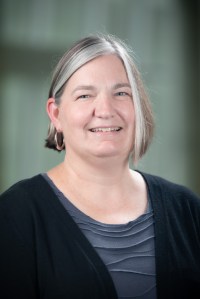
Helen Hudson

Most nurses have little cause to think about prisons or prisoners on a day-to-day basis, yet prisoners’ health needs are extensive. Markers of social disadvantage, including racialization, poverty, mental health issues and illiteracy, are overrepresented among prisoners throughout the Western world, reflecting a lack of access to the determinants of health prior to incarceration. As the global prison population ages, more and more people are dying behind bars of illness or age-related causes.

This paper came about as I examined the literature on palliative care for prisoners in anticipation of starting a doctorate on the topic, only to find that most scholarship engaged with the how questions, without considering the why. That is, end-of-life conditions and palliative care practices – where they exist – are described without much interrogation of why so many people are ending their lives in prison, or what that means, ethically, for the nursing discipline. Though the ethical challenges in this field of nursing are well described, to our knowledge no overarching framework has been put forward for understanding and addressing them. Together with my doctoral supervisor David K Wright, RN, PhD, CHPCN(C), I wrote this paper to address that gap. In it, we articulate an ethical analysis of palliative care nursing for prisoners throughout the illness and grieving trajectory (that is, not solely at end of life), both within and outside of prison facilities. Drawing on literature from various health disciplines – nursing, bioethics, medicine, social work, and public health – as well as prison studies and critical criminology, we synthesize perspectives that illuminate moral questions for practice, research, policy, education, and political action.

I’m excited to share this paper with the ANS readership and look forward to engaging with your comments.

Exploring the Meaning of Quality of Life


The current ANS featured article is titled “Analysis and Evaluation of Conceptual Model for Health-Related Quality of Life Employing Fawcett and DeSanto-Madeya’s Critique Framework” by Min Kyeong Jang, PhD, KOAPN, RN and Catherine Vincent, PhD, RN.  In this article, the authors examine the meanings of this construct in research and in practice, and point to the importance of adequate definitions and meanings for both research and practice.  You can download this article at no cost while it is featured; we hope you will and will also share your responses to the authors’ work here!  Dr. Jang shared this information about this work for ANS readers:

We are delighted that Advances in Nursing Science (ANS) invited us to contribute to the ANS blog. In the field of nursing, health-related quality of life (HRQOL) has been a significant issue that is essential to holistic assessment of patients’ health. In 1994, Wilson and Cleary developed a HRQOL model, and in

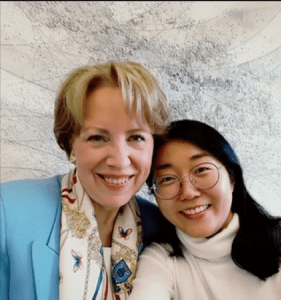
Dr. Carol Ferrans with Dr. Min Kyeong Jang

2005, this model was revised by Ferrans and colleagues to clarify the relationships among the theory concepts, expanding it into an ecological model. The revised HRQOL model was recognized for its promise for future use in HRQOL research and practice, but no previous authors had formally critiqued the model. In our article, we provide a comprehensive analysis and evaluation of the HRQOL model, which we hope will be useful for advanced nursing care and research.

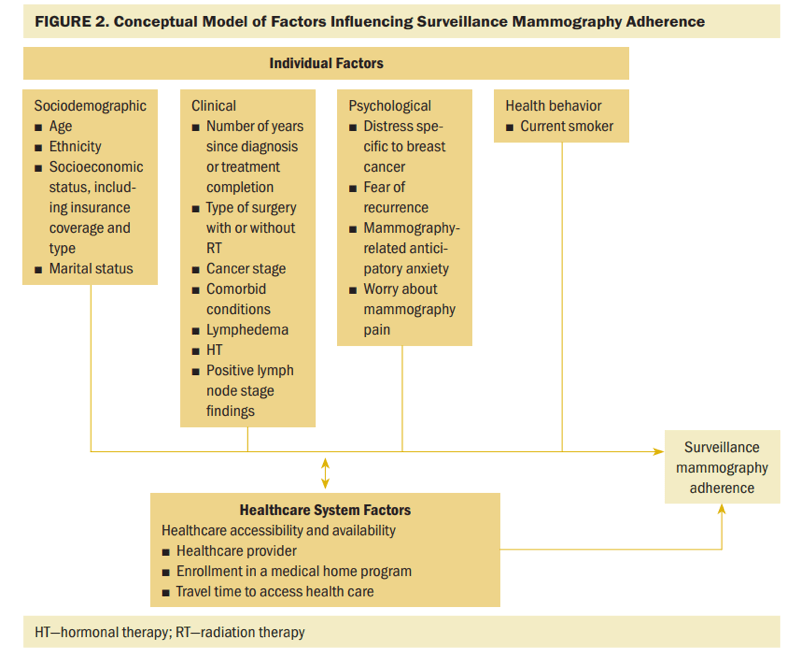
In this article, we identified how the relevant concepts and propositions of the HRQOL model align with the nursing metaparadigm and maintain consistency. In addition, we found that this HRQOL model can easily and comprehensively be applied to improve nursing research and practice. One example is that this HRQOL model can be applicable as a guide for synthesizing an integrated literature review. Guided by HRQOL model, Min Kyeong and colleagues identified and synthesized essential key factors influencing mammography screening among breast cancer survivors from 2000 to 2017, published in the Oncology Nursing Forum. (Figure 1 – An example of applying the HRQOL model). Guided by the HRQOL model, the conceptual model of factors influencing surveillance mammography adherence was able to integrate all relevant key factors. Also, we believe that the most important advantage of using the HRQOL model is to ensure comprehensively covering important factors, some of which can be easily overlooked.

Briefly, Min Kyeong Jang, PhD, RN, KOAPN has been involved in cancer treatment and research for more than 10 years, while simultaneously developing expertise in methodological studies. To be specific, HRQOL is one of her research interests, and Dr. Carol Ferrans, PhD, RN, FAAN (Harriet H. Werley Endowed Chair in Nursing Research) was her PhD mentor (See photo above – Drs. Jang and Ferrans). To develop accurate QOL instruments for use in Korean health care research, Dr. Jang guided the translation of all 15 versions of the Ferrans and Powers QOL instrument, and she also studied the methodologies of theory analysis and theory development with Dr. Catherine Vincent as her guide (co-author).

In collaboration with various research teams, Min Kyeong Jang has been pursuing investigations involving QOL, cancer-related symptoms, chronic pain relief interventions, exercise program development, and sarcopenia, with the ultimate goal of enhancing survivorship care for cancer patients. She is currently working as a postdoctoral fellow at both the University of Illinois Cancer Center and University of Illinois at Chicago College of Nursing with Dr. Ardith Z. Doorenbos and colleagues. She believes that the HRQOL model merits examination to further assess its applicability and usefulness within nursing science; thus, she is applying this model to provision of supportive care for patients.

Jang, M. K., Hershberger, P. E., Kim, S., Collins, E., Quinn, L. T., Park, C. G., & Ferrans, C. E. (2019, November). Factors Influencing Surveillance Mammography Adherence Among Breast Cancer Survivors. In Oncology nursing forum (Vol. 46, No. 6, p. 701). Used by permission


Figure 1.  An example of applying the HRQOL model

Jang, M. K., Hershberger, P. E., Kim, S., Collins, E., Quinn, L. T., Park, C. G., & Ferrans, C. E. (2019, November). Factors Influencing Surveillance Mammography Adherence Among Breast Cancer Survivors. In Oncology nursing forum (Vol. 46, No. 6, p. 701).


Figure 2.  Drs. Jang and Ferrans


Planned ANS featured topics!


As we approach the year 2020, we invite ANS readers and nursing scholars everywhere to take a look at the topics we are featuring in the next couple of years. Even though we no longer dedicate entire issues to a topic, we continue to call for articles related to topics that we believe have particular significance for nursing and healthcare.  Here is the lineup:

Methods for Nursing Knowledge Development
Vol 43:3 –  September 2020
Manuscript due date: January 15, 2020
Vol 43:3
We seek innovative approaches to knowledge development in relation to all patterns of knowing in nursing. We also welcome manuscripts that critique any methodologic approach, manuscripts that explore the philosophic, including ethical underpinnings related to the development of nursing knowledge, and manuscripts that address the critical connections between practice and knowledge development approaches.
Humanizing Precision Science
Vol 43:4 –  December 2020
Manuscript due date: April 15, 2020
Vol 43:3
One of the trends of our time is the development of “precision science” – a trend that deserves careful consideration going forward. We seek manuscripts for this issue that provides assessment, explanation, evaluation and critique of this trend in light of the underlying foundations of nursology. This featured topic intentionally calls for both rigor and creativity that provides avenues for discussion and possible new directions in the development of our discipline.
Social Influences on Health
Vol 44:1 –  March 2021
Manuscript due date: July 15, 2020
Awareness of social influences on health (often called social determinants of health) has grown in recent decades as social, political and environmental challenges have increasingly threatened the health and all it inhabitants.  For this issue we invite articles addressing specific nursing approaches related to these issues, and advances in nursing knowledge that forms a foundation for nursing’s contributions to this important area of focus.
Historical Trauma & Health
Vol 44:2 –  June 2021
Manuscript due date: October 15, 2020
Nursing has a long history of practice and scholarship related to the care of people who experience trauma of all types. However, the health effects of historical trauma only recently have begun to be conceptualized and understood as a significant determinant of health.  For this issue of ANS, we invite scholarship that addresses this important connection and provides a clear perspective founded on nursing’s fundamental values. We welcome research reports, philosophic, including ethics analysis, and exploration of theory and evidence guided practice.
Social Justice, Big Data & Health Disparities
Vol 44:3 –  September 2021
Manuscript due date: January 15, 2021
We are seeking articles that provide a social jusice lens to the emerging ways in which big data are being used , and how these approaches can inform nursing approaches to addressing health disparities. We seek in particular articles that report research, practice, education and policy informed by nursing theoretical and philosophic perspectives.
Values and Vicissitudes of Nursing Scholarship
Vol 44:4 – December 2021
Manuscript due date – April 15, 2021
The evolution of scholarship as online publishing emerged in the past 15 years now points to an urgency to be crystal clear about the standards that shape the scholarship of our discipline, affirm these standards as collective values, and that serve as guideposts for the evolution of scholarship in the future.  For this issue of ANS we welcome manuscripts that explore the values and vicissitudes on which our standards are built.  Articles can address specific areas of focus, or more broadly on underlying philosophic concerns.

General Manuscripts are welcome any time ​

Manuscripts generally relevant to the purposes of the journal are welcome at any time. The purposes of ANS are to advance the development of nursing knowledge and to promote the integration of nursing philosophies, theories and research with practice. We expect high scholarly merit and encourage innovative, cutting edge ideas that challenge prior assumptions and that present new, intellectually challenging perspectives. We seek works that speak to global sustainability and that take an intersectional approach, recognizing class, color, sexual and gender identity, and other dimensions of human experience related to health.​​

Translating practice guidelines into practice


The current ANS featured article is titled Implementation of Clinical Practice Guidelines in the Health Care Setting A Concept Analysis by Melissa Beauchemin, MPhil, RN, CPNP; Elizabeth Cohn, PhD, RN; and Rachel C. Shelton, ScD, MPH.  The article is available for download while it is features and we welcome your ideas and responses in the comments here!  These authors were concerned with the challenges of implementing clinical guidelines, and their concept analysis, and their analysis reveals 7 attributes necessary for effective implementation.  Here is a message from Melissa Beauchemin about this work:

As a research nurse practitioner in pediatric oncology, I became interested in how evidence is translated into clinical practice. I noted hesitations in integrating new evidence into clinical care, and I realized that challenges at multiple levels may present as a barrier. These observations were one of the main drivers for to pursue a PhD. I chose to focus my dissertation on guideline implementation and tools, specifically informatics-based approaches such as clinical decision support, that may be effective in translating evidence into practice. During a course in conceptual and theoretical frameworks, my professor, Dr. Elizabeth Cohn, encouraged my interest in guideline implementation, and I began writing this concept analysis. Using Walker and Avant’s methodology and in consultation with an expert in implementation science, Dr. Rachel Shelton, we searched the existing literature to inform a clear definition of a challenging concept in healthcare. I just started as a postdoctoral research fellow and continue working with our implementation science core at Columbia University, and my research interests continue to focus on an interdisciplinary approach to improve the integration and implementation of evidence-based clinical practice supportive care guidelines for pediatric, adolescent, and young adult cancer into cancer care delivery. The multi-level approaches that we outline in this concept analysis are each distinct and integral components to a successful implementation.

The Ethic of Belonging in Nursing


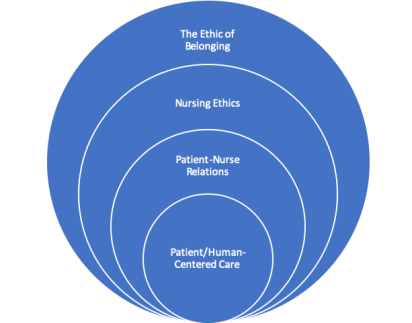
The first featured article in the new issue of ANS (volume 42:4) is titled “Analyzing Patients’ Complaints: Awakening of the Ethic of Belonging” authored by Yan Ming, BSN, RN; Holly Wei, PhD, RN; Hong Cheng, BSN, RN; Jie Ming, BSN, RN and Mark Beck, DNP, RN. This article is one of our ANS Continuing Education offerings and is available for download at no cost while it is featured!   In this article, the authors analyzed patients’ complaints through the lens of human relations and nursing ethics. Here is a message from Dr. Wei regarding their work:

Ms. Yan Ming and Dr. Holly Wei at a quality of care improvement meeting

The ethic of belonging, according to Emmanuel Levinas, is the first principle of science and is a priori of the ontology of separateness of being. We all belong to the universal field of love before we are separate beings, in which wholeness and connection come before separation and division. The universal love and transpersonal caring relationship are the essences of how one treats “the other.” “The other,” according to Levinas, is someone else other than oneself. The ethic of belonging is the interconnectedness with the infinite universe and the consciousness of the spirit and energy source. Based on this worldview, the ontology of caring relations and awareness of belonging become part of the ethical foundation of the discipline of nursing.

Healthcare is undergoing transformation globally. As in the United States, healthcare in China also faces healthcare reform. China embraces two significant challenges in healthcare: one is the volume-based payment system, and another one is the medical model of the nursing education curriculum. The payment system in China is still primarily a fee-for-service payment system, a system that is based on quantity, not quality, and a system that has been phased out in the United States. The nursing education program in China, from its beginning, has adopted a bio-medical model, a direct reproduction of the medical education curriculum.

The field of medicine, including nursing, has traditionally been considered as “hard science,” where the training of nurses focuses more on the tangible medical knowledge and skills and less on the “soft” and intangible humanistic caring. However, as economies grow, people’s expectations for a high quality of care increase. Patients expect a high quality of care in both clinical skills and humanity, which has created discrepancies between the quality of care expected and the quantity-based and illness-centered services offered. The gaps are directly associated with increased patients’ complaints, legal disputes, and violence.

This article has investigated patients’ complaints from a nursing ethics perspective. The notions introduced in this paper, such as “the other,” human-centered holistic caring, and nurse-patient relationships, are important concepts in nursing ethics and practice.

Using Mandala Art to Improve Practice


The current featured article in ANS is titled Something Is Going to Happen Here The Use of Mandala Art in Enhancing Reflective Practice, authored by Kathleen Quinn, EdD, MED, MSN, RN. In this article, Dr. Quinn describes the use of mandalas as part of a reflective practice journaling process used in universities, colleges and hospitals. We welcome your comments and responses to this article; it is available at no cost while it is featured.  Here is a message from Dr. Quinn about her work:

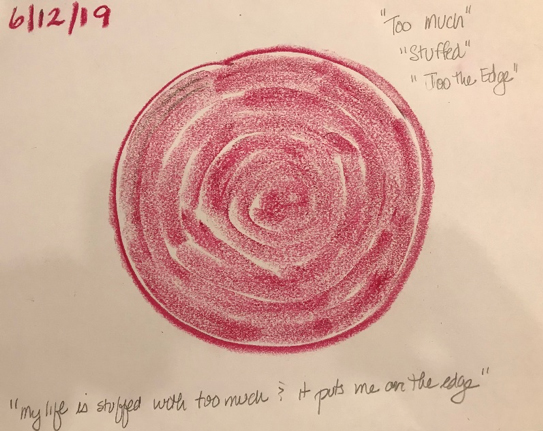
This mandala demonstrates the focus of the journal article “Something is going to happen here….” And it is a great place to begin thinking about your practice and the organization where you work.

This article for ANS is based on a “sliver” of a communications and development program called Discovery Process and Discovery Communications. This program, developed over thirty years of practice and service, is used in higher education nursing and interprofessional education, in hospitals to mitigate errors and develop staff and administrators for retention. It has been utilized in community-based clinics and direct patient care. It has also been used to transform secondary and elementary faculty and programs in private, parochial and public schools.

Dr. Quinn presenting a workshop on the Discovery Process to the Mississippi Nurses Association Annual Conference in Biloxi, October 2018.

Customarily, we are invited into institutions, schools, departments of nursing, allied health and interprofessional programs. We are asked to consult for transformation of personnel, curriculum and programs, accreditation. Part of our work is to support transformation and expansion of programs which are in need of being changed or streamlined; using Discovery Processes for growing new and current faculty to meet shortages of faculty and administrators with the huge number of qualified nursing school applicants. We work with classroom and active learning approaches to improve the educational experience and the workplace environment. We do the same work with individual schools at the elementary and secondary level. Discovery Schools has been doing this work for more than thirty years.

The Discovery Process for Development requires a collaborative approach between Administrators, Faculty and the consultants. The Discovery Process entails an approach where there is a collaborative assessment of needs and a collaborative process for creating the solutions. This very simply means every program is customized using this process. There is an existing framework for the process and then it is adapted to each school’s unique needs. Discovery is not a cookie cutter approach, nor is it imposed from the perspective of an expert having all the answers.

For more information about this work, visit my web site.


Nursing Judgment


The current ANS featured article is titled Nursing Judgment A Concept Analysis, authored by Lila de Tantillo, MS, BSN, RN and Joseph P. De Santis, PhD, ARNP, ACRN, FAAN. While it is featured you can download this article at no cost, and we encourage your comments and discussion below!  Here is a message that Lila de Tantillo sent for ANS readers:

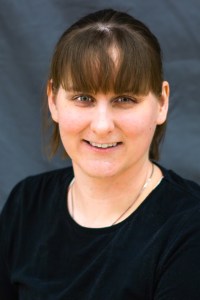
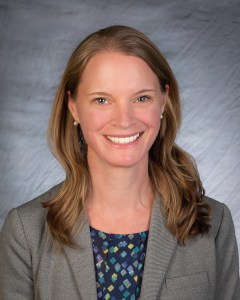
Lila de Tantillo

Health care as we know it is undergoing a transformation. The importance of technology, the composition of the provider workforce to include increased nurse practitioners, and opportunities for patients to access care are changing dramatically. In this context, the role of a registered nurse in the delivery of health care is critical. The essence of a nurse is the implementation of nursing judgment.  

In this paper, coauthored with Joseph P. De Santis, PhD of the University of Miami, we used the Walker and Avant model of concept analysis to explore the unique role of a nurse within the health care system. Specifically, we identified its uses, determined its attributes, identified antecedents and consequences, and determined empirical referents. The goal was to clarify the concept of nursing judgment and better understand how it can be applied in practice, education, research and policy.

Among the essential uses of nursing judgment, we found to be application in the clinical setting, nursing administration, and education of new nurses. One common thread among these uses was that nursing judgment does not necessarily entail the provision of a certain “right” answer or reaction in a scenario, but the ability of a nurse to utilize reason and expertise to respond to a given situation. We continued to explore this theme within the attributes of nursing judgment, which include critical thinking, prioritization, and discernment. A nurse develops these by building on knowledge, experience, and in some cases even intuition.

What happens when you bring this all together? When a nurse implements nursing judgment in practice, the expected consequences are better communication, enhanced patient comfort, fewer errors, and an improved system of health care. Although nursing judgment is an abstract concept, empirical referents that can be used to evaluate the quality of nursing care include reports from Joint Commission, the Agency for Health Care Administration, and Centers for Medicare & Medicaid Services (CMS). CMS data regarding hospital-acquired pressure ulcers and catheter-associated urinary tract infections can provide particular insight. In addition, health care facilities and policymakers can enhance the ability of nurses to implement nursing judgment by supporting BSN nursing education and enforcing reasonable staffing structures. In the future, more work must be done to better understand the ways that patient outcomes are affected by the concept of nursing judgment.

Thank you for taking the time to read this brief preview of our article Nursing Judgment: A Concept Analysis. We hope you enjoy the article in its entirety.  


Complicated Grief


The current featured ANS article is titled “Complicated Grief of Immediate Family Caregivers: A Concept Analysis” authored by Tina M. Mason, MSN, ARNP, AOCN, AOCNS and Cindy S. Tofthagen, PhD, ARNP, AOCNP, FAANP, FAAN. The article is available to download at no cost while it is featured, and we invite you to get your copy, read it, share your ideas about this timely topic here, and respond to the questions posed in this message from Ms. Mason:

Tina Mason

Grace was the sole caregiver for her husband Bob of 46 years. Their son had died while on duty years prior. Grace managed the household and volunteered weekly at a local hospital. Bob was diagnosed with metastatic melanoma but succumbed to the illness in less than 3 months. Six months later, Grace had not returned to her volunteer work. Her appetite was poor and she was not receptive to visitors. She was described as apathetic and her house untidy. Grace was drinking more wine than her usual with-dinner glass. Grace reported to her provider that she felt intense sadness and wished she could be with her husband soon.

It is estimated that over 10 million people suffer from complicated grief in the United States. Complicated grief is the term used to describe prolonged and intense grief that interferes with normal activities and is accompanied by self-destructive thoughts and/or behaviors. The aim of this concept analysis is to provide a clear understanding of the concept of complicated grief and its consequences following the loss of an important relationship.

Nurses, as well as our multi-disciplinary colleagues, need a better understanding of complicated grief in order to intervene early. Because there are so few formal resources available for caregivers in healthcare settings, the authors hope this concept analysis will spur both awareness of the problem and conversation about integrating formal caregiver support programs into practice. Such programs can facilitate awareness of complicated grief, identification of high-risk individuals, as well as early intervention. What types of caregiver support resources are there in your place of employment or community and after reading the article, what types of resources do you think would be most helpful?

Planned ANS featured topics!


As ANS readers have noticed, we no longer devote entire issues to a specific topic, but we do announce topics to feature in each issue.  This provides a good balance between our tradition of calling forth scholarship on timely issues in nursing and health care, and an open door for the wide range of topics that nurse scholars are exploring.  Here are the topics we have planned for the next 6 issues:

Best Evidence for Nursing Practice
Vol 43:2 –  June 2020
Manuscript due date: October 15, 2019 ​
Vol 43:2
Even though the ideal of practice based on evidence has flourished over several decades, the achievement of consistently sound practice, in nursing and in other disciplines as well, still eludes even the most well-intentioned practitioners.  For this issue of ANS we seek manuscripts that explore this dilema, examing questions such as ‘what constitutes evidence?” and “what constitutes the best evidence?” We also seek manuscripts that provide exemplars of best evidence and best practices. 

Methods for Nursing Knowledge Development
Vol 43:3 –  September 2020
Manuscript due date: January 15, 2020
Vol 43:3
We seek innovative approaches to knowledge development in relation to all patterns of knowing in nursing. We also welcome manuscripts that critique any methodologic approach, manuscripts that explore the philosophic, including ethical underpinnings related to the development of nursing knowledge, and manuscripts that address the critical connections between practice and knowledge development approaches.
Humanizing Precision Science
Vol 43:4 –  December 2020
Manuscript due date: April 15, 2020
Vol 43:3
One of the trends of our time is the development of “precision science” – a trend that deserves careful consideration going forward. We seek manuscripts for this issue that provides assessment, explanation, evaluation and critique of this trend in light of the underlying foundations of nursology. This featured topic intentionally calls for both rigor and creativity that provides avenues for discussion and possible new directions in the development of our discipline.
Social Influences on Health
Vol 44:1 –  March 2021
Manuscript due date: July 15, 2020
Awareness of social influences on health (often called social determinants of health) has grown in recent decades as social, political and environmental challenges have increasingly threatened the health and all it inhabitants.  For this issue we invite articles addressing specific nursing approaches related to these issues, and advances in nursing knowledge that forms a foundation for nursing’s contributions to this important area of focus.
Historical Trauma & Health
Vol 44:2 –  June 2021
Manuscript due date: October 15, 2020
Nursing has a long history of practice and scholarship related to the care of people who experience trauma of all types. However, the health effects of historical trauma only recently have begun to be conceptualized and understood as a significant determinant of health.  For this issue of ANS, we invite scholarship that addresses this important connection and provides a clear perspective founded on nursing’s fundamental values. We welcome research reports, philosophic, including ethics analysis, and exploration of theory and evidence guided practice.

Paradigm Shift in Nursing?


The current ANS featured article, available for free download, is titled “Implications for Paradigm Shift in Nursing A Critical Analysis of Thomas Kuhn’s Revolutionary Science and Its Relevance to Nursing” by Ahtisham Younas, MN, BSN and Karen Parsons, PhD, RN. I join the authors in inviting you to download this article, read it and share your thoughts below!  Here is a message from Mr. Younas about this work:

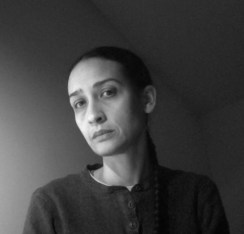
Ahtisham Younas

I am excited to have the article published in ANS. The impetus of this paper dates to the time when I taught nursing theories and models to undergraduate nursing students in Pakistan. The students mostly commented that these theories and models are so complex, and they questioned the relevance of these models for actual nursing practice. At that time, I used case studies to demonstrate the application of these theories and encouraged students to develop nursing care plans using theories of their choice during their clinical. Later, during my master’s program, I studied various nursing paradigms that serve as the foundations of these nursing theories and models. I became curious to learn about the motivation of nursing scholars to develop these paradigms. I was finally able to satisfy my curiosity in my doctoral program when I studied Thomas Kuhn’s work in the nursing philosophy course. I found out that nursing scholars developed nursing paradigms based on Kuhn’s concepts.

   The first time I read Kuhn’s book “The Structure of Scientific Revolutions,” I was blown away and mumbled to myself, “Should I take it seriously?”. I had these feelings because I found some of Kuhn’s arguments quite strange and controversial, particularly the discussion about the paradigm shift. Therefore, I reread the whole book and decided I should analyze this work, explore its relevance for nursing science, and outline the positive and negative implications. I wrote this paper for the nursing philosophy course but later made substantial changes before submitting it to ANS.

   Kuhn has been one of the most cited scholars across various scientific disciplines with over one hundred and three thousand citations. His revolutionary science includes different stages, starting from normal science to paradigm shift. Simply Kuhn argues that a scientific discipline practice under a certain paradigm, but when all the discipline-specific problems cannot be solved under the paradigm, a new paradigm is generated that replaces the older paradigm. The major issues with Kuhn’s science were; the vagueness of ideas, multiple interpretations of the word “paradigm,” inconclusiveness of ideas, issue of incommensurability of paradigms, and the use of case studies from physical sciences to support his arguments.

   Based on the analysis, we noted that Kuhn’s paradigm thinking could be useful to advance the body of nursing knowledge. However, Kuhn’s science was developed for physical and laboratory sciences, and he argued that a single paradigm is adequate to guide a discipline. Hence, we concluded that Kuhn’s science is not robust enough to guide sciences such as nursing because nursing deals with multifaceted human universal health phenomena which change and transform continuously. We proposed that instead of developing more nursing paradigms, it is better to develop middle range and situation specific theories. Such theories are more practical and can help nurses guide their actions in different situations by considering the contextual factors influencing those situations.

   One of my future works is to explore and develop an approach that can help bring various nursing paradigms together to inform nursing practice and knowledge development. The approach does not entail developing a single paradigm, rather it focuses on utilizing the useful aspects of each paradigm to guide research inquires. I would end this message with a question, “Do you think nursing can be conformed under a single paradigm as Kuhn’s envisioned for other physical sciences?”

   I am hopeful that you all read this article and please share your answers, comments, and critiques.