Skip to content

Parents as Partners in the NICU


The latest featured article in the current issue of ANS is by Amy L. D’Agata, PhD, MS, RN and Jacqueline M. McGrath, PhD, RN, FNAP, FAAN, titled “A Framework of Complex Adaptive Systems Parents As Partners in the Neonatal Intensive Care Unit.”  The article is available for download at no cost while it is featured.  Dr. D’Agata sent this message for ANS readers, portraying the important interplay of her clinical experience and academic science to create new insights and new practices to improve care:

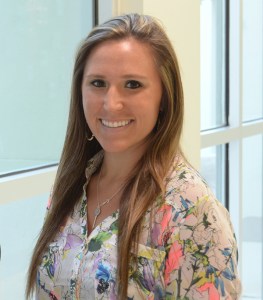
Amy pic

Amy D’Agata

I am honored to have my paper A Framework of Complex Adaptive Systems: Parents as Partners in the Neonatal Intensive Care Unit featured as an editor pick in Advances in Nursing Science.  This paper highlights complexities within the NICU, particularly around relationships and environments of care that may contribute to infant neurodevelopmental outcomes.  It is hoped that by acknowledging challenging factors of interpersonal communication, individual differences in practice and acute care environments, we may begin to redesign the current NICU model of care into a model that better promotes neurodevelopment.  Importantly, reframing how we think about parents and their participation in the care of their infant.

As a novice neonatal intensive care nurse, I loved the excitement the NICU provided, both from a technical and interpersonal perspective.  Through advances in technology and medicine, precious newborn lives were saved and family dreams were realized.  Supporting families as they went through a sea of emotions, learned who their baby was as a person and became a strong advocate for their baby.  I always loved working with families and helping them through this process, all while I was caring for their baby.  This is how we practice in the NICU, right?  By and large, nurses and physicians care for patients while families stand by and watch, right?  This is what has to happen in order to save lives, right?  We know best, right?  This is basically how we have always been trained, but now I wonder if there isn’t a different and better way.

McGrath pic

Jacqueline McGrath

After 14 years of professional nursing practice, I entered doctoral studies.  Early in the program I felt as though I was floundering because my research interests were all over the map.  I knew my population of interest would be NICU infants, but I wanted to fix lots of different issues.  Most of which were medical issues.  When potential ideas around developmental care were suggested by my advisor (and co-author) I quickly pooh-poohed them.  Developmental care was a fundamental component of NICU care, but not in my wheelhouse to study.

One day my doctoral advisor shared an article she had co-authored, Epigenetics and Family-Centered Developmental Care for the Preterm Infant. At the time I knew nothing about epigenetics so I was immediately curious.  After reading this paper I literally experienced a professional paradigm shift.  Swiftly brought into focus was the idea that all of our daily experiences impact us.  While this may not seem like a game-changing statement, the fact that seemingly insignificant experiences may trigger molecular changes was something I never considered.  This certainly wasn’t something I considered for our patients.

I have always passionately believed that the work we do in the NICU is important to an infant’s future, but as a nurse, I had practiced with the thought of meeting the necessary medical needs so that infants may one day leave the NICU with their family.  I didn’t intentionally practice with the idea that everything I did in the NICU, every single day, may leave a permanent molecular mark or imprint that may shape who that person becomes.  If I had understood the potential magnitude of my influence, I would have most certainly practiced differently early in my career.

Back to doctoral studies, following lots and lots of reading, my research program began to take shape.  I read volumes about early life experience, epigenetics, genetics, molecular experiences that ‘get under our skin’ and neurodevelopment.  During my academic studies I also continued practicing as a staff nurse in the NICU.  This was a time in which I felt a lot of turmoil as a caregiver, because of what I was learning academically and what I was observing and taking part in clinically, sometimes I felt such internal conflict.  To get through I need to reconcile that what I was learning from basic science was ahead of where we were clinically.

As a conceptual model and framework of the NICU infant experience, Infant Medical Trauma in the NICU, broadly reflects the adverse exposures that occur within the NICU doors and how they may contribute to long-term outcomes (see figure below).  Designing this model was the foundational to my dissertation work for exploring the relationships between NICU stress, genotype of stress associated gene FKBP5 and neurodevelopmental outcomes.  The goal of my dissertation study was to understand if some infants may be genetically more vulnerable to stress experiences in the NICU.

Understanding that some infants may be predisposed to stress sensitivity, and the dynamics of the NICU, parents may be ideally positioned for the role of co-caregiver.  Given the typical parent’s desire to learn anything that helps their infant, their sensitivity to their infant’s needs and awareness of the role they must fulfill once they leave the NICU, why do we place parents on the sideline while we care for their infant?   Are parents incapable of learning how to assess their infant or perform caregiving tasks beyond diaper changes, temperature measurement and feeding?  We expect them to be fully capable once we indicate discharge is eminent, why not earlier in the process?

If we are to improve neurodevelopmental outcomes in the NICU, we may need to critically assess how we practice and consider alternative models.  As care providers, our goal is to save lives and promote health.  While not intentionally inflicted, there are adverse experiences that result from that goal.  Parents are the constants in their infant’s life and the people who will care for their infant beyond the NICU.  In light of this we must begin to see parents as partners in every step of the NICU, including in the provision of care.

Infant Medical Trauma_final rev2 copy


  1. Samra, H., McGrath, J. M., Wehbe, M., & Clapper, J. (2012). Epigenetics and family centered developmental care of the preterm infant. Advances in Neonatal Care, 12(5s), s2-s9

Theory Integration to Explore Complexity


Our new featured article is titled “Using Theory Integration to Explore Complex Health Problems” by Brenna L. Quinn, PhD, RN, NCSN. We invite you to download the article while it is featured and return here to join discussion of these ideas.  In this message about her article, she describes the evolution of this article as a result of a rejection of another manuscript!

Brenna Quinn

Brenna Quinn

The idea for this article was actually born out of another article’s rejection. I met with my colleague Dr. Barbara Mawn to seek commiseration over the outright rejection and ask for help in writing an article about the importance of theory use and interdisciplinary integration, given that reviewer suggestions included removing the entire section on the study’s conceptual framework. Barbara’s mentorship was invaluable to the development of this article.  Said  conceptual framework is described in the ANS article as an example of interdisciplinary theory integration.

Use of theory to guide nursing research and clinical practice is underreported at best, but more likely is extremely underutilized. This is due to several factors, such as nurses receiving little education on theory use or confusion about how to interpret and apply theories to clinical practice.  Additionally, clinical nurses and nurse researchers may view nursing theories as too narrow to address the multi-faceted needs of patients or study populations.

Nurses know that they need to view patients and populations holistically, and cannot silo specific health problems.

Barbara Mawn

Barbara Mawn

For example: school nurses experience difficulty when assessing pain in children with intellectual and developmental disabilities. What kind of pain assessment tools has the nurse learned about? Has the school offered any continuing education opportunities regarding pain assessment for special populations? Do classroom teachers know which behaviors may be indicative of student pain? What is the ability of the student to report painful experiences?  Or, perhaps a nurse is working with a patient who has not been taking a medication prescribed for diabetes. The nurse must consider more than a presenting high blood glucose reading. Did the patient understand the nurse practitioner’s instructions for taking the medication? Can she access the pharmacy? Read the bottle? Administer the medication correctly? What is her level of cognition?

Many variables factor in to complex health problems faced by people today. However, this may not always appear clear to nurses and researchers when looking at nursing models. Using a non-nursing model, such as a model from psychology as described in the ANS article, can help frame the use of nursing theory components to the health problem at hand.

After reading this article, I hope nurses take the opportunity to explore both nursing and non-nursing theories that can guide and enlighten new approaches to clinical and research activities. Thank you for featuring this article on the ANS blog!

Quinn Picture1

Improving Mixed-methods Research in Nursing


The current featured article is titled “Mixed-Methods Research in the Discipline of Nursing” by Cheryl Tatano Beck, DNSc, CNM, FAAN and Lisa Harrison, MSN, PMHNP. We invite you to download this article while it is featured and return here to share your comments, questions and ideas for discussion.  Dr. Beck shared this background about her experiences with mixed methods:

This article was the culmination of a years’ worth of work that Lisa Harrison and I did. Lisa is a PhD student in

Cheryl Beck

Cheryl Beck

nursing at the University of Connecticut. She was assigned to me as a graduate assistant and for her assistance ship that year. Lisa worked with me on this review of mixed methods research in the discipline of nursing. Two years ago I presented one of my mixed methods studies in Boston at the Mixed Methods International Research Association’s inaugural research conference. At that conference there

were reports of the state of the science of mixed methods research in some disciplines but none focused on nursing. It was at that conference that I got the idea to conduct this focused review of mixed methods research in the discipline of nursing.

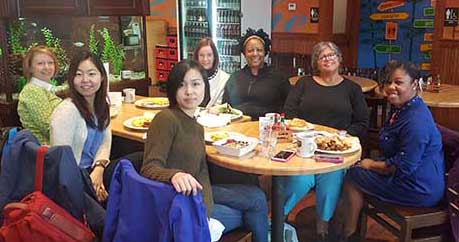
I began my interest in mixed methods research in earnest when about 6 years ago faculty at the University of Connecticut’s School of Nursing voted to add a mixed methods research design course to our core PhD curriculum. I was asked to teach this inaugural course and the rest is history. I have been teaching it every year since then. I have included in this blog a photo of my most recent mixed methods research class (spring 2016) when we

Lisa Harrison

Lisa Harrison

all went out for breakfast to celebrate the last day of class. Our PhD students are getting excited about the possibilities of mixed methods research. This past year we had 2 PhD students graduate who had conducted mixed methods dissertations.

I have conducted 4 mixed methods studies to date. Two have focused on secondary traumatic stress. One of these studies was with labor and delivery nurses and the other study was with certified nurse-midwives. Currently I have 2 other mixed methods studies in press. Both studies examined vicarious posttraumatic growth in obstetrical clinicians due to the struggles with caring for women during traumatic births.

We hope that our article published here in ANS will spark interest in students and faculty to conduct mixed methods research studies. This type of research can be the best of both worlds.

Front L toR: Lisa Sundean, Semin Park (PhD student in Business), and Wanli Xu. Back L to R: Cheryl Beck, Lucinda Canty, Lisa Nemchek, Nayomi Dawes.

Front L toR: Lisa Sundean, Semin Park (PhD student in Business), and Wanli Xu. Back L to R: Cheryl Beck, Lucinda Canty, Lisa Nemchek, Nayomi Dawes.

Are You Subscribed to ANS Published-Ahead-of-Print Alerts?


If not, visit the ANS Published-Ahead-of-Print page and sign up!  We are now posting articles online as they are available, providing ANS readers the very latest content leading scholarly discourse in nursing!  These papers can be cited using the date of access and the unique DOI number. Any final changes in manuscripts will be made at the time of print publication and will be reflected in the final electronic version of the issue. Here is the line-up just posted today!

The “As-If” World of Nursing Practice: Nurses, Marketing, and Decision Making.
Grundy, Quinn; Malone, Ruth E.

Returning to the Profession’s Roots: Social Justice in Nursing Education for the 21st Century.
Thurman, Whitney; Pfitzinger-Lippe, Megan

Development of Hermes, a New Person-Centered Assessment Tool in Nursing Rehabilitation, Through Action Research.
Thórarinsdóttir, Kristín; Björnsdóttir, Kristín; Kristjánsson, Kristján

Expert Nurses’ Perceptions of the Relevance of Carper’s Patterns of Knowing to Junior Nurses.
Terry, Louise; Carr, Graham; Curzio, Joan

Efficacy of the Mantram Repetition Program for Insomnia in Veterans With Posttraumatic Stress Disorder: A Naturalistic Study.
Beck, Danielle; Cosco Holt, Lindsay; Burkard, Joseph; Andrews, Taylor; Liu, Lin; Heppner, Pia; Bormann, Jill E.

Decision Making Among Older Adults at the End of Life: A Theoretical Perspective.
Romo, Rafael D.; Dawson-Rose, Carol S.; Mayo, Ann M.; Wallhagen, Margaret I.

What End-of-Life Care Needs Now: An Emerging Praxis of the Sacred and Subtle.
Rosa, William; Estes, Tarron

Facing Death: A Critical Analysis of Advance Care Planning in the United States.
Sullivan, Suzanne S.; Dickerson, Suzanne S.

An Analysis and Evaluation of the Theory of Unpleasant Symptoms.
Lee, Seung Eun; Vincent, Catherine; Finnegan, Lorna

Workplace Mistreatment


The current ANS featured article is titled “Social Justice as a Lens for Understanding Workplace Mistreatment,” authored by Christine Moffa, MS and Joy Longo, PhD. In this article the authors explore the various forms of workplace mistreatment using Powers and Faden’s theory of social justice. Visit the ANS website now to download your copy at no charge while this article is featured!  Here is a message from Ms. Moffa about this

I have been interested in the issue of workplace mistreatment, particularly that faced by nurses, for a long time. My direct experience with this issue started during my first year as a nurse. I had never heard the unfortunately common

Christine Moffa

phrase “nurses eat their young” until I started working. Had I known, I might have studied something else! It sounds naïve now, but I was shocked that a profession built on caring was so cruel to its own members. My personal strategy for dealing with it was to keep moving until I found a work environment that didn’t expose me to being either a target or a witness to these negative behaviors. However, after continuing to hear from other nurses, new and experienced, how the problem persisted I knew more had to be done.

The idea for looking at workplace mistreatment as a social justice issue started with a conversation I had with one of my professors. Horizontal violence, incivility, and bullying have appeared in the nursing literature for over 30 years. It was time for a new viewpoint, one that could get people interested enough to want to do something about it, and at the same time acknowledge that patient outcomes were also a concern. Social justice was the answer.

Delving into the social justice literature I came across Powers and Faden’s (2006) theory. I believe viewing workplace mistreatment through their model of the six dimensions of well-being (health, personal security, respect, attachment, reasoning, and self-determination) highlights the gravity of workplace mistreatment, and demonstrates that this issue reaches far beyond the individual having a bad day at work, or having trouble getting along with other personalities. Powers and Faden’s (2006) theory is now the theoretical framework for my dissertation. The goal of this future study is to add to the knowledge base of workplace mistreatment so that the nursing profession, hospital administrators, and the public, will advocate for change and develop interventions to eradicate this problem.

This paper was a team effort, a culmination of my course work at the Christine E. Lynn College of Nursing at Florida Atlantic University. I would like to thank all of my professors past and present. In particular, I would like to thank my co-author Dr. Joy Longo who has devoted the last several years to studying horizontal violence and helped to bring this article up to the level worthy of appearing in ANS. Also thanks to Dr. Pat Liehr, who encouraged me to expand the section on social justice after my first draft.

Reference

Powers, M., & Faden, R. R. (2006). Social justice: The moral foundations of public health and health policy. New York: Oxford University Press.


Re-examining Marginalization


The first featured article for the latest issue of ANS is authored by Joanne M. Hall, PhD, RN, FAAN and Kelly Carlson, PhD, APRN-BC. The article addresses complex issues that perpetuate health disparities, and is titled “Marginalization: A Revisitation With Integration of Scholarship on Globalization, Intersectionality, Privilege, Microaggressions, and Implicit Biases.” The article is available to download at no cost while it is featured; I join the authors in inviting you to read it and return here to share your comments and ideas.  Here is a message from Dr. Hall about her work:

Why talk about marginalization? Marginalization refers to principles that can be transferred across contexts, yet we are learning that so many nursing problems, especially in the US, where healthcare is a pluralistic, patchwork

Joanne Hall

Joanne Hall

structure require attention to situation-specific factors, and situation-specific theories? The beginning of this thread of scholarship was the question, is there anything marginalized groups, or people in marginalizing situations have “in common?”  This not only included marginalization based on identity or group status, but on social processes, cultural expectations, environmental and socio-political factors. We agree with Chinn and Kramer that emancipatory knowledge is foundational to nursing science and practice.

There is an aspect of person that is potentially universal, a striving toward survival, thriving, and belongingness in such a way that supports diversity, equality, equity and justice. But this is not feasible for so many in the world at this time in history.

As a newly practicing RN, I was also, (in my spare time), an activist in the Catholic Worker Movement, and part of a group who opened a house of hospitality for women and children in Dubuque Iowa, my home town.  Eventually, we became a “discharge plan” and patients were sent from the local hospitals to “Catholic Worker House.”  The patients I cared for from noon to midnight in the psychic unit the night before might arrive in time for dinner the next evening and stay for two weeks.  This 6 years of my life was a great education about the highest-risk people in our communities.   We as a community combined providing food, clothing and shelter for those in immediate need with political action on larger justice issues.  At that time, liberation movements were growing in Latin America, and I became involved in discussions with various liberation and feminist theologians. In particular, I formed a partnership with my friend and mentor, now deceased, Manolo Barreno. Mano was a liberation theologian from Ecuador who had been thrown out by the Jesuits from a seminary in Rome for “associating with communists,” poor folks, who then not only took him in but supported his journey to the US,  to Iowa to finish his PhD at Aquinas Institute of Theology, which happened to be in Dubuque. Mano and I were fast friends, and became agitators in the group, pressing for justice not only in Latin America, and locally, but for structural changes in the Catholic Church itself. The movement by survivors of sexual abuse by ministers and priests (SNAP), was emergent.  Those who joined Mano and me pressed for women in the Catholic priesthood, and support for a local woman who taught at a Catholic school, and was fired specifically because she had a baby and was not married. We pressed for LGBT full recognition by the church.

My years in the Catholic Worker Movement eventually convinced me that this movement had a useful personalist philosophy, political analysis, an action orientation, especially focused on poverty, economic and anti-military issues, but that it would not take strong positions for women, African Americans, LGBTQ people, and in opposition to the emerging sexual abuse scandal, which eventually proved to be more expansive that anyone imagined at that time. (As I understand it, the movement has “come around” on these issues in recent years.)

I took a graduate course at Aquinas Institute in christology, the search for the historical Jesus. I realized the complex level of scholarship that had been done to determine hermeneutically, anthropologically, and historically who Jesus of Nazareth was.  I knew the power of writing that could influence sociopolitical and health outcomes.  I realized I was capable of taking a graduate class.

Fast forward, I decided that I might have more influence in solving the problems I became so familiar with as an activist, by contributing scholarship as a nurse leader as a nurse scientist. Working with Afaf Meleis and Patricia Stevens, we began in 1994 to answer that initial question, “Is there any thing, process, or set of elements, that is common in the experience of being marginalized?  Rather than an “identity categories” approach, the scholarship on marginalization focuses on the fact that anyone can be targeted, or suddenly find themselves in the high-risk situation of being marginalized.  This more contextual approach is consistent with an intersectionality framework, in which we realize that a person is potentially subject to marginalization based on a number of factors, and that, for a Black lesbian woman, for example, interpersonal slights may set off a whole energy-consuming and stressful problem-solving process for the woman, who is in a quandary about what the basis for the insult is.  “Is this based on race?  Is this because I am a woman and he is a man?  Do they know I am gay?  Is he just pissed off about something else? etc….  This is far less often a subjective experience of White, privileged males.  In fact research shows that those who are privileged, including White health care providers, have implicit biases, prejudices leading to racial microaggressions that White people are usually not aware they are perpetrating, and that has harmful effects on the target person.  We discuss much of this in this article, which is an update on recent scholarship relevant to marginalization.

Why should we as nurses be concerned with understanding political dynamics of the world we live in?  We hope this perspective helps nurses to be able to see the striving of human beings toward fullness of their lives, without amputating their culture, their understanding of their gender identity, their sexual orientation, their partner, their color, their religion, their abilities, and /or their substance use/abuse status. The emancipatory nature of human beings is as real as is their psychological, social, and physiological developmental processes. It is striving toward autonomy, self-determination, group-self-determination and respect as equals among other groups.  Therefore as nurses, we should assess where people are in terms of their own liberation.  This starts with safety, but goes far beyond, to wisdom, transcendence and action for those defined as “other.”  Or “them.”  This is advocacy.

I asked Dr. Kelly Carlson, coauthor what she might feel is relevant for this blog, and she replied that if we apply analysis to what is being said in the Trump presidential campaign about the Muslim parents who have spoken out in opposition we will see the discourses underlying such comments, and their implications. We are in an era in which, for instance, crowds, or mobs yelling “lock her up” about Hillary Clinton is reaching a level of social “acceptability.”  Instability and globalization have now led to xenophobia and the migrations of millions brown people from diverse regions affected by extreme poverty, political persecution and terrorist attacks. In the US, White privilege is systemic, and we have seen biased decisions by police resulting in statistics that look like systematic execution of people of color. The War on Drugs resulted in mass incarceration of African Americans and Latino/as.  The privatization of many of our prison facilities means that services, and even administration is “outsourced” to corporations, for profit, and the labor of prisoners becomes part of an enterprise reminiscent of slavery.

As psychiatric nurses, Kelly and I are particularly concerned with the “non-state” of mental health care following closure of state hospitals. The private corporations who stepped into that gap have been found to be far less concerned with quality of care, and are inadequate to meet the needs. Thus many enter the health system in costly ways, such as through the ED.  They fall through the cracks, at taxpayer expense.  Kelly pointed to another example of the return of a “slavery” system in the network of human trafficking, now pervasive in the US. We need to see the many ways people are marginalized, and how that affects health.  We need to end health disparities.

Nurses can develop knowledge through the lens of marginalization, viewing the person in part as an emancipatory being, striving toward impacting their sociopolitical environment.  It is about exerting self-will, and group self will.  We challenge nurse scientists, and health related scholars to include marginalization, and the real-life contexts of our patients, whether we are providing hands-on care, or making policy decisions at the population level. We can use social media, and mainstream media more effectively to shape the public discourse about health, and to define it broadly to include issues of discrimination, stigmatization, violence and symbolic violence.

Emancipatory knowledge will always need updating, as it is so closely tied to structures and processes of the larger social, cultural and political environment. It requires a historicist perspective.  We invite dialogue on this article, and the issues and questions it raises for nursing.

Preview of upcoming issue – ANS 39:3


In a couple of weeks, the Fall issue of ANS, Vol 39 No 3 will be released!  This is our first issue that features articles on a wide range of topics, while maintaining the ANS tradition of articles that lead cutting-edge discourses on issues of critical importance for nursing and healthcare.  Here is a preview of the Table of Contents!

Marginalization: A revisitation with integration of scholarship on globalization, intersectionality, privilege, microaggressions and implicit biases
– Joanne M. Hall, PhD, RN, FAAN; Kelly Carlson, PhD, APRN-BC

Social Justice As a Lens for Understanding Workplace Mistreatment
– Christine Marie Moffa, MS; Joy Longo, PhD

Mixed Methods Research in the Discipline of Nursing
– Cheryl Tatano Beck, DNSc,CNM,FAAN; Lisa Harrison, MSN, PMHNP

Using Theory Integration to Explore Complex Health Problems
– Brenna Leda Quinn, PhD, RN, NCSN

A Framework of Complex Adaptive Systems: Parents As Partners in the NICU
– Amy L. D’Agata, PhD, MS, RN; Jacqueline McGrath, PhD, RN, FNAP, FAAN

Nurses’ knowledge about transgender patient care: A qualitative study
– Rebecca M Carabez, PhD, RN; Michele J. Eliason, Ph.D.; Marty Martinson, PhD

Teen Mothers’ experience of Intimate Partner Violence; a metasynthesis.
– Sarah Bekaert, MSc; Lee SmithBattle, PhD

Interpretation of Hospital Nurse Fatigue using Latent Profile Analysis
– Diane Ash Drake, Ph.D., R.N.; Linsey M. Barker Steege, PhD

Internet Recruitment of Asian American Breast Cancer Survivors
– Eun-Ok Im, PhD, MPH, RN, CNS, FAAN; Yaelim Lee, PhD; Xiaopeng Ji, MSN; Jingwen Zhang, MS; Sangmi Kim, MPH; Eunice Chee, BSE; Wonshik Chee, PhD; Hsiu-Min Tsai, PhD, FAAN; Masakazu Nishigaki, PhD; Seon Ae Yeo; Marilyn Shapira; Jun Mao, MD, MSCE

Development of Hermes, a new person-centered assessment tool in nursing rehabilitation, through action research
– Kristin Thorarinsdottir, RN, BScN, MScN; Kristen Bjornsdattir, RN, PhD; Kristjin Kristjinsson, PhD

Clinical Growth: An Evolutionary Concept Analysis
– Jessica Barkimer, MSN

Understanding Nursing Influence: Development of the Adams Influence Model using practice, research, and theory
– Jeffrey M Adams, PhD, RN, NEA-BC; Sudha Natarajan, PhD, RN

Nursing Leadership in East Africa


Our current featured article is title “An Exploratory Descriptive Study on Task Shifting in East Africa,” authored by Lori A. Spies, PhD, RN, NP-C.  In this article, Dr. Spies reports the findings of her study that explored the perceptions of nurse leaders in Ethiopia, Kenya, Tanzania, and Uganda who have taken on expanded roles through task shifting – an approach intended to compensate for the significant shortage of providers needed to address the healthcare needs of the populations in this region. While this article is featured you can download it at no cost, then return here and share your comments for discussion!  Dr. Spies shared this message about her work for ANS readers:

It is an honor and a pleasure to have my article featured in the ANS blog.  My interest in Africa began in 2005 after getting to know an African student with a compelling life story. Shortly thereafter I led a team of family nurse practitioner students for a month long trip to Uganda. The experience led to establishing an international clinical

Lori Spies

Lori Spies

elective for Baylor University students and to my awareness of the tremendous work being done by nurses in Sub-Saharan Africa. I observed nurses in Uganda called and expected to provide desperately needed care for which they were often not adequately prepared.  I became convinced that my biggest contribution to global health, apart from educating students, would be by supporting our global nursing colleagues through research and capacity-building endeavors.

Task shifting, i.e. taking on work typically be done by others, has been informally practiced for years and is a well-established tool to increase access to care. As I delved into the published task shifting literature it became clear to me that the research had almost exclusively focused on the increased number of patients being seen and the quality of care being provided. The nurses’ perspective was absent from the many published studies. The challenges and rewards of the frontline providers of health care were virtually ignored.  After a preliminary focus group study in Uganda, also on task shifting, I elected to conduct my dissertation study on the perspective of nurse leaders working in four countries where task shifting was practiced.

I found the insight and words of the nurse leaders fascinating and provocative. The richness of their insights and the commitment to provide good nursing care in challenging environment motivates me to continue research and efforts to support of nurses globally.

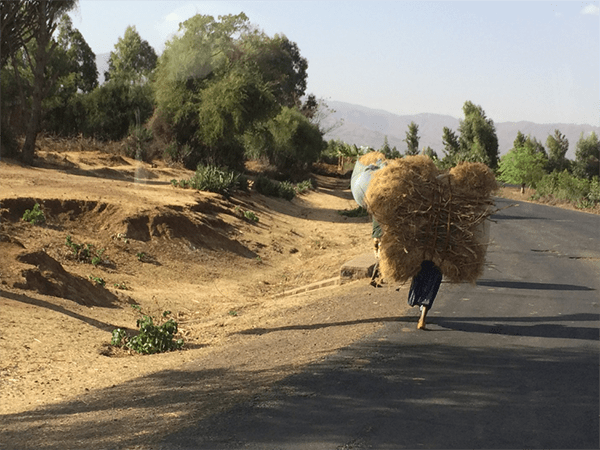
Spies women work

The great burden of work that woman assume is not only in the nursing profession but evident in myriad ways throughout sub-Saharan Africa.

Examining the meaning of “relationship power”


The latest ANS featured article is authored by Valerie Halstead, BSN; Joseph De Santis, PhD, ARNP, ACRN; Jessica Williams, PhD, MPH, APHN-BC, and is titled “Relationship Power in the Context of Heterosexual Intimate Relationships: A Conceptual Development.” The article is available to download at no cost while it is featured, and we welcome your comments in response!  Ms Halstead shared this information about this work:

It is a great pleasure to have our article featured on the ANS blog. The need for this article was identified while I was

Valerie Halstead

Valerie Halstead

enrolled in an epistemology class. Within this class we discussed the importance for concepts to be clearly defined to advance nursing knowledge, research, and theory development. Though this is the case, when reading literature focused on relationship power, inconsistencies were revealed in how this concept has been examined and defined. Because of this, a need for clarification of this concept was identified.

Therefore, with the guidance and collaboration from co-authors Dr. DeSantis and Dr. Williams, we are pleased to offer this conceptual development of relationship power in the context of heterosexual intimate relationships. We conducted a concept analysis on the basis of the guidelines

Jessica Williams

Jessica Williams

provided by Walker and Avant to assist in understanding this concept. As specified in this article, we propose the definition of relationship power to be the relative perceived, and actual ability to influence a relationship partner.

Many of the identified consequences of relationship power were found to have health care implications. Because of

Joseph De Santis

Joseph De Santis

this, it is extremely important for nurses in the clinical setting to be aware of what this concept entails. Doing so will help ensure they provide appropriate and comprehensive care to patients. Therefore, we hope that this article assists nurses with this. Furthermore, it is hoped that this article will assist nurse researchers in increasing consistency in their use of conceptual definitions and operational uses of relationship power. Doing so will allow for more directed future research in this particular area of science. We want to thank ANS for giving us the opportunity to share our developing work in this important area of nursing research.

Cultural Meanings of Mothering


Our current featured article describes a study that uses an intersectional approach to examine the simultaneous and cumulatie effects of gender, race and class.  The article, byDebora M. Dole, PhD, CNM; Donna Shambley-Ebron, PhD, RN, CTN-A, is titled “Cultural Meanings of Mothering Through the Eyes of African American Adolescent Mothers.”  Please visit the ANS website to download your copy of this important article at no coast while it is featured, then return here to share your responses and ideas!  Here is a message from Dr. Dole about her work in this area:

It is an honor to have this article featured in the Advances in Nursing Science blog.  I am thankful for the opportunity to share the work that has opened my own eyes in ways I was not prepared for. This article

Debora Dole

Debora Dole

represents a critical reflection as a researcher and practicing midwife of what inner strength, empowerment, humility and support looks like through the eyes of young African American mothers.  The use of Photovoice as a method to explore cultural meanings from the inside out invited critique and deconstruction of presupposed ideas of what mothering looked like, how it was perceived internally and externally, and how it was ultimately constructed by the mothers themselves.  Photovoice, a method using photography to represent and interpret the daily lives and concerns of participants, gives “voice” in a way that ethnography or qualitative inquiry alone could not provide.

As an experienced practitioner but a novice researcher, I struggled with how to explore the concept of cultural mothering from a perspective I had never experienced.  I am white, middle-aged, middle-class and live in a rural suburb.  While my clinical practice has been primarily in service of young, urban African American women, my experience did not provide the lens I felt was necessary to truly understand. The development of a theoretical framework representing the methodology as well as interpretation of study findings was necessary to understand more deeply the question, “What does mothering look like through the eyes of African American adolescent mothers?”

Intersectional Theoretical Framework

The theoretical framework for this study provided support for exploring mothering through the intersectional lens of gender, race and class.  It was important for my own understanding to have a framework that represented the process of deconstructing each of these.  No one theory alone seemed to fit.  Critical feminist, race and social theories represented the intersectional trifecta of being female, Black and poor.  It was my belief that mothering from what I viewed as a disadvantaged position would prove to be difficult in such a fragmented environment.

The interpretative nature of the study required a cultural lens constructed using concepts of Black Feminist Thought, Womanism, and Africana Womanism to bring meaning to the themes of building a network, sharing responsibilities, and seeing the future. Participant photography was accomplished in response to prompts such as: 1) What does mothering look like to you? 2) Who or what are the things that help you be a mother? 3) What makes it hard to be a mother? 4) What motivates you as a mother? 5) What does the future look like?   The cornerprocess of participant photography, discussion and analysis provided unique insight into a complex network of extended family, “other mothers”, friends and kin constantly under construction.  The power of a simple photograph cannot be overstated.   The photograph to the right is titled “Backed into a Corner”.  The photograph was taken and presented to the group for discussion by a participant who expressed her feeling of being trapped with few options.  It was through group discussion among the participants that the window represented a way out.

If the purpose of research is to uncover, explain or understand phenomena, the unexpected insight gained through this process has accomplished more than that.  This process has changed me.  It has made me a better midwife, a better researcher, a better learner, a better teacher and a better person.  I have a group of young, inexperienced, and “disadvantaged” mothers to thank for showing me what lies beneath the surface.  I hope you enjoy the article.  Maybe it will provide the reader another perspective.  Take a step back and “see”.  The clinical application of this research can be realized in how those that care for mothers and their children see their role, the power relationships that exist in healthcare and ultimately change how care is delivered.  The change has begun with the development and expansion of models of care that put mothers and their families at the center of their care such as CenteringPregnancy and CenteringParenting ®.

I would like to thank my co-author, Dr. Donna Shambley-Ebron for guiding me, sharing her wisdom, her insight and showing me the value of dwelling with the data.