Skip to content

Cultivating Nursing Leadership for Our Envisioned Future


In this “Editor’s Pick” featured article, author Lee Galuska, MSN, RN, summarizes the result of a metasynthesis of qualitative studies on nursing leadership development.  Her analysis offers significant evidence that can shape leadership development programs and curricula.  Galuska described the development of this research:

This article emerged out of my passion for promoting excellence in nursing leadership.  As I started my doctoral work, the driving questions centered on effective nursing leadership in healthcare organizations.   In exploring leadership models and theories, I became interested in complexity science and leadership in complex adaptive systems. I became intrigued with the work of Tim Porter O’Grady and Kathy Malloch on quantum leadership.  Their discussion of leadership in complex health care systems helped to shape my studies.  For nurse leaders, an understanding of complexity science and the behavior of complex systems is essential for creating the conditions for leadership to emerge in nurses throughout the system.

As I was learning more about leadership and complexity, the Future of Nursing: Leading Change, Advancing Health report was released.  The report reflected a recognition that our healthcare system is a complex adaptive system and that in order to achieve the outcomes of a transformed system and a healthier nation, nursing leadership development was critical.  That triggered my pursuit of understanding how best to cultivate nursing leadership

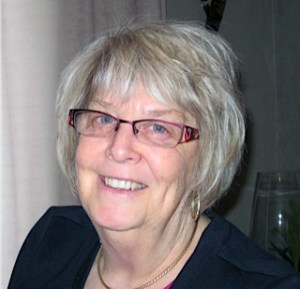
Lee Galuska

Lee Galuska

competency in nurses at all levels.   I wanted to study it from the perspective of nurses themselves.  I wanted to find out what nurses had found to be effective in helping them to develop leadership competency.

I had the good fortune at that time to be studying qualitative research methods with Cheryl Beck at the University of Connecticut.  Under Cheryl’s guidance I began to conduct a metasynthesis of qualitative studies of nurses’ experience with leadership development.  That work ultimately evolved into three metasyntheses.  This article focuses on the role of the context or environmental considerations on the development of nursing leadership competencies.  Another focuses on the role of purposeful, guided experiential learning and the third on formal leadership learning strategies.  My hope is to propose a model or “bundle” for effective nursing leadership development at all levels.

This is an important article that can inform efforts to bring the recommendations of the “Future of Nursing” report to reality.  Visit the ANS web site and download your free copy of this article today!

The Primacy of Relationships


Public health nursing has a rich history demonstrating the difference that nursing makes in the health and well-being of individuals, families and communities.  This “Editor’s Pick” article by Adeline Falk-Rafael, PhD, RN, FAAN and  Claire Betker, MN, RN, CCHN(C) titled “The Primacy of Relationships: A Study of Public Health Nursing Practice from a Critical Caring Perspective” makes a major contribution showing evidence of the potential influence of public health nursing when nurses can practice to the full scope of practice.  Their research explored the relevance of the mid-range theory of critical caring to the practice of expert public health nursing, and provides evidence that supports a critical caring approach to nursing practice.  They each speak to their experience with this research:

I (Adeline Falk-Rafael) never set out to “develop” a nursing theory, nor do I claim to have done that.  Critical Caring reflects public health nursing as I experienced it in my own practice and observed it in the practice of other public

Adeline Falk-Rafael

Adeline Falk-Rafael

health nurses (PHNs) and taught it to nursing students.  Although I had used Watson’s Caring Science to inform my own practice, as I taught public health nursing, I began to realize the influence of Nightingale as well as feminist and critical social theories on contemporary public health nursing practice. I see Critical Caring, therefore, as a descriptive mid-range theory of public health nursing that I have set into a theoretical framework.

The study described in part in this article began in 2005.  After the initial data were gathered, professional and personal circumstances made it impossible for me to continue with the work. I owe my most profound thanks to Claire Betker, a public health nurse with a breadth of public health nursing experience. Beginning her doctoral studies in 2010, Claire saw value in the theory and approached me about work we might do together.  Together we began to analyze the data that, in turn, energized us to complete the study.

I (Claire Betker) embarked on doctoral studies, as I wanted to contribute to theory to guide the practice of public health nurses so their practice could be better articulated and made visible. Early into my studies, I discovered that in 2005 Dr. Adeline Falk-Rafael had published several articles describing a middle range theory, Critical Caring, that

Claire Betker

Claire Betker

rooted public health nursing practice in an expanded nursing caring science and the social justice agenda characteristic of early public health nursing practice. Adeline describes a reciprocal relationship between theory and

public health nursing practice which she illustrated using a metaphor of a tree (practice) anchored by its roots (theory) where theory is nourished by practice and continues to evolve while supporting practice and giving it definition. This description of theory and the 7 carative health promoting process that represent the  ‘core’ of public health nursing practice resonated with what I had experienced in practice, just as they did with the participants in the research described in this article.  I  encourage those within the pubic health nursing community to consider how Critical Caring could: a) guide practice; b) assist us to articulate and give voice to our practice and its importance; and c) be a tool of resistance to those forces that prevent PHNs from working to their full scope of practice.

If you have already downloaded the new ANS iPad app, you can read this article now!  All of the articles in the current issue of ANS are available at no charge on the iPad app, and on the ANS web site.  Get your copy of this important article now!

Update on Future Issue Topics!


We  have added a new issue topic for ANS 37:3 – Health Equities!  Here is our complete list of future topics; follow the links for the issue topics to see a description of the kinds of manuscripts we are seeking for each.

36:3 – Peace & Health – September 2013
Manuscript Due Date – January 15, 2013

36:4 – Innovations in Health Care Delivery – December 2013
Manuscript Due Date – April 15, 2013

37:1 – Emerging Theories for Practice – March 2014
Manuscript Due Date – July 15, 2013

37:2 – Relationships & Health – June 2014
Manuscript Due Date – October 15, 2013

37:3 – Health Equities – September 2014
Manuscript Due Date – January 15, 2014

Nurse Fatigue and Patient Harm


The current “Editor’s Pick” article focuses on the “Future of Nursing” Report’s first recommendation, that nurses practice to the full extent of their education and training.  The article, titled  “Hospital Nurse Force Theory: A Perspective of Nurse Fatigue and Patient Harm” presents an evolving theoretical framework for reaching this goal.  This is a fascinating article that reflects a coming together of hospital and academic nurses to address one of the most vexing of nursing challenges – nurse fatigue.  But the background of how this work evolved is equally fascinating!  Read the background story here, by lead author Diane Drake:

In November 2005, I received an email from Dr. Michele Luna, the Mission Hospital quality manager about an idea to study nurse fatigue and adverse events prompted by reading a publication by Ann E. Rogers and others about sleep and nurse fatigue. I had recently begun consulting at Mission Hospital as the nurse research

L to R: Dr Michele Luna, Dr Linsey Barker Steege, Dr Diane Drake

scientist after finishing a post-doc at UCSF in cancer symptom management. I knew very little about quality management and was curious why a PhD nurse was the quality manager at a community hospital. Fortunately I knew something about fatigue research, and was interested to talk with Dr. Luna about hospital nurse fatigue.

During the next few years, Dr. Luna and I read and discussed many reviews, studies, and dissertations to help clarify the complex relationships and sometimes confusing definitions of nurse fatigue and patient safety. Our initial ideas resonated with a nurse fatigue dissertation we read by Dr, Linsey Barker Steege, a human engineer, who I contacted by phone in 2010 at the University of Missouri to discuss nurse fatigue theory.

By December 2010 Dr. Luna and I agreed to formalize our discussions into a plan of research and received approval from Linda Johnson, RN, MSN, Mission Hospital Chief Nursing Officer, to convene a study team and conduct nurse fatigue investigations. Our study team members included graduate nursing research students who were also Mission Hospital nurse managers, Mary Olivas, RN, MSN, Gerri Mazza, RN, MSN and staff nurse Anne Faust, RN, MSN. Mission Hospital Clinical Director, Connie Gagliardo, RN, MN, doctoral nursing student Teri Arruda, NP and University of Missouri Human Engineer, Dr. Linsey Barker Steege also joined the study team and participated in monthly study meetings by conference call and attending annual meetings. By the first year, we completed our survey design including items and concepts that were important to our theory.

During a monthly study team meeting, we reviewed a compelling paper about the unspeakable in nursing, published in ANS, my favorite nursing journal, written by Dr. Jane Georges, a professor at University of San Diego School of Nursing where our team member Teri Arruda was a doctoral student. One Saturday in December 2011 Dr. Luna and I met for lunch near San Diego with Dr. Georges to ask her opinion about publication of our work.  Dr. Georges assured us the work was worthy to consider for ANS publication and her contributions were essential to the success of this publication. Dr. Georges also contributed to the evolution of the model during our discussions about the physics of nurse force and the importance of studying and preventing hospital nurse fatigue and patient harm.

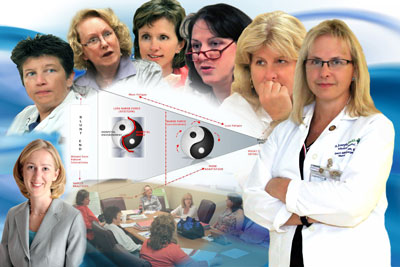
The current evolution of the Hospital Nurse Force Theory was considerably advanced when we realized the study domains of hospital, nurse, fatigue and harm were inadequate to describe and measure the essential and dynamic force and belief that hospitals exist for nursing care and essential nursing practice requires the recognition and prevention of patient harm. Optimal hospital nurse force is the combination of nurse wellness, professionalism and education in sync (yin-yang) with the hospital environment and resources.

Our theoretical discussions have guided our research strategy to apply empirical methods over three phases of research: 1) design and administration of a survey to test the prevalence of hospital nurse fatigue and test the effect of interrelated hospital and nurse variables on nurse fatigue and patient harm, 2) validate self-report measures with clinical tests of physical, mental, and emotional fatigue and wellness, and 3) design and test interventions to mitigate or prevent hospital nurse fatigue and patient harm.

In February 2012, 420 Mission Hospital RNs completing a 100-item online nurse force and fatigue survey. Summary of the findings is underway as well as a publication to validate survey domains in cooperation with Dr. Mary Wickman, nurse researcher at St. Jude Hospital in Fullerton, CA a sister hospital of Mission.

Mary Olivas, RN, MSN and I presented the Hospital Nurse Force and Fatigue (HNF&F) theory at the International Sigma Theta Tau Research conference in Brisbane, Australia in July 2012. Connie Gagliardo RN, MSN and I presented the theory to the Nebraska Nursing Association in Lincoln, NE in September 2012 and had the pleasure to meet with Dr. Ann E. Rogers, the keynote speaker whose research has been inspirational to our research.

Several new investigations have begun as a result of the study team collaborations. Nurses Olivas, Mazza and I have collaborated on a secondary and qualitative analysis with Dr. Barker Steege, revisiting her nurse fatigue

lower left to right, Dr Linsey Barker Steege, Gerri Mazza, RN, MSN, Dr Michele Luna, Dr Diane Drake, Mary Olivas, RN,MSN, Connie Gagliardo, RN, MN and Anne Faust, RN, MSN.

dissertation. Shanghayegh Parhizi a doctoral student of Dr. Barker Steege has joined the study team to use the survey data for dissertation source. Dr. Barker Steege and her colleague at the University of Missouri, Dr. Kalyan Pasupathy have joined me to conduct data mining on fatigue and wellness in night shift nurses, preliminary work to evaluate breast cancer risk and screening practice of night nurses.

The study team continues to meet monthly with plans to design and test interventions to promote hospital nurse force, test methods to mitigate nurse fatigue and prevent patient harm.  We welcome your comments and questions by email at diane.drake@stjoe.org.

This story, I hope, will be an inspiration to others who have an idea you want to pursue with a team of colleagues!  Visit the ANS web site today, and download your copy of this inspiring article!

NEW! ANS for the iPad!


Just released – the ANS app for the iPad!    The app is free, and for a limited time, you will have access to all the current issue contents to read and download!  I am very excited about this feature.  For quite a while now many folks have speculated about the future of journal publishing, and the possibility of paper becoming obsolete. The time has not arrived for paper to disappear for ANS, nor for most professional journals, but the arrival of the ANS app for the iPad certainly unveils a new possibility!

Soon we will begin featuring video abstracts of articles provided by the authors, and these will be directly accessible on the iPad.  Links to the video abstracts will also be available on article PDF files, and will be noted in the paper issue of the journal.  But the iPad app opens up a realm of many multi-media possibilities!  Watch for these as they begin to appear in the months to come!  Download the app today to begin exploring this great new journal feature!


Rural Nursing and Palliative Care


This “Editor’s Pick” article describes an analysis of two studies that examine nursing palliative care in rural settings.  The authors (Barbara Pesut, PhD, RN; Barbara McLeod, MSN, BSN, RN; Rachelle Hole, PhD, MSW; Miranda Dalhuisen, BSN, RN) explain how the findings of these studies inform nursing practice in palliative care, and the ways in which the rural context shapes nursing practice. Their analysis provides insight into the ways in which nursing palliative care improves quality of life.  Dr. Pesut described their project as follows:

This article was birthed out of the Initiative for a Palliative Approach in Nursing: Education and Leadership, more commonly known as iPANEL.

“Research for nurses by nurses” is the motto for iPANEL.  A population aging with multiple chronic health conditions provides some important challenges for nurses, challenges that require both evidence and leadership. Research conducted by members of this team have indicated that a failure to identify and support those who are dying may have adverse consequences including poor symptom management, lack of advance

Barbara McLeod (L) and Barbara Pesut (R)

care planning and failure to attend to important psychosocial and spiritual issues. These issues are particularly relevant for nurses working in non specialized palliative settings such as acute medical units, residential care and home health.

iPANEL is a unique team, funded by the Michael Smith Foundation for Health Research, of researchers, clinicians, administrators and policy makers whose goal it is to integrate a palliative approach into the care of those living with life limiting chronic illness.  A palliative approach takes the supportive principles of palliative care and applies them in an upstream approach, recognizing that although there is a role for specialized palliative care, a palliative approach can be used by all nurses in all contexts to improve the care of the dying. A palliative approach begins by recognizing that a person with an advancing chronic illness may indeed be on a dying trajectory and then having sensitive and ongoing conversations around the goals of care.

This particular project arose out of my (Barb Pesut’s) interest in rural palliative care. Having done extensive ethnographic work examining palliative care in rural areas I was struck by how the rural context influenced

Rachelle Hole (L), Miranda Dalhuisen (R)

nursing work at end of life. I observed how policies and programs generated in urban areas had unintended consequences for nurses. For example, nurses in rural areas work outside of hours and scopes of practice to ensure that their neighbours and friends are well cared for. And yet, this may put them in difficult situations if they are not supported by administrators, if they feel less than competent in the care they are being asked to provide, or if the burden of care becomes too great. In the context of my research I heard many nurses talk about wanting more of the benefits of specialized palliative teams. And yet, I also observed a high degree of expertise and commitment in these nurses as they cared for palliative individuals. It made me wonder about the concept of specialty practice, and where it served nursing well…and not so well. Thus, rural nursing work became an important context in which to look at a palliative approach which seeks to apply the principles of palliative care within generalist contexts – the rural context became an important “living laboratory”. It also became an opportunity to deepen understandings of what rural family caregivers need most from nurses.

Barb Pesut and Barbara McLeod are academic/practice partners leading iPANEL on how to better understand how to educate nurses for a palliative approach. Rachelle Hole is a colleague from social work who brought her expertise in qualitative analysis and social systems to help us think outside of our ‘nursing lens’ as we analyzed the data. Miranda Dalhuisen is a palliative nurse and research coordinator – those invaluable partners who make our programs of research doable.

Visit the ANS web site today to download a free copy of this very informative and interesting article!

Freedom of Choice: Nursing Perspective on Reducing Hypertension for African-Americans


The persistently high incidence of hypertension among African-American people is one of the primary factors that accounts for significant disparities in the United States.  While it is widely assumed that this is a complex issue, typical approaches to intervene in practice have remained simplistic and ineffective.  In this “Editor’s Choice” article titled “Freedom of Choice and Adherence to the Health Regimen for African Americans With Hypertension” authors Willie M. Abel, PhD, RN, ACNS-BC and Debra J. Barksdale,PhD, RN, CFNP, CANP, present an informative review of the complex factors contributing to persistent high rates of hypertension in African-American communities.They propose that the theory of psychological reactance can guide nurses in fulfilling our pivotal role in helping African-Americans become active participants in managing their hypertention.  As Dr. Abel describes it:

The background for this article stemmed from my research on medication adherence issues in African American women with hypertension. African American women have the highest rates of hypertension in the world, positioning them at an increased risk for heart attack, heart failure, stroke, and kidney disease. Understanding why some African American women choose not to adhere to treatment approaches to HTN is essential, especially when antihypertensive treatment regimens such as medications have proven efficacy in lowering blood pressure and preventing the devastating consequences of HTN. Thus, it is inconceivable why an individual with HTN may choose not to adhere to the treatment regimen. However, one potential answer to this perplexing problem is related to the one factor that distinguishes African Americans from all racial ethnic groups in the United States, their history of slavery. Because health care demands may disrupt personal routines and restrict valued personal freedoms, many African Americans may feel motivated to preserve their freedom if it is threatened or restricted. Thus, the theory of psychological reactance offers a framework for understanding poor adherence to the health treatment regimen for African Americans with HTN.

This article appears in the October-December 2012 issue of ANS, released today (November 6)!  Visit the ANS web site today to get this article at no charge while it is featured!

(Picture is Royalty Free –http://www.inmagine.com/license.php?brand=submissionrf )


Transition from student to professional: High-Stakes clinical simulation


Clinical simulation has become a standard teaching and learning approach in nursing education. Dr. Mary Ann Cordeau’s article titled “Linking the Transition: A Substantive Theory of High-Stakes Clinical Simulation”  reports the findings of a grounded theory study that reveals a 4-stage transition experienced by students as they learn caring as a professional nurse.  Dr. Cordeau describes her research:
I have been involved in developing clinical simulation as a teaching/learning/assessment strategy at Quinnipiac University for the past seven years. During that time, I have conducted one-on-one simulations, group simulations, and most recently have been involved in streaming scenarios from the laboratory to the classroom. When I began to examine the clinical simulation literature, I learned the majority of the research was quantitative.  There was very little information on the student’s perspective of the clinical simulation experience. My background in history and phenomenology led me to focus on the qualitative aspect of clinical simulation. My initial research examined the lived-experience of high-stakes clinical simulation. The results of that study greatly influenced my approach to using clinical simulation with junior and senior nursing students.  The next logical step in examining clinical simulation was to use grounded theory to reveal the social psychological problem and process used to cope with the problem. At the time I was conducting the grounded theory study, I was teaching Transitions theory to the junior nursing students.  I began to see a connection between Linking and Transitions. Discussing my thoughts with colleagues and expert nurse researchers prompted me to examine Linking as fostering the situational transition from student to professional nurse.
 I would like to thank all of the students who participated in the studies and everyone who advised and supported me on my journey of discovery.
Visit the ANS web site today to download your copy of this very interesting article!

Transitions to Independent Living for Developmentally Impaired Young Adults


Dr. Geraldine Pearson,PhD, PMH-CNS, FAAN, in her featured article titled “The Transition Experience of Developmentally Impaired Young Adults Living in a Structured Apartment Setting,” reports the findings of a study conducted with young adults with a history of pervasive developmental disorders.  The young adults were all no longer eligible for child services in their area, and were transitioning to independent living.  It is rare that researchers turn directly to people who experience such extensive physical and psychologic challenges as participants.  Dr. Pearson’s work with her participants yielded impotant insights into their experience, as well as very important  explanations of methodologic adjustments that needed to be taken into consideration in the conduct of this research. She shared this description of her work in this message for the ANS blog:

Peggy asked me to begin this blog about my my paper published on the July-September 2012 online issue of ANS. titled “The Transition Experience of Developmentally Impaired Young Adults Living in a Structured Apartment Setting”. It detailed my dissertation research with a population of chronically disturbed young adults. I learned so much from these young adults trying to grow up with chronic psychiatric and developmental impairments and very little family support. The research is fairly clear in defining the need for parental figures to guide and assist as these individuals pass into adulthood. I think of these young people as I read the recent statistics about so many college graduates moving back home with their parents. While economics are cited as the predominant reason for this, I also wonder how many of them feel the need for family support as they face an unfriendly economic environment where living is expensive. My research participants were attempting to grow up using limited public resources for housing and expenses. Most appeared to live at the poverty line and they clearly struggled.

There were also some unique moments as I conducted the interviews in participant living environments. One young man proudly spoke of the “crickets” that were darting up his kitchen wall. He seemed oblivious to the fact that he was actually infested with roaches!

Participants were polite, eager to talk about their lives, longing for someone to talk with them. At the conclusion of the research interviews I was left to ponder the plight of this population, their quality of life, and what we, as mental health professionals, might be doing to improve their living. I didn’t come away with clear answers. In the end, the research cemented my passion about caring for these individuals, whether children, adolescents, or young adults. It is such an honor to have this paper published in ANS!

I believe you will find this featured article to hold valuable insights for all nurse scholars, not just because of the substance of the article, but as an exemplar of approaches to nursing research with those who are most vulnerable, and whose experience remains essentially unknown.  Visit the ANS web site now to download your free copy!

Transition to adulthood for youth with special needs


The transition to adulthood is a daunting one for all teens and their parents, but when the teen is developmentally disabled, this is a mammoth challenge.  Today’s “Editor’s Pick” article addresses this challenge, and report the findings of a study in the San Francisco Bay Area that included 64 youth and their parents. The article, titled “Parent and Youth Priorities During the Transition to Adulthood for Youth With Special Health Care Needs and Developmental Disability,” provides evidence of the need to broaden the usual health care transition goals for special-needs youth and their families.  This study was funded by the National Institute of Child Health and Human Development.

Roberta Rehm, PhD, RN, FAAN  is the lead author of this article; her co-authors are  Elena Fuentes-Afflick, MD, MPH; Lucille T. Fisher, PhD, RN; and Catherine A. Chesla, DNSc, RN, FAAN.  Dr. Rehm shared this description of the background of the project and what they are planning for the future of the project:

The TAPS (Transition to Adulthood Plans Study) project came about because parents in my previous studies with younger children told me how concerned they were about transition to adulthood issues. Parents worried about what would happen to their children as they aged and the children got bigger and older, but still needed a lot of support. I wanted to explore what was happening around planning for the transition to adulthood and the impact of caring for teens and young adults on the families. I recognized that parents worked closely with schools and health care providers, so included teachers and primary care providers in the TAPS study.

I am particularly interested in that group of young people who will continue to need support and assistance throughout their lives, so we defined “youth with complex needs”, for this study, as teens and young adults who have both a chronic health conditions and a developmental disability. Obviously, there are many other ways this population can be defined, but for any particular study decisions must be made so that recruitment can be focused.

As we proceeded with data analysis, TAPS’ project director, Lucy Fisher, and I began partnering with a local affiliate of Family Voices (Support for Families of Children with Disabilities, a parent-run organization that provides support and education to families of children with disabilities. We designed and did some initial testing of an intervention based on what we learned in TAPS, and focused it around “Person Centered Planning” strategies. We will continue working on this intervention and hope to add other community partners and test its effectiveness in the future.

Please visit the ANS web site today!  This featured article is available for free download for a limited time – get your copy today!